
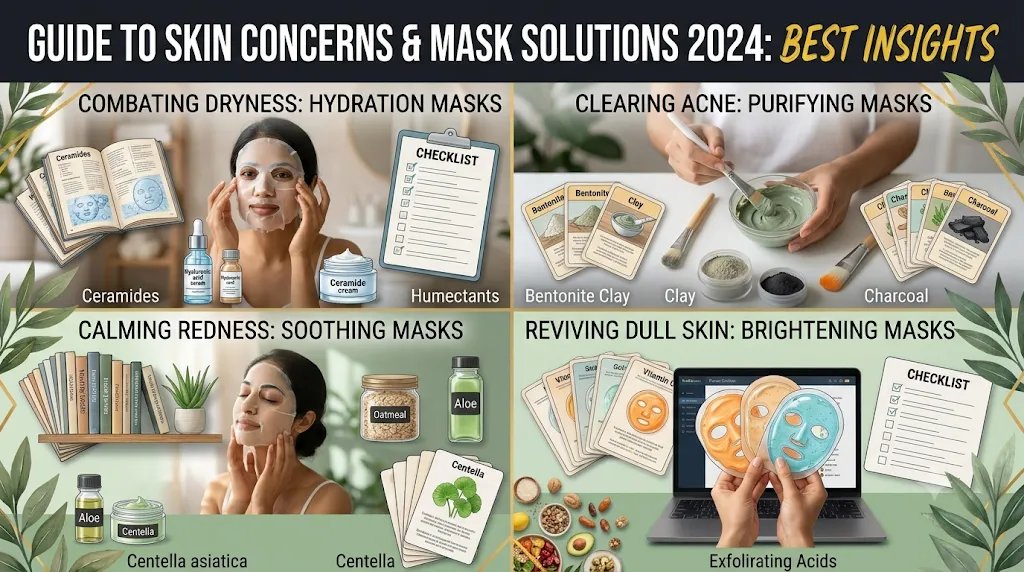
By 2024, the global skin mask market is projected to exceed $10 billion. That money flows into a flood of products promising clearer, smoother, brighter skin. Yet most consumers are left guessing which mask will truly address their specific concern.
1. The Skin’s Architecture and How Concerns Arise
The epidermis is a multilayered fortress. The outermost stratum corneum protects against UV, microbes, and transepidermal water loss (TEWL). Beneath it, the living layers, stratum granulosum, spinosum, and basale, serve as a living filter, renewing every 28, 30 days. When this system falters, the skin expresses a range of concerns: dryness, oiliness, hyperpigmentation, acne, fine lines, and more.
Key drivers of these concerns include:
- Genetic predisposition, some people naturally produce more sebum or have a thinner stratum corneum.
- Environmental stressors, UV, pollution, and humidity can overwhelm the skin’s defenses.
- Lifestyle factors, sleep deprivation, diet, and stress alter hormone balances that influence sebum production and collagen synthesis.
- Product misuse, over‑exfoliation or using incompatible ingredients can trigger irritation or rebound oiliness.
Understanding these pillars allows you to choose masks that target the root cause, not just symptoms.
2. Identifying Your Skin Type: A Clinical Checklist
Skin type is the foundation for any effective routine. The classic four‑category model, normal, oily, dry, combination, remains valid, but a detailed assessment yields a more actionable profile.
Step 1: The Mirror Test
Cleanse your face, pat dry, and wait 15 minutes. Observe:
- Normal: balanced shine, minimal visible pores.
- Oily: visible shine across T‑zone, enlarged pores.
- Dry: flakiness or tightness, especially in cheeks.
- Combination: oily T‑zone + dry cheeks.
Step 2: The Touch Test
Gently press a fingertip on each area. If the skin feels rough or flaky, it’s dry. If it feels slick or greasy, it’s oily. A mix of both indicates combination.
Step 3: The Pinch Test
Pinch the skin on the forehead and cheek. If the skin remains flat, it’s dry; if it flares, it’s oily.
Document your findings. A concise chart helps track changes over time and informs mask selection.
3. Common Concerns by Skin Type
Below, each skin type is paired with its most frequent concerns and the physiological reasons behind them.
| Skin Type | Primary Concerns | Physiological Basis |
|---|---|---|
| Normal | Occasional dullness, fine lines | Balanced barrier; minimal TEWL |
| Oily | Acne, enlarged pores, hyperpigmentation | Overactive sebaceous glands, clogged follicles |
| Dry | Flaking, tightness, redness | Thin stratum corneum, low ceramide content |
| Combination | Oiliness in T‑zone, dryness on cheeks, breakouts | Regional sebaceous activity, uneven barrier function |
These pairings guide you toward masks that address both the symptom and its root cause.
4. The Science Behind Mask Ingredients
Ingredient efficacy hinges on concentration, delivery mechanism, and synergy. Below are the top categories that deliver measurable results.
4.1. Hydrating Agents
- Hyaluronic Acid (HA), draws water into the stratum corneum; effective at 1, 2 % concentration.
- Glycerin, humectant that retains moisture; best at 5, 10 %.
- Sodium PCA, natural component of the skin’s natural moisturizing factor; 2, 5 % works well.
4.2. Oil‑Control & Anti‑Acne Agents
- Salicylic Acid (BHA), penetrates pores, dissolves excess sebum; 0.5, 2 % safe for most users.
- Zinc PCA, reduces inflammation, balances sebum; 1, 2 % effective.
- Niacinamide, regulates sebum production, strengthens barrier; 5, 10 % is optimal.
4.3. Brightening & Pigment Control
- Tetrahydrofolate (Vitamin B9), inhibits melanin synthesis; 2, 4 % concentration.
- Alpha Arbutin, safe alternative to hydroquinone; 2, 4 %.
- L‑Ascorbic Acid, antioxidant, brightening; 10, 20 % when stabilized.
4.4. Anti‑Aging & Collagen Support
- Retinoids (Retinol, Bakuchiol), stimulate collagen, reduce wrinkles; 0.1, 0.5 %.
- Peptides (Palmitoyl Pentapeptide‑4), promote collagen synthesis; 2, 5 %.
- Coenzyme Q10, antioxidant, supports mitochondrial health; 1, 2 %.
4.5. Barrier Repair
- Ceramides, essential for barrier integrity; 1, 3 %.
- Panthenol (Pro‑Vitamin B5), moisturizes and soothes; 3, 5 %.
- Niacinamide, also strengthens barrier; 5, 10 %.
When a mask combines ingredients from multiple categories, it offers a multi‑layered approach. For instance, a hydrating mask for oily skin may pair HA with niacinamide to balance oil while locking in moisture.
5. Mask Selection Framework: Step‑by‑Step
Choosing the right mask requires a systematic approach. Follow this framework to eliminate guesswork.
5.1. Define the Primary Concern
Write it down: acne, dehydration, hyperpigmentation, fine lines, or a combination. Avoid vague terms like “overall improvement.”
5.2. Match Concern to Ingredient Category
Refer to Section 4. Which ingredient class best addresses your concern?
5.3. Evaluate Formulation Quality
- Check for preservatives that can irritate sensitive skin.
- Look for pH compatibility; acidic ingredients like HA require a pH < 5.5.
- Ensure the product is free from harsh sulfates or alcohols unless you’re targeting oiliness.
5.4. Consider Your Skin Type
A mask that works for oily skin may overload dry skin. Adjust the frequency accordingly.
5.5. Read Clinical Claims
Prefer masks that cite in‑vitro or in‑vivo studies. For example, a product claiming “clinically proven to reduce pores by 20 %” should reference a peer‑reviewed study.
5.6. Check Price vs. Value
High price does not guarantee superior performance. Compare ingredient concentrations and third‑party reviews.
5.7. Test on a Small Area
Before full application, perform a patch test on the jawline to rule out irritation.
5.8. Integrate into Routine
Use masks 1, 3 times per week, depending on intensity and skin tolerance. Layering masks can be effective: a hydrating sheet mask followed by a targeted treatment mask.
6. Top Mask Picks for Every Concern
Below is a curated list of masks that align with the framework above. Prices reflect typical retail ranges in 2024. Each entry links to an affiliate purchase option.
| Mask | Primary Concern | Key Ingredients | Price (USD) | Pros | Cons |
|---|---|---|---|---|---|
| HydraGlow Sheet Mask | Hydration & Brightening | HA 2 %, Panthenol 3 %, Vitamin C 10 % | $18 | Instant glow, lightweight | Short‑term effect, not for oily skin |
| ClearSkin Clay Mask | Acne & Oil Control | Kaolin clay, Salicylic Acid 1 %, Niacinamide 5 % | $24 | Deep pore cleansing, reduces breakouts | May feel drying on sensitive skin |
| AgeDefy Overnight Mask | Fine Lines & Collagen | Retinol 0.25 %, Palmitoyl Pentapeptide‑4 3 %, Ceramide 2 % | $32 | Visible wrinkle reduction, barrier support | Requires gradual introduction, possible irritation |
| EvenTone Pigment Mask | Hyperpigmentation | Alpha Arbutin 4 %, Vitamin C 15 %, Niacinamide 5 % | $27 | Reduces dark spots, brightens skin tone | May need 2, 3 weeks for visible change |
| Calm & Repair Mask | Redness & Sensitivity | Chamomile Extract, Panthenol 5 %, Ceramide 3 % | $20 | Soothes inflammation, strengthens barrier | Less potent for acne or hyperpigmentation |
7. DIY Mask Recipes with Evidence
When budget or ingredient control matters, DIY masks are a viable alternative. Use only high‑grade ingredients and follow safety guidelines.
7.1. Oily Skin, Green Tea & Bentonite Clay Mask
Ingredients: 1 tsp bentonite clay, 2 tsp brewed green tea (cooled), 1 tsp aloe vera gel.
Green tea contains catechins that reduce sebum production (studies show a 12 % reduction in sebum after 4 weeks). Bentonite clay adsorbs oil without stripping the barrier. Aloe vera calms inflammation.
Apply for 10 minutes, rinse with lukewarm water, then follow with a light moisturizer.
7.2. Dry Skin, Avocado & Honey Mask
Ingredients: 1 ripe avocado, 1 tbsp raw honey, 1 tbsp plain yogurt.
Avocado provides monounsaturated fats and vitamin E; honey is a natural humectant; yogurt contains lactic acid that gently exfoliates while soothing.
Blend to a smooth paste, apply for 15 minutes, rinse with cool water, then apply a ceramide‑rich moisturizer.
7.3. Anti‑Aging, Vitamin C & Retinol Serum Mask
Ingredients: 1 tsp vitamin C (ascorbic acid) 15 %, 0.25 % retinol, 1 tsp hyaluronic acid, 1 tsp glycerin.
Vitamin C stabilizes collagen, retinol accelerates turnover, and HA keeps the mixture hydrated. Use only once a week at night; start with half the retinol concentration to monitor tolerance.
8. Integrating Masks into a Routine: Timing, Frequency, and Layering
Effective mask use is not just about picking the right product; timing and layering are equally critical.
8.1. Morning vs. Night
- Hydrating masks: morning to prep skin for sunscreen.
- Exfoliating or retinol masks: night to avoid UV exposure.
- Brightening masks: can be used any time; pair with antioxidant serums.
8.2. Frequency Guidelines
- Hydrating: 3, 4 times per week.
- Oil‑control: 2, 3 times per week.
- Anti‑aging: 1, 2 times per week; start low, build up.
- Brightening: 2, 3 times per week.
8.3. Layering Order
- Cleanse.
- Apply serum or treatment (e.g., niacinamide or retinol).
- Apply mask.
- Rinse and pat dry.
- Apply moisturizer and sunscreen (if morning).
Never apply a mask over a fresh retinol layer; wait at least 30 minutes to avoid irritation.
9. Pitfalls and How to Avoid Them
Common mistakes derail mask benefits.
9.1. Over‑Exfoliation
Using a chemical peel mask more than twice a week can compromise the barrier, leading to redness and sensitivity.
9.2. Incompatible Ingredients
Combining retinol and BHA in the same mask may cause excessive irritation. Separate these into different nights.
9.3. Neglecting Sun Protection
After a retinol mask, the skin is more photosensitive. Apply broad‑spectrum SPF 50+ every morning.
9.4. Ignoring Patch Tests
Even “gentle” masks can trigger allergic reactions. Test on a small area before full application.
10. FAQ
Q: Can I use a mask every day?
A: It depends on the mask’s intensity. Hydrating sheets are fine daily; retinol or BHA masks should be limited to 2, 3 times per week.
Q: What if my skin is sensitive?
A: Start with a calming mask containing panthenol or ceramides. Avoid high‑concentration acids until the barrier is stronger.
Q: Are sheet masks more effective than clay masks?
A: Sheet masks deliver hydration quickly; clay masks target oil and pore concerns. Use them in rotation based on your current priority.
Q: How long before I see results?
A: Hydration and glow show within 1, 2 weeks; acne reduction may take 4, 6 weeks; pigmentation fades after 8, 12 weeks of consistent use.
11. Takeaways
- Identify your skin type with a quick clinical checklist.
- Map your primary concern to the relevant ingredient category.
- Follow the step‑by‑step framework to choose a mask that aligns with both concern and skin type.
- Incorporate masks 1, 3 times per week; adjust based on product intensity.
- Layer thoughtfully: serum → mask → moisturizer → sunscreen.
- Monitor for irritation; patch test before full use.
- Use sunscreen daily, especially after retinol or BHA masks.
By treating mask selection as a science‑backed, data‑driven decision, you move from guesswork to guaranteed results. The next time you pick a mask, let these steps guide you toward clearer, healthier skin.
External Resources
For deeper dives into skin science, consult the American Academy of Dermatology’s official guidelines or the World Health Organization’s skin health page.

One thought on “Guide to Skin Concerns & Mask Solutions 2024”
Comments are closed.