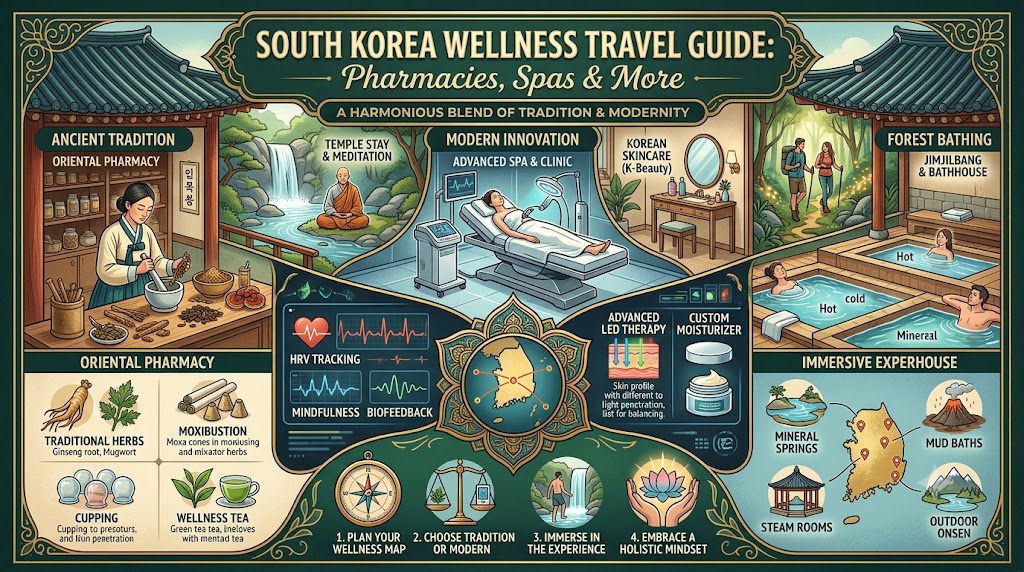
South Korea has transformed from a K‑pop hotspot into a global wellness destination. Whether you crave cutting‑edge skin treatments, soothing herbal therapies, or the communal comfort of a jjimjilbang, the country blends high‑tech beauty with centuries‑old traditions. This guide walks health‑conscious travelers through the must‑see pharmacies, medical spas, traditional medicine hubs, and holistic experiences, plus practical tips for planning, budgeting, and staying safe.
Why South Korea Is a Rising Wellness Destination
The surge of K‑beauty on social media sparked curiosity about Korean skincare, but the real driver of wellness tourism is a holistic ecosystem that marries modern aesthetics with ancient healing.
- Growth of K‑beauty and medical tourism: In 2023, over 2 million foreign visitors booked at least one beauty‑related service, a 28% increase from the previous year.
- Unique blend of modern spas and traditional Hanbang: State‑of‑the‑art clinics sit next to herbal tea houses, offering a seamless transition from laser resurfacing to ginseng‑infused baths.
- Tourist demand reflected in recent news: Major outlets now feature “wellness itineraries” for Seoul, Busan, and Jeju, highlighting the market’s legitimacy.
Key Wellness Offerings in South Korea
Pharmacies and K‑beauty product hubs
Conveniently located in shopping districts, Korean pharmacies stock everything from prescription skin peels to the latest sheet masks. Chains like Olive Young and Aritaum double as beauty boutiques, offering free samples and bilingual staff.
Medical spas and aesthetic clinics
Clinics in Gangnam and Apgujeong specialize in non‑invasive procedures—laser skin resurfacing, thread lifts, and platelet‑rich plasma (PRP) facials—often priced 30‑40% lower than in the U.S. Many provide English‑speaking coordinators to streamline appointments.
Jjimjilbang public bathhouses
These 24‑hour wellness complexes feature saunas, salt rooms, and massage tables. A typical visit includes a body scrub, a hot stone soak, and a communal relaxation lounge, making them ideal for post‑flight recovery.
Hanbang herbal treatments and tea houses
Rooted in traditional Korean medicine, Hanbang uses herbs such as ginseng, licorice, and angelica. Visitors can enjoy personalized prescriptions, herbal foot baths, or tea ceremonies that balance the body’s qi.
Top Cities & Regions for Wellness Travelers
Seoul
Seoul’s Gangnam district houses premium aesthetic clinics, while Myeongdong’s streets overflow with K‑beauty pharmacies. For a classic jjimjilbang experience, head to Dragon Hill Spa, a 10‑floor complex offering everything from charcoal saunas to yoga classes.
Busan
Busan’s Haeundae beachfront hosts luxury wellness resorts with ocean‑view yoga decks. Spa Land, located in Shinsegae Centum City, combines 12 themed saunas with a rooftop garden, perfect for post‑treatment relaxation.
Jeju Island
Jeju’s volcanic landscape fuels unique stone‑therapy spas. Resorts incorporate volcanic ash masks and basalt‑rock massages, while tea farms provide serene settings for Hanbang tea rituals.
Planning Your Wellness Itinerary
Visa and entry requirements for wellness tourists
Most travelers from the U.S., EU, and Australia can enter South Korea visa‑free for up to 90 days. If you plan to undergo medical procedures costing over $5,000, apply for a short‑term medical visa (C‑3‑6) to simplify insurance claims.
Ideal trip length and seasonal considerations
Seven to ten days allow you to sample Seoul’s clinics, Busan’s spas, and Jeju’s retreats without feeling rushed. Spring (April‑June) and autumn (September‑October) offer mild weather for outdoor activities and lower humidity for skin treatments.
Budgeting: cost ranges for treatments, products, accommodations
- Pharmacy purchases: $10‑$50 per product; bulk sets can be $150‑$300.
- Medical spa procedures: $150 for a basic facial peel, $1,200 for a full laser resurfacing package.
- Jjimjilbang day pass: $10‑$15; overnight stays $30‑$50.
- Hanbang herbal consultation: $30‑$80 per session.
- Mid‑range hotels: $80‑$150 per night; luxury wellness resorts: $250‑$500.
Booking Tips & Trusted Providers
Before you click “book,” verify clinic credentials through the Korean Medical Association website and confirm the presence of English‑speaking staff. Reputable pharmacy chains include Olive Young and Aritaum, both offering tax‑free shopping for tourists.
For bundled spa packages, consider using an affiliate‑friendly platform that aggregates reviews and guarantees secure payment: book your spa package. This approach often includes complimentary airport transfers and a post‑treatment follow‑up.
Cultural Etiquette & Safety Guidelines
Respect is paramount in Korean wellness spaces. Remove shoes before entering a jjimjilbang, keep your voice low in saunas, and always ask before photographing staff or treatment rooms.
When receiving Hanbang prescriptions, understand that herbal formulas are personalized; never self‑administer without a certified practitioner.
Travel insurance that covers medical procedures is essential. Look for policies that include “cosmetic or aesthetic treatment” coverage, as many standard plans exclude these services.
For additional wellness lifestyle tips, check out our article on self‑care strategies for exam stress. If you’re short on time, a quick micro‑workout routine can keep your energy levels high between spa days.
Sample 7‑Day Wellness Itinerary
- Day 1 – Arrival in Seoul: Check into a boutique hotel near Gangnam, unwind with a 30‑minute foot scrub at Dragon Hill Spa.
- Day 2 – Pharmacy crawl: Visit Olive Young and Aritaum for a personalized skin analysis; purchase a travel‑size set of sheet masks.
- Day 3 – Aesthetic clinic: Undergo a non‑invasive laser rejuvenation; schedule a follow‑up consultation via English‑speaking coordinator.
- Day 4 – Hanbang experience: Travel to Insadong’s tea house for a ginseng tea ceremony and herbal body wrap.
- Day 5 – KTX to Busan: Check into a beachfront wellness resort; enjoy a volcanic stone massage at Spa Land.
- Day 6 – Jeju day‑trip: Fly to Jeju, join a volcanic ash facial, and end the day with a sunset meditation on Hallasan.
- Day 7 – Departure: Light stretching at the hotel’s yoga studio, final pharmacy run for souvenirs, and head to Incheon Airport.
Must‑Try Products & Treatments to Bring Home
When you return, the following items make authentic souvenirs and extend your wellness routine:
- Centella‑based ampoules: Ideal for calming inflammation after travel.
- Jeju volcanic ash mask: Deep‑cleansing and mineral‑rich.
- Hanbang herbal tea blends: Ginseng‑licorice mixes boost energy and immunity.
- Professional‑grade facial rollers: Often made from jade or rose quartz, these tools enhance lymphatic drainage.
Conclusion: Making the Most of Your Korean Wellness Journey
South Korea offers a rare convergence of futuristic beauty technology and time‑honored healing practices. By planning ahead, respecting local etiquette, and selecting reputable providers, you can return home refreshed, rejuvenated, and equipped with products that sustain your wellness routine. Share your experiences on social media, leave reviews for clinics, and inspire fellow travelers to explore this dynamic wellness landscape.