The Modern Guide to Skin Types and Concerns: AI Diagnostics, Custom Sunscreens, and Tested Face Oils
The binary classifications of the past—oily, dry, combination, and sensitive—are no longer adequate for modern dermatological science. As our understanding of the skin barrier, the cutaneous microbiome, and lipid biochemistry deepens, diagnostic and formulation technologies are undergoing a radical shift. This guide explores the cutting edge of personal skin assessment: from algorithmic diagnostics to bespoke photoprotection and the targeted use of pure plant lipids.
Dismantling the Monolith: Modern Skin Types vs. Dynamic Skin States
The traditional method of categorizing human skin into four rigid quadrants was devised in the early 20th century, largely as an inventory and marketing architecture for department store beauty counters. It relies on a simplistic evaluation: how much sebum does the skin produce across the central face? While sebaceous gland density is a real biological variable, using it as the sole defining axis of skin health ignores the complex physiological shifts driven by climate, hormones, barrier health, and epigenetic stress.
Modern cutaneous biology draws a sharp line between an individual’s constitutional skin type and their fluctuating transitory skin states. Your constitutional baseline is heavily driven by genetics: it governs your intrinsic follicular pore size, basal sebum production rate, melanocyte activity (Fitzpatrick phototype), and genetic predisposition to barrier impairment—such as loss-of-function variations in the filaggrin gene (FLG), which regulates natural moisturizing factor (NMF) synthesis.
In contrast, a skin state is dynamic, reactive, and temporary. Conflating a state with a type leads to significant diagnostic and therapeutic errors. For instance, treating dehydrated skin (a state marked by water depletion and elevated transepidermal water loss, or TEWL) as dry skin (a constitutional lipid deficiency) often leads consumers to apply heavy, occlusive waxes over parched, low-water tissue. This can cause secondary congestion without resolving the fundamental osmotic deficiency in the stratum corneum.
The Primary Variables of Cutaneous Profiling
- Basal Sebum Output vs. Surface Barrier Integrity: An individual can possess active, hyper-productive sebaceous glands alongside a severely disrupted lipid matrix in the stratum corneum. This manifests as oily surface skin that flakes, stings on product application, and displays reactive micro-erythema.
- Neurosensory Sensitivity vs. Structural Barrier Breach: True sensitive skin exhibits an altered neurosensory threshold, where peripheral nerve fibers (unmyelinated C-fibers) in the epidermis fire abnormally in response to harmless environmental stimuli. This differs from an induced barrier breach, where harsh cleansing or over-exfoliation physically strips the intercellular ceramides, exposing underlying cells to chemical irritation.
- Inflammatory Propensity: Skin responds along specific inflammatory pathways. Some skin registers stress through vascular hyper-reactivity (flushing, telangiectasia, rosacea phenotypes), while others respond via follicular hyperkeratinization (comedogenesis) or melanocyte excitation (post-inflammatory hyperpigmentation).
The Rise of AI Skin Diagnostics: Clinical Innovation vs. Consumer Gimmick
As the limitations of manual self-typing have become obvious, artificial intelligence and computer vision have moved to center stage in both clinical dermatology and consumer skincare. Consumers are routinely presented with smartphone apps, retail diagnostic mirrors, and web-based algorithms promising to scan their faces and deliver precise medical-grade skin assessments in seconds. Separating clinical utility from marketing theater requires understanding how these systems operate behind the user interface.
How AI Computer Vision Evaluates the Stratum Corneum
Consumer and clinical AI diagnostics rely primarily on Convolutional Neural Networks (CNNs) trained on vast repositories of annotated facial imagery. When you submit a photograph, the algorithm does not “read” your skin the way a human clinician does. Instead, it extracts low-level pixel data, identifying mathematical patterns in color gradients, edge detection, and surface reflections.
The engine decomposes the image into specific diagnostic vectors:
- Chromophore Mapping (Melanin vs. Hemoglobin): By measuring spectral absorption across different channels, the algorithm isolates red zones (erythema, vascular dilation, inflammatory lesions) from brown zones (epidermal melanin, lentigines, melasma, post-inflammatory hyperpigmentation).
- Topographical Profiling: Algorithms analyze micro-shadowing across targeted angles to identify fine lines, textural depressions, follicular opening expansion, and raised papules or pustules.
- Hydration and Sebum Proxies: Because an optical sensor cannot directly measure stratum corneum moisture content, AI uses light reflectance as a surrogate marker. It differentiates the diffuse, soft bounce of hydrated skin from the high-specular, concentrated shine of lipid accumulation or the chalky, scattering reflectance of xerosis.
Algorithmic Strengths and Critical Blind Spots
The utility of AI skin analysis depends on the context of its deployment. In tracking chronic conditions or measuring long-term product efficacy, consumer-facing AI offers genuine benefits. It can document baseline metrics and monitor subtle changes over three to six months—such as a slow reduction in superficial erythema or the fading of solar lentigines—providing objective, time-stamped visual data that human memory cannot replicate.
However, the technical limitations of consumer-grade hardware present real obstacles to clinical accuracy:
- Hardware and Illumination Variances: The white balance, dynamic range, and resolution across smartphone sensors vary wildly. A photograph taken in warm, indirect morning light will register dramatically lower erythema and higher surface hydration scores than the same face captured five minutes later under 4000K fluorescent bathroom lighting.
- Lack of Multi-Spectral Depth: In a dermatology practice, diagnostic imaging machines like the VISIA system utilize cross-polarized, parallel-polarized, and ultraviolet lighting to visualize sub-surface vascular structures, deep dermal pigment, and porphyrin production from Cutibacterium acnes. A single standard RGB camera on a smartphone captures only surface-level reflections, routinely misinterpreting simple skin dehydration or mild perioral irritation as active rosacea or inflammatory acne.
- Biometric Data Privacy Concerns: High-resolution facial scans constitute sensitive biometric information. Many free consumer apps process and store these scans on external cloud servers, linking your biological identity and health markers to commercial marketing profiles without robust, HIPAA-compliant encryption standards.
| Diagnostic Dimension | Smartphone AI Application | In-Clinic Multi-Spectral Imaging | Board-Certified Dermatologist |
|---|---|---|---|
| Optical Modality | Standard ambient RGB sensor | Cross/Parallel Polarized, UV, Wood’s Light | Dermatoscope, High-magnification direct light |
| Sub-Surface Analysis | None (estimates via surface pixels) | High (deep melanin, vascularity, porphyrins) | High (visual + physical palpation of induration) |
| Pathology Recognition | Low (often conflates distinct dermatoses) | Moderate (imaging aid, requires interpretation) | Diagnostic standard (rules out malignancy/systemic causes) |
| Primary Ideal Use | Longitudinal routine tracking; cosmetic adjustments | Pre/post clinical procedure tracking | Definitive diagnosis, medical intervention, prescription |
Bespoke Photoprotection: The Era of Custom and Targeted Sunscreens
Sunscreen formulation has historically been constrained by a difficult compromise: to achieve high-spectrum, stable photoprotection, chemists were forced to load emulsions with heavy, cosmetically unappealing ingredients. These traditional products left a stark white cast, clogged follicles, or stung sensitized tissue. As a result, millions of individuals skip daily photoprotection entirely or apply far less than the internationally mandated testing thickness of 2 milligrams per square centimeter (2 mg/cm²).
The development of modern vehicle textures and customized compounding has fundamentally changed photoprotection. Today, sun protection can be tailored directly to specific cutaneous concerns, turning daily wear from a chore into a targeted therapeutic intervention.
The Mechanics of Filter Customization
Photoprotection is no longer a simple binary choice between “mineral” (inorganic) and “chemical” (organic) active ingredients. Modern formulation focuses on optimizing filter morphology and layering targeted functional ingredients into the carrier base:
- High-Energy Visible (HEV) Light Mitigation for Melasma and Hyperpigmentation: Traditional broad-spectrum sunscreens that pass UVA and UVB regulatory tests can still fail individuals with melasma or deep Fitzpatrick phototypes (IV–VI). This is because High-Energy Visible light (blue light spanning 400–450 nm) directly triggers sustained tyrosinase activation and opsin-3 pathways, producing deep, persistent pigmentation. To neutralize this, modern custom formulations add varied particle sizes of surface-treated Iron Oxides (red, yellow, black) alongside micronized Titanium Dioxide. This tint matches the patient’s exact skin undertone while absorbing the specific wavelengths of high-energy visible light that clear sunscreens allow straight through.
- Encapsulated Organic Filters for Reactive and Rosacea-Prone Skin: Historically, individuals with impaired skin barriers or rosacea avoided organic filters (such as avobenzone or octisalate) due to neurosensory stinging and local thermal release. Advanced bespoke formulations now utilize silica-encapsulated or poly-lipid encapsulated filters. These microscopic shells keep the organic molecules suspended safely on the surface of the stratum corneum, preventing direct cellular contact with viable epidermal tissue while providing strong photostability without the inflammatory sting.
- Bio-Engineered Synergistic Vehicles: Contemporary customized sunscreens use the vehicle itself as an active treatment delivery system. Formulations for acne-prone skin combine lightweight, volatile silicones and sebum-adsorbing silicates with anti-inflammatory niacinamide (typically calibrated to 2–4% to avoid flushing) and lipophilic salicylic acid. For barrier-compromised or post-procedure skin, the sunscreen base can be built on an identical lamellar lipid matrix featuring bio-identical ceramides, squalane, and ectoin—a natural extremolyte that prevents UV-induced cellular dehydration and preserves cellular membrane structures under environmental stress.
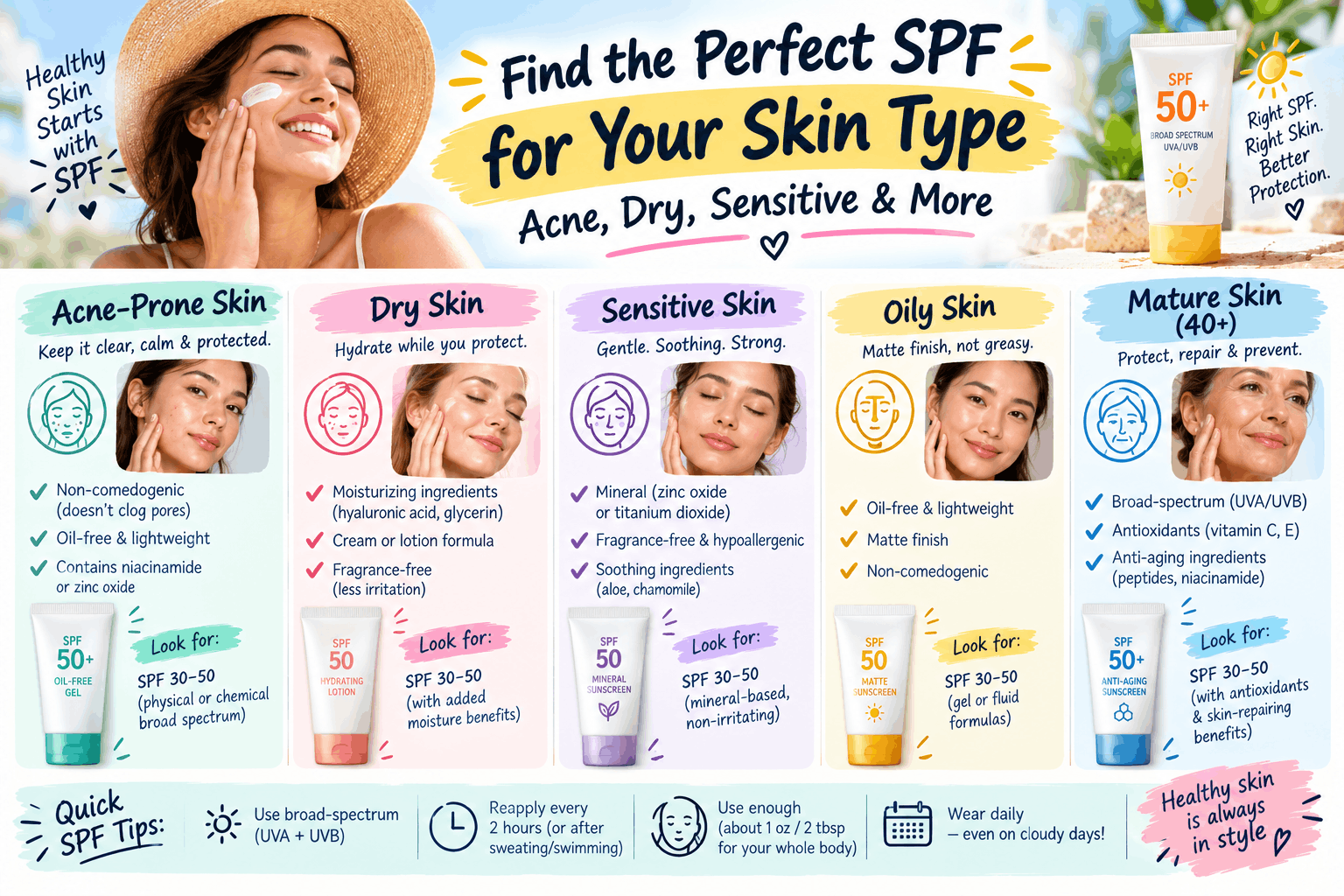
Practical Rules for Precision Sunscreen Selection
When selecting or customizing a photoprotective formulation based on your skin profile, use these actionable rules:
- For Melasma, Chronic Erythema, and Skin Prone to Pigmentation: Always prioritize an inorganic or hybrid sunscreen with documented iron oxide tinting. Clear, transparent formulas rarely shield against the visible light spectrum that drives long-term pigment production.
- For True Barrier Disruption or Neurogenic Stinging: Look for formulas based entirely on non-nano Zinc Oxide (12% to 20%). Zinc oxide carries natural soothing, anti-irritant properties and generates negligible heat on the skin compared to non-encapsulated organic filters.
- For Oily, Congestion-Prone Skin: Select fluid suspensions featuring volatile carrier fluids (like isododecane) with matting agents (silica, methyl methacrylate crosspolymer). Ensure the formula is free of high-melting-point fatty alcohols (like cetyl or stearyl alcohol) that can solidify in sebum-rich follicular infundibula under sweat and heat.
The Empirical Guide to Face Oils: Lipid Profiles, Comedogenicity, and Lab-Tested Efficacy
Facial oils remain one of the most misunderstood categories in modern skincare. They are frequently lauded by clean-beauty proponents as a universal, all-natural cure for barrier issues, while simultaneously vilified by acne specialists as guaranteed pore-clogging agents. Both perspectives miss the underlying science. A pure plant oil is not a single, homogeneous entity; it is a complex, chemically diverse mixture of free fatty acids, triglycerides, sterols, squalene, and fat-soluble antioxidants.
The biological impact of a face oil depends entirely on its specific lipid chemistry—most importantly, the ratio between Linoleic Acid (an Omega-6 polyunsaturated fatty acid) and Oleic Acid (an Omega-9 monounsaturated fatty acid).
The Linoleic vs. Oleic Ratio: Cutaneous Mechanics
Clinical lipid analyses have repeatedly revealed a critical biological pattern: individuals suffering from persistent acne vulgaris and follicular congestion consistently exhibit lower concentrations of linoleic acid within their surface sebum. When sebum is depleted of linoleic acid, the sebaceous lipids become unusually thick and viscous. This deficient sebum irritates the follicular epithelium, causing hyperkeratinization—the retention of dead skin cells inside the pore—which produces a microcomedone.
Applying high-linoleic oils helps fluidize this congested sebum pool, calming hyperkeratosis and stabilizing barrier performance. Conversely, high-oleic oils are rich, deeply emollient, and slow to absorb. While oleic acid excels at softening dense, thickened, chronically dry stratum corneum, it acts as a chemical penetration enhancer by fluidizing intercellular lipid membranes. In skin prone to breakouts, high concentrations of oleic acid can compromise the barrier, leading to increased follicular inflammation and clogged pores.
The Truth About Comedogenicity Scales
Before examining individual oils, we need to dismantle the standard “comedogenicity rating” (the 0 to 5 scale) frequently cited across the beauty industry. This scale was developed in the mid-to-late 20th century using the Rabbit Ear Assay, which involved applying high concentrations of test substances directly into the inner ear canal of rabbits over several weeks.
The rabbit ear canal is vastly more sensitive and hyper-reactive than human facial skin. Many ingredients that produced rapid follicular hyperkeratosis in the rabbit ear model are completely non-comedogenic when applied to human facial tissue at real-world consumer concentrations. Modern cosmetic science relies instead on human repeat insult patch testing (HRIPT) and non-invasive follicular extraction methods to evaluate true comedogenicity in vivo. When selecting plant oils, evaluate the lipid profile itself rather than arbitrary numbers from an outdated animal test.
5 Face Oils Evaluated by Lipid Chemistry and In-Vivo Testing
1. Plant-Derived Squalane (Hydrocarbon, Not a Triglyceride)
- Dominant Component: 100% Saturated hydrocarbon (hydrogenated squalene).
- Biochemical Profile: While squalene is a natural component of human sebum (making up roughly 12% to 15% of our endogenous surface lipids), its unsaturated form oxidizes rapidly into squalene peroxide, a potent cause of comedones and inflammation. Squalane is fully hydrogenated, rendering it completely stable against oxidation from light and air.
- Lab-Tested Performance: Clinically proven to be exceptionally biocompatible, non-irritating, and effectively non-comedogenic across human trials. It integrates seamlessly into the intercellular lipid matrix of the stratum corneum without altering the skin’s natural linoleic-to-oleic balance.
- Best Suited For: Sensitive, reactive, or acne-prone skin that cannot tolerate standard triglycerides; patients suffering from perioral dermatitis or seborrheic dermatitis (since it does not serve as a carbon food source for Malassezia yeast species).
2. Rosehip Seed Oil (Rosa canina / Rosa rubiginosa)
- Dominant Component: Linoleic Acid (approx. 40–54%), Alpha-Linolenic Acid (approx. 20–35%), Oleic Acid (approx. 12–16%).
- Biochemical Profile: Highly polyunsaturated dry oil. Naturally rich in trans-retinoic acid (tretinoin) derivatives at naturally occurring, trace concentrations, along with high levels of tocopherols and carotenoids.
- Lab-Tested Performance: Demonstrates high efficacy in reducing post-inflammatory erythema (PIE) and accelerating barrier recovery after micro-injuries. Absorbs rapidly into the skin with virtually zero greasy residue. Due to its high unsaturation, raw rosehip oil has a shorter shelf life and must be protected from light and heat to prevent oxidation.
- Best Suited For: Post-inflammatory hyperpigmentation, combination skin prone to breakout development, and mature, sun-damaged skin showing signs of photoaging.
3. Golden Jojoba Oil (Simmondsia chinensis)
- Dominant Component: Liquid Wax Esters (Gadoleic and Erucic acids, bounded to long-chain fatty alcohols).
- Biochemical Profile: Technically not a true triglyceride oil, jojoba is a liquid wax ester that mirrors human sebum’s native wax ester profile more closely than any other botanical substance.
- Lab-Tested Performance: Demonstrates an adaptive regulatory effect. Because its physical structure resembles human sebum, it can signal to the follicular pore to temper excessive lipid production via surface feedback mechanisms. In human trials, it exhibits exceptional stability against rancidity and oxidative breakdown, acting as an effective anti-inflammatory emollient.
- Best Suited For: Excessively oily skin, enlarged pores, combination skin, and mild, uninfected comedonal acne.
4. Virgin Cold-Pressed Marula Oil (Sclerocarya birrea)
- Dominant Component: Oleic Acid (approx. 70–78%), Linoleic Acid (approx. 4–7%).
- Biochemical Profile: Monounsaturated heavy lipid. High in natural polyphenols, procynadins, and vitamins C and E, but structurally dominated by monounsaturated oleic acid.
- Lab-Tested Performance: In human barrier-function trials, marula provides deep emollience and forms a durable protective layer on severely depleted stratum corneum. However, its high concentration of oleic acid means it easily disrupts the delicate lipid balance of acne-prone skin, consistently triggering follicular impactions in individuals prone to congestion.
- Best Suited For: Post-menopausal xerosis, severe environmental barrier collapse (such as windburn or sub-zero climates), and strictly dry, non-acne-prone skin types lacking native sebum.
5. Black Cumin Seed Oil (Nigella sativa)
- Dominant Component: Linoleic Acid (approx. 55–60%), Oleic Acid (approx. 20–24%), Thymoquinone (approx. 1–2%).
- Biochemical Profile: A pharmacologically active, aromatic therapeutic oil. Its primary clinical component is thymoquinone, a potent bioactive compound known for robust antimicrobial, anti-inflammatory, and wound-healing benefits.
- Lab-Tested Performance: Controlled clinical trials assessing Nigella sativa have shown meaningful reductions in Cutibacterium acnes counts and associated inflammatory papules. It acts as both a restorative lipid and an active antimicrobial agent, though its volatile aromatic constituents mean patch testing is essential for ultra-sensitive skin.
- Best Suited For: Chronic inflammatory acne, cystic-prone combination skin, and folliculitis.
Application Method: Emulsion Integration vs. Pure Occlusion
A common mistake in skin routines is treating facial oil as a hydrating product. Oils contain zero water and therefore cannot hydrate the skin. True hydration requires the addition of water to the tissue, typically driven by polar humectants (glycerin, low-molecular-weight hyaluronic acid, panthenol, sodium PCA).
Face oils function strictly as emollients (smoothing the micro-cracks between flaking skin cells) and, to varying degrees, as light occlusives (forming a hydrophobic shield that physically slows the evaporation of water).
To maximize the clinical efficacy of any facial lipid without triggering surface irritation:
- Always Apply Over Water: Never massage a facial oil onto bone-dry skin. Apply it directly over a water-dense essence, hydrating toner, or humectant serum while the epidermis is still damp.
- Use the “Micro-Drop” Emulsification Technique: Instead of applying half a dropper of pure oil directly onto your face, place 2–3 drops into the palm of your hand, add a pump of your favorite humectant moisturizer, blend them together in your palms to form a fresh emulsion, and press the mixture into the skin. This improves absorption and ensures uniform distribution across the barrier.
- Understand Routine Layering: If using a multi-step routine, oil should always be applied as your second-to-last step at night (before or blended with a heavy sleeping cream) and never directly under morning sunscreen. Applying an oil immediately beneath an SPF product can break down the sunscreen’s protective film-forming polymers, punching microscopic holes in your UV shield.
Building a Precision Regimen: The Synergy Protocol
Integrating modern diagnostics, custom photoprotection, and targeted lipid chemistry requires a straightforward, practical routine. Here is an evidence-based daily framework that balances these interventions:
The Precision Morning Routine (Defense & Photoprotection)
- Gentle Cleanse: Non-stripping, water-soluble gel or milk cleanser. Avoid high-pH traditional soaps that disrupt the acid mantle.
- Targeted Aqueous Treatment: Water-based serums targeting specific concerns (e.g., L-ascorbic acid or azelaic acid for pigmentation; ectoin and panthenol for redness).
- Lightweight Emulsion: A minimalist moisturizer containing barrier-identical ceramides if the skin requires extra comfort. Skip this step if your sunscreen provides adequate hydration on its own.
- Bespoke / Filter-Targeted Photoprotection: Apply a full, uncompromised 2 mg/cm² layer of customized or concern-specific sunscreen. If treating melasma or erythema, ensure the product contains iron oxides. Do not apply face oils at this point.
The Precision Evening Routine (Reset & Lipid Replenishment)
- First Cleanse: A high-linoleic cleansing oil or gentle micellar fluid to thoroughly dissolve water-resistant sunscreen filters, iron oxides, and airborne pollutants.
- Second Cleanse: A mild, pH-balanced foaming or cream wash to leave the skin surface clean and balanced.
- Dynamic State Treatment: Targeted clinical actives (such as prescription retinoids, salicylic acid, or copper peptides). Alternate these treatments across nights if your barrier is easily compromised.
- Deep Aqueous Hydration: A humectant-dense essence or hydrating serum (featuring glycerin, beta-glucan, or hyaluronic acid).
- Targeted Lipid Layer: While the skin is still damp from your humectants, press 2–3 drops of your chosen facial oil (selected specifically for its linoleic/oleic balance) onto the skin, or blend it directly into your evening barrier cream to lock in hydration and support overnight barrier repair.
Frequently Asked Questions
Can an AI skin diagnostic app accurately detect skin cancer or melanomas?
No. Consumer-facing smartphone AI apps are not cleared or capable of replacing clinical dermoscopy, biopsies, and pathological examinations performed by a physician. While some specialized diagnostic algorithms assist clinicians in research settings, standard consumer phone apps cannot analyze subterranean cellular morphology or structural atypicality. Any new, changing, irregularly pigmented, bleeding, or non-healing skin lesion must be evaluated immediately in person by a board-certified dermatologist.
Why does mineral zinc oxide dry out my skin, and how can custom formulations fix it?
Zinc oxide is an effective astringent that naturally reduces excess surface sebum. In traditional high-percentage mineral sunscreens, this astringency can dehydrate dry or barrier-compromised skin, causing tightness and flaking. Modern custom formulations address this by surface-treating the zinc oxide particles with dimethicone, jojoba esters, or stearic acid. This treatment prevents the mineral from directly pulling moisture from the stratum corneum, while suspending it in a base rich in humectants and ceramides to keep skin comfortable.
Can I use a pure face oil instead of a daily moisturizer?
No. A facial moisturizer is an emulsion combining water, humectants (water-binding agents), emollients (skin-smoothing agents), and occlusives (water-trapping agents). A pure face oil provides only emollients and occlusives—it contains zero water. If you apply oil to dehydrated skin without adding humectants, your skin will remain depleted of water beneath that protective oil layer. For true barrier health, the skin requires both water and lipids.
Will applying face oil before sunscreen lower its SPF protection?
Yes. Sunscreens rely on specialized polymers to form an unbroken, even protective film across the peaks and valleys of the skin. Pure face oils act as lipophilic solvents; applying an oil right before your sunscreen will break down those film-forming agents, leading to an uneven, patchy protective layer that lets UV rays slip through. Keep your facial oils in your evening routine, or blend them exclusively with your nighttime moisturizer.
How long does it take to see measurable results after shifting to a lipid-balanced routine?
The standard turnover cycle for keratinocytes in the human stratum corneum is roughly 28 days (and can extend to 40+ days in mature skin). While immediate comfort and reduced trans-epidermal water loss can often be felt within 48 to 72 hours of introducing compatible lipids, true structural improvements in barrier resilience, pore clearance, and reduced micro-erythema typically take two to three complete turnover cycles—roughly 8 to 12 weeks of consistent care.