
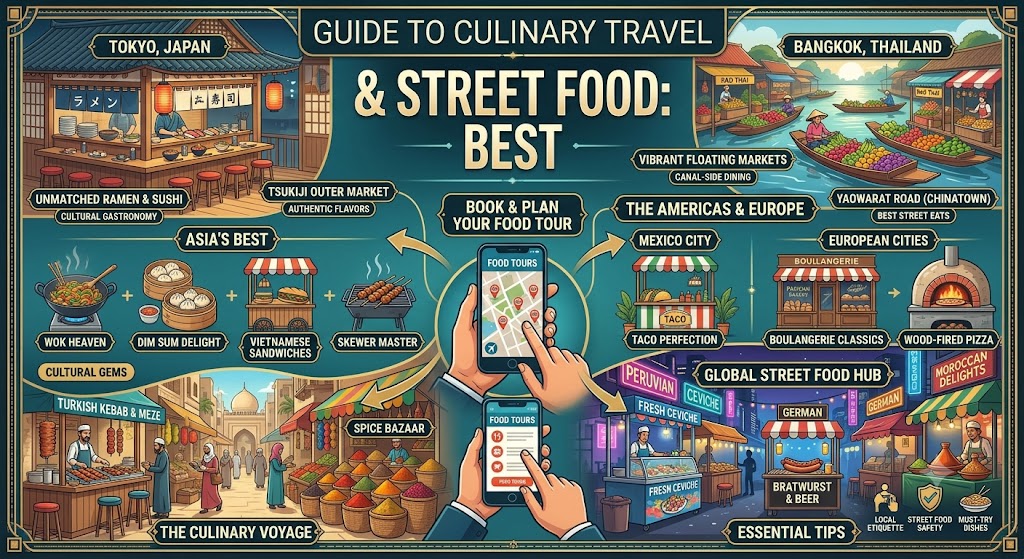
Guide to Culinary Travel & Street Food: Best
Embarking on a culinary adventure is more than tasting dishes; it’s about immersing yourself in the rhythms of local life. Because street food is often the most authentic expression of a culture, a well-planned trip can transform your palate and perspective. Therefore, this guide will equip you with the knowledge, tools, and mindset to navigate the world’s most vibrant food streets.
Why Street Food Is the Soul of Culinary Travel
Street food offers an unfiltered window into a city’s traditions. Consequently, each bite tells a story of heritage, geography, and community. Moreover, the affordability of street stalls invites travelers of all budgets to indulge in culinary diversity.
In contrast to fine-dining establishments, street vendors often use generational recipes that have survived for centuries. Therefore, sampling street food is like tasting a living history book. Because you’re engaging directly with the cooks, you can ask questions, learn cooking tips, and experience the genuine spirit of the locale.
Planning Your Street Food Adventure
1. Map Your Culinary Interests
Begin by identifying the flavors that excite you-spicy, sweet, savory, or umami. Furthermore, research which cities are renowned for those tastes. For example, if you love fermented flavors, Tokyo’s izakaya stalls or Seoul’s tteokbokki stands will be your playground.
2. Schedule Flexibility
Street food thrives in the late afternoon and early evening when vendors are at their freshest. Consequently, avoid rigid itineraries that clash with peak street-food hours. Instead, allow a few hours each day for spontaneous exploration.
3. Pack Smart Essentials
- Reusable water bottle – stay hydrated and eco-friendly.
- Travel-sized hand sanitizer – keep your hands clean before meals.
- Comfortable walking shoes – street food adventures often involve long strolls.
Additionally, consider investing in quality travel accessories that make your journey smoother.
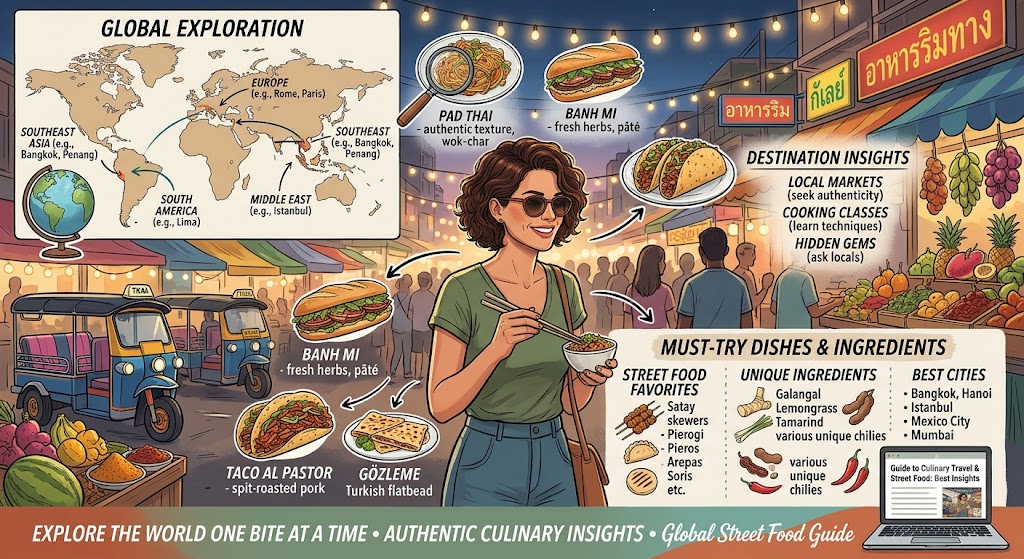
Top Street Food Destinations Around the World
Bangkok, Thailand – The City of Smiles and Street Food
Bangkok’s night markets, such as Yaowarat in Chinatown, showcase dishes like pad thai and som tam. Consequently, you’ll find a fusion of sweet, sour, and spicy flavors that keep your taste buds dancing. Because the vendors often use fresh herbs and local ingredients, the experience feels both vibrant and sustainable.
Mexico City, Mexico – A Fiesta of Flavors
At La Merced, you’ll encounter tacos, tamales, and elote (grilled corn). In addition, the city’s street food scene is deeply rooted in pre-Hispanic traditions. Therefore, sampling these dishes offers a direct link to Mexico’s ancient culinary heritage.
New Orleans, USA – Southern Soul Food on the Streets
From beignets to po’boys, New Orleans’ street vendors celebrate the city’s Creole and Cajun roots. Consequently, you’ll taste the smoky, spicy, and hearty flavors that define Southern cuisine. Because the food is often prepared on the spot, you’ll enjoy the freshest versions of these classics.
Seoul, South Korea – A Street Food Wonderland
In the bustling Gwangjang Market, try kalguksu (hand-made noodles) and hotteok (sweet pancakes). Moreover, the market’s diverse stalls reflect the city’s dynamic culinary evolution. Therefore, Seoul offers a balanced mix of tradition and innovation.
Lisbon, Portugal – Crispy Delights by the River
Street stalls along Rua Augusta serve pastéis de nata and bifana sandwiches. Additionally, the proximity to the Tagus River ensures that many vendors use locally sourced seafood. Consequently, you’ll enjoy the freshest flavors of Portugal’s coastal cuisine.
Essential Gear for the Street Food Explorer
While the food itself is the star, having the right gear enhances safety and comfort. Therefore, consider the following items:
- Portable charger – keep your phone alive for navigation and photos.
- Compact reusable bag – reduce plastic waste while carrying souvenirs.
- Travel-friendly utensils – a small fork or chopsticks for quick meals.
Moreover, a well-chosen set of kitchen appliances can be handy if you decide to experiment with street-food recipes back home. Because the right tools make cooking easier, you’ll be able to recreate exotic flavors whenever you wish.
Safety and Hygiene Tips for Global Foodies
While street food is enticing, it’s crucial to prioritize health. Consequently, always observe how vendors prepare and store food. If the cooking area appears clean and the ingredients look fresh, you’re more likely to enjoy a safe meal.
Additionally, use hand sanitizer before eating, especially if you’re traveling in regions with variable water quality. For instance, in some Asian cities, tap water is not potable, so rely on bottled water for brushing and rinsing.
Because you’re traveling, carry a small first-aid kit that includes antihistamines and rehydration salts. In the event of a stomach upset, these supplies can provide immediate relief.
How to Engage with Local Vendors
Street vendors are often proud of their craft. Therefore, showing genuine interest can lead to deeper interactions. For example, ask about the origin of a dish or the special spice blend they use.
Moreover, learning a few local phrases-such as “Thank you” or “How much?”-can foster goodwill and sometimes unlock discounts. Because many vendors appreciate the effort, you’ll likely receive tips on the best stalls or secret recipes.
In addition, consider paying a bit more than the listed price if you’re satisfied with the meal. This gesture shows respect for the vendor’s labor and encourages continued high-quality offerings.
Beyond the Plate: Cultural Insights Through Street Food
Street food is a living classroom where you can learn about customs, festivals, and social dynamics. Consequently, the timing of certain stalls-such as those selling tacos al pastor during Día de los Muertos-reflects cultural celebrations.
Furthermore, the communal nature of street eating-sharing plates with strangers-highlights the social fabric of a community. Because you’re participating in this shared experience, you gain a deeper appreciation for the local way of life.
Additionally, many street vendors incorporate storytelling into their service. Listening to their narratives enriches your understanding of the region’s history and values.
FAQs
1. Is street food safe for travelers with dietary restrictions?
Yes, but exercise caution. Look for vendors who use fresh ingredients and clear cooking methods. If you’re vegan, ask about plant-based options; many vendors adapt dishes quickly.
2. How can I avoid foodborne illnesses?
Follow these steps: observe cleanliness, choose vendors with high turnover, use hand sanitizer, and avoid raw or undercooked foods unless you’re sure of the preparation.
3. What should I bring for a street food trip?
Essential items include a reusable water bottle, a small first-aid kit, a portable charger, comfortable footwear, and a compact travel bag for souvenirs.
4. Can I use my credit card at street stalls?
Many vendors accept mobile payments or cash. Therefore, carry some local currency and a small amount of credit or debit card for emergencies.
5. How can I support sustainable street food practices?
Choose vendors that use biodegradable packaging, source local ingredients, and practice waste reduction. Additionally, avoid single-use plastics whenever possible.
Conclusion
Street food is more than a meal; it’s a passport to a city’s soul. By planning thoughtfully, equipping wisely, and engaging respectfully, you’ll unlock unforgettable culinary experiences. Because the world’s streets are a mosaic of flavors, the next adventure is just a bite away.
One thought on “Guide to Culinary Travel & Street Food: Best”
Comments are closed.