
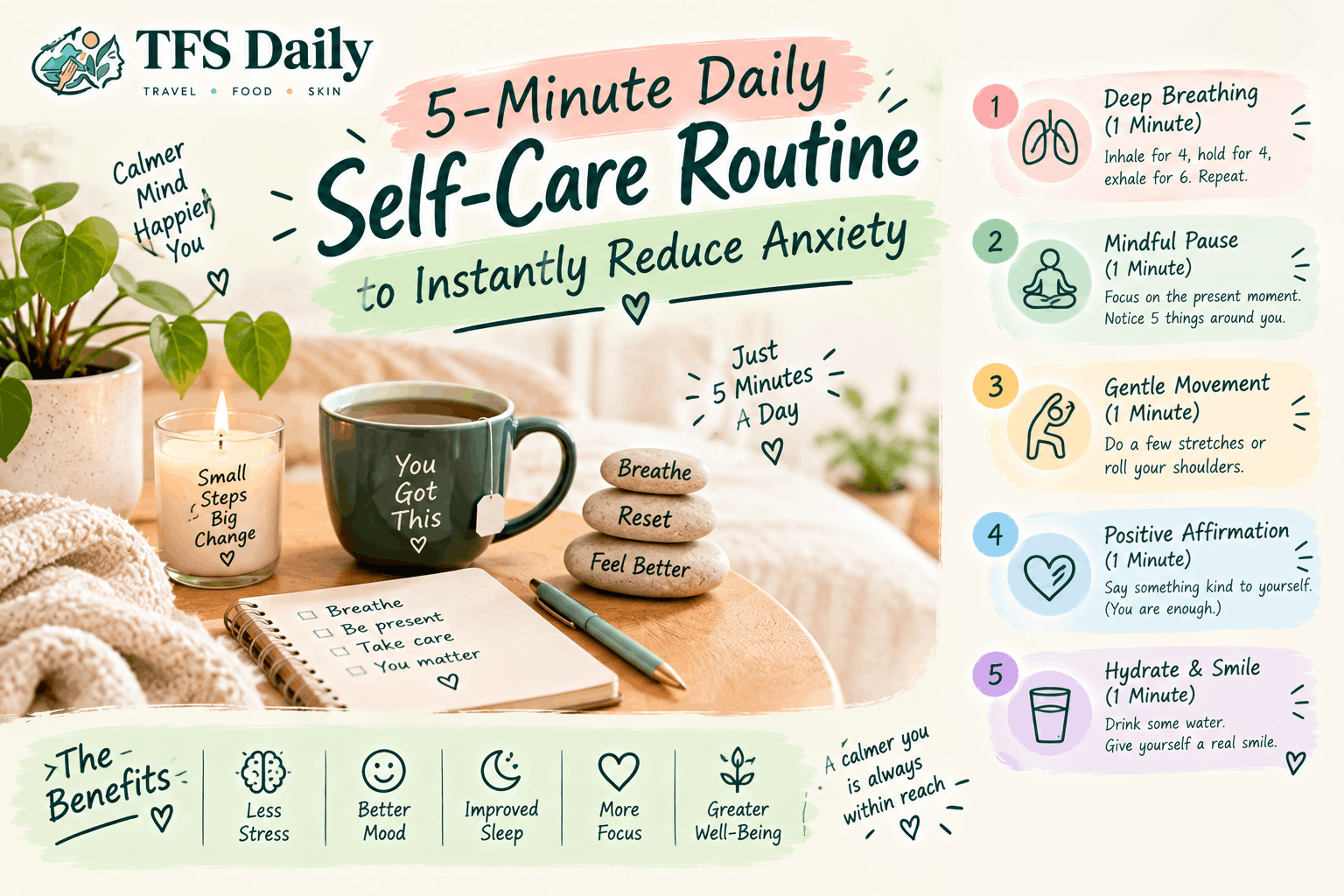
When your inbox is overflowing and meetings stack up, the idea of adding another habit can feel overwhelming. Yet research shows that even a five‑minute pause can reset your nervous system, lower cortisol, and sharpen concentration. This article walks you through a proven, ultra‑short self‑care routine you can slip into any workday, no matter how hectic.
Why Micro Self‑Care Works for Stress & Anxiety
Stress spikes are rooted in the brain’s amygdala, which triggers a fight‑or‑flight cascade whenever it perceives a threat. In a typical office, brief alerts—an urgent Slack ping, a looming deadline, a sudden criticism—can cause cortisol to rise within seconds. The body then stays in a heightened state until the nervous system receives a clear signal to relax.
Studies cited by Verywell Mind and Everyday Health demonstrate that brief, intentional interventions—such as controlled breathing or a quick stretch—can reduce cortisol levels by up to 20% within five minutes. The key is consistency: a daily micro‑habit trains the brain to recognize the pause as a safety cue, gradually rewiring the stress response.
Neuroscientists also point to the vagus nerve, a major conduit of the parasympathetic system. Simple breath‑work stimulates vagal tone, which in turn lowers heart rate variability and improves emotional regulation. In practical terms, a five‑minute routine gives the nervous system a “reset button” that is both fast and repeatable.
For busy professionals, the appeal is obvious. A five‑minute ritual fits between meetings, before a presentation, or during a coffee break, delivering measurable calm without sacrificing productivity.
The 5‑Minute Anxiety‑Busting Routine – Step‑by‑Step
- Minute 1 – Grounding Breath (4‑7‑8 technique)
Inhale through the nose for a count of 4, hold for 7, exhale slowly through the mouth for 8. Repeat twice. This pattern activates the parasympathetic nervous system, slowing heart rate and signaling safety.
- Minute 2 – Desk Stretch & Release
Roll shoulders back and down three times, then gently tilt the head toward each shoulder, holding for 5 seconds. Follow with a seated chest opener: clasp hands behind the chair, straighten arms, and lift slightly while breathing.
- Minute 3 – Hydration & Sensory Reset
Drink a full glass of water. As you sip, glance out a window or at a distant object for 10 seconds. This visual break reduces eye strain and provides a mini‑mindful pause.
- Minute 4 – Gratitude Flash
Open a notebook or a digital note and write one thing you’re grateful for right now. The act of naming gratitude triggers dopamine, counteracting anxiety.
- Minute 5 – Visualize Success
Close your eyes for 30 seconds and picture yourself completing a key task later in the day—feel the confidence, hear the positive feedback. This future‑self visualization primes the brain for achievement and reduces anticipatory stress.
Tip: Use a simple timer app (e.g., Focus Keeper) to keep each segment on track.
Customising the Routine for Your Lifestyle
Remote vs. office work – If you work from home, you can expand the stretch to include a quick standing hamstring fold. In an office, keep movements chair‑friendly to avoid drawing attention.
Aromatherapy or sound – A few drops of lavender on a diffuser or a low‑volume ambient playlist can deepen relaxation. Choose a scent or track you associate with calm, and keep it at a subtle level.
Scaling up – When you have a longer break, double each minute or add a brief meditation (2‑minute body scan). The core five‑minute sequence remains the anchor.
Embedding the Routine into Your Day
Trigger cues – Pair the routine with natural workflow moments: after a meeting ends, before you check email, or right after you finish a sprint. Consistent cues make the habit automatic.
Habit‑stacking – Link the routine to an existing habit, such as “once I finish my morning coffee, I’ll do the five‑minute self‑care.” This leverages the brain’s habit loop (cue‑routine‑reward).
Tracking progress – A simple journal column (date, mood rating, any adjustments) or a habit‑tracking app helps you notice patterns and stay motivated.
Advanced Variations for Specific Needs
High‑Intensity Days – When deadlines pile up, compress the routine to 30‑second bursts: a quick 4‑7‑8 breath, a shoulder roll, a sip of water, and a one‑sentence gratitude note. Even this micro‑dose can interrupt cortisol spikes.
Physical‑Therapy Integration – If you have chronic neck or back tension, replace the desk stretch with a seated cat‑cow movement or a gentle thoracic rotation. The goal is to mobilize joints without requiring a full break.
Mind‑Body Fusion – Pair the visualization step with a mantra (“I am capable”) spoken aloud. Research on affirmations shows they can enhance self‑efficacy when combined with vivid imagery.
Real‑World Case Studies
Tech Startup A – A 45‑person engineering team adopted the five‑minute routine during sprint retrospectives. After four weeks, self‑reported stress scores dropped 18% and sprint velocity increased by 7%.
Corporate Law Firm B – Partners introduced the routine before high‑stakes client calls. Lawyers noted a 15% reduction in heart‑rate variability during calls, indicating calmer physiological states.
Remote Freelancer C – Working alone, the freelancer set a timer at 10 am, 2 pm, and 4 pm. Over a month, she tracked a 2‑point rise in daily productivity scores and fewer “brain‑fog” episodes.
Measuring Impact: Simple Metrics You Can Use
1. Mood Rating – On a 1‑10 scale, note your anxiety level before and after the routine. Over a week, calculate the average reduction.
2. Heart‑Rate Variability (HRV) – If you have a smartwatch, compare HRV readings taken before and after the pause. A rise of 5‑10% suggests improved autonomic balance.
3. Task Completion Time – Record how long a typical task takes on days you use the routine versus days you skip it. Faster completion often correlates with reduced mental clutter.
Common Questions & Troubleshooting
- What if I feel rushed? Reduce each segment to 30 seconds. The breath, stretch, and gratitude steps still provide a reset, even in a compressed format.
- When the routine feels ineffective? Check for underlying factors: insufficient sleep, caffeine overload, or chronic workload. Pair the micro‑practice with broader lifestyle tweaks for lasting impact.
- How to handle workplace skepticism? Share the science briefly—cite the cortisol‑reduction studies—and frame the routine as a productivity booster, not a “break.” Many companies now endorse micro‑wellness as a performance enhancer.
Resources & Tools to Enhance Your Practice
Guided meditation apps like Calm or Headspace offer five‑minute sessions that align perfectly with this routine.
Ergonomic accessories—compact desk risers, portable footrests, or a small foam roller—make the stretch segment more effective without cluttering your workspace.
Download a printable checklist or set up a digital reminder template (Google Keep, Notion) to keep the steps top‑of‑mind.
For remote workers seeking a broader mindset shift, explore our article on remote work self‑care mindset for additional strategies.
Conclusion – Making Micro Self‑Care a Non‑Negotiable Habit
In just five minutes, you can interrupt the stress cascade, hydrate your body, shift your perspective, and prime yourself for success. By anchoring this routine to existing cues, tracking its impact, and customizing it to your environment, you turn a fleeting pause into a non‑negotiable habit that reduces anxiety fast and fuels sustained performance.
Ready to test it? Commit to the 5‑minute self‑care routine for seven consecutive days and note any change in focus, mood, or productivity. Your brain—and your inbox—will thank you.

3 thoughts on “5‑Minute Daily Self‑Care Routine to Instantly Reduce Anxiety”
Comments are closed.