
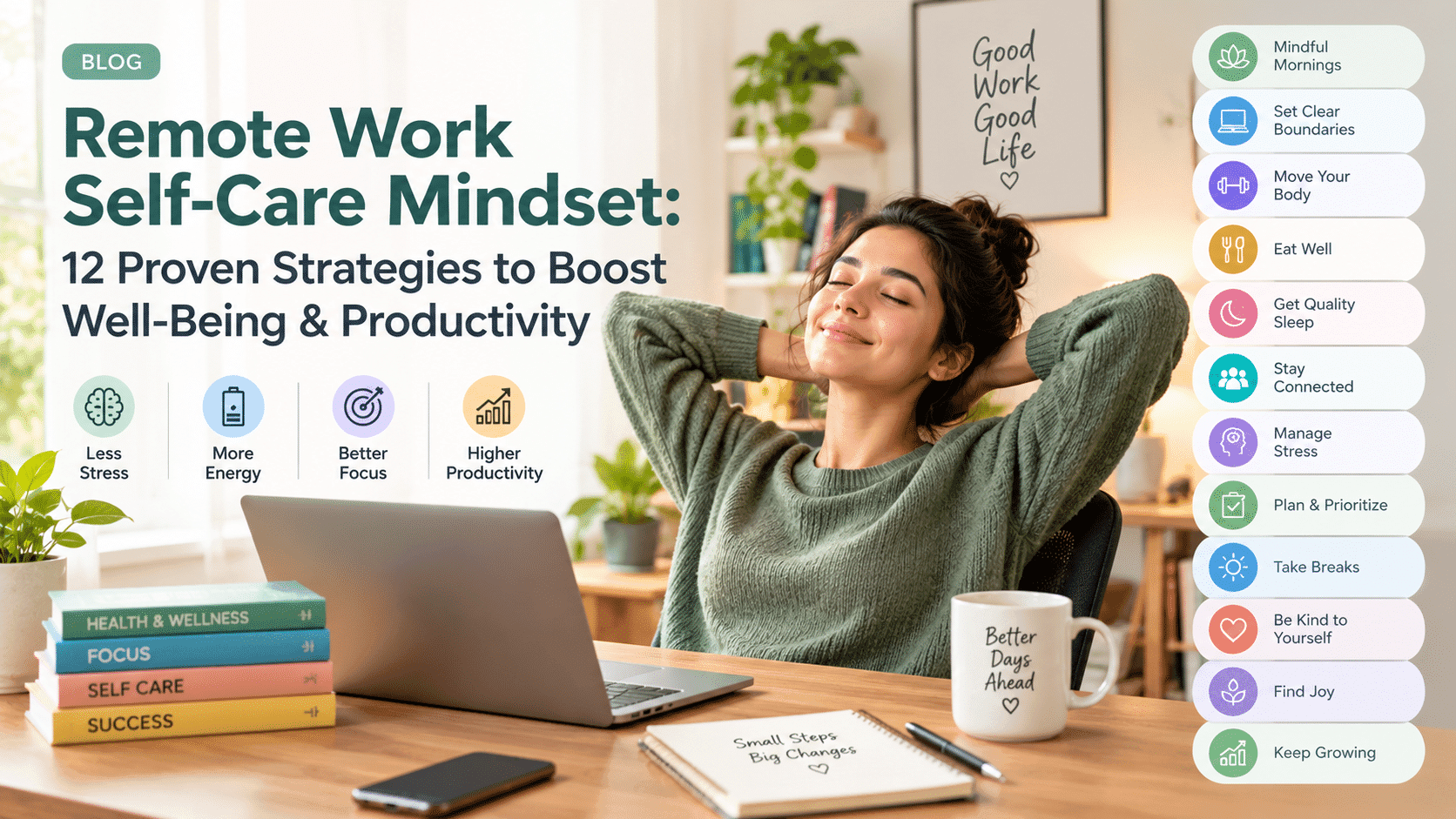
Why Remote Workers Need a Dedicated Self‑Care Mindset
Remote work has exploded over the past decade, but the freedom it promises often masks a hidden epidemic: burnout. The World Health Organization estimates that over 30% of remote employees report chronic stress, while a Stanford University report found that virtual workers are 2.5 times more likely to experience “always‑on” fatigue than their office‑based peers. This isn’t just a feeling—it’s a measurable decline in cognitive performance, immune function, and long‑term health.
The psychology of hustle culture thrives in digital spaces. When a coffee chat turns into a 3‑hour video call, the line between professional ambition and personal exhaustion blurs. Remote workers frequently replace the physical commute with a mental sprint, sacrificing the natural reset that a walk to the office used to provide. Over time, the cumulative effect erodes focus, creativity, and even the joy of work.
Research shows that employees who embed a self‑care mindset into their daily routine see a 20% increase in productivity and a 15% reduction in sick days. In other words, protecting your mental and physical health isn’t a luxury—it’s a strategic advantage for any remote professional who wants to sustain high performance.
12 Actionable Self‑Care Strategies for Remote Professionals
Create a Physical Workspace Boundary
Designate a specific area in your home solely for work. A clear visual cue signals to your brain that it’s time to focus, and when you step away, you’re truly leaving work behind. Even a simple room divider or a dedicated desk can reduce the mental spill‑over that fuels burnout.
Schedule Micro‑Breaks with the 5‑Minute Rule
Every 60 minutes, stand up, stretch, or look out a window for five minutes. Research from the University of Illinois shows that micro‑breaks improve blood flow and reset attention, preventing the dip in performance that typically occurs after 90 minutes of continuous screen time.
Implement Digital Sunset Rituals
Turn off work‑related notifications at a set hour each evening. A “digital sunset”—perhaps 30 minutes before bedtime—helps lower cortisol levels, improves sleep quality, and reinforces the boundary between work and personal life.
Adopt Movement‑Based Breathing Techniques
Combine light movement with diaphragmatic breathing. A 3‑minute routine of seated cat‑cow stretches paired with 4‑7‑8 breathing can lower heart rate and clear mental fog, making it easier to transition between tasks.
Use the Pomodoro Method with Wellness Checkpoints
Traditional Pomodoro cycles (25 min work, 5 min break) can be enhanced by inserting a quick wellness checkpoint—ask yourself: “Am I hunched? Hydrated? Mentally engaged?” This tiny self‑audit keeps posture and mental stamina in check.
Set Clear Work‑Time and Personal‑Time Blocks
Block out your calendar not only for meetings but also for personal activities—exercise, meals, family time. Treat these blocks as non‑negotiable appointments, just like a client call.
Leverage Ergonomic Accessories for Posture Health
Invest in a supportive chair or a standing desk. Brands like autonomous and Fully offer adjustable solutions that reduce back strain and keep energy levels stable throughout the day.
Practice Daily Gratitude Journaling
Spend two minutes each morning noting three things you’re grateful for. This simple habit rewires the brain toward positivity, counteracting the negativity bias that remote isolation can amplify.
Engage in Virtual Coworking Accountability
Join a Zoom or Discord room where peers work side‑by‑side silently. The subtle social pressure of shared focus boosts accountability without the distractions of a physical office.
Integrate Mindful Nutrition Planning
Plan meals that combine protein, fiber, and healthy fats to sustain steady glucose levels. Avoid the “snack‑while‑working” trap by preparing portioned snacks in advance.
Utilize Meditation or Grounding Apps
Guided meditation apps like Headspace or Calm provide 5‑minute grounding sessions that can be slotted between meetings, reducing anxiety and sharpening focus.
Conduct Weekly Mental‑Health Check‑Ins
Set aside 15 minutes each Friday to review your mood, stress scores, and energy levels. Use a simple rating system (1‑10) and note patterns. This data becomes the foundation for iterative improvement.
Tools, Resources, and Products to Support Your Self‑Care Routine
- Meditation apps: Headspace, Calm
- Task‑management platforms with break reminders: Todoist, Asana
- Ergonomic chairs and standing desks: autonomous, Fully
- Blue‑light filter glasses and screen dimmers
- Online therapy services: BetterHelp, Talkspace
Measuring Success: Tracking Your Self‑Care Progress
Quantify the impact of your new habits with three key metrics:
- Energy Levels: Rate your morning and afternoon vigor on a 1‑10 scale.
- Focus Duration: Track average uninterrupted work blocks using Pomodoro timers.
- Stress Scores: Use a quick self‑assessment or a wearable’s stress monitor.
Compile these data points in a simple spreadsheet or habit‑tracker template. Review weekly, look for trends, and adjust strategies—perhaps adding an extra micro‑break or swapping a coffee for a short walk.
Common Pitfalls and How to Overcome Them
Guilt Around Taking Breaks: Reframe breaks as “productivity boosters.” Evidence shows that intentional pauses improve output, so schedule them publicly in your calendar to legitimize them.
Over‑Reliance on Caffeine: Swap one cup of coffee for a glass of water with electrolytes. Gradual reduction prevents withdrawal headaches while keeping hydration optimal.
Isolation Fatigue: Counteract loneliness by scheduling regular virtual coffee chats or joining remote‑worker communities on Slack or Reddit.
Each obstacle requires a mindset shift—from “I must be constantly on” to “I am optimizing my energy for sustainable results.”
Future‑Proofing Your Remote‑Work Self‑Care Mindset
Hybrid work models are emerging, blending office days with remote flexibility. Adapt your self‑care routine by syncing on‑site and off‑site boundaries—use the same digital sunset, same micro‑break cadence, regardless of location.
Commit to continuous learning: attend webinars on mental‑health trends, read research on neuro‑productivity, and share insights with your remote network. A supportive community not only offers accountability but also surfaces fresh tools and perspectives.
By embedding these 12 strategies into your daily rhythm, you cultivate a resilient remote work self‑care mindset that protects against burnout, fuels creativity, and ultimately drives higher performance. Your future self will thank you.

3 thoughts on “Remote Work Self‑Care Mindset: 12 Proven Strategies to Boost Well‑Being & Productivity”