

Major life changes—whether it’s a new job, a move across the country, the arrival of a baby, or returning to school—can feel like emotional earthquakes. The good news is that a deliberately cultivated self‑care mindset can turn those tremors into manageable waves. In this guide we break down the psychology of transition, pinpoint the stressors that most people overlook, and walk you through five concrete steps you can start using today to stay calm, focused, and productive.
Understanding the Self‑Care Mindset in Transitional Periods
A self‑care mindset is more than a checklist of spa days; it is a mental framework that prioritizes your well‑being as a non‑negotiable foundation for every other goal. When you view self‑care as an ongoing attitude rather than an occasional treat, you give yourself permission to protect energy, set boundaries, and respond to stress with intention.
Psychologically, transitions trigger a surge of uncertainty, which activates the brain’s threat circuitry. Cortisol spikes, sleep can become fragmented, and decision‑fatigue sets in. Research from the Mayo Clinic shows that chronic stress during change can impair memory, lower immune function, and increase anxiety. Recognizing these effects early lets you intervene before the stress becomes a habit.
Identify Your Transition Stressors
Every transition has its own set of triggers. Below are the most common sources of stress for adults navigating change:
- Relocation: Packing logistics, unfamiliar neighborhoods, and the loss of familiar social anchors.
- New job: Learning curves, performance pressure, and establishing credibility among new colleagues.
- Parenthood: Sleep deprivation, identity shift, and balancing caregiving with personal goals.
- Returning to school: Academic workload, financial concerns, and time‑management challenges.
Use the quick self‑assessment checklist to pinpoint which of these resonates most with you:
- What time of day do you feel the most overwhelmed?
- Which physical sensations (tight chest, headaches) appear when you think about the change?
- Do you notice specific people or environments that amplify anxiety?
- What tasks do you consistently postpone, and why?
Write down your answers in a notebook or a digital note. Seeing the patterns on paper often reveals the hidden “stress hotspots” you can address directly.
Step 1: Mental Reset – Reframe Your Narrative
Mindfulness and Gratitude Exercises
Begin each morning with a three‑minute mindfulness pause. Sit upright, close your eyes, and simply observe your breath. When thoughts drift toward “what could go wrong,” gently label them (“worry”) and return to the inhale‑exhale rhythm. This practice reduces amygdala activation and creates a mental buffer against sudden stress spikes.
Follow the breath work with a gratitude burst: list three specific things you appreciate about the transition (e.g., “I have a supportive partner who helps with the move”). Gratitude rewires neural pathways toward positivity, making it easier to see opportunities rather than obstacles.
Brief Journaling Prompts for Clarity
Spend five minutes journaling with prompts such as:
- What is the biggest fear I have about this change?
- If I succeeded, what would my day look like in three months?
- Which small action can I take today to move toward that vision?
Writing forces abstract worries into concrete language, which reduces their power and uncovers actionable steps.
Step 2: Micro Self‑Care Habits That Stick
Micro‑habits are tiny, repeatable actions that require less than a minute of effort but compound into lasting resilience.
5‑Minute Breathing Routine
Box breathing—inhale 4 seconds, hold 4 seconds, exhale 4 seconds, hold 4 seconds—calms the nervous system in under five minutes. Do it before a stressful meeting or after a long commute.
Portable Stretch Series for Office or Home
Set a timer to stand every hour. Perform a quick sequence: neck rolls, shoulder shrugs, seated spinal twist, and calf raises. This routine improves circulation, reduces tension headaches, and signals to your brain that you’re taking a break.
Digital Detox Mini‑Breaks
Turn off notifications for 10 minutes after lunch. Use that window to stare out the window, sip water, or read a single paragraph of a book. Consistent mini‑detoxes prevent information overload and protect focus.
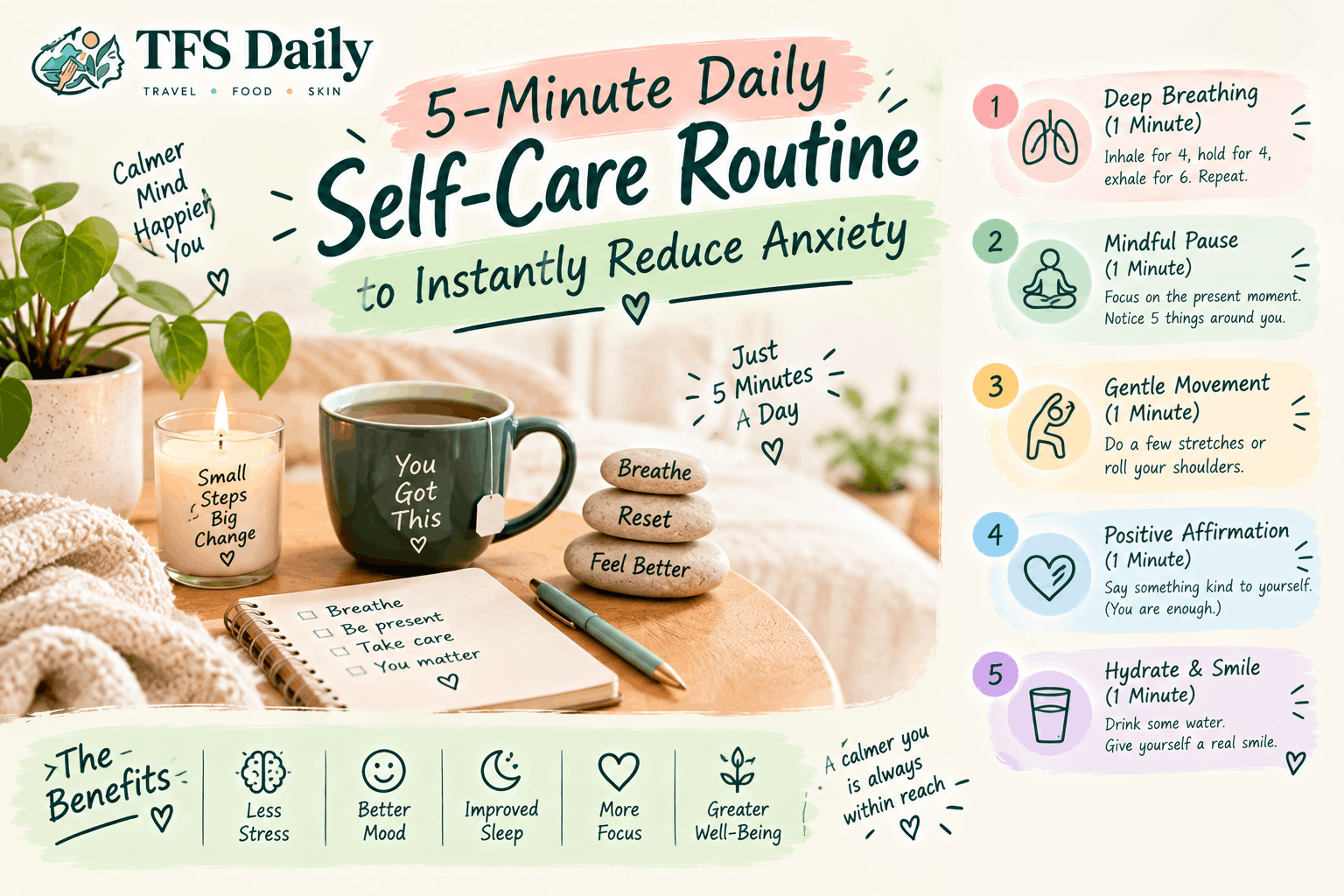
Looking for a ready‑made routine? Check out the 5‑Minute Daily Self‑Care Routine to Instantly Reduce Anxiety for a printable guide you can keep on your desk.
Step 3: Build a Support System
No one thrives in isolation. A robust support network supplies emotional validation, practical assistance, and accountability.
Enlist Friends, Family, or Coworker Accountability Partners
Identify one person per sphere (home, work, community) who can serve as a check‑in buddy. Share your micro‑habit goals and ask them to remind you when you slip. In return, offer to support their goals—mutual accountability boosts commitment.
Leveraging Online Communities and Forums
Forums such as Reddit’s r/selfimprovement or niche Facebook groups for new parents provide anonymity and a steady stream of tips. When you post a short “progress update,” you receive encouragement that reinforces the habit loop.
Step 4: Track, Reflect, Adjust
Tracking transforms vague intentions into measurable data. Choose a method that feels effortless—paper habit tracker, spreadsheet, or a mobile app.
Simple Habit‑Tracking Templates or Apps
Use a grid with days of the month across the top and habits down the side. Color a box each time you complete the habit. Apps like Habitica or Streaks send push reminders and gamify consistency.
Weekly Reflection Questions to Gauge Mindset Shift
At the end of each week, answer:
- Which micro‑habit felt most natural, and why?
- What unexpected stressor emerged, and how did I respond?
- Did my gratitude list grow in depth or breadth?
Documenting answers reveals trends and informs the next week’s adjustments.
Step 5: Sustain the Mindset Long‑Term
Transition periods eventually settle, but the self‑care mindset should evolve into a lifelong habit.
Seasonal Self‑Care Calendar
Map out quarterly themes:
- Spring – Renewal: focus on outdoor movement and decluttering.
- Summer – Energy: incorporate hydration challenges and sunrise meditation.
- Fall – Reflection: schedule weekly journaling retreats.
- Winter – Restoration: prioritize sleep hygiene and warm‑up stretches.
Aligning habits with seasonal cues makes them feel natural rather than forced.
Integrating Self‑Care into New Routines Post‑Transition
When the move is complete or the new job stabilizes, audit your daily schedule. Identify any “empty slots” that previously hosted transition‑specific tasks (e.g., packing). Replace them with self‑care slots—perhaps a 10‑minute walk before dinner or a nightly reading ritual.
For those who prefer a digital solution, consider the recommended habit‑tracking tool. It syncs across devices and offers pre‑built templates for transition periods.
Resources & Expert Insights
- Mayo Clinic: Their definition of self‑care emphasizes “activities that maintain physical, mental, and emotional health.”
- Verywell Mind: Articles on confidence and mental‑health toolboxes provide actionable worksheets you can adapt for transition stress.
- Stanford Report: Recent research on patient mindset training shows a 30% reduction in perceived stress when participants practice daily reframing techniques.
Conclusion – Your Personalized Self‑Care Blueprint
Life transitions are inevitable, but the way you experience them is a choice. By adopting a self‑care mindset, identifying stressors, and implementing micro‑habits backed by reflection and support, you create a resilient foundation that carries you through any change. Use the checklist, tracking templates, and seasonal calendar provided here to craft a personalized blueprint—one that you can revisit, tweak, and expand as new chapters unfold.
Ready to deepen your self‑care practice? Explore our guide on self‑care mindset for burnout prevention for advanced strategies that protect you during high‑pressure periods.

One thought on “Self‑Care Mindset for Life Transitions: A Step‑by‑Step Stress‑Relief Guide”
Comments are closed.