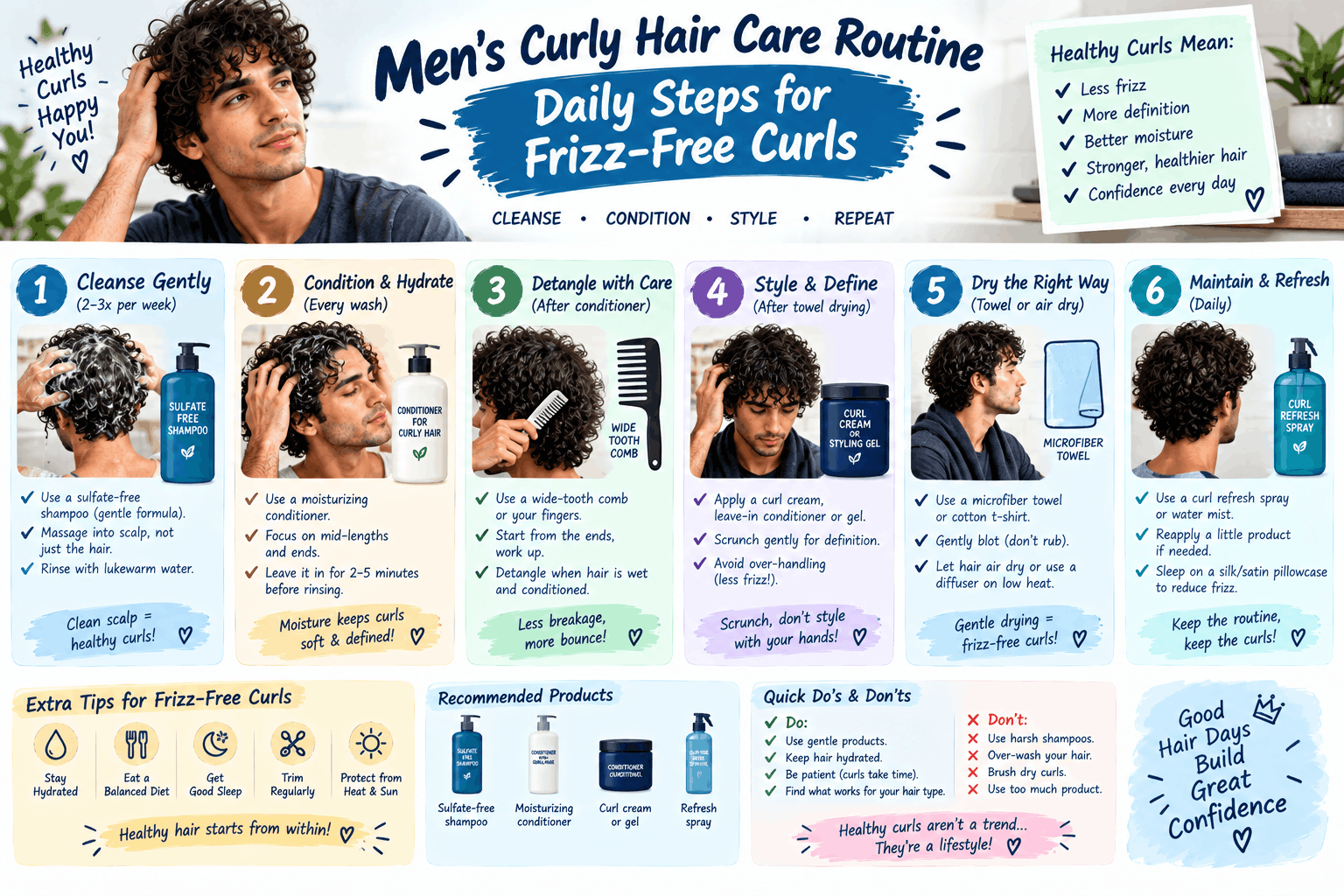
Curly, wavy, or coily hair can feel like a daily puzzle—one moment it’s defined, the next it’s frizz‑laden and dry. The good news is that you don’t need a 30‑minute salon session to keep your curls looking sharp. Below is a complete, low‑maintenance routine built specifically for men who want healthy, defined curls without spending hours in front of the mirror. Follow each step, understand why it works, and you’ll notice fewer bad hair days, more confidence, and a routine that fits into even the busiest schedule.
Understanding Your Curl Pattern and Hair Porosity
Classifying Your Curls
Before you pick products, you need to know what you’re working with. The most common classification system breaks curls into three broad types:
- Type 2 – Waves: Loose, “S” shaped waves that tend to flatten easily. Think beach‑y, relaxed look.
- Type 3 – Curls: Defined “S” or spiral curls that range from loose ringlets to tighter corkscrews.
- Type 4 – Coils: Very tight, often Z‑shaped coils that can feel dense and prone to shrinkage.
Knowing your type helps you select the right amount of moisture, hold, and styling technique.
The Water Float Test for Porosity
Hair porosity describes how quickly your strands absorb and retain moisture. To test, place a few clean strands in a glass of room‑temperature water:
- Low porosity: strands float for 10‑20 seconds before sinking. Cuticles are tightly packed, making it hard for water and products to penetrate.
- Medium porosity: strands sink within a few seconds and stay submerged. This is the sweet spot for most curly hair.
- High porosity: strands sink immediately and may feel gummy. Cuticles are lifted, so hair absorbs quickly but also loses moisture fast.
Understanding porosity tells you whether you need lighter products (low porosity) or richer, sealing agents (high porosity).
Why Natural Sebum Struggles on Curly Hair
Sebum—the oil your scalp produces—travels down the hair shaft via capillary action. Straight hair offers a smooth path, but each curl creates a barrier. The result is that curly hair often feels dry at the ends even though the scalp is perfectly healthy. That’s why a consistent hydration routine is essential for men with curls.
The Ideal Wash‑Day Strategy: Hydrate Without Stripping
How Often Should You Shampoo?
Daily shampooing is a myth for curly hair. Harsh surfactants strip the natural oils that keep curls flexible, leading to breakage and frizz. Most men with wavy to coily hair find that washing 2‑3 times per week maintains cleanliness while preserving moisture. On non‑wash days, a quick rinse with lukewarm water can refresh the scalp without over‑cleansing.
Sulfate‑Free Cleansers vs. Co‑Washing
If you prefer a traditional cleanser, choose a sulfate‑free shampoo. Sulfates (SLS, SLES) create a lather that feels clean but also removes lipids. A gentle, sulfate‑free formula cleanses the scalp while leaving the hair shaft coated in a thin protective layer.
Co‑washing—using a conditioner as a cleanser—works well for medium to high porosity curls. Look for a lightweight, silicone‑free conditioner that can lift dirt without leaving residue. Alternate between a mild shampoo and co‑wash based on how oily your scalp feels.
Scalp Massage Techniques
Massaging stimulates blood flow, encouraging growth and distributing sebum. Use the pads of your fingers (not nails) in small circular motions for 30‑60 seconds. Start at the hairline and work outward, keeping pressure light to avoid tangling the curls.
The 4‑Step Daily Refresh Routine (5‑Minute Protocol)
Step 1 – Reactivate with a Fine‑Mist Water Spray
After a night of sleep, curls can look flat. Fill a spray bottle with room‑temperature water, add a few drops of a lightweight essential‑oil blend if you like, and mist your hair until it feels damp but not soaked. This rehydrates the cuticle and prepares it for product absorption.
Step 2 – Apply Leave‑In Conditioner Using the ‘Praying Hands’ Method
Dispense a nickel‑size amount of recommended leave‑in conditioner into the palms of both hands. Rub them together, then press the cupped hands over a section of hair, sliding down from roots to tips. The “praying hands” technique distributes product evenly without disturbing the curl pattern.
Step 3 – Lock in Moisture with Light Oils or Curl‑Defining Cream
Choose one based on your porosity:
- Low porosity: a pea‑size amount of a lightweight oil (argan or jojoba) to seal moisture without weighing curls down.
- Medium porosity: a curl‑defining cream that offers both hold and hydration.
- High porosity: a richer oil blend (marula or sweet almond) combined with a cream for extra barrier protection.
Apply using a gentle scrunching motion, encouraging the curls to form their natural shape.
Step 4 – Air‑Drying vs. Low‑Heat Diffuser
If you have time, let your hair air‑dry. To enhance volume, flip your head upside down for the first 30 seconds, then let gravity do the work.
When you need quicker results, use a budget‑friendly diffuser on a low‑heat, low‑speed setting. Cup sections of hair and lift toward the scalp, avoiding direct heat on the roots. This method adds bounce while preserving moisture.
Nighttime Care: Protecting Curls While You Sleep
Why Cotton Pillowcases Cause Frizz
Cotton is absorbent. As you move, the fabric pulls moisture from your hair, leaving the ends dry and prone to frizz by morning. The friction also disrupts the curl pattern, creating a “pillow‑puff” effect.
Upgrade to Satin or Silk
Satin and silk have a smooth surface that reduces friction and retains moisture. A single night on a satin pillowcase can cut down morning frizz by up to 40% according to informal hair‑care surveys.
Quick Nighttime Prep
1. Lightly mist your curls with water or a curl‑refresh spray.
2. Apply a tiny amount of a leave‑in or oil to seal the cuticle.
3. Gather hair loosely at the crown using a silk scrunchie—avoid tight ponytails that can cause breakage.
4. Slip onto your satin pillowcase and enjoy a restful night.
5 Crucial Curly Hair Mistakes Most Guys Make
- Rough towel drying: Aggressive rubbing with a terrycloth towel creates friction, leading to frizz. Switch to a microfiber or cotton T‑shirt and pat, don’t rub.
- Brushing dry curls: Dry brushing pulls the hair shaft, breaking the curl pattern and causing split ends. Detangle only when hair is wet, using a wide‑tooth comb or your fingers.
- Heavy silicones: Products packed with non‑water‑soluble silicones coat the scalp, trapping sebum and causing buildup. Opt for silicone‑free formulas or water‑soluble variants.
- Skipping the rinse‑out: Leaving conditioner in for too long can weigh curls down. Follow the recommended 2‑minute leave‑in time, then rinse with cool water to close cuticles.
- Over‑styling with heat: Frequent high‑heat tools strip moisture. Reserve a diffuser for occasional use and keep the temperature low.
FAQ
How often should I co‑wash if I have high porosity curls?
High porosity hair absorbs moisture quickly but also loses it fast. Co‑washing 2‑3 times a week, alternating with a gentle sulfate‑free shampoo, maintains balance without over‑loading the hair.
Can I use a regular towel to dry my curls?
A regular terrycloth towel is too abrasive. A microfiber towel or an old cotton T‑shirt reduces friction and helps preserve the curl’s natural shape.
Is it okay to use hair gel for definition?
Yes, but choose a gel that’s alcohol‑free and contains moisturizing agents. Apply to damp hair, scrunch, and let dry for a crunchy, defined finish.
Putting It All Together
By understanding your curl pattern, porosity, and the science behind sebum distribution, you can tailor a routine that hydrates without stripping. Wash strategically, refresh daily with a five‑minute protocol, protect your curls at night, and avoid common pitfalls. Consistency is the key—once you embed these steps into your morning and evening rituals, frizz becomes a rarity and definition becomes the norm.
Looking for a complementary fitness routine to keep your core strong while you perfect your curls? Check out the standing core routine that pairs well with any grooming regimen. If you’re over 50 and want a simple strength plan, the bodyweight strength routine for seniors is a great addition. And for a holistic approach to self‑care, explore the Japanese skin‑care routine for a fresh, radiant look that matches your healthy curls.