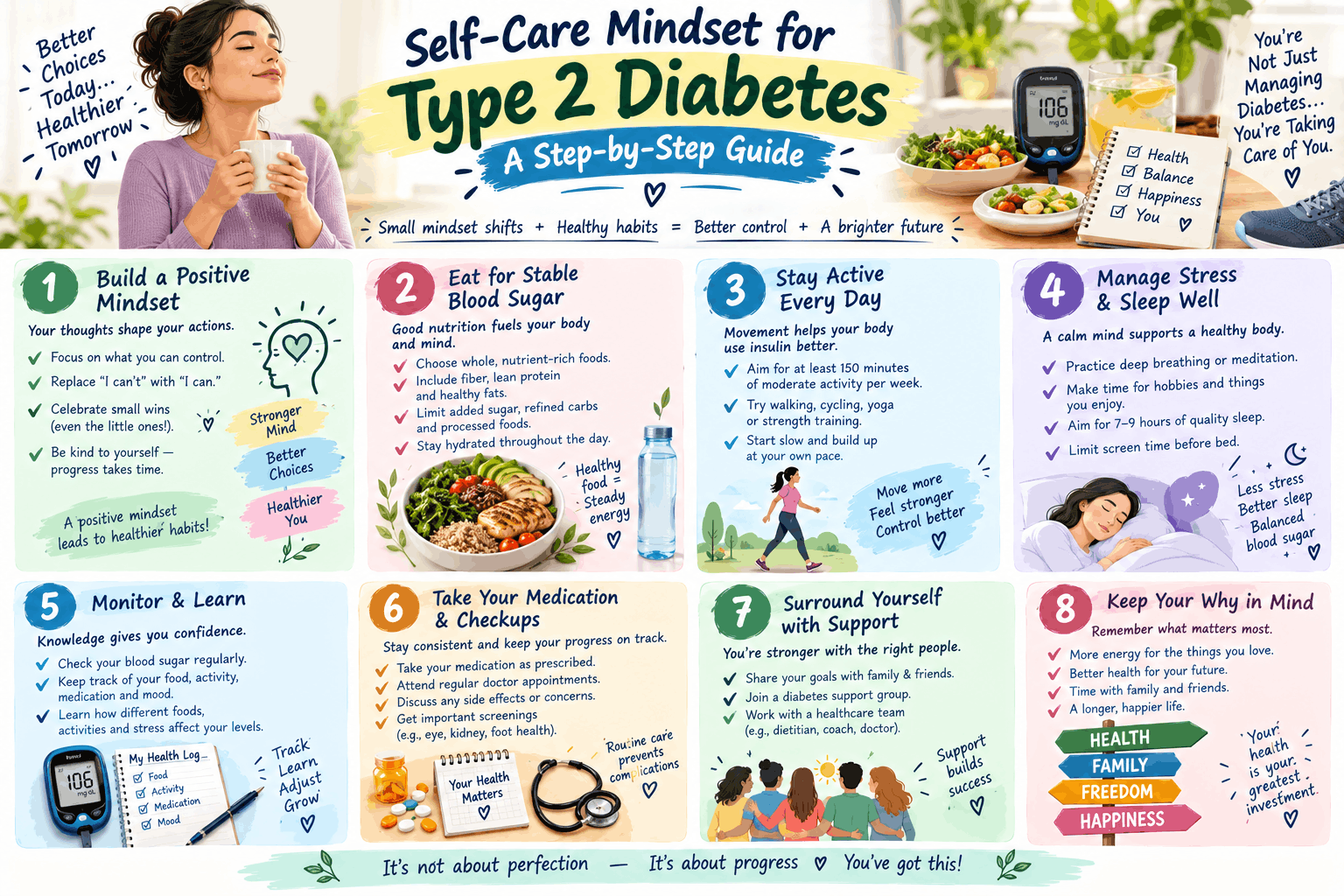
Managing type 2 diabetes often feels like a math problem: count carbs, track medication, log exercise, and check glucose many times a day. Those tactics matter, but they ignore the engine that powers them—your psychological health. Adopting a deliberate self‑care mindset for type 2 diabetes reframes management from a restrictive burden to an empowering daily practice. When you cultivate resilience, reduce chronic stress, and view glucose readings as data—not failures—your body’s ability to regulate blood sugar improves.
Why Mindset Matters
Stress activates the sympathetic nervous system, releasing cortisol, epinephrine, and glucagon. These hormones raise blood sugar and blunt insulin action. In people without diabetes the pancreas compensates, but in type 2 diabetes the existing insulin resistance means stress‑induced spikes linger, raising HbA1c over time. Addressing mental health is therefore a direct physiological intervention.
Defining a Self‑Care Mindset
A robust self‑care mindset rests on three pillars:
1. Non‑Judgmental Self‑Compassion
View each glucose reading as neutral feedback. A 210 mg/dL result isn’t a moral failure; it signals that your body needs movement, hydration, medication adjustment, or stress relief.
2. Proactive Planning
Anticipate high‑risk situations—travel, dining out, hectic workdays—and set up decision‑free environments (pre‑prepared meals, scheduled walks) to conserve mental energy.
3. Growth Orientation
Treat diabetes management as a personal experiment. If a meal spikes your glucose, ask, “Was it the portion, the fiber, or the stress I felt?” This curiosity prevents burnout and drives continuous optimization.
Daily Mindset Practices
Morning Intention & Gratitude
Before checking your CGM or finger‑stick, take three slow breaths and set a clear intention (e.g., “I will stay calm and move when my glucose rises”). Research links brief gratitude practice to lower inflammatory markers.
Mindful Eating
- Chew Thoroughly: Aim for 20‑30 chews per bite.
- Parasympathetic Reset: Two deep diaphragmatic breaths before the first bite.
- Order of Foods: Eat fiber and protein first, then carbs. This can blunt post‑meal spikes by up to 40%.
Quick Stress‑Relief
When anxiety spikes, try a 5‑minute routine of diaphragmatic breathing or physiological sighs. This lowers heart rate and curtails further cortisol release.
Active Mindful Movement
After meals, walk 10‑15 minutes. The activity both activates GLUT4 transporters (improving insulin sensitivity) and gives your mind a break.
Sleep Hygiene
Aim for 7‑8 hours, turn off screens 60 minutes before bed, and keep the bedroom cool (65‑68°F). Adequate sleep balances ghrelin and leptin, reducing cravings.
Build Your Personalized Plan
Step 1: Self‑Assessment
Answer these questions:
- Which part of my routine causes the most mental stress?
- How do I react to an unexpected high reading?
- What triggers (sleep loss, work pressure, food access) disrupt my choices?
Step 2: SMART Goals
Instead of “lower my sugar,” try: “I will walk 10 minutes after dinner four nights a week for the next month to reduce post‑meal spikes.”
Step 3: Habit Stacking
Link a new mindset habit to an existing cue:
- After I pour my morning coffee, I will take three deep breaths before checking glucose.
- After I log lunch, I will step outside for a 5‑minute mental reset.
- After I brush my teeth at night, I will write one positive health win.
Step 4: Holistic Tracking
Log sleep quality, stress rating (1‑10), activity, and glucose. Over weeks you’ll see patterns—low‑stress days often produce smoother glucose curves.
Tools & Resources
Continuous Glucose Monitors
Using a continuous glucose monitor (CGM) lets you see how stress, sleep, and meals affect real‑time glucose, turning abstract feelings into concrete data.
Meditation Apps
Apps like Headspace, Calm, or Insight Timer offer short courses on chronic‑illness anxiety and sleep support.
Meal‑Planning Services
Pre‑portioned, diabetes‑friendly meals reduce decision fatigue on busy days.
Support Communities
Join local or online peer groups to share experiences and reduce isolation.
Common Challenges & Solutions
Unexplained Spikes
Remember over 40 variables affect glucose (infection, hormones, hydration, temperature, hidden stress). Protocol: hydrate, follow prescribed corrective action, engage in low‑intensity movement, and avoid re‑checking for at least an hour.
Social Settings
Eat a protein‑rich snack before attending events, decide in advance how you’ll handle desserts, and focus on conversation rather than food.
Motivation Plateaus
When burnout hits, simplify: stay hydrated, take meds, eat balanced protein/fiber, and pause detailed tracking for a few days while you rest.
FAQ
Can mindset alone lower A1C?
Mindset reduces stress hormones and supports habit adherence, but it works alongside medication, nutrition, and exercise.
How often should I adjust my plan?
Review every 4‑6 weeks or after major life changes.
Which professionals complement a self‑care approach?
Seek a Certified Diabetes Care and Education Specialist (CDCES), a licensed therapist experienced in chronic illness, and a registered dietitian.
Conclusion & Action Checklist
Managing type 2 diabetes is as much psychological as biological. A compassionate, data‑driven mindset lowers stress hormones, improves insulin sensitivity, and protects against burnout.
Daily Diabetes Self‑Care Checklist
- Morning:
- [ ] Three deep breaths before glucose check.
- [ ] Full glass of water.
- [ ] Set a positive health intention.
- Mid‑Day:
- [ ] Two calming breaths before meals.
- [ ] Prioritize fiber and protein.
- [ ] 10‑15 minute post‑meal walk.
- Evening:
- [ ] Turn off screens 60 min before bed.
- [ ] Review glucose trends without judgment.
- [ ] Record one gratitude or health win.