
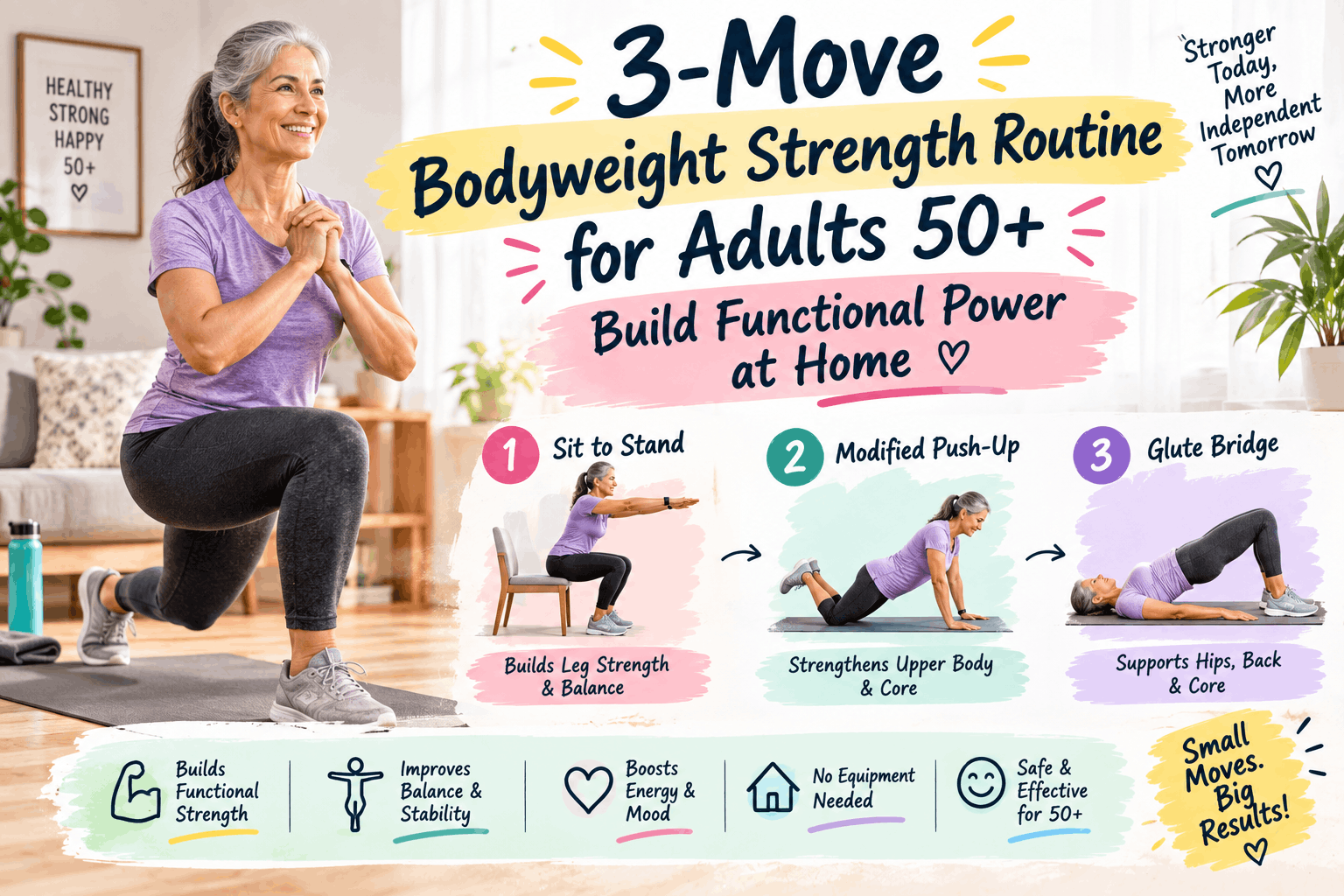
Staying strong after 50 doesn’t require a gym membership or fancy machines. A focused, low‑impact bodyweight routine can preserve muscle, sharpen balance, and keep everyday tasks easy—all from the comfort of your living room. Below you’ll find a proven 3‑move circuit, safety tips, progression ideas, and answers to common concerns, all designed for adults aged 50‑70 who want functional strength without the hassle.
Why Functional Strength Matters After 50
Age‑related muscle loss, known as sarcopenia, begins in the early 30s and accelerates after 50. By the time most people reach their 60s, they may have lost up to 30% of their muscle mass if they remain sedentary. This decline directly impacts balance, joint stability, and the ability to perform daily activities such as climbing stairs, carrying groceries, or getting up from a chair.
The CDC and the National Council on Aging (NCOA) both recommend at least 150 minutes of moderate aerobic activity plus two days of muscle‑strengthening activities each week for older adults. Meeting these guidelines isn’t just about cardio; it’s about building functional strength—the power you need to lift, reach, and move safely in real life.
Benefits of maintaining functional strength after 50 include:
- Greater independence and confidence in daily tasks
- Improved bone density, reducing osteoporosis risk
- Lower incidence of falls and related injuries
- Enhanced metabolic health, supporting weight management
Safety First: Preparing Your Space and Body
Creating a clutter‑free area
Choose a flat surface with enough room to move freely—ideally a living‑room carpet or a yoga mat. Remove chairs, coffee tables, and loose cords. A clear space reduces the chance of tripping and gives you room to perform the standing bird‑dog without hitting anything.
Joint‑friendly warm‑up sequence
Warm‑ups increase blood flow, lubricate joints, and prime the nervous system. Perform each move for 30‑45 seconds:
- March in place, lifting knees to a comfortable height.
- Arm circles: 15 seconds forward, 15 seconds backward.
- Hip circles: hands on hips, rotate clockwise then counter‑clockwise.
- Ankle rolls: 10 reps each foot, both directions.
Finish with a gentle dynamic stretch such as a seated hamstring reach to further activate the posterior chain.
Contra‑indications and when to consult a physician
If you have uncontrolled hypertension, recent heart surgery, severe osteoarthritis, or any acute injury, talk to your doctor before starting. Also, pause the routine if you experience sharp chest pain, dizziness, or joint swelling that doesn’t improve with rest.
The 3‑Move Bodyweight Routine Explained
Move 1: Chair‑Supported Squat
Using a sturdy chair (no wheels) provides support while you rebuild squat mechanics.
- Setup: Stand facing the chair, feet hip‑width apart, toes slightly turned out.
- Execution: Inhale, hinge at the hips, and lower your hips toward the seat while keeping weight on the heels. Lightly tap the chair with your glutes, then press through the heels to return to standing. Exhale on the way up.
- Reps: Aim for 12‑15 controlled repetitions per set.
- Modifications: Reduce depth if knees feel strained, or use a higher chair for a shallower squat. To increase difficulty, perform the squat without the chair after mastering form.
Move 2: Wall‑Push‑Up
Wall push‑ups protect the shoulder joint while still engaging the chest, shoulders, and triceps.
- Setup: Stand an arm’s length from a wall, palms placed shoulder‑width apart at chest height.
- Execution: Lean forward, bending elbows to bring your chest toward the wall. Keep your body in a straight line from head to heels. Push back to the starting position.
- Reps: 10‑12 repetitions.
- Progression: Move your feet farther from the wall to increase angle, or transition to a countertop push‑up for added challenge.
Move 3: Standing Bird‑Dog
This move improves core stability, proprioception, and balance without requiring a mat.
- Setup: Stand tall, feet hip‑width apart, hands on hips or extended in front for extra balance.
- Execution: Shift weight onto the right leg, extend the left arm forward and the right leg back, forming a straight line. Hold for 2‑3 seconds, then return to neutral. Switch sides.
- Reps: 8‑10 per side.
- Tips: Keep the core engaged and avoid arching the lower back. If balance is a challenge, lightly touch a wall for support.
Putting It All Together: Full Session Layout
A complete workout lasts about 30 minutes, making it easy to fit into a busy day.
- Warm‑up (5 min): Follow the joint‑friendly sequence described earlier.
- Exercise circuit (3 rounds): Perform each move for 30‑45 seconds, then rest 15 seconds before moving to the next. After completing all three moves, rest 60 seconds, then repeat two more times.
- Cool‑down stretch (5 min): Gentle static stretches—standing quad stretch, chest opener against the wall, and seated forward fold—hold each for 20‑30 seconds.
Suggested weekly frequency: 2‑3 sessions per week on non‑consecutive days. Consistency beats intensity for long‑term functional gains.
Progression Strategies & Tracking
Adding reps or time
Once 30‑45 seconds feels easy, extend each interval by 10 seconds or add two more repetitions per set. Small, incremental changes keep the stimulus effective without overloading joints.
Incorporating resistance bands
Resistance bands add external load while preserving low impact. Loop a light band around your thighs during the chair‑supported squat to engage the glutes more intensely, or place a band across your back during wall‑push‑ups for added chest activation. resistance bands are inexpensive and come in a range of tensions.
Using a fitness tracker or journal
Record the date, duration, and perceived effort of each session. Tracking trends helps you spot plateaus and celebrate progress. Many smartphones offer built‑in activity logs; a simple notebook works just as well.
FAQs and Common Troubleshooting
I feel sore – is that normal?
Mild muscle soreness (DOMS) is typical after a new routine, especially if you haven’t exercised in months. It should subside within 48 hours. Persistent pain, sharp joint aches, or swelling warrant a pause and possibly a medical check‑up.
Can I do the routine on a carpet?
Yes, a low‑pile carpet is fine. Ensure the surface isn’t too soft, which could destabilize balance moves. If you find the carpet too forgiving, place a yoga mat or folded towel under your feet for a firmer base.
Adjusting for knee or shoulder limitations
For knee pain, reduce squat depth or perform a seated leg extension instead. For shoulder discomfort, keep the wall‑push‑up angle shallow or switch to a countertop push‑up. Always prioritize pain‑free range of motion.
Trusted Resources & Further Reading
- CDC Physical Activity Basics for Older Adults
- NCOA Chronic Disease Self‑Management Programs
- Japanese skin‑care routine
- Tom’s Guide 3‑move workout article
By integrating this simple 3‑move bodyweight strength routine into your weekly schedule, you’ll safeguard functional power, boost confidence, and enjoy a more active, independent life well beyond your 50s.



3 thoughts on “3‑Move Bodyweight Strength Routine for Adults 50+: Build Functional Power at Home”
Comments are closed.