
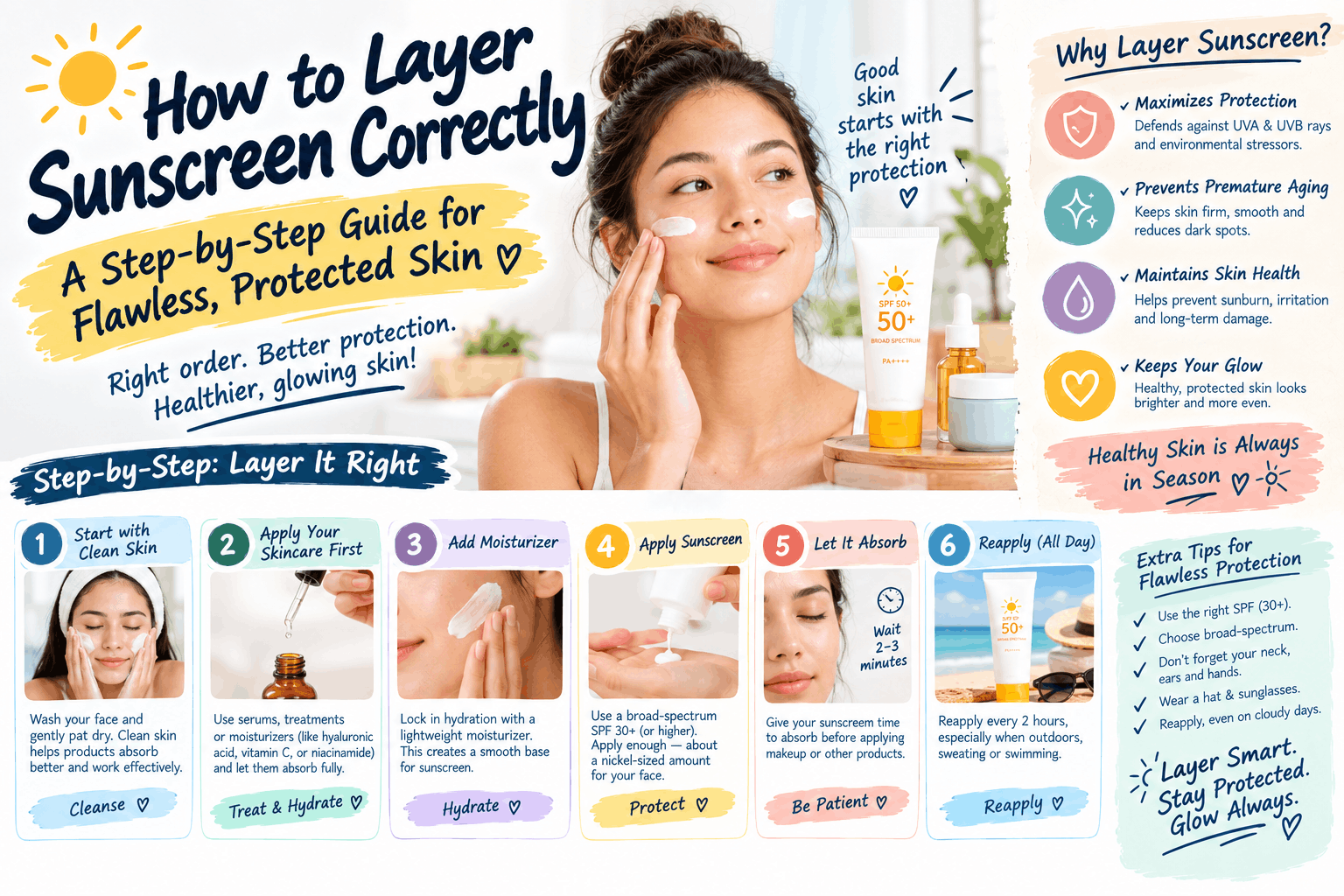
Protecting your skin from harmful UV rays is non‑negotiable, but many skincare‑savvy adults still get the layering order wrong. When sunscreen isn’t applied in the optimal sequence, you lose SPF efficiency, your makeup slides off, and you risk premature aging. This guide walks you through the science, the exact steps, product picks, and common pitfalls so you can master how to layer sunscreen correctly and enjoy flawless, protected skin all day.
Why Proper Sunscreen Layering Matters
UV radiation penetrates the skin in three main ways: UVA (aging), UVB (burning) and UVC (filtered by the ozone). A broad‑spectrum sunscreen creates a protective shield that either absorbs (chemical) or reflects (mineral) these rays. However, that shield only works when the product is applied evenly and allowed to bind to the skin surface.
Common misconceptions include “more sunscreen equals better protection” and “I can spray sunscreen over my moisturizer and be done.” In reality, a thick, uneven layer can cause the sunscreen to ball up, creating gaps in coverage. Conversely, a layer that’s too thin won’t reach the labeled SPF. The order in which you apply moisturizer, sunscreen, and makeup directly influences the SPF’s real‑world performance.
Dermatologists estimate that incorrect layering can reduce a sunscreen’s efficacy by up to 30 %. By following the correct sequence, you preserve the full SPF rating and keep your foundation from melting or caking under the sun.
The Science Behind Sunscreen Absorption and Protection
Chemical vs. Mineral Sunscreens
Chemical sunscreens contain organic molecules (e.g., avobenzone, octocrylene) that absorb UV photons and convert them into harmless heat. They are lightweight, blend well under makeup, and are ideal for oily or acne‑prone skin. Mineral sunscreens—zinc oxide and titanium dioxide—sit on the surface and physically block UV rays. They tend to be thicker but are less likely to irritate sensitive skin.
Interaction with Moisturizers and Primers
Moisturizers create a hydrated barrier that can either help or hinder sunscreen absorption. A well‑formulated moisturizer with a balanced pH (around 5.5) allows the sunscreen’s active ingredients to spread evenly. Primers, especially those with silicone bases, lock in the sunscreen layer, preventing it from rubbing off during the day. When a primer contains additional UV filters, it effectively adds a second protective layer without increasing SPF confusion.
Dermatologist Insights
A recent Women’s Health review highlighted that layering a lightweight moisturizer before sunscreen improves SPF stability by up to 12 % because the moisturizer prevents the sunscreen from sinking into dry patches. The same study warned against applying sunscreen over heavy creams, which can dilute the active filters.
Step‑by‑Step Routine for Layering Sunscreen
- Cleanse and tone: Use a gentle cleanser and alcohol‑free toner to remove impurities and prep the skin’s surface.
- Apply lightweight moisturizer (if needed) and wait 2‑3 minutes: Choose a non‑comedogenic lotion that absorbs quickly. This step ensures the skin isn’t overly dry, which would cause the sunscreen to cling unevenly.
- Apply broad‑spectrum sunscreen (amount & SPF): Dispense a nickel‑size amount (about ¼ teaspoon for the face) and spread it evenly. Aim for SPF 30 + for daily wear; SPF 50 + is recommended for outdoor activities.
- Let sunscreen set (5‑10 minutes): Give the product time to bind. This waiting period prevents the next layer from diluting the sunscreen’s film.
- Apply sunscreen‑based primer or second sunscreen layer (optional): If you love a matte finish or need extra protection for high‑UV days, use a silicone‑based primer that contains additional UV filters.
- Apply makeup (foundation, powder, etc.): Finish with your usual makeup routine. Powder can act as a “seal” that locks the sunscreen in place.
Choosing the Right Products for Each Layer
Best Moisturizers That Play Well With Sunscreen
Look for moisturizers labeled “non‑greasy,” “fast‑absorbing,” and preferably with hyaluronic acid or glycerin. Examples include CeraVe PM Facial Moisturizing Lotion and Neutrogena Hydro Boost Water Gel. If you’re searching for a complementary oil, consider the best face oil for your skin type to add a boost of antioxidants without compromising sunscreen adhesion.
Top Broad‑Spectrum Sunscreens for Layering (Mineral vs. Chemical)
- Mineral option: high‑performance mineral sunscreen with zinc oxide 20 % and titanium dioxide 5 % offers a weightless feel and is ideal for sensitive skin.
- Chemical option: La Roche‑Posay Anthelios Melt‑In Milk SPF 60 delivers a silky finish that works well under makeup.
- Hybrid option: Supergoop! Unseen Sunscreen SPF 40 doubles as a primer, streamlining steps for busy mornings.
Sunscreen Primers and Tinted Moisturizers
Products like the IT Cosmetics CC+ Cream SPF 50 combine coverage with UV protection, making them a convenient “two‑in‑one.” If you prefer a separate primer, the Smashbox Photo Finish Primer Shield SPF 45 adds a subtle blur while reinforcing the sunscreen layer.
Common Mistakes & How to Fix Them
- Applying sunscreen too thick or too thin: Use the “finger‑tip” rule—about a quarter‑teaspoon for the face. If you see a white cast, you’re likely using a mineral formula; blend with a damp beauty sponge.
- Skipping the waiting period: Rushing can cause the sunscreen to mix with moisturizer, reducing SPF. Set a timer for 5 minutes after sunscreen before moving on.
- Layering multiple high‑SPF products unnecessarily: Two SPF 50 products do not equal SPF 100. Instead, focus on proper application and reapply every two hours.
FAQ – Quick Answers to Reader Questions
- Can I use a spray sunscreen over a lotion?
- Yes, but spray sunscreens should be applied after the lotion has fully absorbed and the skin feels dry. Hold the can 6‑8 inches away and mist evenly, then pat gently.
- Do I need to reapply after makeup?
- Reapplication is essential for sustained protection. Use a powder sunscreen or a setting spray with SPF 30 for touch‑ups without disturbing makeup.
- Is it safe to use sunscreen under a night‑time moisturizer?
- Night moisturizers are formulated without UV filters, so layering sunscreen under them isn’t necessary. Instead, cleanse thoroughly at night and reserve sunscreen for daytime only.
Putting It All Together: Sample Daily Routine
06:30 am – Cleanse & Tone: Gentle foaming cleanser, followed by rose‑water toner.
06:35 am – Light Moisturizer: Apply 2 puffs of a hyaluronic‑acid gel; wait 2 minutes.
06:38 am – Broad‑Spectrum Sunscreen: Dispense a nickel‑size amount of the mineral sunscreen (high‑performance mineral sunscreen) and spread evenly.
06:45 am – Set: Allow 5‑10 minutes for the sunscreen to bind.
06:55 am – Primer & Makeup: Apply a silicone‑based primer with SPF 15, then foundation, concealer, and setting powder.
09:00 am – Mid‑Morning Touch‑Up: Light dusting of SPF 30 powder or a setting spray.
For oily skin types, pairing this routine with the perfect SPF for oily skin ensures a matte finish without greasiness.
Conclusion & Takeaway Action Steps
Layering sunscreen correctly is less about adding more products and more about respecting the science of absorption. Follow these quick steps: cleanse, moisturize, apply the right amount of sunscreen, wait, prime (if desired), then makeup. Avoid common errors like skipping the waiting period or over‑layering high‑SPF formulas. Reapply every two hours, especially after sweating or swimming.
Start today by evaluating your current routine, swapping in a broad‑spectrum sunscreen that matches your skin type, and setting a timer for the five‑minute set‑time. Your skin will thank you with fewer fine lines, even tone, and makeup that stays put—all while staying protected from the sun’s relentless rays.
One thought on “How to Layer Sunscreen Correctly: A Step‑by‑Step Guide for Flawless, Protected Skin”
Comments are closed.