
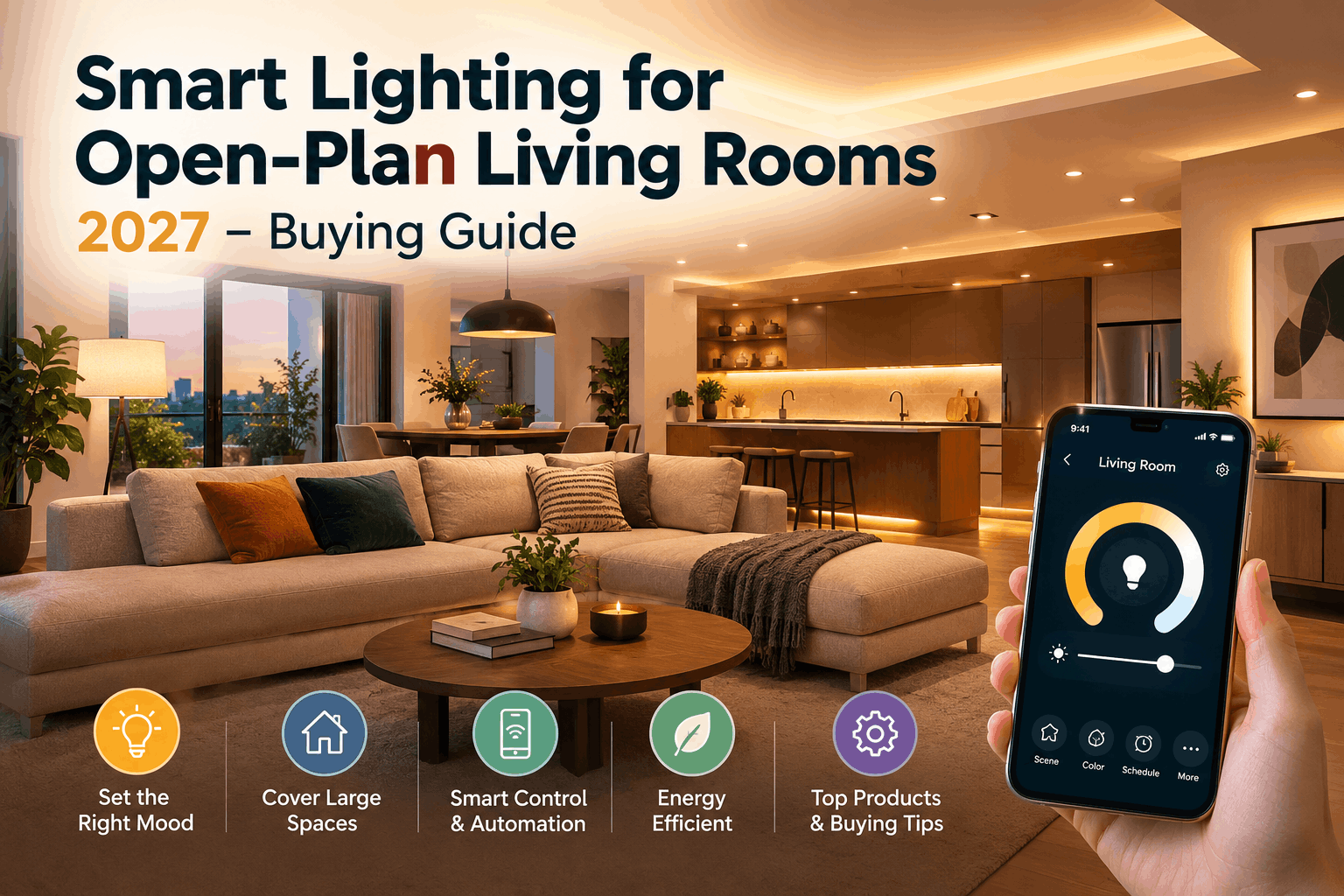
Open‑plan living rooms have become the heart of modern homes, blending kitchen, dining and lounge spaces into one fluid environment. While the seamless layout feels airy and social, it also creates a lighting dilemma: how do you illuminate distinct activities without cluttering the ceiling with countless fixtures? In 2027, smart lighting offers a solution that is both elegant and energy‑efficient. This guide walks homeowners and interior designers through the why, what, and how of choosing, installing, and future‑proofing smart lighting for open‑plan living rooms, while highlighting the most reliable products, budgeting tips, and emerging trends that will keep your space ahead of the curve.
Why Open‑Plan Living Rooms Need Smart Lighting
Visual zoning is the first challenge in an open layout. Without walls to define spaces, light becomes the primary tool for carving out functional zones—entertainment, reading, cooking, or quiet conversation. A well‑designed lighting scheme can make a 30‑square‑meter loft feel intimate in one corner and expansive in another, simply by adjusting brightness, color temperature, or direction.
Beyond aesthetics, lighting directly influences mood and perceived space. Warm, low‑CCT (correlated color temperature) light can make a large area feel cozier, while cooler, higher‑CCT light expands visual depth, ideal for a kitchen island or work area. Studies published in 2023 link dynamic lighting to improved circadian rhythms and reduced stress, reinforcing the wellness‑focused home decor movement that dominates design headlines today.
Core Smart Lighting Technologies to Know
Connectivity Protocols: Wi‑Fi, Zigbee, Thread
Wi‑Fi bulbs connect directly to your router, offering easy setup but can strain bandwidth in a house full of devices. Zigbee creates a mesh network, reducing latency and improving reliability, especially when paired with a dedicated hub. Thread, introduced by the Connectivity Standards Alliance, combines the best of both worlds—low power consumption, secure mesh networking, and native support in major voice assistants.
Color Temperature & Tunable White LEDs
Modern LEDs let you shift from 2700K (soft amber) to 6500K (daylight) with a slider or automated schedule. Tunable white is essential for open‑plan rooms because you can set cooler light over the kitchen work zone while keeping the lounge area in a warm glow, all from a single app.
Integrated Motion & Occupancy Sensors
Sensors detect presence and adjust brightness automatically, preventing lights from staying on in unoccupied zones. In a large open space, placing a sensor near the entryway can dim the foyer lights while keeping the entertainment area bright for a movie night.
Voice Control Ecosystems
Alexa, Google Assistant, and Siri all support smart lighting, but compatibility varies by brand. If you already own an Echo or Nest device, prioritize products that list native integration to avoid extra bridges or apps.
Top Smart Lighting Products for 2027
Philips Hue White & Color Ambiance
Philips Hue remains the benchmark for reliability and ecosystem breadth. The system includes a Hue Bridge (required for Zigbee connectivity), a range of bulbs, light strips, and outdoor fixtures. Features include 16‑million colors, tunable white, and robust third‑party app support. Prices start around $30 per bulb, with starter kits available for $150‑$200. For a quick upgrade, consider the Philips Hue starter kit which covers a living room, kitchen island and accent lighting.
Lutron Caseta Wireless
Lutron excels in dimming performance and seamless integration with major voice assistants. The Caseta system uses a proprietary Clear Connect radio, offering a range of up to 30 feet through walls—ideal for large open‑plan homes. Dimmers are priced $80‑$120 each, and the hub costs $80. Compatibility with both bulbs and traditional fixtures makes Lutron a versatile choice for mixed‑technology installations.
Nanoleaf Shapes
Nanoleaf’s modular panels double as decorative art and smart light sources. Each panel can display millions of colors and reacts to music, making it perfect for an entertainment zone. The Shapes Hexagons kit starts at $200 for 9 panels, and the app offers preset scenes as well as custom rhythm‑sync options.
Budget‑Friendly Options
For homeowners on a tighter budget, Wyze Bulb delivers 2700K‑6500K tunable white and 16 million colors for under $15 per bulb, with a simple Wi‑Fi setup. TP‑Link Kasa Smart Wi‑Fi LED Bulb offers reliable performance at $12‑$18 per unit and integrates with Alexa and Google Assistant without a hub.
Planning Your Installation: Layout, Zones, and Wiring
Map the Room into Functional Zones
Start by sketching the floor plan and labeling zones: entertainment (media wall), reading (sofa nook), cooking (kitchen island), and ambient (general ceiling wash). Each zone will have its own lighting hierarchy—ambient, task, and accent.
Recommended Fixture Types per Zone
- Recessed cans for uniform ambient light over the main floor area.
- Pendant lights above the kitchen island to provide focused task lighting.
- LED strip lights under cabinets or behind the TV for subtle accent.
- Smart floor lamps or table lamps in reading corners for adjustable task light.
Step‑by‑Step Wiring Guide
- Turn off power at the breaker and verify with a tester.
- Run a new 14/2 NM cable from the switch box to each fixture location if you’re adding more than existing points.
- Install a smart dimmer (Lutron Caseta) in the main switch box to control recessed cans.
- Connect Wi‑Fi or Zigbee bulbs directly into existing sockets; no wiring changes needed.
- Mount a hub (Hue Bridge or Lutron Smart Bridge) near your router for optimal signal.
- Label each zone in the app for easy scene activation.
If you’re uncomfortable with electrical work, hire a licensed electrician for the wiring phase; the smart bulb installation itself is DIY‑friendly.
Budgeting, ROI, and Energy Savings
Below is a typical cost breakdown for a 30 m² open‑plan living room:
- Smart bulbs (12 × $30) – $360
- Hue Bridge – $70
- Lutron dimmer (2 × $100) – $200
- Installation labor – $300 (or $0 for DIY)
- Miscellaneous (mounts, wiring) – $80
Total upfront investment: roughly $1,010. With LED efficiency of 10 lumens per watt and occupancy sensors reducing usage by 30 %, the annual electricity cost drops from $120 to $84, saving $36 per year. Assuming a 5 % electricity rate increase, the cumulative savings reach $250 in five years, delivering a modest ROI while adding resale value and comfort.
Future‑Proofing: Trends Shaping Smart Lighting After 2027
AI‑Driven Lighting Scenes
Machine‑learning algorithms are beginning to analyze occupancy patterns, automatically adjusting brightness and color temperature to match daily routines—bright, cool light for morning work, warm, dim light for evening relaxation.
Health‑Monitoring Integration
Future hubs will sync with wearable health devices, modulating light to support circadian rhythms, reduce blue‑light exposure after sunset, and even boost alertness during afternoon slumps.
Sustainable Materials & Recyclable Fixtures
Manufacturers are shifting to aluminum housings made from recycled content and designing bulbs for easier disassembly, making end‑of‑life recycling more feasible.
FAQs
Do I need a separate hub for each brand?
Most Zigbee products (Hue, Nanoleaf) use the Hue Bridge, while Lutron Caseta requires its own Smart Bridge. Wi‑Fi bulbs (Wyze, Kasa) connect directly to your router, so no hub is needed.
Can I control lights when I’m away?
Yes. All major platforms offer cloud‑based apps that let you turn lights on/off, set schedules, or trigger scenes from anywhere with an internet connection.
Is smart lighting worth the extra cost?
If you value energy savings, customizable ambiance, and integration with voice assistants, the long‑term benefits outweigh the initial expense, especially in high‑traffic open‑plan spaces.
Conclusion
Smart lighting transforms an open‑plan living room from a single, undifferentiated space into a series of purposeful zones that respond to your lifestyle and wellness goals. By understanding the core technologies, selecting reliable products, planning zones thoughtfully, and budgeting for both hardware and installation, you can create a flexible, energy‑efficient environment that stays ahead of 2027 trends. Remember to future‑proof your design with AI‑enabled scenes and sustainable fixtures, and you’ll enjoy a living room that feels fresh for years to come.

One thought on “Smart Lighting for Open‑Plan Living Rooms 2027 – Buying Guide”
Comments are closed.