
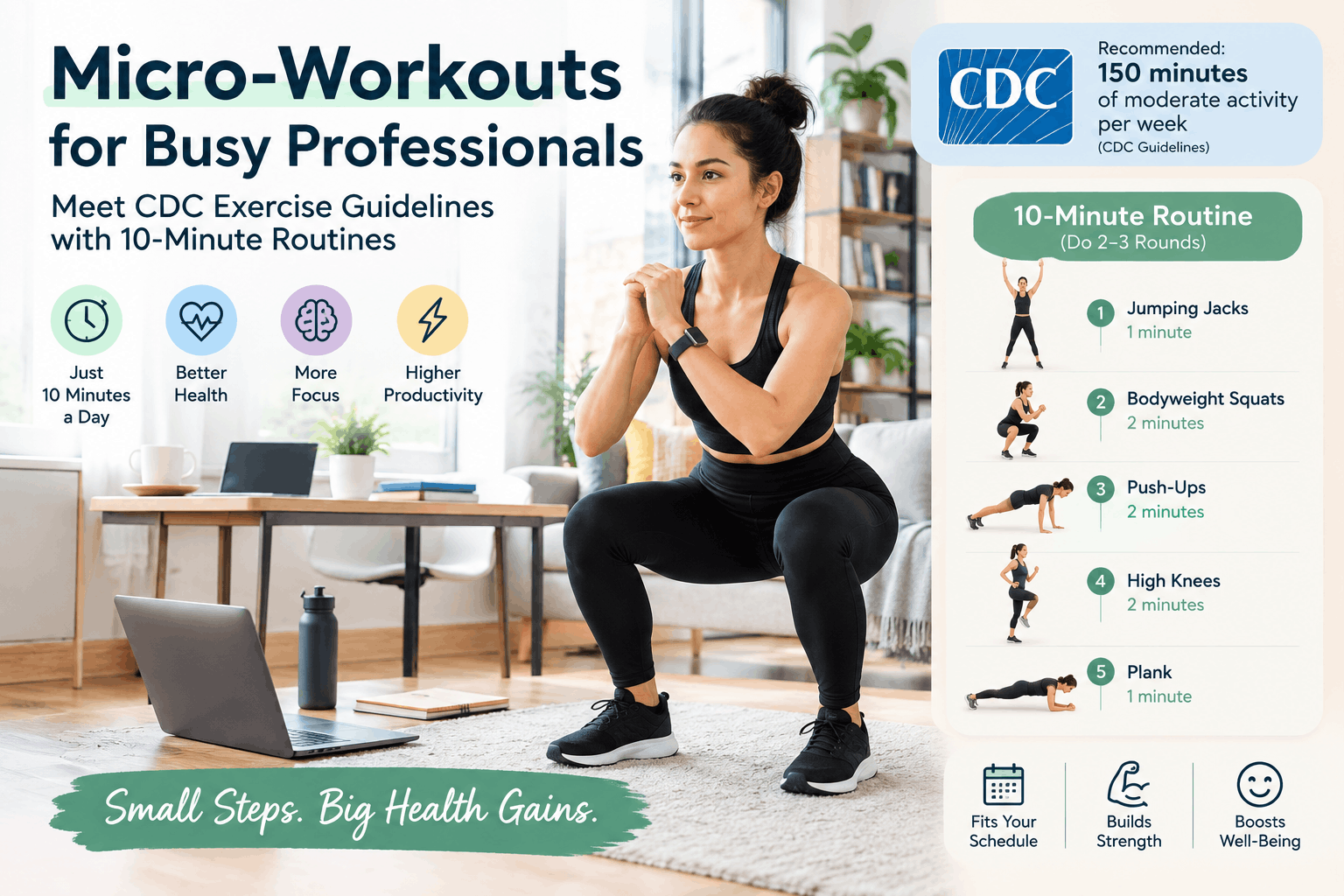
Finding time for fitness can feel impossible when your calendar is packed with meetings, deadlines, and travel. Yet the CDC still expects 150 minutes of moderate‑intensity activity—or 75 minutes of vigorous effort—each week. The good news is that you don’t need a full‑hour gym session to hit those numbers. By breaking exercise into focused, 10‑minute micro‑workouts, busy professionals can accumulate the required volume, boost energy, and protect brain health without sacrificing work performance.
Why Micro‑Workouts Work: Science & CDC Guidelines
The Centers for Disease Control and Prevention defines moderate activity as raising your heart rate to 50‑70 % of your maximum, while vigorous effort pushes it to 70‑85 %. Importantly, the CDC counts any bout of activity that lasts at least one minute toward the weekly total, meaning ten 10‑minute sessions equal the same health benefit as a single 100‑minute workout.
Research highlighted by Verywell Health shows that brief aerobic bursts improve brain health benefits such as memory retention and mood regulation. Short, high‑intensity intervals increase blood flow to the hippocampus, the area responsible for learning, and trigger the release of neurotrophic factors that support neural growth.
“Consistent micro‑workouts can deliver comparable cardiovascular and cognitive gains to longer sessions, provided intensity is sufficient.” – Summary of 2024 meta‑analysis
Because the physiological stimulus is cumulative, you can meet CDC recommendations by sprinkling 5‑ to 15‑minute bouts throughout the day—perfect for the office environment.
Designing a 10‑Minute Daily Routine
Structure
A balanced micro‑workout includes three phases: warm‑up (2 min), main set (6 min), and cool‑down (2 min). This structure prepares joints, maximizes calorie burn, and reduces injury risk.
- Warm‑up: March in place, arm circles, and dynamic lunges to raise core temperature.
- Main set: Circuit of bodyweight moves—squats, push‑ups, planks, and jumping jacks—performed for 45 seconds each with 15‑second transitions.
- Cool‑down: Slow hamstring stretch, chest opener, and deep breathing.
Sample Circuit
- 30 seconds jumping jacks
- 30 seconds bodyweight squats
- 30 seconds push‑ups (knees or full)
- 30 seconds plank (forearms)
- Repeat the sequence twice, resting 15 seconds between exercises.
Modifications
Beginners: Reduce each work interval to 30 seconds and increase rest to 30 seconds. Substitute jumping jacks with step‑touches to lessen impact.
Advanced: Add a plyometric element—jump squats or clap push‑ups—and shorten rest to 10 seconds. Use a weighted vest or resistance bands for added load.
Tech Tools to Optimize Micro‑Workouts
In 2026, several apps specialize in bite‑size training, integrating sensor data and AI to keep sessions efficient.
- FitOn: Offers 10‑minute “QuickFit” classes curated by celebrity trainers. Syncs with Apple Health and Google Fit.
- Apple Fitness+: Leverages Apple Intelligence to auto‑adjust interval length based on heart‑rate trends, ensuring you stay in the target zone without manual input.
- Seven: Delivers 7‑minute high‑intensity circuits, with a “Micro‑Mode” that strings two sessions together for a 14‑minute office break.
Most of these platforms let you set a weekly goal aligned with CDC metrics. When your tracker records 5 minutes of moderate activity, the app logs it toward the 150‑minute target, giving you real‑time feedback on progress.
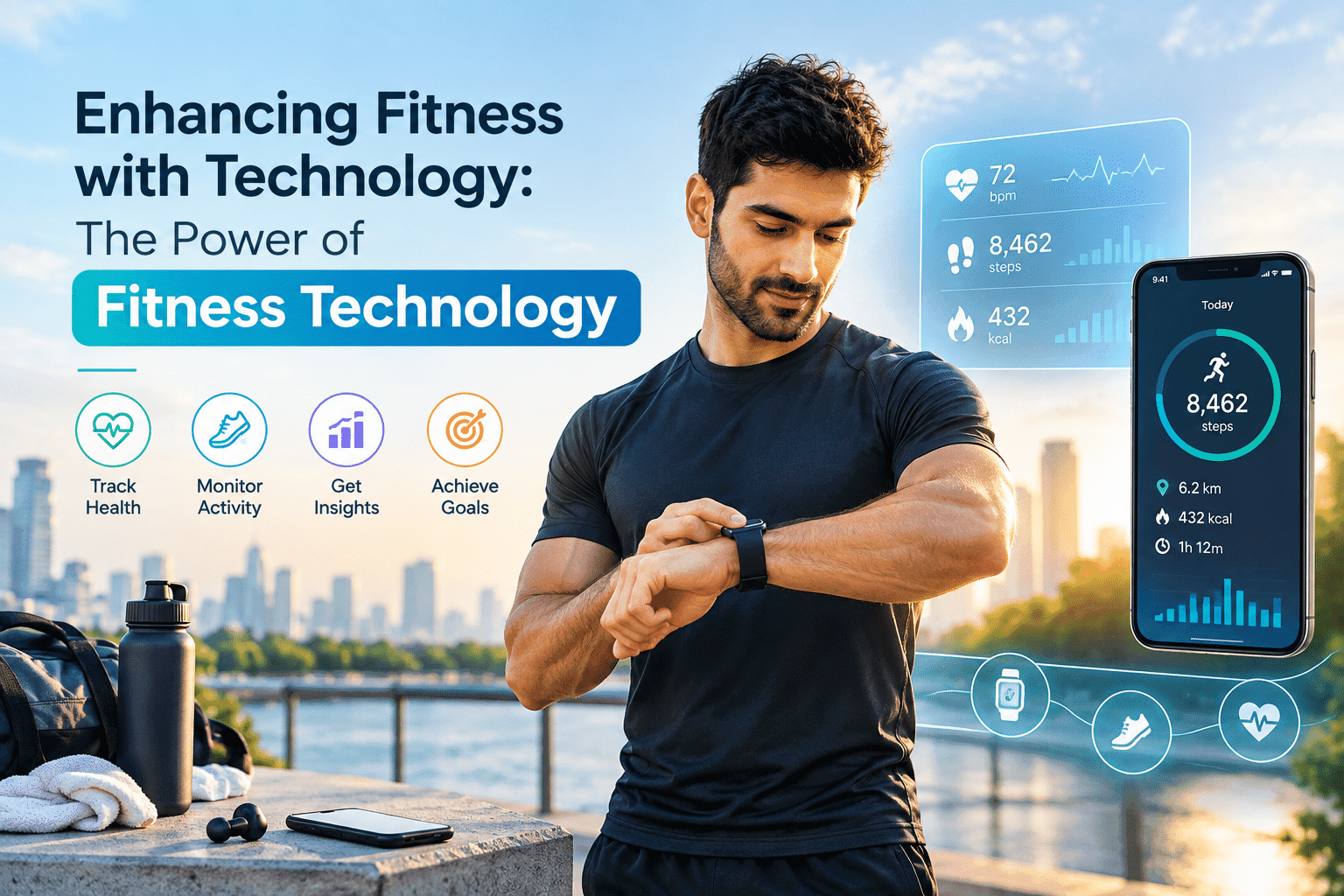
For those who love data, linking your smartwatch to fitness technology dashboards visualizes trends, flags plateaus, and suggests when to increase intensity.
Consider adding an recommended tool such as a compact resistance band set—ideal for desk‑side strength work.
Embedding Exercise into the Workday
Movement doesn’t have to wait for a gym. Simple habits can turn any office into a mini‑fitness studio.
Desk‑friendly stretches
- Shoulder rolls and neck tilts during conference calls.
- Seated cat‑cow stretches to mobilize the spine.
Calendar blocks
Schedule recurring 5‑minute “movement slots” in Outlook or Google Calendar. Treat them like any other meeting—set a notification, close the laptop, and execute a quick set of jumping jacks or a wall‑sit.
Standing desks & walking calls
Alternating between sitting and standing every 30 minutes reduces musculoskeletal strain. When a call doesn’t require screen sharing, walk around the office or use a treadmill desk for light cardio.
Tracking Progress & Staying Motivated
Goal‑setting is most effective when it follows the SMART framework (Specific, Measurable, Achievable, Relevant, Time‑bound).
- Specific: “Complete three 10‑minute micro‑workouts per workday.”
- Measurable: Use your smartwatch to log minutes and intensity.
- Achievable: Start with two sessions and build to three.
- Relevant: Align with CDC’s 150‑minute weekly target.
- Time‑bound: Review progress every Friday.
Habit‑stacking—pairing a new micro‑workout with an existing cue like “after I brew my morning coffee”—creates automatic triggers. Push notifications from your chosen app reinforce the habit, while community challenges (e.g., “10‑Minute Tuesday”) provide social accountability.
Safety, Legal & Ergonomic Considerations
Even short sessions can cause overuse injuries if form deteriorates. Keep these safeguards in mind:
- Maintain proper alignment: knees over toes in squats, neutral spine in planks.
- Limit high‑impact moves on hard flooring; use a yoga mat or carpeted area.
- Check your employer’s wellness policy—many companies now include “movement breaks” as a protected activity.
Legal precedent from the ACSM Journal (2023) confirms that employers who provide structured wellness breaks reduce workers’ compensation claims and are protected from liability when the program follows OSHA ergonomic guidelines.
FAQ & Troubleshooting Common Barriers
What if I miss a day?
Missing a single 10‑minute session won’t derail your weekly total. Simply add an extra bout later in the week or extend the next session by 5 minutes.
How can I increase intensity without extra equipment?
Manipulate time, speed, or range of motion. For example, turn a standard squat into a pulse squat, or perform push‑ups at a faster tempo. Elevating the heart rate through quicker transitions also boosts caloric burn.
Can I adapt these routines for travel or remote work?
Absolutely. Hotel rooms, airport lounges, or small living spaces accommodate bodyweight circuits. Pack a resistance band (the recommended tool) and replace jumps with band‑assisted rows.
Conclusion
Micro‑workouts empower busy professionals to meet CDC physical activity guidelines without overhauling their schedules. By designing a 10‑minute routine, leveraging AI‑driven apps, and weaving movement into daily tasks, you can protect cardiovascular health, sharpen mental performance, and stay injury‑free. Start small, track consistently, and let technology keep you accountable—your body and your career will thank you.
2 thoughts on “Micro‑Workouts for Busy Professionals: Meet CDC Exercise Guidelines with 10‑Minute Routines”
Comments are closed.