
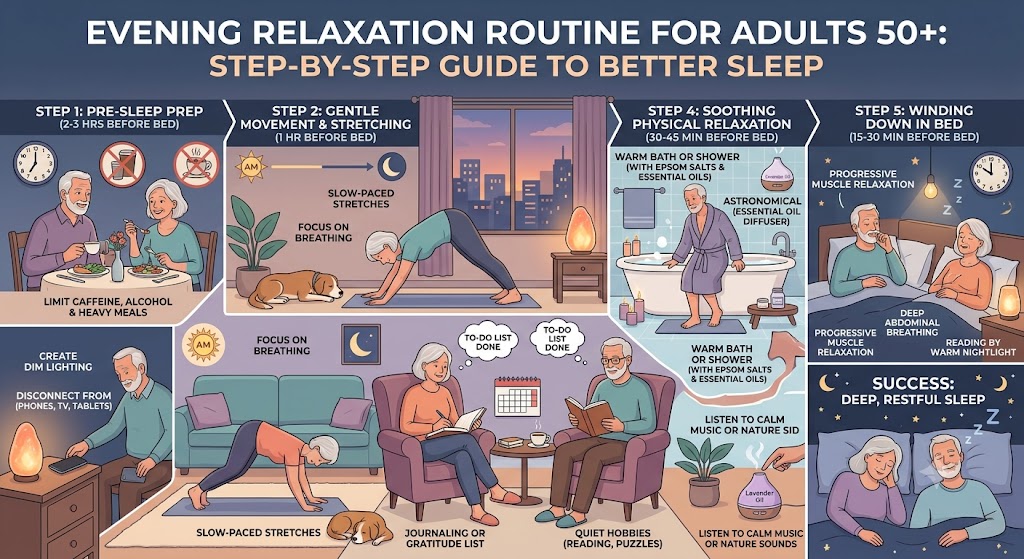
Finding a calm, consistent way to wind down after a busy day can feel like a puzzle, especially once you hit your 50s. Hormonal shifts, changing circadian rhythms, and the cumulative stress of decades all conspire to make sleep feel elusive. The good news is that a thoughtfully designed evening relaxation routine can reset your body clock, lower cortisol, and turn bedtime into a restorative ritual rather than a nightly struggle. Below is a comprehensive, step‑by‑step guide built for adults aged 50‑70 who want to improve sleep quality, reduce stress, and wake up feeling refreshed.
Why an Evening Routine Matters After 50
Impact of aging on sleep architecture
As we age, the proportion of deep slow‑wave sleep (stage 3) naturally declines, while lighter stages and brief awakenings become more common. This shift means the body spends less time in the restorative phases that support memory consolidation and tissue repair. A predictable pre‑sleep routine signals the brain that it’s time to transition into these deeper stages, helping to compensate for the age‑related loss.
Stress, cortisol, and recovery in older adults
Elevated cortisol in the evening can delay melatonin release, pushing bedtime later and fragmenting sleep. Chronic stress also impairs the immune system, which is already more vulnerable after 50. Simple relaxation techniques—breathing, gentle movement, and mindful journaling—activate the parasympathetic nervous system, lowering cortisol and creating a hormonal environment conducive to sleep.
Health benefits backed by CDC and NCOA
The CDC reports that adults over 65 who get 7‑8 hours of quality sleep have a 30 % lower risk of cardiovascular disease. The National Council on Aging (NCOA) highlights that regular bedtime routines improve mood, reduce fall risk by enhancing balance, and support metabolic health. In short, a nightly ritual is not a luxury; it’s a preventive health strategy.
Assess Your Current Nighttime Habits
Quick self‑audit checklist
- What time do you typically start winding down?
- Do you use screens within the last hour?
- How many caffeinated drinks do you consume after 4 p.m.?
- Do you feel rested in the morning?
Identifying digital and dietary disruptors
Blue‑light from phones, tablets, and TVs suppresses melatonin. Even a single cup of coffee after 4 p.m. can keep cortisol elevated for several hours. Late‑night snacks high in sugar or fat spike insulin, which interferes with the body’s natural sleep‑onset processes.
Setting realistic goals
Start with one small change—like turning off screens 30 minutes before bed—and build from there. Aim for a total routine length of 20‑30 minutes; consistency beats length.
Core Components of a Senior‑Friendly Evening Routine
Mindful breathing or guided meditation (5‑7 min)
Box breathing (inhale 4, hold 4, exhale 4, hold 4) or a short guided meditation calms the nervous system. Free apps such as Insight Timer or YouTube videos tailored for seniors work well.
Gentle stretching and progressive muscle relaxation (10 min)
Focus on neck, shoulders, lower back, and hips—areas that tighten after a day of sitting. A simple sequence might include:
- Neck side‑to‑side rolls (30 sec each side)
- Shoulder shrugs and rolls (1 min)
- Seated cat‑cow spine mobilization (2 min)
- Standing hamstring stretch using a chair for support (2 min)
- Progressive muscle relaxation: tense each muscle group for 5 seconds, then release (4 min)
For a more structured program, check out the gentle mobility routine that complements evening stretching.
Skin‑care and hygiene steps that promote relaxation
Warm showers increase peripheral blood flow, signaling the body to cool down afterward—a natural sleep cue. Follow with a calming skin‑care routine using lavender or chamomile‑infused products. If you enjoy a Japanese aesthetic, the Japanese skin‑care routine offers soothing steps that double as a mindful ritual.
Digital detox: blue‑light reduction and device limits
Activate night mode on all devices, use amber‑tinted glasses, or simply place phones out of reach. Aim for a full screen‑free window of at least 30 minutes.
Journaling or gratitude practice (3‑5 min)
Write down three things you’re grateful for and one small task for tomorrow. This off‑loads mental clutter and encourages a positive mindset before sleep.
Optional sleep‑support supplements (melatonin, magnesium)
For many adults over 50, a low‑dose melatonin (0.3‑1 mg) taken 30 minutes before bed can help reset the circadian rhythm. Magnesium glycinate supports muscle relaxation. Always consult a healthcare provider before starting any supplement. A reputable option is melatonin supplement.
Sample 30‑Minute Step‑by‑Step Routine
- 5 min – Dim lights, turn off screens, start breathing exercise
Lower ambient light to 200 lux, put away devices, and begin box breathing. - 7 min – Light stretching sequence targeting neck, shoulders, lower back
Follow the stretch list above, moving slowly and breathing deeply. - 5 min – Simple skin‑care ritual using calming ingredients
Warm shower (if desired), then apply a lavender‑infused moisturizer. - 5 min – Journaling prompts for gratitude and next‑day planning
Answer: “What went well today?” “What am I looking forward to tomorrow?” - 5 min – Guided meditation or soft music to transition to sleep
Play a 5‑minute meditation track or soft instrumental music, keeping eyes closed.
Adjust the timing to fit your schedule; the key is to keep the flow uninterrupted.
Customizing the Routine for Your Lifestyle
Adjusting time blocks for busy evenings
If you have only 15 minutes, combine breathing with a quick stretch, then skip the skin‑care step and move straight to journaling. The routine is modular—each piece works alone, but together they create a stronger signal to your brain.
Adapting movements for limited mobility
Use a sturdy chair for seated stretches, or perform the progressive muscle relaxation while lying on a supportive mattress. The goal is gentle activation, not fatigue.
Choosing aromatherapy or sleep‑aid products
Essential oils such as lavender, bergamot, or cedarwood can be diffused or applied topically (diluted). If you prefer a sleep‑aid pillow spray, look for products with pure botanical extracts and no synthetic fragrances.
Common Mistakes & How to Avoid Them
- Over‑stimulating activities late at night – Intense video games, heated debates, or vigorous cardio raise heart rate and delay melatonin. Schedule these earlier in the evening.
- Skipping the digital detox – Even a brief glance at a phone can reignite alertness. Keep devices out of the bedroom.
- Doing intense exercise too close to bedtime – High‑intensity workouts increase cortisol for up to 90 minutes. Opt for low‑impact yoga or walking after 7 p.m. if you exercise later.
FAQs About Evening Routines for 50+
Can I drink tea before bed?
Herbal teas such as chamomile, valerian, or lemon balm are safe and can be soothing. Avoid caffeinated teas after 4 p.m.
Is it safe to use melatonin daily?
Low‑dose melatonin is generally considered safe for short‑term use in adults over 50, but long‑term safety data are limited. Discuss with your physician, especially if you take blood thinners or have hormonal conditions.
How soon will I notice sleep improvements?
Most people report a measurable difference within 7‑10 days of consistent practice. If you don’t see progress after two weeks, revisit the checklist for hidden disruptors (e.g., late‑night snacking).
Final Takeaway & Next Steps
Implementing an evening relaxation routine after 50 is a low‑cost, high‑impact strategy that aligns your body’s natural rhythms, reduces stress hormones, and supports overall health. Start with a 7‑day trial: choose a consistent bedtime, follow the 30‑minute sample routine, and track how you feel each morning.
We’d love to hear how your routine evolves. Share your favorite calming steps in the comments below, and explore related guides like the bodyweight strength routine for seniors to keep your evenings both restful and empowering.