
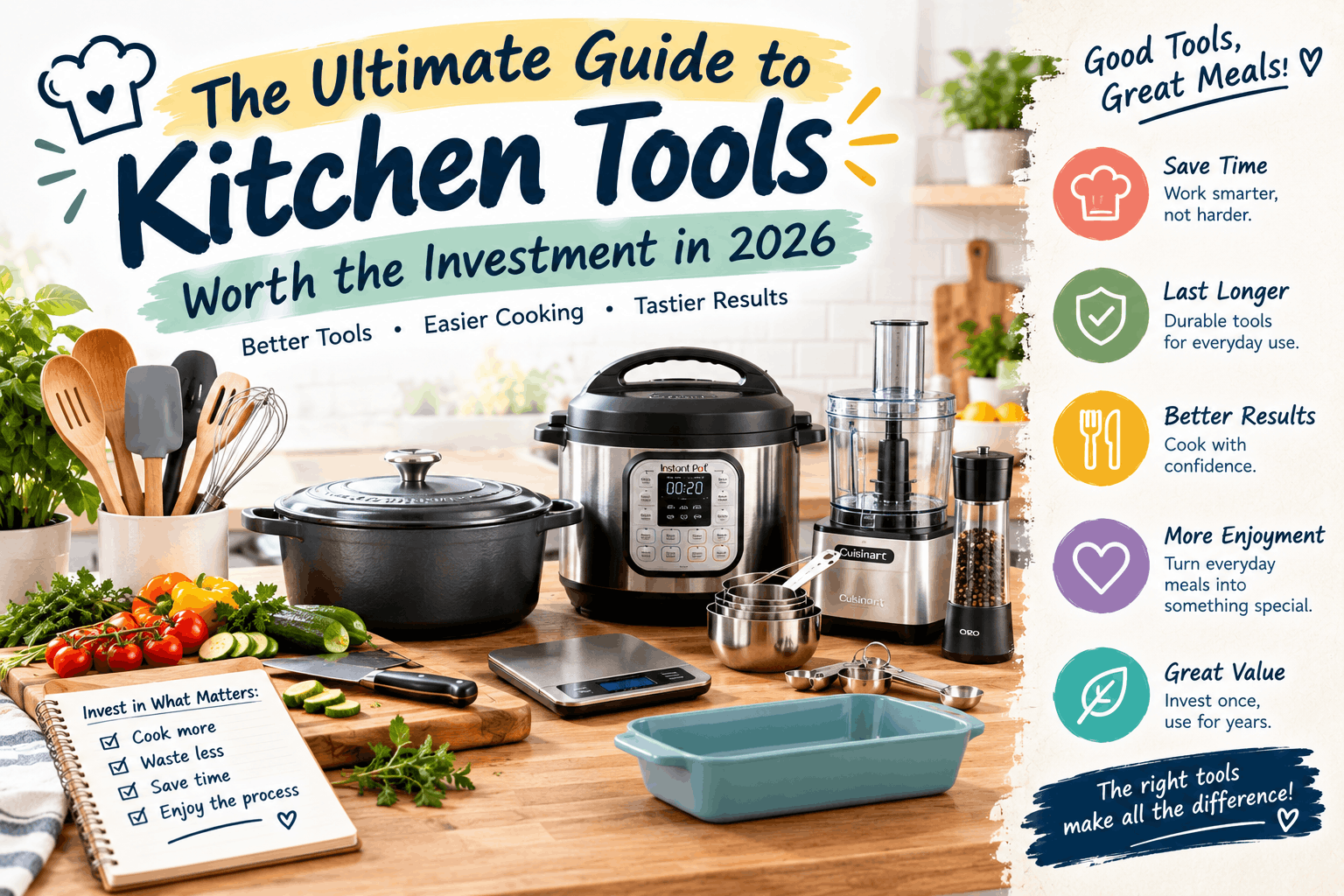
If you’ve ever snapped a cheap garlic press or watched a $20 non‑stick pan lose its coating after a few months, you know the hidden cost of low‑grade cookware. The market is flooded with viral gadgets that promise quick fixes, but most end up forgotten in a drawer or in the landfill. Finding the best kitchen tools worth the investment means looking beyond the sticker price to long‑term value, durability, and everyday performance.
To revolutionize your cooking with the right gear, you don’t need a kitchen full of single‑use gadgets. High‑quality equipment made from premium materials provides precision, safety, and reliability for years. This guide explains why durable tools deliver real ROI, how to assess material and construction, which essentials merit your money, and how to calculate cost‑per‑use.
Why Investing in Quality Pays Off
Long‑Term Cost Savings
A $25 non‑stick skillet typically needs replacement every 12‑18 months. Over ten years that’s $150‑$200 spent on the same pan. In contrast, a $130 tri‑ply stainless steel or cast‑iron skillet can last 30 years with basic care. The higher upfront cost translates into a dramatically lower cost per meal.
Performance Boost
Heavy‑bottomed, multi‑clad pans distribute heat evenly, preventing hot spots that scorch sauces. A forged, high‑carbon chef’s knife glides through vegetables, delivering uniform cuts that cook evenly. Better balance reduces hand fatigue, making prep faster and more enjoyable.
Environmental Impact
Throwaway kitchenware contributes millions of tons of waste each year. Choosing recyclable metals—cast iron, carbon steel, stainless steel—reduces landfill load and eliminates harmful fluorinated chemicals from cheap non‑stick coatings.
How to Evaluate Durability Before You Buy
Material Basics
- Stainless Steel: 18/10 (18% Cr, 10% Ni) or 304‑grade offers corrosion resistance and non‑reactivity.
- Carbon Steel: Light yet heat‑retentive, perfect for woks and fry pans; seasons to a natural non‑stick patina.
- Food‑Grade Silicone: Platinum‑cured, 450‑500°F tolerance; avoid fillers that turn white under the twist test.
- BPA‑Free Plastics: Tritan or high‑impact polycarbonate for processor jars and blender containers.
Construction Cues
- Forged vs. Stamped: Forged knives are a single steel bar, full‑tang, with a bolster—far superior edge retention.
- Riveted Handles: Double or triple stainless steel rivets on cookware stay secure through thermal expansion.
- Heat‑Resistant Lids: Solid metal knobs (stainless or brass) survive oven temps up to 500°F.
Warranty & Repairability
Lifetime warranties from brands like All‑Clad, Le Creuset, and Lodge signal confidence in durability. Look for products with replaceable parts (blades, gaskets) rather than whole‑unit replacements.
Top 5 Essentials That Deliver ROI
1. 8‑Inch High‑Carbon Stainless Chef’s Knife
An 8‑10‑inch blade of VG‑10, X50CrMoV15, or SG2 powder steel with a full tang handles 80‑90% of prep tasks. A well‑balanced knife reduces wrist strain and stays sharp longer. Shop a high‑performance chef’s knife for lasting edge retention.
2. Pre‑Seasoned Cast‑Iron Skillet
10‑12‑inch cast iron offers unmatched thermal mass, natural non‑stick seasoning, and generations‑long durability. Proper care turns it better with each use.
3. Tri‑Ply Stainless Steel Cookware
Fully clad pans feature an aluminum core sandwiched between stainless steel layers, delivering even heat to sidewalls, induction compatibility, and metal‑utensil safety.
4. High‑Power Immersion Blender
300 W+ motor, stainless steel shaft, variable speed—perfect for soups, smoothies, and emulsions directly in the pot, saving counter space.
5. Digital Kitchen Scale
0.1 g resolution, tare function, stainless platform, and auto‑off timer ensure precise measurements for baking and portion control.
Spotting Overhyped Gadgets
Single‑function novelties—avocado slicers, electric herb keepers, plastic egg poachers—often add clutter without real benefit.
“If a tool performs only one hyper‑specific job, occupies significant cabinet space, and cannot be cleaned in seconds, it’s likely a gimmick.”
Red Flags
- Thin plastic gears that strip under load.
- Multi‑blade attachments that bend or trap food.
- Unit‑task designs that a sharp knife or sturdy pan can replace.
Research Before Buying
Consult independent reviews from Consumer Reports, Serious Eats, or Food & Wine. Look for drop tests, heat‑stress cycles, and long‑term usage data.
Maintenance Hacks to Extend Lifespan
Knife Care
- Hand wash only; avoid dishwasher heat and abrasive detergents.
- Use end‑grain wood or HDPE cutting boards.
- Hone regularly; sharpen with a whetstone or professional service every 6‑12 months.
Cast‑Iron & Carbon Steel
Clean with warm water and a soft sponge; dry on low heat; apply a thin layer of high‑smoke‑point oil after each use.
Storage
Store knives on a magnetic strip or in a wooden block; separate pans with felt protectors to avoid scratching.
Cost‑Per‑Use Formula
Cost Per Use = Purchase Price ÷ Estimated Lifetime Uses
| Tool | Price | Lifespan | Uses | Cost/Use |
|---|---|---|---|---|
| Budget Non‑Stick Pan | $25 | 1 yr | 150 | $0.17 |
| Tri‑Ply Skillet | $130 | 25 yr | 3,750 | $0.03 |
| Cheap Chef’s Knife | $15 | 1 yr | 200 | $0.08 |
| Forged Chef’s Knife | $140 | 20 yr | 5,000 | $0.02 |
High‑tier gear delivers 70‑80% lower cost per use while boosting safety and efficiency.
Where to Buy Smartly
Trusted Retailers
Amazon, Williams‑Sonoma, Sur La Table, and brand sites (Lodge, All‑Clad, Zwilling) offer authentic warranties and return policies.
Timing Purchases
- Mid‑summer sales (Prime Day, Amazon Lightning Deals).
- Black Friday/Cyber Monday for deep discounts.
- Factory‑seconds sales for minor cosmetic blemishes.
FAQ
Full set vs. individual pieces?
Individual pieces give better value; sets often include rarely used items.
How to verify tri‑ply?
Check the pan rim; three distinct layers should be visible.
Are expensive knives safer?
Yes—sharper edges require less force, reducing slip‑related cuts.
Final Checklist
- ✔ Material: 18/10 stainless, forged carbon steel, or food‑grade silicone.
- ✔ Multi‑Task: Does it replace several tools?
- ✔ Repairability: Warranty and replaceable parts?
- ✔ Cost‑Per‑Use: Does it justify the price over years?
Focus on a sharp chef’s knife, a heavy cast‑iron skillet, and a solid tri‑ply pan. Skip short‑lived trends, and your kitchen will be faster, cleaner, and more cost‑effective for years to come.


One thought on “The Ultimate Guide to Kitchen Tools Worth the Investment in 2026”
Comments are closed.