
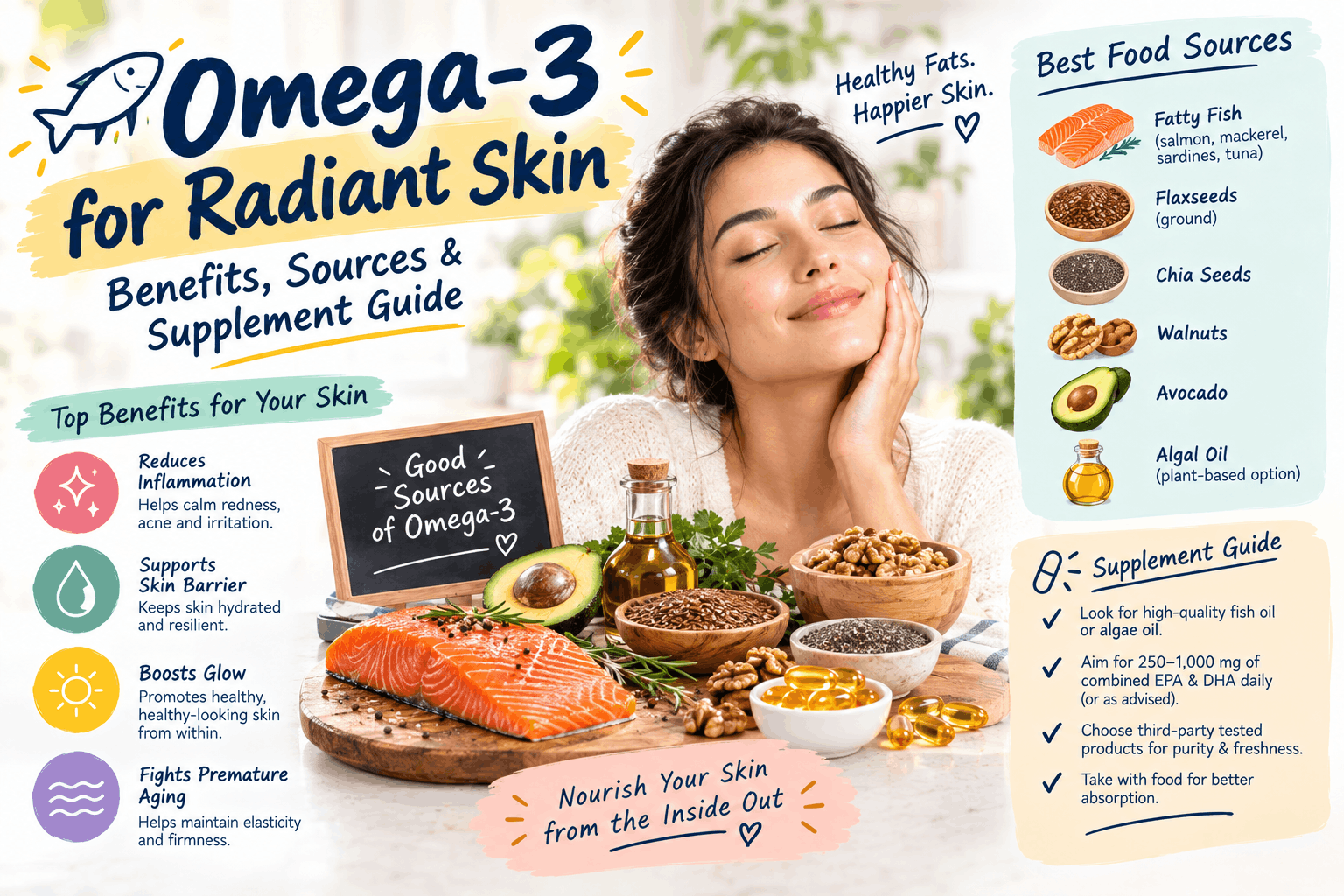
When you hear the phrase “beauty from within,” omega-3 fatty acids often sit at the top of the list. These polyunsaturated fats are not just heart‑healthy—they play a direct role in maintaining a supple, even‑toned complexion. In this guide we break down the science behind omega-3 skin benefits, highlight the most effective food sources, and give you a practical supplement roadmap so you can turn knowledge into visible results.
Why Omega-3 Matters for Skin Health
Essential fatty acids are the building blocks of cell membranes, and the skin is the body’s largest organ. Every keratinocyte (skin cell) relies on a balanced lipid bilayer to retain moisture, protect against pollutants, and signal inflammation pathways.
Barrier function: Omega-3s reinforce the stratum corneum’s lipid matrix, reducing transepidermal water loss and keeping the skin plump.
Inflammation reduction: By competing with arachidonic acid, omega-3s produce less pro‑inflammatory eicosanoids, which translates to calmer redness and fewer flare‑ups.
Collagen support: Studies show that omega-3 intake can modulate matrix metalloproteinases, enzymes that break down collagen, thereby slowing fine‑line formation.
In short, a diet rich in omega-3s helps the skin stay hydrated, resilient, and youthful—exactly what the modern, health‑conscious skincare enthusiast is after.
The Science: EPA vs. DHA in Dermatology
Omega-3s come primarily in two long‑chain forms: eicosapentaenoic acid (EPA) and docosahexaenoic acid (DHA). Though they share a common backbone, their biological actions diverge.
EPA – the inflammation moderator
EPA is a direct precursor to resolvins and protectins, molecules that actively turn off inflammatory cascades. Clinical trials on adults with acne vulgaris report a 20‑30% reduction in lesion count after 12 weeks of EPA‑rich supplementation.
DHA – the membrane stabilizer
DHA integrates into phospholipid membranes, enhancing fluidity and barrier integrity. A 2021 double‑blind study found that participants taking DHA experienced a measurable increase in skin elasticity and a decrease in wrinkle depth after eight months.
Both EPA and DHA contribute, but if your primary concern is redness or acne, lean toward EPA‑dominant sources; for anti‑aging and barrier repair, DHA takes the lead.
Top Natural Food Sources of Omega-3
Getting omega-3s from whole foods delivers additional nutrients—protein, vitamin D, antioxidants—that amplify skin benefits.
Fatty fish (the gold standard)
- Salmon (wild, 3‑oz serving): ~1,200 mg EPA + DHA.
- Mackerel (3‑oz): ~1,000 mg EPA + DHA.
- Sardines (canned, 3‑oz): ~800 mg EPA + DHA.
Aim for two servings per week to meet the omega-3 dosage for skin recommended by most dermatologists (≈500‑1,000 mg combined EPA/DHA daily).
Plant sources (ALA)
- Flaxseed (1 tbsp ground): ~2,300 mg ALA.
- Chia seeds (1 oz): ~5,000 mg ALA.
- Walnuts (¼ cup): ~2,500 mg ALA.
The body converts ALA to EPA/DHA at a modest 5‑10% efficiency, so vegetarians may need 2‑3× the amount found in fish to achieve comparable skin effects.
Emerging sources
- Algae oil (1 tsp): ~300 mg DHA, perfect for vegans.
- Hemp seed (3 tbsp): ~600 mg ALA with a balanced omega‑6:omega‑3 ratio.
These options are especially useful when dietary fish is limited or when mercury exposure is a concern.
Choosing the Right Omega-3 Supplement
Supplements fill gaps, but quality matters. Here’s how to evaluate a bottle before you click “add to cart.”
Marine oil vs. algal oil
Marine oil (fish or krill) typically offers the highest EPA/DHA concentration. Look for molecularly distilled products that remove heavy metals and PCBs.
Algal oil provides a sustainable, vegan source of DHA (and sometimes EPA). It’s less prone to oxidation and often carries a “certified sustainable” label.
Purity, oxidation, and testing
- Check for third‑party certifications such as IFOS, USP, or NSF.
- Oxidation levels should be below 5 meq O₂/kg; high peroxide values indicate rancidity and can exacerbate skin inflammation.
- Look for “enteric‑coated” capsules if you’re prone to fishy aftertaste.
Recommended dosages for skin
Most dermatology‑focused studies use 500‑1,000 mg combined EPA + DHA per day. If you rely on ALA‑rich plant foods, consider 1,500‑2,000 mg ALA daily, or supplement with a high‑quality algal oil providing at least 300 mg DHA.
For readers ready to purchase, our best omega-3 supplement meets all the criteria above and is priced competitively.
Integrating Omega-3 Into Your Skincare Routine
Timing and synergy amplify results. Here’s a practical daily regimen.
Meal timing
Consume omega-3 with a meal containing healthy fats (olive oil, avocado) to improve absorption. A typical schedule:
- Breakfast: ½ tbsp ground flaxseed mixed into oatmeal.
- Lunch: 3‑oz grilled salmon or a algae‑oil capsule.
- Dinner: A handful of walnuts or a chia‑seed pudding.
Topical synergy
Omega-3s work well with antioxidants that prevent lipid peroxidation. Pair oral intake with a night cream containing vitamin E and ceramides for a double‑layer barrier boost. For readers interested in advanced actives, explore our biomimetic ingredients deep‑dive, which explains how lab‑crafted lipids mimic natural skin fats.
Sample daily regimen
Morning: Cleanser → Vitamin C serum → SPF 30+ → Omega‑3‑rich breakfast.
Afternoon: Light lunch with fish or algae oil → Hydrating mist.
Evening: Double‑cleanse → Retinol (if tolerated) → Ceramide‑rich moisturizer → Omega‑3 supplement.
Consistency over 8‑12 weeks is key; skin turnover cycles mean visible improvements usually appear after two months.
Potential Side Effects & FAQs
Omega-3s are safe for most adults, but awareness prevents surprises.
Common tolerability issues
- Minor gastrointestinal upset (bloating, mild diarrhea) – often mitigated by splitting the dose.
- Fishy aftertaste – choose enteric‑coated capsules or algae oil.
Interactions with medications
High doses (>3 g/day) can thin blood and may interact with anticoagulants (warfarin, clopidogrel). Always consult your physician before starting a regimen above 1,000 mg EPA/DHA daily.
Reader questions
Q: Can omega-3 improve existing hyperpigmentation?
A: While omega-3 reduces inflammation, it does not directly inhibit melanin production. Pairing it with brightening agents like vitamin C or niacinamide yields better results.
Q: Is there a difference between farmed and wild salmon for skin health?
A: Wild salmon typically contains higher EPA/DHA ratios and fewer contaminants. If you choose farmed, verify that the product is responsibly raised and tested for pollutants.
Q: How long before I see smoother skin?
A: Most users report noticeable hydration and reduced redness after 4‑6 weeks; anti‑aging benefits (elasticity, fine lines) often emerge after 12‑16 weeks.
For a broader perspective on skin‑supporting nutrients, check out our PDRN skincare article, which explores another emerging ingredient with proven collagen‑stimulating properties.
Conclusion
Omega-3 fatty acids offer a science‑backed, versatile approach to achieving radiant skin—from strengthening the barrier and calming inflammation to supporting collagen integrity. By prioritizing high‑quality fish or algae sources, supplementing thoughtfully, and pairing intake with complementary topical actives, you can create a holistic routine that delivers lasting glow. Remember, consistency and quality trump quick fixes—your skin will thank you for the long‑term investment.


2 thoughts on “Omega-3 for Radiant Skin: Benefits, Sources & Supplement Guide”
Comments are closed.