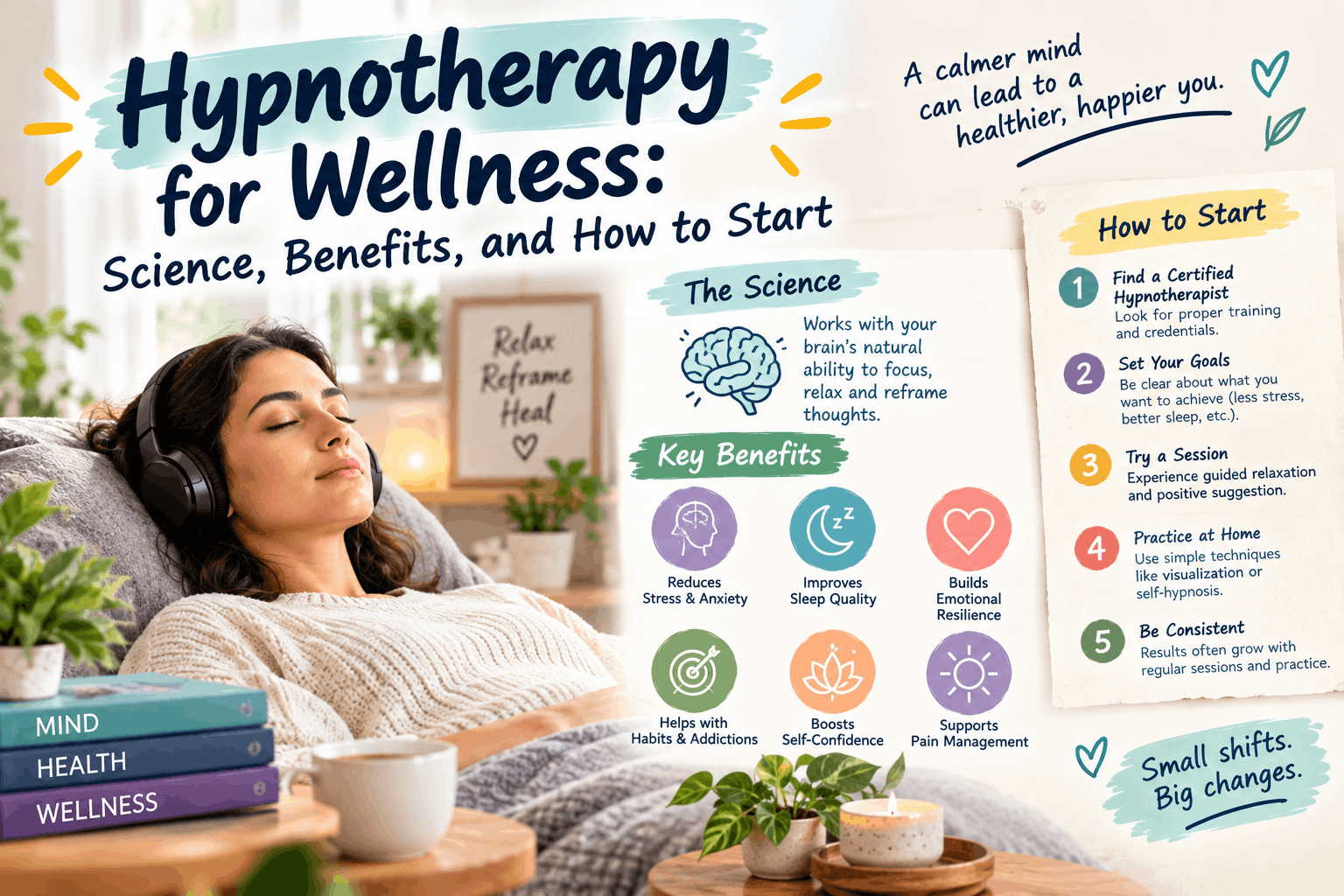
In a world where high‑pressure jobs and constant digital noise dominate daily life, many wellness‑focused adults are looking beyond meditation and breathwork for deeper, subconscious tools to manage stress, improve sleep, and sharpen mental clarity. Clinical hypnotherapy—grounded in neuroscience and delivered by trained professionals—offers a proven, evidence‑based pathway to rewire habit loops, calm the nervous system, and boost performance. This guide explains what hypnotherapy for wellness really is, how it differs from meditation, the top health benefits, practical self‑hypnosis steps, and what to expect when you work with a certified practitioner.
What Is Wellness Hypnotherapy? Debunking Myths vs. Science
When people hear the word “hypnosis,” images of stage shows, swinging watches, and mind‑controlled volunteers often surface. Those theatrical displays are entertainment, not therapy. Wellness hypnotherapy is a clinical modality that uses focused attention and deep relaxation to facilitate measurable changes in brain activity.
Clinical hypnotherapy vs. stage hypnosis
Stage hypnosis relies on suggestion, peer pressure, and the performer’s charisma to produce fleeting, often humorous responses. Clinical hypnotherapy, by contrast, follows a structured protocol, obtains informed consent, and targets specific neural pathways. A therapist guides the client into a trance‑like state—characterized by heightened suggestibility—not by coercion but by cooperation.
Brainwave shifts: from beta to alpha and theta
During everyday alertness, the brain operates primarily in the high‑frequency beta range (13‑30 Hz), associated with analytical thinking and stress. Hypnotherapy induces a gradual shift toward alpha (8‑12 Hz) and theta (4‑7 Hz) frequencies, states linked to relaxed awareness, creativity, and memory consolidation. Functional MRI studies show that these slower rhythms reduce activity in the amygdala (the brain’s alarm center) while enhancing connectivity in the prefrontal cortex, the region responsible for executive control and habit formation.
Hypnotherapy vs. Meditation: Key Differences in Mind‑Body Healing
Both practices cultivate calm, yet they operate on distinct mechanisms.
Meditation: observing thoughts
Meditation teaches non‑judgmental observation of thoughts, allowing them to pass without attachment. This passive stance can lower cortisol over time, but it does not directly rewrite entrenched belief patterns.
Hypnotherapy: targeted subconscious reframing
Hypnotherapy goes a step further by delivering precise, positive suggestions while the client’s critical mind is quieted. These suggestions are designed to reprogram the brain’s default mode network (DMN), which is active during mind‑wandering and self‑referential thinking. By interrupting the DMN’s habitual loops, hypnotherapy can break the “stress‑rumination” cycle that fuels anxiety and imposter syndrome.
Practical distinction
- Meditation: Ideal for building present‑moment awareness and emotional regulation.
- Hypnotherapy: Best for fast‑tracking specific goals such as reducing performance anxiety, improving sleep, or reshaping eating habits.
Top Wellness Benefits of Clinical Hypnotherapy
Research across psychology, neuroscience, and integrative medicine highlights several measurable outcomes.
1. Downregulating the sympathetic nervous system
During a hypnotherapy session, heart rate variability (HRV) increases, indicating a shift from sympathetic (fight‑or‑flight) dominance to parasympathetic (rest‑and‑digest) activity. Salivary cortisol levels often drop 20‑30% after a series of sessions, reducing systemic inflammation linked to chronic stress.
2. Overcoming emotional eating
By accessing the subconscious motivations behind cravings, therapists can replace “food‑as‑comfort” scripts with healthier coping statements. Clients report a 40% reduction in binge episodes after 4‑6 weeks of guided hypnotherapy.
3. Enhancing sleep quality
Alpha‑theta training before bedtime helps synchronize the brain’s sleep‑onset mechanisms. A randomized trial found that participants using nightly self‑hypnosis experienced a 30‑minute reduction in sleep latency and a 15% increase in deep‑sleep percentages.
4. Dissolving imposter syndrome
Targeted suggestions that reinforce competence and self‑worth rewire the brain’s reward circuitry. Clients often notice a boost in confidence during presentations and meetings within a few sessions.
5. Supporting mental clarity and focus
By quieting background mental chatter, hypnotherapy improves working memory capacity. Professionals report clearer decision‑making and reduced mental fatigue during high‑stakes projects.
How to Practice Guided Self‑Hypnosis at Home
Self‑hypnosis empowers you to integrate therapeutic suggestions into daily routines without needing a therapist for every session. Follow this four‑step framework for a safe, effective practice.
Step 1: Induction
Begin in a quiet space, seated or lying down. Close your eyes and take three deep breaths, counting to four on the inhale and six on the exhale. As you exhale, imagine tension draining from your body. Use a gentle phrase like, “With each breath, I become more relaxed.”
Step 2: Progressive Physical Relaxation
Mentally scan your body from toes to crown, consciously releasing tension in each muscle group. Visualize a warm wave of relaxation traveling upward, deepening the sense of calm. This process helps shift brainwaves into the alpha range.
Step 3: Focused Suggestions
When you feel fully relaxed, introduce concise, present‑tense affirmations tailored to your goal. For anxiety, try: “I breathe easily, and my mind stays clear.” For sleep: “My body drifts into restful sleep within minutes.” Repeat each suggestion three times, allowing the subconscious to absorb the message.
Step 4: Grounding Return
Gently bring awareness back by counting upward from one to five, telling yourself you will feel refreshed and alert at “five.” Open your eyes, stretch, and note any subtle shifts in mood or body sensations.
Creating post‑hypnotic anchors
Anchors are sensory cues that trigger the desired state later in the day. Pair a specific scent (e.g., lavender oil) or a tactile cue (pressing thumb and forefinger together) with your suggestion during the session. Later, using the same cue will cue the brain to re‑enter the relaxed state.
Working with a Certified Hypnotherapist: What to Expect
While self‑hypnosis is valuable, collaborating with a qualified professional accelerates progress, especially for deep‑seated issues.
Intake interview and goal setting
The first appointment typically involves a comprehensive interview to identify stress triggers, health history, and personal objectives. The therapist may use standardized questionnaires (e.g., Perceived Stress Scale) to establish a baseline.
Personalized therapeutic plan
Based on the intake, the hypnotherapist crafts a series of sessions that blend induction techniques, tailored suggestions, and post‑session homework. Progress is monitored through follow‑up assessments and optional physiological measures like HRV tracking.
Credentials to verify
Ensure your practitioner holds certification from reputable bodies such as the National Board for Certified Clinical Hypnotherapists (NBCCH) or the American Society of Clinical Hypnosis (ASCH). Look for a background in psychology, counseling, or medicine, which adds an extra layer of safety and ethical oversight.
Safety and ethical considerations
Ethical hypnotherapists never suggest actions that conflict with a client’s values, never claim miracle cures, and always obtain informed consent for each suggestion. They maintain confidentiality and provide a clear exit strategy if a client feels uncomfortable.
Practical Tips for Integrating Hypnotherapy into a Busy Lifestyle
Even high‑pressure professionals can weave hypnotherapy into daily routines.
- Micro‑sessions: A 5‑minute self‑hypnosis break between meetings can reset stress levels.
- Morning anchor: Pair a brief affirmation with your coffee ritual to start the day with focus.
- Evening wind‑down: Use a guided audio (e.g., a recommended tool) to transition into sleep.
Frequently Asked Questions
Is hypnotherapy safe for everyone?
Most adults can safely experience hypnotherapy, but individuals with severe psychosis, certain personality disorders, or uncontrolled epilepsy should consult a medical professional first.
How many sessions are needed to see results?
Results vary by goal. Stress‑reduction protocols often show measurable improvement after 3‑5 sessions, while habit‑change programs may require 6‑12 sessions.
Can I combine hypnotherapy with other wellness practices?
Absolutely. Many clients pair hypnotherapy with yoga, mindfulness, or cognitive‑behavioral therapy (CBT) for synergistic effects. Just ensure each practice respects your overall time budget.
Do I need special equipment?
No. A quiet space, comfortable seating, and optionally a smartphone for guided audio are sufficient.
Conclusion
Clinical hypnotherapy bridges the gap between ancient trance techniques and modern neuroscience, offering a scientifically validated toolkit for stress reduction, habit reframing, and mental clarity. By understanding its mechanisms, distinguishing it from meditation, and applying practical self‑hypnosis steps—or partnering with a certified therapist—you can unlock deeper levels of wellness without sacrificing productivity. Ready to explore? Start with a short guided session tonight, set a clear intention, and notice how the subtle shift in brainwave patterns translates into real‑world calm and focus.
For further inspiration on building a resilient self‑care routine, check out this self‑care mindset for burnout prevention guide, or browse the upcoming wellness expo guide to connect with experts in the field.