
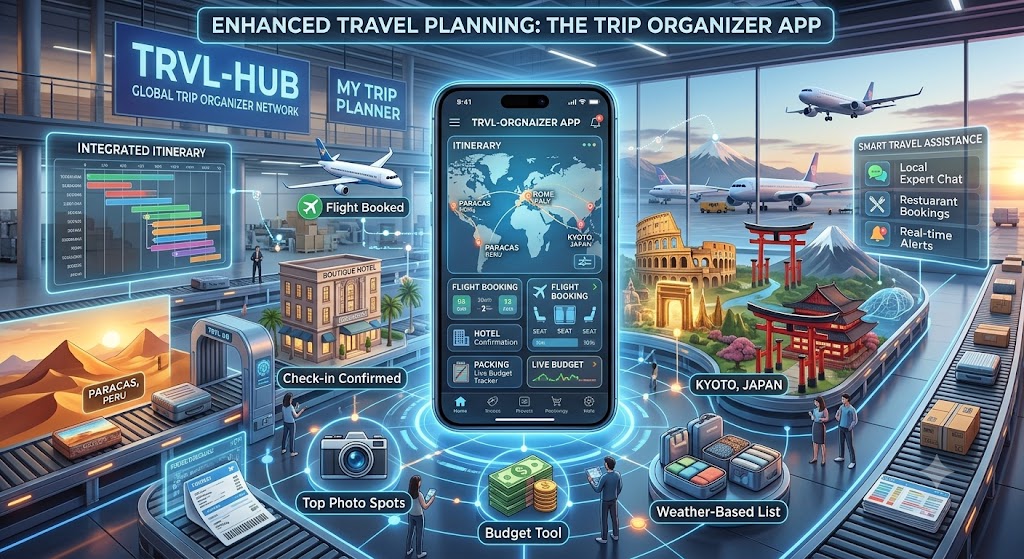
How a Trip Organizer App Enhances Travel Planning
Planning a trip can feel like juggling flaming swords-between flights, accommodations, activities, and the ever-present anxiety of missing a connection. In today’s digital age, a well-designed trip organizer app transforms that frantic juggling act into a seamless, enjoyable process. By centralizing every detail, offering real-time updates, and providing smart suggestions, these apps become indispensable travel companions.
But why have so many travelers turned to apps instead of traditional planners or spreadsheets? Because the modern traveler demands instant access, collaboration, and personalization-all delivered in a single, intuitive interface. Below, we dissect how trip organizer apps elevate every stage of travel planning, from the initial spark of inspiration to the last sunset of your journey.
1. The Evolution of Travel Planning
Historically, travel planning involved paper itineraries, sticky notes, and countless phone calls. As technology progressed, people migrated to email threads and spreadsheets. However, these tools lacked integration and real-time synchronization. Consequently, the introduction of mobile apps marked a pivotal shift, enabling travelers to manage itineraries on the go.
Today, a trip organizer app is more than a digital notebook. It combines mapping, budgeting, booking, and social features into one cohesive platform. For example, travelers can now sync flight confirmations directly from their email, automatically populate hotel details, and receive instant alerts if a gate changes. This integration eliminates redundant steps, saving precious time.
Furthermore, the rise of AI and machine learning has empowered apps to anticipate traveler needs. In contrast to static itineraries, modern apps adapt to changing circumstances, offering alternative routes, last-minute deals, or weather-appropriate suggestions. As a result, travelers experience greater confidence and flexibility throughout their trip.
2. Core Features of a Trip Organizer App
While each app varies in design, the most effective ones share a set of core features. Understanding these features helps travelers choose the right tool and maximize its benefits.
- Unified Dashboard – A single screen displays flights, accommodations, activities, and notes.
- Automated Data Sync – Import reservations via email or API, reducing manual entry.
- Collaborative Sharing – Invite friends or family to co-edit itineraries.
- Budget Tracker – Monitor expenses against a preset budget.
- Offline Access – Download maps and itineraries for use without data.
- Smart Recommendations – AI suggests restaurants, attractions, and packing lists.
- Real-time Alerts – Receive notifications about flight delays or gate changes.
Because these features converge in one platform, travelers no longer need multiple apps or spreadsheets. Instead, they enjoy a streamlined experience that adapts to their needs.
3. Streamlining Itinerary Creation
Creating an itinerary traditionally involved drafting dates, times, and locations, then cross-checking against booking confirmations. This process is error-prone and time-consuming. With a trip organizer app, the workflow becomes linear and intuitive.
Step-by-Step Framework
1. Import Bookings – Connect your email or airline accounts to auto-populate flights, hotels, and car rentals. For example, a flight confirmation email from Aviasales instantly appears in the app.
2. Add Activities – Search the integrated database for tours, museums, or events. Then, drag and drop them onto the calendar.
3. Set Reminders – Assign notifications for check-ins, boarding times, or museum opening hours.
4. Collaborate – Share the itinerary with travel companions. They can add personal notes or suggest changes.
5. Export & Print – Generate a PDF or printable version for offline use.
Because the process is linear, travelers reduce the risk of missed reservations and enjoy peace of mind.
4. Collaboration and Sharing Power
Modern trips often involve groups, whether couples, families, or friends. Coordinating schedules, preferences, and budgets becomes challenging when each person maintains separate notes. A trip organizer app solves this by fostering real-time collaboration.
For instance, a group of friends planning a road trip can collectively choose restaurants, hotels, and activities. Each member can vote on options, and the app automatically updates the itinerary for everyone. Consequently, decision fatigue diminishes, and everyone feels heard.
Additionally, shared itineraries enable dynamic updates. If a flight is delayed, the app notifies all participants instantly, and the new schedule is reflected across devices. This feature is especially valuable for families traveling with children or elderly members who rely on timely information.
5. Budget Management and Smart Booking
Budgeting is a cornerstone of responsible travel. Yet, tracking expenses across multiple platforms can be cumbersome. Trip organizer apps integrate budgeting tools that sync with booking confirmations.
When a traveler books a hotel, the app records the cost and updates the overall budget in real time. If the traveler later adds a pricey dinner, the app recalculates the remaining balance instantly. Consequently, overspending is avoided, and travelers can reallocate funds to other experiences.
Moreover, many apps partner with airlines and hotels to offer exclusive discounts. For example, booking a flight through the app might yield a 5% savings compared to the airline’s website. Similarly, hotel partners often provide loyalty points or complimentary upgrades for app users.
Because budgeting is visual and interactive, travelers gain a clearer understanding of their financial limits and can make informed decisions.
6. Real-time Updates and Offline Accessibility
Travel is unpredictable. Weather changes, gate shifts, or sudden closures can derail plans. A robust trip organizer app mitigates these disruptions by providing real-time updates and offline functionality.
When a flight is delayed, the app pushes a notification to every device, along with an updated boarding time. Meanwhile, if a tourist attraction closes unexpectedly, the app suggests an alternative nearby venue. Additionally, offline maps and itineraries ensure travelers remain connected even in remote areas with limited connectivity.
Because these features are proactive rather than reactive, travelers maintain control even when circumstances shift.
7. Personalization and AI Recommendations
Every traveler is unique, with distinct interests, dietary restrictions, and mobility needs. AI-driven personalization tailors the itinerary to these nuances.
For example, if a traveler prefers vegan cuisine, the app identifies restaurants with vegan menus and suggests them automatically. Similarly, if a traveler has a mobility limitation, the app highlights wheelchair-accessible attractions.
Furthermore, AI can recommend packing lists based on destination climate, planned activities, and personal preferences. For instance, a beach vacation in the Caribbean would prompt the app to suggest sunscreen, a lightweight rain jacket, and a waterproof phone case. Travelers can then purchase these items directly through affiliate links, such as essential travel accessories or healthy food snacks for the long flight.
Because the itinerary evolves with the traveler’s preferences, the experience feels personal and curated.
8. Case Study: Planning a European Adventure
To illustrate the power of a trip organizer app, let’s walk through a hypothetical 12-day European adventure. The traveler, Alex, wants to visit Paris, Amsterdam, and Rome, with a mix of cultural sites, culinary experiences, and relaxation.
Day 1-3: Paris
- Flights auto-imported from Aviasales.
- Hotel booked via the app’s partner program, earning free breakfast.
- AI recommends the Louvre, Eiffel Tower, and a vegan dinner at Le Petit Vegan.
- Offline maps downloaded for the Seine river walk.
Day 4-6: Amsterdam
- High-speed train tickets added automatically.
- Suggested canal cruise and a bike rental from local partners.
- Budget tracker flags the cost of a tulip garden visit; Alex reallocates funds to a cooking class.
- Offline map ensures navigation during the canal tour.
Day 7-12: Rome
- Flights and hotel details sync automatically.
- AI identifies a gluten-free restaurant and a guided tour of the Colosseum.
- Smart packing list includes sunscreen, a lightweight rain jacket, and a reusable water bottle.
- Travel companions receive shared itinerary updates, ensuring everyone is aligned.
Because Alex leveraged the app’s full suite-auto-sync, AI recommendations, budgeting, and collaboration-planning took only a few hours, and the trip itself unfolded smoothly.
FAQ
1. Are trip organizer apps free?
Many offer free basic plans with optional premium upgrades. Premium features often include advanced budgeting, offline maps, or exclusive discounts.
2. Can I use the app offline?
Yes. Most apps allow you to download itineraries, maps, and travel documents for offline use, which is invaluable in areas with limited connectivity.
3. How secure is my personal data?
Reputable apps employ end-to-end encryption and comply with GDPR or local privacy regulations. Always review the privacy policy before signing up.
4. Do I need to pay extra for booking flights or hotels through the app?
In most cases, booking through the app is free. However, some apps offer discounted rates or loyalty points for bookings made directly within the platform.
5. Can I share my itinerary with family who don’t have the app?
Yes. You can export a PDF or share a link that opens the itinerary in a web view.
Conclusion
From the first spark of wanderlust to the last memory of a sunset, a trip organizer app acts as a steadfast ally. By centralizing data, automating updates, offering AI-driven personalization, and fostering collaboration, it transforms travel planning from a stressful chore into a joyous, organized adventure.
Ultimately, the modern traveler seeks efficiency, flexibility, and peace of mind. A well-chosen trip organizer app delivers all three, ensuring that every journey is not just a trip, but a curated experience.
Ready to elevate your next adventure? Download a top-rated trip organizer app today and experience travel planning redefined. Happy travels!


One thought on “How a Trip Organizer App Enhances Travel Planning”
Comments are closed.