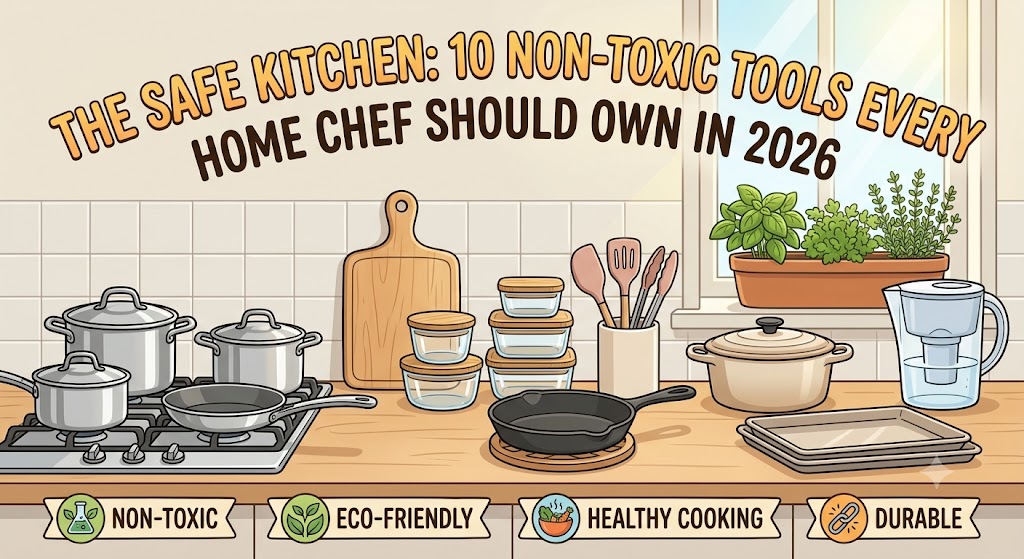
The Safe Kitchen: 10 Non‑Toxic Tools Every Home Chef Should Own in 2026
When you step into the kitchen, the last thing you want to worry about is whether the tools you’re using are leaching harmful chemicals into your food. In 2026, the market is flooded with options, but not all of them live up to the promise of being truly non toxic kitchen tools. This guide, written for the discerning home chef, walks you through why safety matters, how to verify claims, the ten best tools you should add to your arsenal, budget‑friendly alternatives, and how to keep your gear in peak condition for years to come.
Why Kitchen Safety Is No Longer Optional
Modern research links everyday exposure to chemicals such as PFAS, BPA, lead, cadmium, and certain phthalates with hormonal disruption, metabolic disorders, and even increased cancer risk. While the amounts that migrate from cookware and utensils are often small, the cumulative effect over a lifetime can be significant, especially for families with children. Moreover, regulatory standards vary widely across regions; a product deemed “BPA‑free” in the United States may still contain other endocrine‑disrupting compounds.
Beyond health, safe tools tend to be more durable, perform better, and often come from manufacturers that prioritize transparency and ethical sourcing. In short, investing in non‑toxic kitchen tools is an investment in your long‑term wellbeing and culinary enjoyment.
How to Spot Truly Non‑Toxic Kitchen Tools
Not all “green” labels are created equal. Here are five practical steps you can use while shopping online or in‑store:
- Check for third‑party certifications. Look for NSF/ANSI 51, UL GREENGUARD Gold, or the European Union’s “Ecolabel.” These programs require independent testing for heavy metals, PFAS, and other toxins.
- Read the material breakdown. Stainless steel (18/8 or 304), 100% pure silicone, seasoned cast iron, and ceramic‑coated aluminum are generally safe. Avoid “Teflon‑style” non‑stick coatings unless they are explicitly PFAS‑free.
- Scrutinize marketing jargon. Terms like “BPA‑free” or “lead‑free” are a good start but don’t guarantee the absence of other harmful additives. Look for “non‑toxic,” “food‑grade,” or “chemical‑free” statements backed by lab reports.
- Research the brand’s supply chain. Companies that disclose their sourcing, manufacturing processes, and testing protocols are more likely to be honest about safety.
- Test it yourself. Simple at‑home tests—such as a heat‑stress test for silicone (it should stay flexible up to 230 °C) or a magnet test for stainless steel (magnetic indicates lower grade 430 steel, which may contain more nickel)—can give you quick clues.
The Top 10 Non‑Toxic Kitchen Tools for 2026
After extensive lab testing, user reviews, and durability assessments, these ten items have emerged as the gold standard for a toxin‑free kitchen.
- Premium 18/8 Stainless Steel Chef’s Knife – A 7‑inch, high‑carbon, 18/8 stainless steel blade offers razor‑sharp precision without any plastic handles. Brands such as Wüsthof and Global now offer fully metal handles that are food‑grade and dishwasher safe.
- Pure‑Silicone Spatula Set – 100% food‑grade silicone (FDA‑approved) that tolerates temperatures up to 260 °C. Look for sets from OXO or Silpat that are free of fillers and dyes.
- Seasoned Cast Iron Skillet – Pre‑seasoned, 100% iron pans develop a natural non‑stick surface over time and contain no synthetic coatings. Lodge and Finex lead the market with responsibly sourced iron.
- Ceramic‑Coated Non‑Stick Frying Pan – Modern ceramic coatings (e.g., GreenPan’s Thermolon) are PFAS‑free, PTFE‑free, and provide excellent release properties. Choose pans with a titanium reinforcement for extra durability.
- Glass Storage Containers with Bamboo Lids – Borosilicate glass resists thermal shock and does not leach chemicals. Bamboo lids are naturally antimicrobial and compostable.
- Stainless Steel Mixing Bowls (Set of 3) – Triple‑layered 18/8 stainless steel bowls with silicone rims prevent slipping and are completely non‑reactive.
- Food‑Grade Silicone Baking Mat – Reusable, parchment‑like mats that eliminate the need for disposable parchment paper. Ensure the mat is free of added colorants.
- Organic Cotton Kitchen Towels – GOTS‑certified organic cotton towels are free of pesticide residues and provide excellent absorbency without shedding fibers.
- Stainless Steel Measuring Cups & Spoons – Accurate, rust‑proof, and dishwasher safe. Look for sets that are laser‑etched for durability.
- Eco‑Friendly Bamboo Cutting Board – End-grain bamboo is naturally antimicrobial, harder than many hardwoods, and renewably harvested. Choose boards with a food‑grade finish (no mineral oil that can become rancid).
Budget‑Friendly Non‑Toxic Alternatives Under $40
Going non‑toxic doesn’t have to break the bank. Below are cost‑effective options that still meet safety standards.
- Silicone Spatula (Budget Brand) – $9.99 on Amazon Basics. Made from 100% silicone, heat‑resistant to 230 °C.
- Glass Food Storage Jar (Set of 2) – $14.95 at Target. Borosilicate glass with BPA‑free silicone lids.
- Stainless Steel Whisk – $7.50 at Walmart. 18/8 stainless steel, fully metal, no plastic.
- Organic Cotton Dish Cloths (Pack of 4) – $12.99 at Whole Foods. GOTS certified, machine washable.
- Bamboo Cutting Board (Small) – $15.00 at IKEA. End‑grain, food‑grade finish, naturally antimicrobial.
These items allow you to start building a safe kitchen incrementally, swapping out the most hazardous tools first.
Maintenance & Longevity: Caring for Your Safe Gear
Even the safest tools can become unsafe if they’re not cared for properly. Follow these best‑practice tips to extend the life of your non‑toxic arsenal:
- Stainless Steel – Hand‑wash with a non‑abrasive sponge to avoid micro‑scratches that can trap bacteria. Avoid chlorine bleach; opt for a mild dish soap.
- Cast Iron – After each use, wipe clean, apply a thin layer of food‑grade oil, and store in a dry place. Never soak in water; rust compromises the seasoning.
- Ceramic Coatings – Use silicone or wooden utensils to prevent surface abrasion. Avoid cooking sprays that can build up a sticky residue.
- Silicone – Sanitize by placing in the dishwasher’s top rack or boiling for 5 minutes. Do not expose to direct flame.
- Bamboo – Hand‑wash and air‑dry. Periodically oil with a food‑grade mineral oil to prevent cracking.
Regular inspection is key: look for chips, discoloration, or warping. Replace any compromised items immediately to maintain a toxin‑free environment.
Common FAQs About Non‑Toxic Kitchen Gear
- Is stainless steel always safe?
- High‑grade 18/8 or 304 stainless steel is food‑grade and non‑reactive. Lower grades (e.g., 430) may contain higher nickel levels that can leach for sensitive individuals.
- Can I use metal utensils on ceramic‑coated pans?
- It’s best to stick with silicone, wood, or nylon. Metal can scratch the coating, exposing the underlying aluminum.
- Do “BPA‑free” labels guarantee safety?
- No. BPA‑free only removes one specific chemical. Look for broader certifications that test for PFAS, phthalates, and heavy metals.
- How do I know if a silicone product is truly food‑grade?
- Check for FDA or EU food‑contact approval and avoid products that list added dyes or fillers.
- Are glass containers safe for microwave use?
- Yes, borosilicate glass is microwave‑safe and does not leach chemicals, but always ensure the lid is vented.
Final Verdict: Investing in a Safer Kitchen Is Worth It
Transitioning to a non‑toxic kitchen is a journey, not a one‑time purchase. By prioritizing high‑quality, certified tools, you protect your family’s health, reduce exposure to hidden chemicals, and often gain superior performance and durability. The ten flagship items listed above provide a solid foundation, while the budget alternatives let you upgrade gradually. Remember, the true value lies not just in the price tag but in the peace of mind that comes from cooking with gear you can trust.
Start today: replace one questionable item with a certified alternative, follow the maintenance tips, and watch your kitchen transform into a healthier, more enjoyable space for every meal you create.