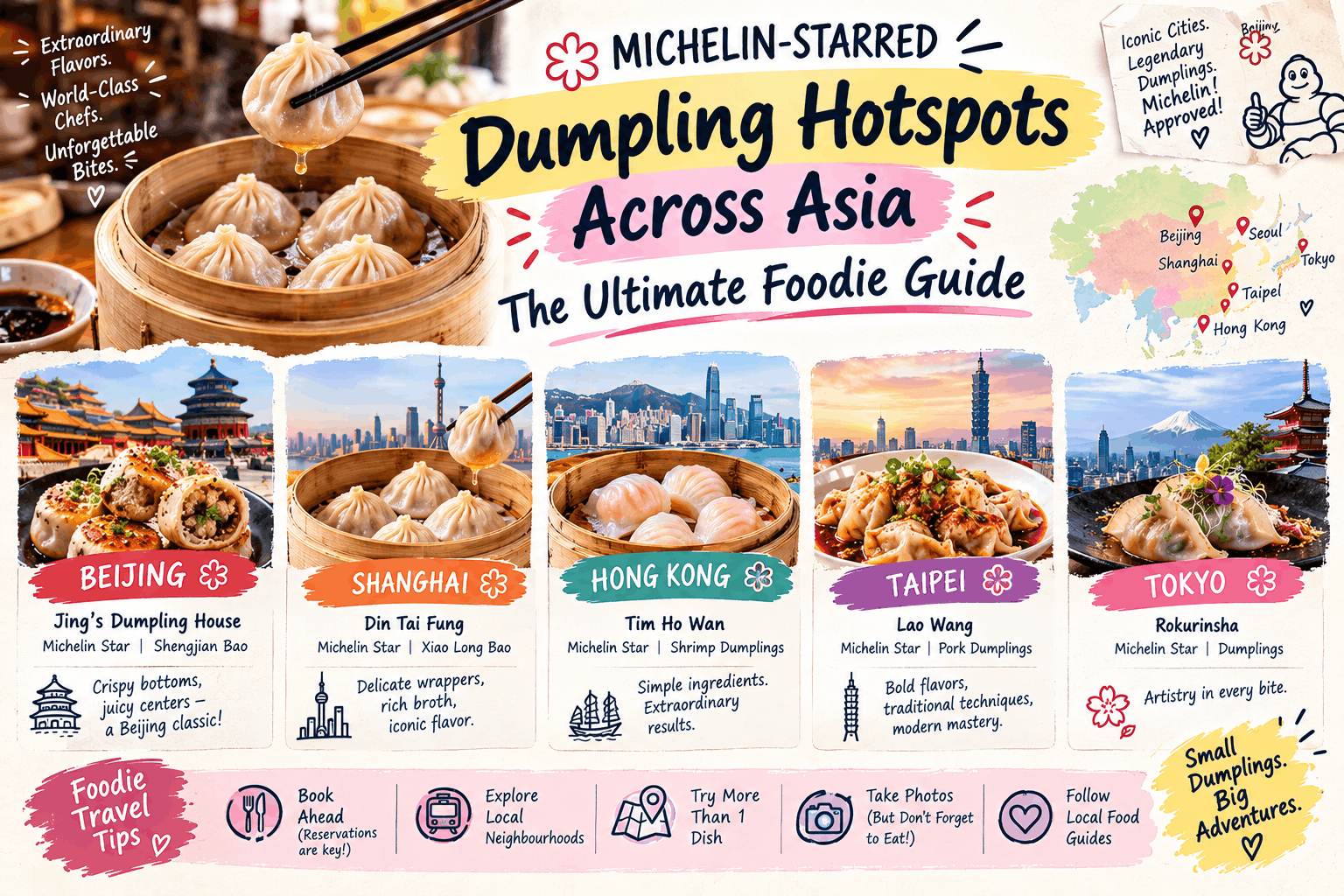
For travelers who equate a perfect trip with a perfect bite, Asia’s dumpling scene offers a rare blend of comfort, craft, and culinary prestige. From street‑side xiao long bao that earned a coveted Bib Gourmand to avant‑garde gyoza at three‑star restaurants, the continent now maps a network of Michelin‑recognized dumpling hotspots. This guide answers the essential questions—where to go, what to eat, and how to travel smart—so you can turn a simple craving into a curated, unforgettable food adventure.
Why Dumplings Matter in Asian Culinary Culture
Dumplings trace their lineage back over 1,800 years to the Han dynasty, where they were originally shaped like gold ingots to bring good fortune. In China, the humble jiaozi evolved into regional specialties such as Shanghai’s soup‑filled xiao long bao, Sichuan’s spicy chongqing dumplings, and Cantonese dim sum har gow. Korea embraced mandu, integrating it into royal court cuisine and later street markets, while Japan refined gyoza after World War II, turning it into a staple of izakaya culture.
Beyond taste, dumplings embody social rituals: families gather to fold jiaozi on Lunar New Year, friends share mandu at winter festivals, and Japanese families celebrate the first snowfall with a pot of simmering gyoza. These rituals have propelled dumplings from home kitchens to fine‑dining tables, where chefs reinterpret traditional fillings with foie gras, truffle, or sustainably sourced seafood. The Michelin Guide, once reserved for haute cuisine, now celebrates this evolution, awarding stars and Bib Gourmand accolades to establishments that elevate the simple parcel into an art form.
Understanding Michelin’s Evaluation of Dumplings
Michelin inspectors assess every dish—whether served in a Michelin‑starred restaurant or a bustling hawker stall—against a consistent set of criteria: quality of ingredients, mastery of technique, consistency, and the chef’s expression of personality. For dumplings, the focus sharpens on dough elasticity, folding precision, and the harmony between broth (if any) and filling. A perfectly sealed xiao long bao that releases a clear, seasoned broth without leaking demonstrates both technical skill and respect for tradition.
Star eligibility extends beyond the plate. Inspectors also consider the overall dining experience, from service cadence to ambiance. Bib Gourmand, a separate Michelin distinction, highlights exceptional value; many street‑food stalls earning this badge deliver restaurant‑level craftsmanship at a fraction of the price. Recent trends show an increasing number of street‑food vendors receiving stars—a testament to the guide’s evolving openness and a signal to travelers that world‑class dumplings can be found on any side of a bustling market.
Top Michelin‑Starred Dumpling Destinations by Region
East Asia
- Tokyo, Japan – Ginza Kojyu (3 ★) serves a minimalist yet luxurious gyoza filled with wagyu beef and yuzu‑infused broth. Tempura Kondo (2 ★) offers a seasonal dumpling tasting menu that pairs shiso‑scented fillings with artisanal sake.
- Osaka, Japan – Hajime (3 ★) reimagines the classic pork‑cabbage gyoza with a miso‑caramel glaze, creating a sweet‑savory contrast that earned its star in 2022.
- Seoul, South Korea – Mandu (Bib Gourmand) at Gwangjang Market is famed for its kimchi‑infused mandu, served piping hot with a side of fermented soy dipping sauce.
Southeast Asia
- Singapore – Hawker Chan (1 ★) earned fame for its soy‑glazed chicken, but its side of pork and shrimp dumplings, steamed to a flawless translucence, has become a must‑try.
- Bangkok, Thailand – Jok Kitchen (Bib Gourmand) offers a Thai‑style dumpling stuffed with lemongrass‑infused pork, served with a spicy tamarind dip.
- Ho Chi Minh City, Vietnam – Nhà Hàng Ngon (1 ★) showcases bánh bột lọc, a translucent tapioca dumpling filled with shrimp and pork, reflecting the Mekong Delta’s culinary heritage.
South Asia & Beyond
- Delhi, India – Indian Accent (2 ★) experiments with dumplings by wrapping spiced paneer and beetroot in a delicate rice flour skin, marrying Indian flavors with Chinese technique.
- Melbourne, Australia – Shujinko (Bib Gourmand) blends Japanese gyoza with Australian native ingredients like finger lime, creating a cross‑continental dumpling experience.
City‑by‑City Itinerary Templates
3‑Day Tokyo Dumpling Crawl
- Day 1 – Shinjuku: Start at Ginza Kojyu for a lunch tasting menu (reserve 2 weeks ahead). Walk to Omoide Yokocho for street‑side gyoza stalls.
- Day 2 – Tsukiji & Ginza: Join a morning dumpling‑making workshop at a local culinary school. Afternoon, sample tempura‑wrapped gyoza at Tempura Kondo.
- Day 3 – Asakusa: Explore traditional dumpling vendors near Senso‑ji, then finish with a night‑cap of sake paired with truffle‑infused gyoza at a speakeasy bar.
4‑Day Seoul Street‑Food Immersion
- Day 1 – Myeong‑dong: Try mandu at Gwangjang Market, then visit a nearby tea house for pairing with Korean barley tea.
- Day 2 – Hongdae: Book a mandu‑making class that covers kimchi, pork, and vegetarian fillings.
- Day 3 – Itaewon: Dine at a Michelin‑starred Korean BBQ that offers a premium dumpling side dish.
- Day 4 – Gangnam: End with a rooftop dinner featuring dumpling‑inspired tapas and craft beer.
5‑Day Taiwan Night‑Market Road‑Trip
- Day 1 – Taipei: Sample xiao long bao at Din Tai Fung (3 ★), then hit Raohe Street Night Market for pork and crab dumplings.
- Day 2 – Taichung: Visit the Fengjia Night Market, focusing on steamed dumplings with local herbs.
- Day 3 – Tainan: Explore the historic Anping district, tasting oyster‑filled dumplings.
- Day 4 – Kaohsiung: Join a coastal dumpling workshop that uses fresh seafood.
- Day 5 – Hualien: Conclude with a mountain‑view tea ceremony paired with sweet red‑bean dumplings.
Practical Planning Tips for the Dumpling Traveler
Reservations: Michelin‑starred venues often fill within days. Use online platforms like recommended tool to secure tables and receive instant confirmation.
Language & Menus: While major cities provide English menus, smaller stalls rely on photos or QR codes. Download translation apps beforehand, and don’t hesitate to point at pictures—most vendors appreciate the effort.
Budgeting: Balance splurges with street‑food stops. A three‑star dinner may cost $120 USD per person, but a night‑market dumpling plate is often under $5. Allocate roughly 60 % of your food budget to high‑end experiences and 40 % to local stalls.
Dietary Accommodations: Many chefs can adapt fillings for vegetarian, vegan, or gluten‑free diets, especially if you notify them in advance. In Japan, ask for “niku‑nashi” (no meat) and in Korea request “채식” (vegetarian).
Travelers with mobility concerns can benefit from inclusive tourism resources that list wheelchair‑friendly markets and restaurants with accessible restrooms.
Beyond the Plate: Complementary Experiences
Enrich your dumpling pilgrimage with hands‑on cooking classes. In Tokyo, the Tsukiji Cooking School offers a half‑day session where you learn to fold xiao long bao under a master chef’s eye. Seoul’s Mandu Academy provides a cultural deep‑dive into Korean mandu history while you craft your own.
Visit iconic food markets—Bangkok’s Chatuchak, Singapore’s Lau Pa Sat, and Taipei’s Ningxia Night Market—to witness the broader culinary ecosystem that nurtures dumpling innovation. Guided tours often include stories about local grain cultivation and the evolution of regional sauces.
Pairings elevate the experience: Japanese green tea with delicate gyoza, Korean makgeolli with kimchi‑filled mandu, and a crisp Riesling with pork‑and‑cabbage dumplings from Shanghai. Many restaurants now feature curated tasting menus that include these beverage matches.
Conclusion & Next Steps
Asia’s Michelin‑starred dumpling destinations prove that a simple parcel can embody centuries of history, regional identity, and cutting‑edge gastronomy. By following the itineraries, reservation tips, and cultural insights provided, you’ll travel confidently, savoring each bite while respecting the traditions behind it.
Ready to turn this guide into a reality? Download our printable travel checklist, book your accommodations through our trusted partners, and start mapping your dumpling adventure today.