
Introduction
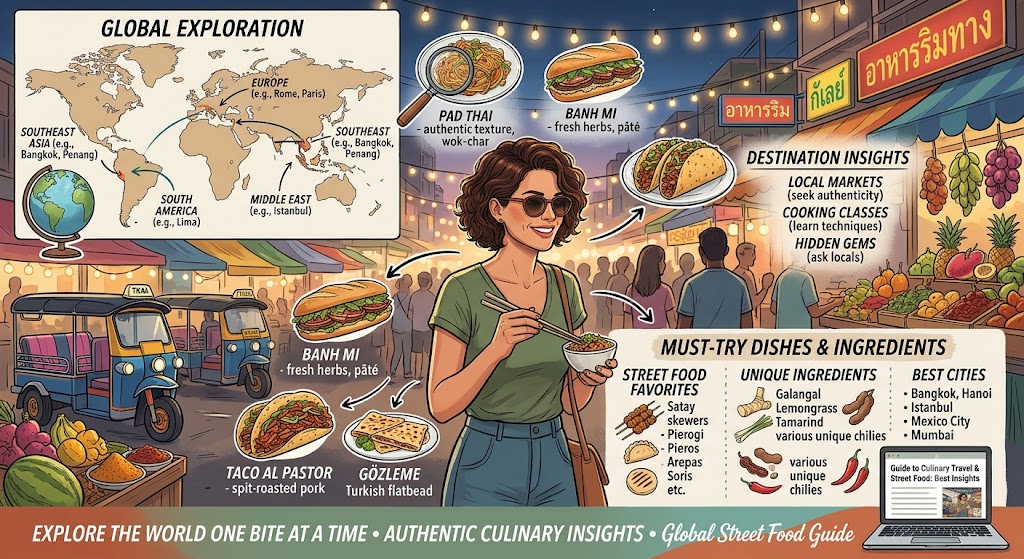
Traveling is more than just checking off landmarks; it is an invitation to taste the soul of a place. Street food, in particular, offers an authentic, unfiltered window into local culture, history, and community. In this guide, we will walk you through every nuance of culinary travel, from planning to plating, ensuring you experience the world’s best street eats with confidence and curiosity.
Why Street Food?
Street food is the heartbeat of any city, and it thrives on spontaneity, flavor, and accessibility. Because it is made on the spot, it preserves the freshest ingredients and preserves cultural rituals. Furthermore, it allows travelers to interact directly with vendors, gaining insider stories that no guidebook can provide. Consequently, a street-food adventure is both an edible and educational journey.
Planning Your Culinary Roadmap
Choosing Destinations
Begin by selecting cities that are renowned for their street-food scenes. For example, Bangkok is famous for its spicy satays, while Oaxaca boasts legendary tlayudas. Meanwhile, Lagos offers savory suya that will linger in your memory. By mapping these culinary hotspots, you create a flavor-rich itinerary that balances exploration with nourishment.
Timing & Season
Timing is critical: the best street food often appears during cooler months when vendors keep their stalls open longer. Additionally, festivals like the Rio Carnival or the Jaipur Food Fest bring temporary stalls that serve unique, seasonal delicacies. Therefore, aligning your visit with local events will amplify your culinary experience.
The Ultimate Street Food Checklist
Preparation is the key to enjoying street food safely and responsibly. Below is a concise checklist that covers gear, safety, and budgeting.
- Travel Accessories: Travel accessories such as a lightweight backpack, water bottle, and a portable phone charger ensure you stay comfortable.
- Health & Hygiene: Hand sanitizer, disposable gloves, and a reusable face mask help you maintain hygiene while you’re on the move.
- Budget Buffer: Allocate a small daily allowance for street-food treats, because you never know when a hidden gem will tempt you.
- Local Currency: Having cash on hand is essential, as many vendors do not accept cards.
Top 10 Street Food Destinations
Bangkok, Thailand
Bangkok’s night markets are legendary. Here, you’ll find pad thai, mango sticky rice, and the ever-popular roti. Because the city’s vendors source fresh ingredients daily, each bite is a burst of authentic Thai flavor. Moreover, the street-food stalls are strategically placed along bustling avenues, making them easy to locate.
Mexico City, Mexico
Mexico City’s street scene is a symphony of colors and aromas. Tacos al pastor, elote, and churros dominate the culinary landscape. Furthermore, the city’s vibrant neighborhoods provide a safe and welcoming environment for adventurous eaters.
New Delhi, India
In Delhi, street food is an art form. You’ll encounter kebabs, samosas, and the famous chaat. Because of the city’s diverse cultural tapestry, you can sample a wide range of regional flavors in a single evening.
Jakarta, Indonesia
Jakarta’s street stalls are a treasure trove of Indonesian cuisine. Roti canai, bakso, and sate ayam are must-tries. Moreover, the city’s humid climate keeps the food fresh and flavorful.
Lagos, Nigeria
Street food in Lagos is a vibrant mix of African flavors. Suya, puff-puff, and pepper soup are staples that reflect the city’s culinary heritage. Additionally, the bustling markets provide an immersive cultural experience.
Seoul, South Korea
Seoul’s street food scene is a fusion of tradition and modernity. Gimbap, tteokbokki, and hotteok showcase Korean ingenuity. Because the city is well-connected by public transport, exploring these stalls is both convenient and safe.
Rio de Janeiro, Brazil
Rio’s street vendors offer feijoada, pastel, and coxinha. The city’s lively atmosphere enhances the flavor profile, and the vendors often serve dishes with a touch of samba rhythm.
Portland, USA
Portland’s food carts are a modern culinary phenomenon. From Korean BBQ to vegan tacos, the city’s diverse offerings reflect its progressive culture. Additionally, the city’s focus on sustainability ensures that many vendors use locally sourced ingredients.
Oaxaca, Mexico
Oaxaca is famed for its tlayudas and mezcal. The city’s culinary tradition is deeply rooted in indigenous techniques, and the street stalls provide a direct taste of this heritage.
Hanoi, Vietnam
Hanoi’s street food is a blend of Vietnamese and French influences. Pho, bun cha, and banh mi are the highlights. Because the city’s vendors prioritize freshness, each dish is a delightful experience.
How to Eat Like a Local
Adopting a local mindset enhances both safety and enjoyment. Below are practical techniques that will help you navigate street-food stalls confidently.
- Observe First: Watch how vendors prepare and serve food before you approach. This gives you insight into hygiene practices.
- Ask Questions: Don’t hesitate to ask vendors about ingredients and cooking methods. Most will be eager to share.
- Start Small: Sample a few dishes before committing to a large order. This strategy prevents overindulgence.
- Use Reusable Containers: When ordering large portions, request to take leftovers in a reusable container. This practice reduces waste.
Safety & Hygiene
Street food is inherently safe when approached with caution. Because many vendors operate under strict local regulations, the risk is minimal. However, you should still take preventive measures:
- Always eat food that appears freshly cooked.
- Choose stalls with high foot traffic; they tend to have higher turnover and better hygiene.
- Use a hand sanitizer before and after eating.
- Keep a small first-aid kit in your backpack for any unexpected incidents.
Budgeting & Money Tips
One of the biggest advantages of street food is its affordability. Because each dish typically costs between 50 and 200 local currency units, you can enjoy a full meal without breaking the bank. Additionally, consider the following budgeting strategies:
- Set a daily street-food budget and track your spending with a simple app.
- Carry small denominations of cash; many vendors will not accept cards.
- Opt for local currency exchange services at reputable bureaus to avoid unfavorable rates.
- Use a flight booking link to secure early-bird deals that free up more funds for culinary adventures.
Practical Packing Guide
When traveling for culinary exploration, packing efficiently is crucial. Because you will be moving through bustling markets and possibly long distances, your gear should be lightweight yet functional.
- Travel Backpack: Choose a 30-liter backpack with multiple compartments.
- Portable Water Bottle: Keep hydrated, especially in hot climates.
- Reusable Food Containers: Ideal for carrying leftovers or pre-prepared snacks.
- Travel Kitchen Appliances: If you plan to cook, a compact kitchen appliance can be a game changer.
- Health Snacks: Pack some healthy food snacks for those times when a stall is closed.
FAQ
What is the best time of day for street food?
Late afternoon to early evening is ideal because most stalls open after lunch and stay open until night. During this window, you’ll find the freshest offerings and the most vibrant atmosphere.
Do I need to bring my own utensils?
In many places, vendors provide disposable utensils. However, if you prefer to be eco-friendly, bring a small, reusable utensil set.
How can I avoid foodborne illness?
Always choose stalls with high traffic, observe cooking practices, and avoid foods that look undercooked or contaminated. Additionally, using hand sanitizer before eating can significantly reduce risk.
Is street food safe for travelers with dietary restrictions?
Yes, but you must communicate your needs clearly. Many vendors are adaptable and can accommodate vegetarian, vegan, or gluten-free requests with minimal adjustments.
Can I bring my own spices to enhance street food?
While you can carry a small spice sachet for personal preference, be mindful of local regulations regarding the import of spices and consider the vendor’s willingness to accommodate.
Key Takeaways
- Street food is a cultural immersion. It offers authentic flavors and direct interaction with locals.
- Planning is paramount. Choose destinations, align with festivals, and budget wisely.
- Safety first. Observe hygiene, carry sanitizer, and stay vigilant.
- Pack smart. A lightweight backpack, reusable containers, and essential gadgets ensure a smooth journey.
- Enjoy responsibly. Sample, ask, and respect local customs for a memorable culinary adventure.

2 thoughts on “Guide to Culinary Travel & Street Food: Best”
Comments are closed.