
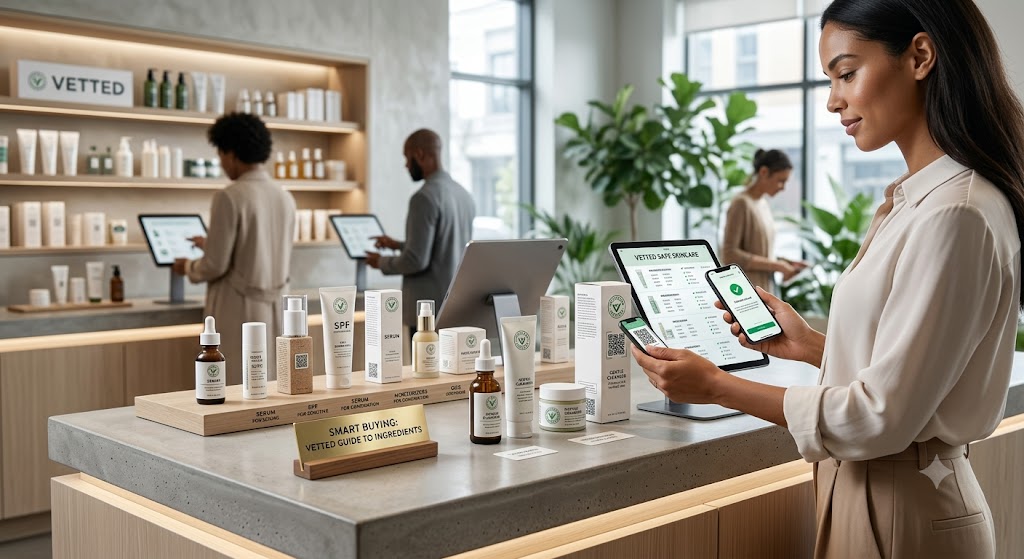
Walking down the skincare aisle or scrolling through an online beauty shop can feel less like a self-care experience and more like navigating a minefield of pseudo-scientific buzzwords. From minimalist glass bottles proclaiming to be “100% chemical-free” to high-tech serums advertising clinical-grade percentages of unfamiliar acids, the modern skincare market thrives on hyperbole. The rapid proliferation of direct-to-consumer brands and viral social media trends has only muddied the waters, making it difficult to discern between genuine dermatological safety and calculated consumer panic.
True skincare safety is rarely as simple as scanning for “clean” certifications or avoiding single, demonized ingredients. Instead, it requires understanding formulation chemistry, stability, skin barrier biology, and the regulatory landscapes that govern what goes into a bottle. Achieving healthy skin does not necessitate fear-mongering; it requires consumer literacy. This guide deconstructs marketing vernacular, examines the science behind safe formulations, and provides an actionable blueprint for vetting skincare products before they ever touch your face.
Deconstructing Marketing Myths: Clean, Natural, and Non-Toxic
To shop smartly, you must first unlearn the prevailing lexicon of the cosmetic industry. Much of the marketing that consumers rely on to assess safety is unregulated, subjective, and designed to leverage the psychological bias known as the “appeal to nature”—the assumption that natural things are inherently benevolent and synthetic compounds are inherently hazardous.
The “Chemical-Free” Fallacy
There is no such thing as a chemical-free skincare product. Water (dihydrogen monoxide) is a chemical. Rosehip oil is a complex mixture of hundreds of distinct chemical compounds, including linoleic acid, oleic acid, and tretinoin precursors. When a brand labels its product “chemical-free,” it is signaling either profound scientific ignorance or an intentional willingness to deceive consumers. Everything in physical reality is composed of chemicals; the relevant question is never whether an ingredient is a chemical, but rather what its toxicological profile, concentration, and delivery mechanism look like.
The Regulatory Void: “Clean,” “Non-Toxic,” and “Dermatologist-Tested”
Unlike pharmaceuticals or food additives, cosmetic terminology is largely unregulated in major markets. The U.S. Food and Drug Administration (FDA) does not legally define terms such as “clean,” “pure,” “green,” or “non-toxic.” A manufacturer can formulate a serum using standard commercial ingredients, attach a green label with a leaf icon, describe it as “clean beauty,” and face zero regulatory pushback, provided they do not make drug claims like curing eczema or reversing cellular damage.
Similarly, “dermatologist-tested” is an essentially meaningless claim on a front label. It indicates merely that at least one dermatologist evaluated the product on a sample group at some point. The label does not disclose the testing parameters, whether the test subjects developed contact dermatitis, what percentage tolerated the formula, or whether the dermatologist actually endorsed the formulation. A brand could run a patch test on five individuals, observe mild erythema in three of them, and still truthfully print “dermatologist-tested” on the packaging.
The Biological Reality of “Natural” Ingredients
Natural botanical extracts are chemically complex and variable. Unlike lab-synthesized ingredients, which can be produced at 99% purity with virtually no batch-to-batch variation, a plant extract reflects the soil quality, rainfall, pesticide exposure, and harvesting conditions of its source. Poison ivy, belladonna, and hemlock are all 100% natural, organic, and plant-derived; none of them belong on your face. In clinical dermatology, unrefined plant extracts and cold-pressed botanical oils are frequent culprits behind allergic contact dermatitis and phytophotodermatitis—a phototoxic reaction where citrus botanicals react with sunlight to cause severe burns and hyperpigmentation.
The Anatomy of a Cosmetic Label: How to Read the INCI List
The front of the bottle is an advertisement; the back of the bottle is where the truth lives. Cosmetic packaging in most developed countries requires the disclosure of ingredients using the International Nomenclature of Cosmetic Ingredients (INCI). Learning to parse an INCI list is the single most valuable skill you can develop as an informed skincare buyer.
The Structure: The “1% Rule”
INCI regulations dictate that ingredients must be listed in descending order of predominance by weight down to the 1% concentration threshold. The first three to seven ingredients typically make up roughly 80% to 95% of the total formulation. In water-based products, you will almost universally find Aqua/Water/Eau in the primary position, followed by humectants like glycerin or glycols, and fatty emollients.
Once the formulation reaches the 1% mark, manufacturers are legally permitted to list the remaining ingredients in any order they choose. This regulatory loophole is routinely exploited via “ingredient dressing” or “fairy dusting.” A brand might advertise a luxurious “Ceramide and Copper Peptide Restorative Cream,” but upon closer inspection of the INCI list, those expensive actives appear below the preservative system (which is usually capped at 0.5% to 1%). The actual concentration of those heroic ingredients may be a microscopic fraction of a percent—enough to satisfy legal requirements for label claims, but functionally inert on your skin barrier.
Categorizing the Core Components
When you scan an INCI list, try to break the formulation down into functional categories rather than getting overwhelmed by Latin names:
- Vehicles/Solvents: Water, thermal spring water, aloe barbadensis leaf juice, propanediol. These act as the base carrier dissolving and suspending other compounds.
- Humectants: Glycerin, hyaluronic acid (sodium hyaluronate), panthenol, urea, sodium PCA. These draw water from the environment and the deeper dermis into the stratum corneum.
- Emollients and Occlusives: Squalane, caprylic/capric triglyceride, dimethicone, butyrospermum parkii (shea butter), jojoba oil. They smooth cellular rough edges and form a protective film to prevent transepidermal water loss (TEWL).
- Emulsifiers and Thickeners: Cetearyl alcohol, polysorbate 60, carbomer, xanthan gum. These keep oil-in-water or water-in-oil formulations from separating into layers.
- Active Ingredients: Niacinamide, retinol, ascorbic acid, salicylic acid, azelaic acid. Compounds targeted at altering biological structure or addressing specific dysfunctions.
- Preservatives and Chelators: Phenoxyethanol, ethylhexylglycerin, disodium EDTA, potassium sorbate. These protect against microbial colonization and chemical oxidation.
Preservatives: The Unsung Heroes of Product Safety
Few topics in cosmetics provoke as much consumer anxiety as preservatives, yet no component of a formulation is more critical to human safety. Any product containing water provides an ideal incubator for fungi, yeast, mold, and pathogenic bacteria such as Pseudomonas aeruginosa, Staphylococcus aureus, and Escherichia coli. Applying a microbially contaminated cosmetic product to your face can result in severe follicular infections, permanent corneal damage, and systemic infections if your skin barrier is compromised.
The Paraben Panic in Retrospect
The widespread anti-paraben crusade remains one of the greatest case studies in scientific misinterpretation within consumer wellness. Parabens (methylparaben, ethylparaben, propylparaben, butylparaben) are esters of p-hydroxybenzoic acid. They occur naturally in fruits like blueberries and raspberries and were the gold standard of cosmetic preservation for decades due to their broad-spectrum efficacy, low irritation profile, and exceptional stability.
The controversy originated largely from a small, methodologically flawed 2004 study that detected paraben traces in human breast tissue samples. Crucially, the study did not examine healthy tissue for comparison, did not establish that parabens caused the tumors, and did not demonstrate that the parabens originated from cosmetic use. Subsequent comprehensive safety reviews by the European Scientific Committee on Consumer Safety (SCCS) and peer-reviewed toxicological assessments indexed in the National Library of Medicine (PubMed) have repeatedly reaffirmed that short-chain parabens (methyl- and ethylparaben) are safe, non-accumulative, and rapidly metabolized by human enzymes when used at standard concentrations (0.4% to 0.8%).
Alternative Preservative Systems and Irritation Risks
In response to public backlash, many cosmetic brands hastily eliminated parabens, replacing them with alternative systems that frequently possess higher rates of skin sensitization. Phenoxyethanol, ethylhexylglycerin, and various organic acids (benzoic acid, sorbic acid) are effective alternatives, but when brands attempt to use weak preservative blends or “self-preserving” strategies, products can spoil long before their stated expiration dates.
The quest for completely “preservative-free” water-based cosmetics is a dangerous gamble. If a product contains water, aloe vera, floral hydrosols, or botanical teas and claims to be preservative-free, one of two things is occurring: either the product is secretly preserved via unlisted chemical processing aids, or it is a breeding ground for pathogenic microbes waiting for an ambient temperature spike to flourish.
Active Ingredients: The Trap of the Percentage Wars
In recent years, the market has undergone a dramatic shift toward single-ingredient-focused marketing. Driven by affordable minimalist brands, consumers have been conditioned to believe that higher concentrations of active ingredients directly correlate with superior results. This is a critical misconception that compromises barrier health.
The Realities of the Dose-Response Curve
In pharmacology and cosmetic science, the dose-response curve illustrates that an ingredient’s benefit does not increase indefinitely with its concentration. Beyond a certain threshold, the efficacy plateaus while the risk of adverse events—erythema, contact dermatitis, transepidermal barrier disruption—climbs exponentially.
Consider niacinamide (Vitamin B3). The seminal clinical trials demonstrating niacinamide’s capacity to reduce sebum production, mitigate hyperpigmentation, and upregulate ceramide synthesis utilized concentrations between 2% and 5%. Despite this, the consumer market is flooded with 10%, 15%, and even 20% niacinamide serums. At 10% to 20%, niacinamide does not deliver four times the benefit; instead, it frequently triggers flushing, perioral dermatitis, and localized allergic reactions in users who would have tolerated a 3% formulation effortlessly.
Balancing Potency and Stability
When selecting active formulations—whether looking for stable daily essentials, exfoliants, or targeted sunscreen and targeted serums—formulation synergy matters far more than an isolated percentage on the front label. Three key ingredients highlight this balance:
1. Retinoids
Over-the-counter retinol must be converted twice by cellular enzymes: first into retinaldehyde (retinal), and then into retinoic acid, the biologically active molecule that binds to retinoic acid receptors in the nucleus. A 0.2% encapsulated retinol suspended in a squalane base with soothing lipids can deliver superior clinical outcomes with vastly less peeling and flaking than an unbuffered 1.0% pure retinol formula that degrades upon air exposure.
2. L-Ascorbic Acid (Vitamin C)
Pure L-ascorbic acid is inherently unstable in water. It requires a low pH (typically below 3.5) and the stabilizing presence of ferulic acid and alpha-tocopherol (Vitamin E) to penetrate the stratum corneum and resist oxidation into dehydroascorbic acid. A poorly formulated 20% Vitamin C serum that has oxidized into a deep amber-orange hue is no longer delivering antioxidant photoprotection; it is generating reactive oxygen species on your skin surface, exacerbating inflammation.
3. Exfoliating Acids (AHAs and BHAs)
With alpha hydroxy acids (glycolic, lactic, mandelic) and beta hydroxy acid (salicylic acid), the free acid value is dictated by the formulation’s pH, not merely the nominal percentage. A 5% glycolic acid toner formulated at pH 3.2 contains significantly more bioavailable free acid—and is far more potent and potentially irritating—than a 10% glycolic acid serum buffered to a pH of 4.5. Always prioritize brands that transparently disclose their formulation pH alongside acid percentages.
High-Risk Sensitizers: Protecting Reactive Skin
Every individual’s biological tolerance is unique, but dermatological patch testing has identified recurring categories of ingredients responsible for the vast majority of cosmetic-induced contact allergy and barrier breakdown. If your goal is safety and minimalism, these are the variables to monitor closely.
Fragrance and Essential Oils
According to the American Academy of Dermatology (AAD), fragrance mixtures are consistently classified among the top allergens identified by patch tests. Under trade-secret protections, cosmetic manufacturers are permitted to list dozens or even hundreds of individual aromatic compounds under the single catch-all term Fragrance or Parfum.
Many consumers flee synthetic fragrances only to embrace “natural” alternatives containing essential oils such as lavender, eucalyptus, bergamot, ylang-ylang, and peppermint. This is often an unfortunate trade-off. Essential oils are packed with volatile organic terpenes, including limonene, linalool, geraniol, and citronellol. When exposed to ambient oxygen on your bathroom shelf, these volatile compounds oxidize into hydroperoxides—exceptionally potent contact allergens that trigger delayed hypersensitivity reactions, presenting days or weeks after initial application as persistent redness, flaking, or textural irregularity.
Drying Alcohols vs. Fatty Alcohols
The term “alcohol” on an INCI list causes unnecessary panic because consumers fail to distinguish between short-chain drying alcohols and long-chain fatty alcohols.
- Simple/Drying Alcohols: Listed as Alcohol Denat, SD Alcohol 40, Ethanol, or Isopropyl Alcohol. These low-molecular-weight compounds are frequently utilized as fast-evaporating penetration enhancers or astringents. While useful in specific clinical formulations to help heavy actives penetrate dense sebum, chronic high-concentration exposure strips the stratum corneum of endogenous intercellular lipids, driving up TEWL and compromising barrier resilience.
- Fatty Alcohols: Listed as Cetyl Alcohol, Stearyl Alcohol, Cetearyl Alcohol, or Behenyl Alcohol. These are non-drying, waxy solids derived from natural fats. They function as soothing emollients, structural emulsifiers, and moisture-binding agents. They do not dehydrate the skin and are generally non-irritating.
Surfactant Profiles
Cleansing represents the most disruptive phase of any skincare regimen. Harsh surfactants denature stratum corneum proteins and strip the intercellular lipid matrix (ceramides, cholesterol, free fatty acids). Sodium Lauryl Sulfate (SLS) is notorious for its barrier-disruptive potential and is routinely used as the negative control in dermatological studies evaluating skin irritation.
Look for milder, amphoteric or non-ionic cleansing agents that cleanse effectively while maintaining a physiologically compatible pH (4.5 to 5.5). Ingredients like Cocamidopropyl Betaine, Sodium Cocoyl Isethionate, Decyl Glucoside, and Coco-Glucoside cleanse the skin without stripping the delicate lipid bilayer.
The Vetted Protocol: A Systematic Buying Checklist
Transforming your approach from impulse-driven purchases to vetted acquisitions requires a structured framework. Before adding any new product to your cart, execute this step-by-step verification protocol.
| Step | Evaluation Target | Critical Verification Criteria |
|---|---|---|
| 1. Objective | Regimen Utility | Does this product solve a diagnosed skin concern, or does it duplicate an existing active in your current routine? |
| 2. Formulation | The First 7 Ingredients | Identify the base solvents, primary humectants, and emollients. Ensure the advertised active isn’t relegated below the 1% threshold. |
| 3. Preservation | Microbial Protection | Verify a credible broad-spectrum preservative system if water, hydrosol, or botanical juice is present. |
| 4. Packaging | Container Engineering | Confirm light- and air-sensitive ingredients are housed in opaque, airless containers rather than clear, wide-mouth jars. |
| 5. Introduction | Tolerance Testing | Perform a mandatory 48-hour patch test prior to full facial application; introduce actives in isolation. |
When selecting your foundational items—such as daily cleansers, barrier-repair moisturisers, and everyday skincare products—prioritize formulas that lean heavily into physiologic lipids: ceramides (specifically Ceramides NP, AP, EOP), cholesterol, and fatty acids in an equimolar ratio. A strong barrier allows your skin to tolerate targeted corrective treatments without chronic low-grade inflammation.
Packaging, Storage, and Product Shelf Life
A formula may be immaculately constructed in a laboratory, but if the packaging fails to protect it from ambient environmental factors, its safety and efficacy degrade rapidly once opened.
The Danger of Open Jars
Wide-mouth jars expose cosmetic formulations to two primary destructive forces: continuous oxygen exchange and direct finger contamination. Every time you dip your finger into an open jar of moisturizer, you introduce ambient microbes and cellular debris into the emulsion. While preservatives are formulated to handle nominal microbial challenge, repeated biological inoculations combined with open-air oxidation will accelerate product rancidity and microbial proliferation.
Whenever possible, select products packaged in airless pump bottles, aluminum tubes, or opaque vacuum dispensaries. This packaging prevents room-air intrusion, preserves antioxidant longevity, and eliminates the need for physical contact with the unexpressed reservoir.
UV Degradation and Photostability
Antioxidants, retinoids, and chemical UV filters are chemically altered by electromagnetic radiation. Clear glass or transparent plastic bottles look elegant on a vanity, but they allow ultraviolet and visible light to penetrate the formula, breaking down unstable covalent bonds within hours of sun exposure. Photolabile actives should always be packaged in opaque, amber, cobalt, or UV-coated containers and stored inside drawers or cabinets rather than on sunlit bathroom shelves.
Decoding the PAO Symbol
Check the packaging for the Period After Opening (PAO) symbol—an icon depicting an open jar with a number followed by the letter “M” (e.g., 6M, 12M, 24M). This denotes the number of months the product remains microbiologically safe and chemically stable once the protective seal is broken. Marking the date of unsealing on the bottom of the bottle with a permanent marker prevents the accidental, regular use of degraded emulsions.
How to Conduct a Clinical-Grade Patch Test at Home
Most consumers skip patch testing because they assume a brief application to the back of the hand is sufficient. However, the skin on the back of your hand is significantly thicker, less reactive, and structurally distinct from facial skin. A negative reaction on your hand offers zero guarantee that your face will tolerate the formulation.
The 72-Hour Dual-Site Protocol
- Site One (The Forearm): Apply a pea-sized amount of the product to clean skin on your inner upper forearm. Allow it to absorb and leave it undisturbed for 24 hours. This initial phase identifies rapid-onset immediate hypersensitivity reactions (type I allergic reactions, severe acute contact irritations).
- Site Two (The Retroauricular Zone): If no redness, itching, burning, or hives manifest on your forearm after 24 hours, apply a small amount to the delicate skin directly behind your ear or along the lateral jawline once daily for two consecutive days.
- Observation: Monitor the site for delayed-type hypersensitivity (type IV allergic reactions), which typically take 48 to 72 hours to manifest. If the area remains free of erythema, edema, follicular swelling, or pruritus, you can safely integrate the product into your facial routine.
Introduce new products one at a time, spaced at least two to three weeks apart. If you introduce a new cleanser, serum, and cream simultaneously and wake up with acute perioral dermatitis or an inflammatory acne flare, identifying the culprit ingredient becomes impossible without clinical patch testing administered by a board-certified dermatologist.
When Over-the-Counter Isn’t Enough: Knowing When to Seek Medical Guidance
A common misstep in skincare buying is attempting to resolve complex dermatological diseases with over-the-counter cosmetics. Skincare products are legally defined as preparations designed to cleanse, beautify, promote attractiveness, or alter appearance without affecting the structure or function of the body.
Conditions like cystic acne, severe rosacea, melasma, psoriasis, and atopic dermatitis are inflammatory medical conditions originating deep within the follicular apparatus, the dermal vasculature, or the immune system. Attempting to manage a moderate-to-severe medical dermatosis with an endless cycle of expensive non-prescription serums is not only financially inefficient; it frequently worsens the disease through barrier over-manipulation and delayed medical intervention.
If you experience persistent erythema that does not resolve, painful cystic lesions, rapidly changing pigmented macules, or skin that stings upon water application, stop purchasing over-the-counter products. Consult a board-certified dermatologist who can provide accurate differential diagnosis and prescribe targeted medical therapies—such as topical ivermectin, azelaic acid at 15–20% concentrations, prescription retinoids (tretinoin, trifarotene), or oral interventions—with documented safety and clinical endpoints.
Frequently Asked Questions
Does “non-comedogenic” guarantee a product won’t cause breakouts?
No. The term “non-comedogenic” is completely unregulated. Historically, comedogenicity testing was conducted on rabbit ears—a biological model with oversized, hyper-reactive follicles that bear little resemblance to human facial anatomy. Individual comedogenic responses vary widely based on human sebum composition, native microbial flora, and overall formulation design. An ingredient that is comedogenic in isolation may be entirely inert when formulated at low concentrations within a balanced emulsion.
Are natural essential oils safer than synthetic fragrances?
In most instances, no. Synthetic fragrances are chemically synthesized molecules engineered to maintain stability and have predictable toxicological profiles. Natural essential oils, conversely, are complex botanical mixtures containing hundreds of unstable chemical compounds, including known allergens like linalool and limonene. Essential oils pose a significantly higher risk of inducing allergic contact dermatitis and phototoxic reactions compared to hypoallergenic synthetic alternatives or completely fragrance-free formulations.
How can I tell if my skin barrier is damaged by a product?
Classic symptoms of a compromised stratum corneum include a persistent stinging or burning sensation when applying even gentle, basic moisturizers or water; sudden localized redness; unexplained tightness despite moisturizing; and a strange “crepey” or dehydrated plastic-like sheen over rough texture. If these signs occur, immediately pause all direct acids, retinoids, and manual scrubs. Revert to a basic routine of lukewarm water, a gentle surfactant cleanser, and a lipid-replenishing ceramide moisturizer until normal barrier sensations return.
What is the difference between an allergic reaction and an irritant reaction?
An irritant contact reaction occurs when a chemical directly damages the physical structures of the skin barrier; it typically happens quickly, is dose-dependent, and remains confined precisely to the area of application. An allergic contact dermatitis reaction involves the adaptive immune system (type IV delayed hypersensitivity); it may take several days to develop after repeated exposures, can intensify over time even with minute exposures, and often spreads beyond the initial zone of product application.
Can I safely use skincare products past their expiration or PAO date?
It is generally unadvisable. Beyond the Period After Opening (PAO) date, preservative systems degrade, increasing the risk of microbial contamination. Furthermore, active ingredients oxidize and degrade into inactive or irritating byproducts, and the emulsion itself may undergo phase separation, resulting in uneven active concentration across the remaining product.
Summary for the Smart Buyer
Navigating the modern cosmetic marketplace requires shifting focus from seductive front-of-bottle narratives to the empirical realities on the ingredient deck. Safety is not a consequence of buying from brands that preach purity, clean living, or natural harvesting; it is the direct result of balanced formulation science, rigorous broad-spectrum preservation, appropriate pH buffering, and thoughtful packaging.
As you curate your routine, resist the temptation to chase ultra-high active percentages or trend-driven multi-step regimens. Prioritize structural barrier support, treat cosmetic claims with healthy skepticism, and rely on disciplined patch testing before committing to new formulations. True skincare mastery is not about owning an elaborate medicine cabinet; it is about knowing how to evaluate what your skin barrier genuinely needs to stay healthy, protected, and calm.

One thought on “Safe Skincare Products: A Vetted Guide to Smart Buying”
Comments are closed.