Culinary Travel & Street Food: Ultimate Guide to Immersive Food Tourism
To travel solely to gaze upon monuments is to experience the world in two dimensions. You can admire the flying buttresses of a Gothic cathedral or stand in the shadow of ancient ruins, but these encounters remain observational. You look, you photograph, you move on. Food, however, demands sensory participation. When you pull up a dented aluminum stool on a humid sidewalk in George Town, Penang, or lean against a tile-lined bar in San Sebastián, travel ceases to be a spectator sport. It becomes physical, immediate, and intimate.
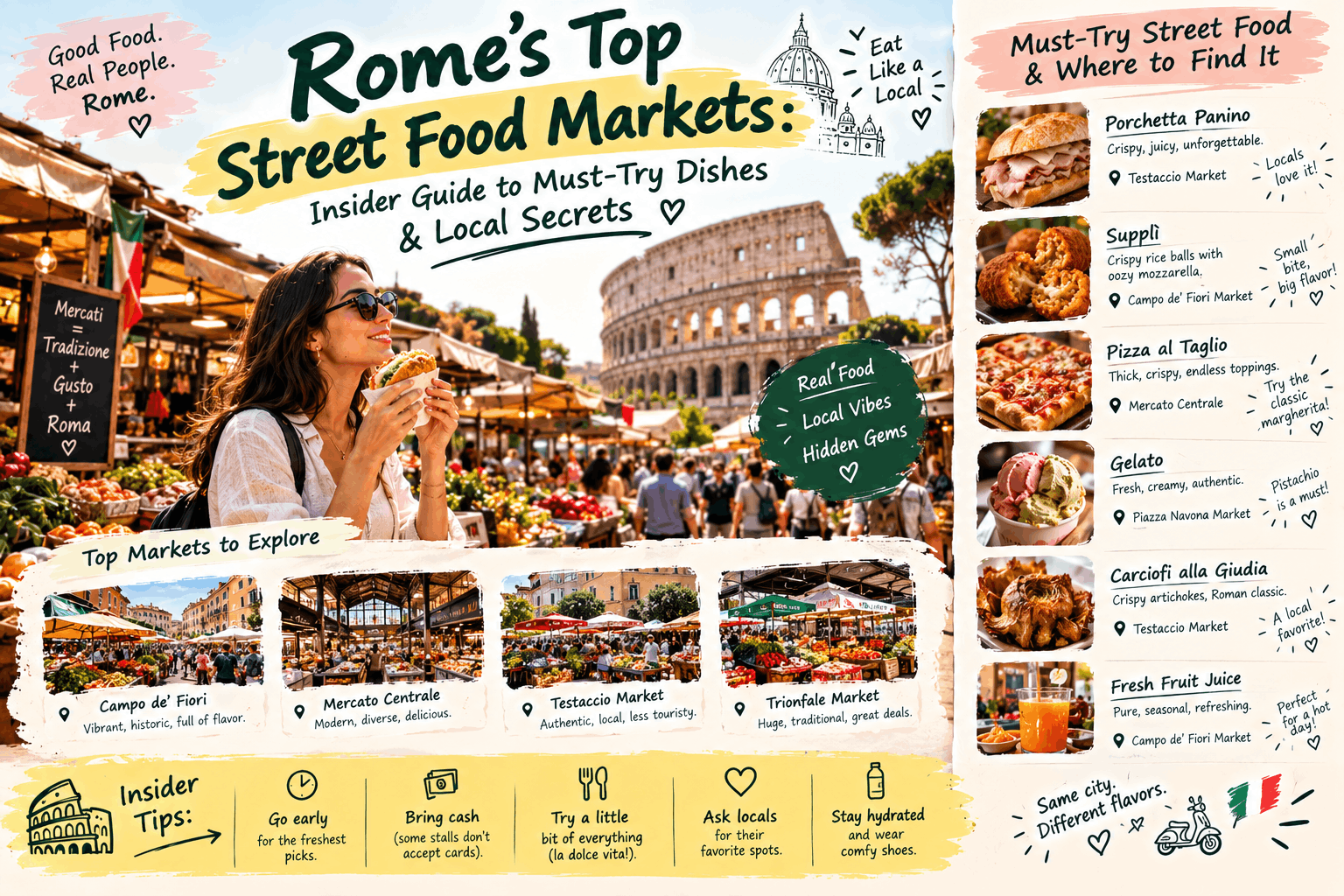
Immersive culinary tourism is the conscious choice to explore a destination through its agricultural traditions, culinary techniques, and communal eating rituals. It positions the plate not merely as daily sustenance, but as a dynamic cultural archive. Within every bowl of Vietnamese phở, every folded Oaxacan tlayuda, and every slice of Roman pizza al taglio lies a narrative of colonial encounters, trade winds, climate adaptation, domestic survival, and artistic expression. This comprehensive guide outlines the philosophies, logistical strategies, safety protocols, and field methods required to transform your travels into an authentic gastronomic exploration.
The Anatomy of Immersive Food Tourism
Food tourism has evolved far beyond the confines of checklist-driven Michelin guide chases or choreographed hotel buffet banquets. While fine dining preserves and reinvents elite heritage, culinary travel in its most transformative form embraces the full spectrum of a culture’s foodways, prioritizing informal food systems, communal dining spaces, and regional micro-cuisines.
At its core, immersive culinary travel balances three distinct spheres:
- The Vernacular (Street Food & Home Cooking): The everyday fuel of working communities, cooked curbside, in bustling night markets, or inside multi-generational family homes. This is where flavor profiles are uncompromised and tuned precisely to local palates.
- The Terroir (Producers & Markets): The origin points of raw ingredients—early-morning fish auctions, wholesale fruit terminals, mountain apiaries, small-scale olive mills, and community wet markets.
- The Curated (Bistros, Trattorias, and Modern Interpretations): Neighborhood institutions where generational recipes are preserved, alongside progressive restaurants translating traditional profiles into modern dining concepts.
True culinary immersion requires peeling back the sanitary veneer created for western tour groups. It asks travelers to step outside climate-controlled dining rooms and lean into sensory overload: the hiss of cold batter meeting boiling lard, the scent of charcoal smoke mingling with night-blooming jasmine, and the rapid-fire cadence of vendors shouting daily prices across dripping market aisles.
The Street Food Philosophy: Why Sidewalks Outshine White Tablecloths
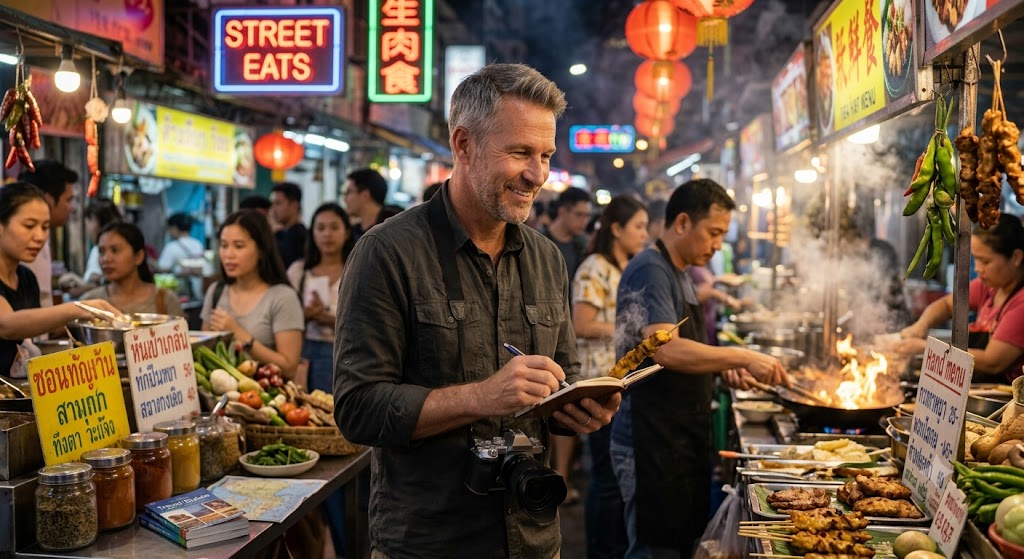
There is a peculiar democratizing power to street food. In places like Bangkok, Palermo, or Mexico City, you will regularly witness a high-level corporate attorney in a tailored suit waiting patiently in the same queue as a motorcycle courier, both eager to secure a lunch crafted by a cook who has made only one dish for forty consecutive years.
This dynamic highlights the primary advantage of street vendors over brick-and-mortar kitchens: radical specialization. A conventional restaurant must manage dozens of menu items, managing complex prep stations and high inventory overhead. A street vendor often stakes their entire livelihood on a singular preparation—perhaps charcoal-grilled pork neck, fermented rice noodles, or deep-fried chickpea fritters. Because their focus is narrow, their execution approaches absolute mastery. The heat of their wok is calibrated by touch and intuition; their broth carries the layered depth of continuous simmering; their hand movements display the effortless choreography of muscle memory repeated hundreds of thousands of times.
Street food also strips away dining pretension. Without plush seating, dim lighting, or elaborate plating to distract the senses, the cooking must stand purely on the balance of salt, acid, fat, heat, and texture. Furthermore, street-side eating erases the wall between cook and consumer. You witness every stage of preparation: the raw ingredients, the knife work, the flare of high heat, and the final assembly. This direct line of sight offers an unmatched lesson in culinary technique.
Navigating Street Food Safely: An Insider’s Field Manual
The fear of foodborne illness—the infamous traveler’s stomach—is the single greatest barrier preventing travelers from enjoying street food. While gastrointestinal distress is a valid concern when introducing foreign bacterial strains to an unaccustomed gut microbiome, abandoning street food entirely out of fear is an overreaction that robs you of world-class dining. Experienced culinary travelers do not rely on luck; they employ a systematic risk-management protocol based on observation and local patterns.
1. Follow the Working-Class Crowd
High foot traffic is your most reliable food safety indicator. A cart surrounded by families, office workers, and taxi drivers signals two things: the food is delicious, and the turnover is swift. High turnover means ingredients do not languish in ambient temperatures; they move rapidly from prep bowl to fire to plate. Conversely, an empty street cart with pre-cooked skewers sitting under direct sunlight is an invitation to food poisoning, regardless of how friendly the vendor appears.
2. Prioritize Thermal Cooking and Live Heat
Bacteria thrive in the danger zone between 40°F and 140°F (4°C to 60°C). When ordering street food, prioritize dishes that are flash-cooked to order over open flames, submerged in rolling, boiling broths, or deep-fried in bubbling oil right before your eyes. If you order something that has been par-cooked, ensure the vendor returns it to high heat until steam rises from the core before serving.
3. Inspect the Water and Ice Infrastructure
In developing nations, water-borne pathogens are far more common culprits of illness than the food itself. Take note of how the vendor washes utensils and plates. Do they use a single tub of stagnant, murky water, or do they have running water or line their dishes with clean plastic wrap? When it comes to ice, look closely at the cubes: factory-produced ice with uniform shapes or hollow cylindrical centers is commercially manufactured with filtered water and generally safe. Irregular, rough-hewn blocks of ice chipped away with an ice pick may have been transported under questionable sanitary conditions.
4. Observe Hand and Currency Hygiene
Cash is among the dirtiest items on earth. Watch the stall dynamic: does the person handling the food also collect bills and count coins with bare hands? In top-tier operations, you will see a strict division of labor—one person manipulates the food using tongs or gloved hands, while another handles monetary transactions. If a lone vendor runs the stall, observe whether they wash their hands, use tongs, or use small plastic bags to handle raw food items.
5. Give Your Microbiome Time to Acclimate
A sudden change in diet, oils, and spices can cause digestive shifts without any actual pathogens present. Begin your trip gradually. Allow your body a day or two to adapt to the local baseline before diving headlong into raw salads, unpeeled herbs, or hyper-spicy curries. Pairing your culinary exploration with plenty of bottled or filtered water, electrolytes, and locally produced fermented foods (like yogurt, kimchi, or pickled vegetables) helps support digestive resilience throughout your itinerary.
Regional Masterclasses: Global Epicenters of Street Gastronomy
Southeast Asia: The Wok-Fired Alleys of Penang, Bangkok, and Hanoi
Southeast Asia remains the undisputed promised land of street dining. Here, food is not confined to set hours; it flows along roadsides around the clock, guided by the scent of roasted garlic, galangal, kaffir lime, and fermented shrimp paste.
In Bangkok, Thailand, head away from tourist-dense walking streets and seek out the working neighborhoods of Talat Phlu or Yaowarat (Chinatown). Here, street masters harness wok hei—the elusive “breath of the wok” achieved only by atomizing oil droplets over roaring, pressurized charcoal burners. Look for Kuay Teow Khua Gai (wide rice noodles flash-fried with chicken, calamari, and preserved cabbage) or dive into roadside pots of Khao Kha Moo, where pork trotters braise for twelve hours in a dark broth scented with star anise, cinnamon, and coriander root.
Cross the southern border to George Town, Penang (Malaysia), an island whose cuisine reflects a stunning historical convergence of Chinese, Malay, Tamil, and Peranakan cultures. Take a seat on a plastic chair along Lebuh Chulia or Kimberley Street for a plate of Char Kway Teow. Cooked over intense heat, flat rice noodles are tossed with dark soy, chili paste, plump blood cockles, prawns, Chinese sausage, and duck egg. Follow it with Penang Asam Laksa, an intensely savory, sour, and spicy fish broth thickened with flaked mackerel, infused with tamarind and torch ginger flower, and served over slippery rice noodles with a dollop of thick prawn paste (hae ko).
Northward in Hanoi, Vietnam, street dining takes on an understated, herbaceous elegance. In the labyrinth of the Old Quarter, street vendors position themselves on impossibly low stools, serving plates of Bún Chả: charcoal-grilled pork patties and caramelized pork belly slices submerged in a sweet-tart dipping broth of fish sauce, sugar, rice vinegar, and green papaya, balanced by mounds of fresh perilla, mint, and rice vermicelli.
Latin America: Corn, Smoke, and Ancestral Technique
Latin American street food is anchored by a transformative culinary discovery: nixtamalization. This ancient Mesoamerican process involves soaking field corn in an alkaline solution (calcium hydroxide), releasing vital nutrients, softening the kernel, and unlocking the intoxicating, earthy aroma of pure masa.
In Mexico City, street gastronomy is an art form operating on every street corner. Stand beside a gleaming stainless-steel taquería cart to study the mechanics of tacos al pastor. Thinly sliced pork, marinated in achiote, dried chilies, and citrus, is stacked into an inverted conical spit (trompo) and roasted against an open flame. The taquero shaves the crispy, spiced pork directly onto small, warm tortillas, catches a flying slice of roasted pineapple carved from the top of the spit, and crowns the creation with minced white onion, cilantro, and fiery salsa verde.
Venture further into the southern highlands to Oaxaca, widely considered Mexico’s culinary capital. Here, market stalls inside the Mercado 20 de Noviembre feature the Pasillo de Humo (Smoke Alley). In this long, charcoal-hazed corridor, you select your raw meats—thin ribbons of tasajo (cured beef), spiced cecina (pork), and links of fresh chorizo. Vendors grill them over glowing coals while you collect accompaniments: grilled spring onions (cebollitas), sliced avocado, fresh radishes, and massive, crispy tlayudas spread with unrefined pork lard (asiento), refried black beans, and shredded quesillo string cheese.