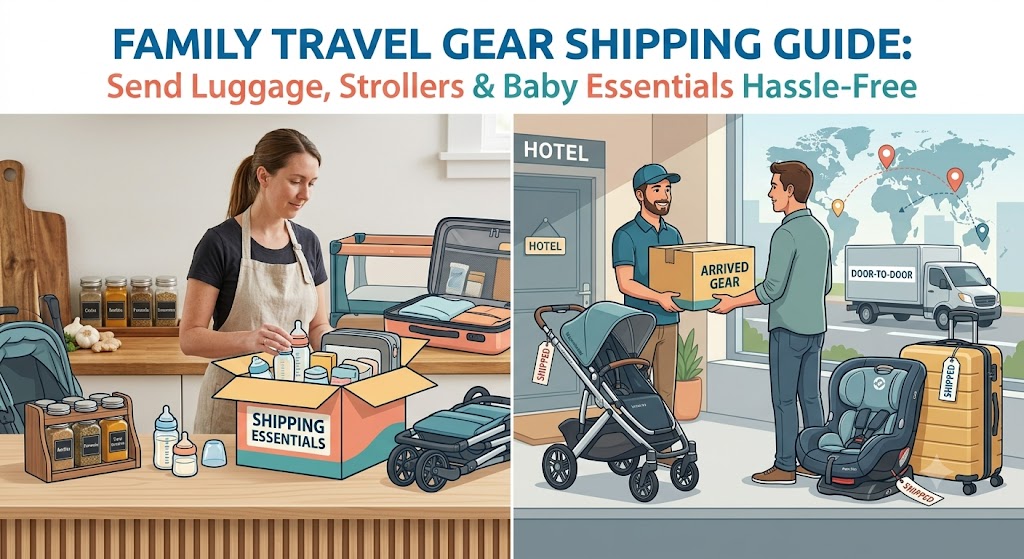
Planning a multi‑destination family vacation is exciting, but the logistics of moving bulky baby gear, strollers, and extra luggage can quickly turn enthusiasm into anxiety. Fortunately, a well‑structured family travel gear shipping plan eliminates heavy suitcase lifts, reduces airport fees, and protects delicate items from damage. This guide walks parents through why a dedicated strategy matters, which services perform best in 2024, a step‑by‑step shipping workflow, packing checklists, cost‑saving hacks, customs essentials, and answers to the most common questions. By the end, you’ll have a printable action plan and a clear call‑to‑action for the recommended shipping partner.
Why Families Need a Dedicated Gear‑Shipping Strategy
- High baggage fees for large items – Airlines often charge $100‑$300 per extra stroller or car seat, and overweight bags can add another $50‑$150 per kilogram.
- Stress of carrying strollers, car seats, and bulky gear – Navigating crowded terminals with a folded stroller and a suitcase is exhausting, especially after a long flight.
- Safety and wear‑and‑tear concerns – Repeated handling can damage delicate hinges, wheels, or baby monitors, leading to costly replacements mid‑trip.
Top Family‑Friendly Gear Shipping Services (2024)
LuggageToShip.com
LuggageToShip.com specializes in door‑to‑door luggage delivery for families. Pricing starts at $1.25 per kilogram for domestic routes and $2.10 per kilogram for intercontinental shipments. The service includes free online tracking, optional insurance up to $5,000, and a “Family Bundle” discount when you ship three or more boxes.
Ship Stroller
Ship Stroller is a niche carrier that focuses exclusively on baby gear. They provide custom‑fit crates for strollers, car seats, and travel cribs, and their rates are flat‑fee based: $75 per crate within the U.S., $150 internationally. The company handles all customs documentation for baby equipment, which saves parents hours of paperwork.
UPS / FedEx
Both UPS and FedEx offer reliable global networks, but families must weigh pros and cons. UPS’s UPS My Choice gives precise delivery windows, useful for hotel check‑ins, while FedEx’s International Economy is often cheaper for bulk shipments. Both require you to arrange your own packaging, and insurance is sold separately.
Regional Players
In Europe, Luggage Forward provides a “Family Express” service that consolidates multiple boxes into a single pallet, reducing per‑kilogram costs by up to 30%. In Australia, Pack & Ship offers a “Kids Gear” add‑on that includes free protective padding for car seats.
Step‑by‑Step Guide to Shipping Your Family Gear
- Inventory your items and categorize by size/weight – Create a spreadsheet listing each stroller, car seat, suitcase, and baby essential. Note dimensions, weight, and fragility level. This step clarifies how many boxes you’ll need and which service offers the best rate.
- Choose the right service based on destination and timeline – For a two‑week European cruise, Ship Stroller’s 7‑day guarantee is ideal. For a cross‑country road trip, UPS Ground with a “Family Bundle” discount may be cheaper.
- Pack securely – recommended materials and labeling – Use double‑wall cardboard boxes, wrap each wheel in bubble wrap, and fill voids with clothing. Seal with heavy‑duty packing tape and label both the owner’s name and the destination address on two opposite sides.
- Complete customs paperwork for baby equipment – Fill out the commercial invoice, list each item’s HS code (e.g., 8708.99 for strollers, 9403.20 for car seats), and attach a copy of the purchase receipt. Some countries require a safety certification for car seats; keep the original paperwork handy.
- Purchase insurance and track the shipment – Opt for “full replacement value” coverage if you’re shipping high‑cost items like a travel crib. Most providers let you monitor progress via a mobile app or web portal.
Packing Checklist & Best Practices
- Use rigid boxes for car seats and strollers – they prevent crushing and keep wheels aligned.
- Protect delicate items with bubble wrap or clothing – a folded sweater works well as a cushion for plastic parts.
- Seal liquids and toiletries per airline regulations – place them in zip‑lock bags and pack them separately from electronics.
- Label boxes with both owner and destination details – include a QR code that links to the tracking page for quick scanning at the hotel front desk.
Pro tip: Place a small “Open‑First” sticker on the side that faces the delivery driver. This reduces handling time and lowers the risk of accidental drops.
Cost Breakdown & Savings Hacks
Understanding the true cost of shipping versus paying airline excess baggage fees is crucial for budgeting.
- Compare per‑kg rates vs. airline excess baggage – A typical airline charges $150 per extra 23 kg bag. If your stroller weighs 12 kg, shipping it for $30 per kg (including insurance) saves $90.
- Bundle multiple boxes for discounts – Most carriers reduce the per‑box fee by 10‑15% when you ship three or more items together.
- Leverage loyalty programs and promo codes – UPS My Choice members earn free insurance upgrades, while Ship Stroller offers a 5 % discount for first‑time users who sign up for the newsletter.
- Consider off‑peak shipping windows – Shipping on Tuesdays or Wednesdays often avoids weekend surcharges and yields faster customs clearance.
Customs, Regulations, and Insurance Essentials
Restricted Items and Certifications
Some countries prohibit lithium‑ion batteries larger than 100 Wh, which can affect electric strollers. Check the destination’s customs website before packing. Car seats may require a safety certification label; without it, the item could be held at the border.
Filling Out HS Codes for Baby Gear
HS (Harmonized System) codes streamline customs clearance. Common codes include:
- 8708.99 – Strollers and baby carriages
- 9403.20 – Seats of a kind used in motor vehicles (car seats)
- 6307.90 – Other bedding, blankets, and cushions (travel cribs)
Choosing Coverage Levels
Most carriers offer two main options:
- Liability coverage – Pays a percentage of the declared value (usually 10‑15 %). Good for low‑cost items.
- Replacement value coverage – Reimburses the full purchase price, minus depreciation. Recommended for high‑value gear such as premium strollers or designer luggage.
Frequently Asked Questions
Can I ship a travel crib to a hotel?
Yes. Pack the crib in a rigid box, include the hotel’s name and room number on the label, and use a “Deliver to Front Desk” instruction. Many hotels will hold the crate at the concierge until check‑in.
What happens if my shipment is delayed?
Most carriers provide real‑time tracking. If a delay exceeds 48 hours, contact customer service to request expedited handling or a refund of the shipping fee. Insurance policies may also cover loss of use.
How to handle lost or damaged gear
Document the damage with photos, file a claim within the carrier’s stipulated window (usually 30 days), and keep all receipts. For lost items, submit a written statement and proof of value; replacement‑value insurance will cover the cost.
Conclusion & Quick Action Plan
Shipping family travel gear doesn’t have to be a headache. Follow these five steps: inventory, select a service, pack securely, complete customs paperwork, and insure your shipment. Download the printable checklist below, then click the link to book your first shipment with our recommended shipping partner. With the right plan, you’ll arrive at each destination light, organized, and ready to enjoy quality time with your kids.
How to ship your bike internationally – a useful reference if you’re also bringing a family bike.
Sports team travel logistics offers insight into bulk‑gear coordination that can be adapted for large families.
AI‑driven luggage shipping shows how predictive pricing tools can further reduce costs.