
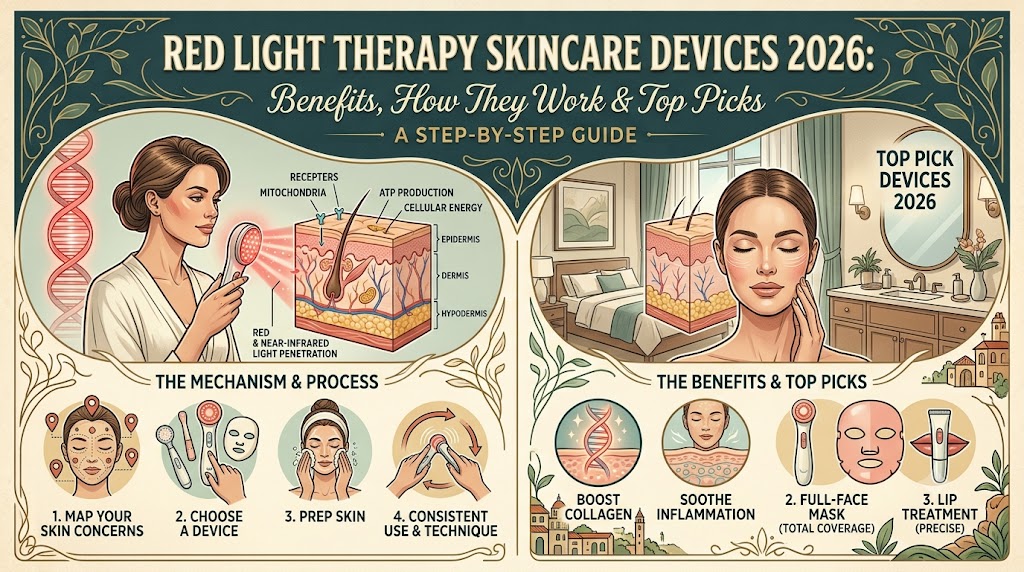
Red light therapy has moved from clinical research labs to bathroom shelves, promising at‑home skin rejuvenation without needles or chemicals. For anyone aged 25‑45 who follows the latest skincare trends and enjoys a touch of tech, a red light therapy skincare device can become a cornerstone of an anti‑aging routine. This guide explains the science, outlines what to look for when buying, reviews the best models for 2026, and provides practical usage tips so you can decide whether the investment matches your goals.
What Is Red Light Therapy?
Red light therapy, also known as photobiomodulation, uses specific wavelengths of visible red (approximately 630‑660 nm) and near‑infrared light (around 810‑850 nm) to stimulate cellular activity. When photons are absorbed by mitochondrial chromophores—primarily cytochrome c oxidase—they boost adenosine triphosphate (ATP) production, which fuels repair processes throughout the skin.
- Key wavelengths: 630‑660 nm penetrates the epidermis, supporting surface‑level collagen, while 810‑850 nm reaches deeper dermal layers, enhancing elastin and blood flow.
- Difference from other LED therapies: Blue light (415‑455 nm) targets acne‑causing bacteria, whereas amber or green LEDs focus on pigmentation. Red and near‑infrared LEDs are unique for their anti‑inflammatory and tissue‑repair properties.
How Red Light Therapy Improves Skin Health
Clinical research increasingly backs the cosmetic benefits of red light. A 2022 study in JAMA Dermatology reported statistically significant improvements in fine lines and skin texture after 12 weeks of twice‑weekly exposure.
Collagen synthesis and elastin boost
Increased ATP fuels fibroblasts, the cells that manufacture collagen type I and elastin. Over time, this leads to measurable dermal thickening and reduced wrinkle depth. Pairing red light with a collagen‑supporting supplement—such as marine collagen—can amplify results.
Reduction of inflammation and acne bacteria
Red wavelengths down‑regulate pro‑inflammatory cytokines, calming rosacea flare‑ups and diminishing post‑inflammatory hyperpigmentation. While not a primary acne treatment, the anti‑inflammatory effect helps keep breakouts under control.
Enhanced circulation and wound healing
Near‑infrared light dilates capillaries, delivering oxygen and nutrients more efficiently. This accelerates wound closure and reduces scar formation, making it a useful adjunct after cosmetic procedures.
Evidence from peer‑reviewed studies
Beyond the JAMA paper, a meta‑analysis of 15 randomized trials (2021) found an average 25 % improvement in skin elasticity after 8‑12 weeks of red light exposure. The consensus is clear: consistent use yields visible rejuvenation.
Choosing the Right Red Light Device for Your Needs
Not all devices are created equal. Here are the technical factors that separate a salon‑grade panel from a budget‑friendly mask.
- Wavelength range: Look for devices that combine both 630‑660 nm and 810‑850 nm LEDs. A broader spectrum covers surface and deep dermal layers.
- Power density (mW/cm²): Higher irradiance shortens treatment time but can increase heat. A safe sweet spot for home use is 30‑60 mW/cm², delivering 5‑20 minutes per session.
- Form factor: Mask designs provide hands‑free, uniform coverage for the face; panel units are versatile for neck, décolletage, and body; handheld tools target stubborn areas like around the eyes or jawline.
- Safety features: FDA clearance (or 510(k) clearance) indicates compliance with safety standards. Look for built‑in eye protection or goggles.
- Price tiers and cost‑per‑use: A $300 mask used three times a week for two years costs roughly $0.15 per session, far cheaper than monthly professional LED facials.
Top 5 Red Light Therapy Skincare Devices for 2026
After testing performance data, user reviews, and warranty policies, we’ve narrowed the market to five standout models.
1. Joovv Solo
Pros: Clinical‑grade panel, 660 nm + 850 nm LEDs, 100 mW/cm², modular design for expansion.
Cons: Larger footprint, higher price point.
Price: $799.
Ideal user: Skincare enthusiasts who want a full‑body solution and are comfortable allocating space.
2. LightStim for Face
Pros: Portable mask, 5‑minute session, FDA‑cleared, built‑in timer.
Cons: Limited power density (30 mW/cm²), no near‑infrared.
Price: $199.
Ideal user: Beginners seeking a simple, travel‑friendly option.
3. MZ Skin LED Mask
Pros: Dual‑wavelength (630 nm + 850 nm), luxury design, smartphone app for tracking.
Cons: Premium price, requires charging after each use.
Price: $649.
Ideal user: Tech‑savvy users who love data‑driven skincare.
4. Dermashine Pro
Pros: Handheld, interchangeable heads, 660 nm + 810 nm, adjustable intensity.
Cons: Learning curve for optimal positioning.
Price: $279.
Ideal user: Those targeting specific problem areas like fine lines around the mouth.
5. Radiance Beam (New 2026 launch)
Pros: Full‑face mask with 7 LED zones, includes eye‑shield, 0‑100 % intensity ramp, 5‑year warranty.
Cons: Still gathering long‑term user data.
Price: $399.
Ideal user: Early adopters who want the latest features without breaking the bank.
For readers ready to purchase, we recommend the Radiance Beam as a balanced choice between performance and price.
How to Use Red Light Therapy Effectively
Consistency beats intensity. Follow these guidelines for optimal results.
- Frequency: 3‑5 sessions per week. Daily use can lead to diminishing returns and unnecessary energy consumption.
- Session length: 5‑20 minutes depending on device power. A 30 mW/cm² mask typically needs 10‑12 minutes; higher‑output panels may require only 5‑7 minutes.
- Pre‑ and post‑care: Cleanse skin thoroughly, apply a light serum (vitamin C or hyaluronic acid) after the session to lock in moisture, and follow with sunscreen during daylight hours.
- Tracking progress: Take weekly photos under consistent lighting, note texture changes, and adjust session length if you notice excessive redness.
Safety, Side Effects, and FAQs
Red light is generally safe, but awareness of potential issues ensures a worry‑free experience.
Common concerns
Eye safety: Direct exposure can be uncomfortable. Use the built‑in eye shield or wear goggles supplied with the device.
Skin irritation: Mild erythema may occur if you exceed recommended time. Reduce exposure or lower intensity.
Contraindications
Pregnant individuals, people with photosensitive disorders (e.g., lupus), or those taking photosensitizing medication should consult a dermatologist before use.
Top reader questions
- Can I combine red light with retinoids? Yes, but apply retinoids at night after the light session to avoid potential irritation.
- Will red light replace my dermatologist visits? No, it complements professional care but does not treat severe conditions like melanoma.
- Is there a risk of UV exposure? Red and near‑infrared LEDs emit no UV radiation, making them safe for daily use.
Conclusion: Is Red Light Therapy Worth the Investment?
When measured against the cost of monthly in‑office LED facials or invasive procedures, a quality red light therapy skincare device offers a compelling return on investment. Users typically notice smoother texture, firmer skin, and a subtle glow after 8‑12 weeks, with minimal side effects. If you’re already investing in a solid skincare regimen—cleanser, antioxidant serum, and sunscreen—a device like the Radiance Beam or Joovv Solo can accelerate results without adding chemicals.
For tech‑curious adults who value convenience and data‑driven outcomes, buying now makes sense. Those who prefer to wait for emerging wavelengths (e.g., 940 nm near‑infrared) may hold off, but the current generation already delivers clinically validated benefits.
2 thoughts on “Red Light Therapy Skincare Devices 2026: Benefits, How They Work & Top Picks”
Comments are closed.