
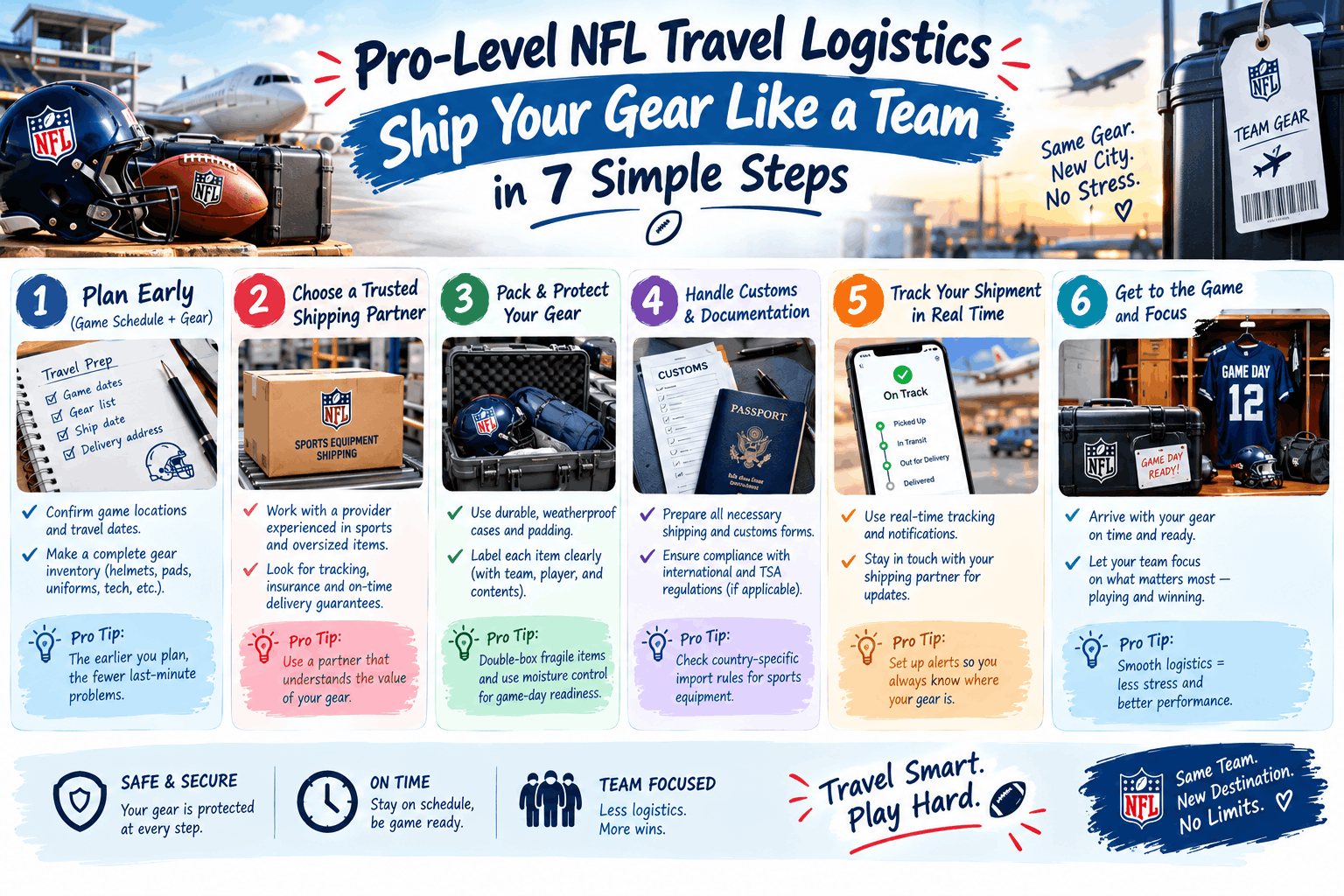
When an NFL team travels, they move 15,000–25,000 lb of equipment each week. The process is a blend of military‑grade planning, dedicated freight partners, and strict contingency plans.
For group organizers, outdoor adventurers, and sports teams, the same approach can eliminate airport hassles, protect high‑value gear, and keep budgets in check. Below are seven actionable steps to ship your gear like a pro.
Why NFL Travel Logistics Matter for Everyday Travelers
Teams bypass commercial baggage entirely, using door‑to‑door freight and custom manifests. Regular travelers face similar friction when moving golf clubs, ski gear, or film equipment. By treating gear as a supply chain, you gain tracking, insurance, and reliability.
Step 1 – Inventory and Categorize Your Gear
Professional equipment managers catalog every item weeks before departure. Create a digital spreadsheet with item name, weight, value, and serial numbers. Then split items into three tiers:
- Tier 1 – Carry‑On Essentials: Documents, meds, primary cameras.
- Tier 2 – Bulky Freight: Skis, golf bags, tents. Ideal for luggage shipping services.
- Tier 3 – Fragile Hardware: Drones, lenses, medical devices.
Step 2 – Choose the Right Shipping Partner
NFL franchises use dedicated freight handlers. For personal trips consider:
- Express Couriers (DHL, FedEx, UPS): Fast, strong customs support.
- Specialized Luggage Delivery (Luggage Forward, LuggageToShip): White‑glove door‑to‑door service for oversized gear.
- Freight Forwarders: Best for combined weights over 150 lb.
Check Service Level Agreements for guaranteed windows, money‑back delivery, and insurance limits.
Step 3 – Timing, Scheduling, and Consolidation
Teams ship gear 48–72 hours before players board. Reverse‑engineer your arrival: if you land Friday 2 PM, aim for gear delivery Thursday afternoon. Consolidate multiple boxes into a single pallet or master air bill to lower per‑pound rates and simplify tracking.
Step 4 – Customs, Regulations, and Documentation
International trips require clean gear (no soil) and clear paperwork. Use an ATA Carnet for high‑value, temporary imports. For standard trips attach a commercial invoice and detailed packing list to the box exterior, avoiding vague labels like “stuff.”
Step 5 – Insurance, Real‑Time Tracking, and Contingency Plans
Carrier liability is often $100 per shipment. Declare the full replacement value and purchase supplemental coverage. Place Bluetooth or GPS trackers (Apple AirTag, Samsung SmartTag) inside each case. Consider AI‑driven tools such as AI luggage shipping to reroute shipments proactively.
Always identify local rental options at your destination and keep digital specs of critical gear.
Step 6 – Packing Techniques Used by Pro Teams
Use hard‑shell transit cases (Pelican, SKB) with custom foam inserts. Fill voids with dense foam and add silica‑gel packs for moisture control. Color‑code each case (e.g., red for outdoor gear) and label every side with owner name, phone, destination address, and “This Side Up.”
“Pack expecting a four‑foot drop onto concrete. If your case can’t survive that, it’s not ready for commercial transit.”
Step 7 – Cost Optimization and Bulk Discounts
Couriers charge by actual or dimensional weight—whichever is higher. Keep boxes compact to stay within lower pricing brackets (0‑25 lb, 26‑50 lb, etc.). If you ship frequently, open a small‑business account for 15‑30 % rate discounts and pool group shipments under one master account.
Bonus Tools & Apps
- DHL Express Mobile & Luggage Forward portals: Create labels, schedule pickups, and receive push alerts.
- Sortly & PackPoint: Visual inventory with photos and dynamic gear checklists.
- ShipStation or Pirate Ship: Access discounted carrier rates without volume commitments.
Frequently Asked Questions
Is it cheaper to ship sports equipment or check it as baggage?
For a single 30‑lb suitcase, airline fees may be lower. For oversized or multiple items, dedicated shipping often wins after factoring excess‑weight fees and vehicle rentals.
How far in advance should I ship?
Domestic: 24‑48 hours before arrival. International: 5‑7 business days to allow customs clearance.
Can I ship directly to a hotel or resort?
Yes. Notify the front desk and address the package as “Guest: [Name] (Arriving [Date]) – Hold for Front Desk.”
Master Your Travel Operations
Adopt the disciplined, supply‑chain mindset of NFL equipment managers: inventory everything, pick the right partner, schedule with buffers, clear customs, insure fully, track in real time, pack in hard cases, and leverage bulk discounts. Ship ahead, skip the baggage line, and step off the plane ready to perform.


One thought on “Pro-Level NFL Travel Logistics: Ship Your Gear Like a Team in 7 Simple Steps”
Comments are closed.