
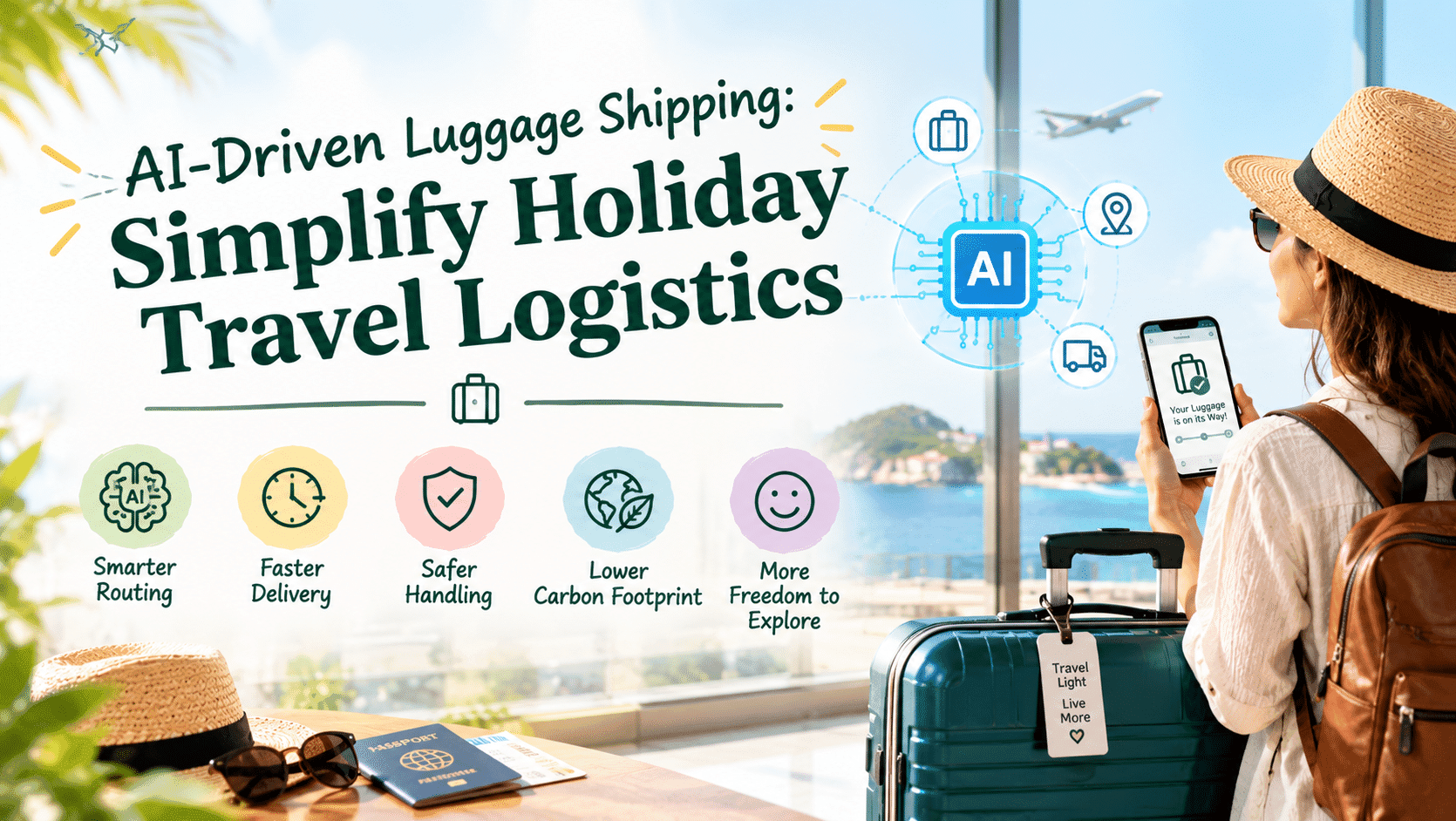
Imagine stepping off a plane, strolling through a bustling airport terminal, and never having to wrestle with a wheeled suitcase again. For the tech‑savvy traveler, that vision is becoming reality thanks to AI luggage shipping. As holiday seasons bring crowded flights and tighter baggage allowances, artificial intelligence is reshaping the entire holiday travel logistics landscape, turning what used to be a logistical headache into a seamless, data‑driven experience.
Why AI Is Revolutionizing Luggage Shipping
Traditional luggage forwarding dates back to the early 20th century, when rail companies offered door‑to‑door bag services for affluent travelers. Over the decades, the model evolved into modern courier‑style offerings, but the core process remained manual: fixed routes, static pricing, and limited visibility.
Today, three AI capabilities are driving the next wave:
- Predictive routing: Machine‑learning algorithms analyze traffic patterns, weather forecasts, and historical shipment data to select the fastest, most reliable path for each bag.
- Dynamic pricing: Real‑time supply‑and‑demand models adjust rates per kilogram, ensuring you pay a fair price whether you ship during peak holiday travel or off‑season.
- Real‑time tracking: IoT sensors combined with AI analytics provide minute‑by‑minute location updates, predictive arrival windows, and proactive alerts if a delay is imminent.
These innovations not only cut costs but also give travelers unprecedented confidence that their belongings will arrive on time, intact, and exactly where they need them.
Choosing the Right AI‑Powered Shipping Service
By 2024, three providers have emerged as industry leaders:
- LuggageToShip – Known for its robust AI engine that integrates directly with airline reservation systems.
- SendMyBag – Offers a sleek chatbot interface and multi‑modal freight options (air, rail, road).
- LugLess – Focuses on sustainability, using AI to consolidate shipments and reduce carbon footprints.
Below is a quick feature comparison matrix:
| Feature | LuggageToShip | SendMyBag | LugLess |
|---|---|---|---|
| Predictive routing | Yes (deep‑learning) | Yes (rule‑based) | Yes (hybrid) |
| Dynamic pricing | Real‑time market data | Hourly updates | Fixed‑plus‑AI boost |
| Insurance coverage | Up to $10,000 | Up to $5,000 | Up to $7,500 |
| Customs support | AI‑generated documentation | Manual upload | AI‑assisted templates |
| App integration | Travel app SDK | Standalone chatbot | Web portal only |
When evaluating a service, consider three critical factors:
- Insurance and liability: Verify the maximum coverage, claim process speed, and whether AI can flag high‑risk items before shipment.
- Customs assistance: AI‑driven platforms can auto‑populate customs declarations, reducing errors that cause delays.
- Scalability: During peak holiday periods, the provider’s AI should automatically allocate extra capacity without manual intervention.
Step‑by‑Step Guide to Ship Your Luggage with AI
Following a structured workflow ensures you reap the full benefits of smart luggage forwarding:
- Create a shipment profile: Input travel dates, destination airport codes, bag dimensions, weight, and any fragile or prohibited items. The AI engine uses this data to calculate optimal space, suggest packing configurations, and generate a price quote.
- Book the service: Most platforms let you finalize the reservation through an AI‑powered chatbot or an integrated AI travel booking widget inside your airline app. Confirm pickup address, preferred delivery window, and payment method.
- Packing tips optimized for AI‑calculated space: Use lightweight, compressible fabrics; roll clothing instead of folding; and place heavier items at the bottom. Some services even provide a virtual 3‑D bag model that shows you exactly how to load items for maximum efficiency.
- Tracking, notifications, and last‑mile delivery: Once the bag is in transit, the AI continuously updates its ETA, factoring in traffic, weather, and hub processing times. You’ll receive push notifications when the bag clears customs, arrives at the destination hub, and is out for delivery to your hotel or home.
By staying engaged with the AI’s alerts, you can adjust your own itinerary if a delay occurs, ensuring you never miss a connecting flight or a holiday dinner.
Cost, Safety, and Convenience: The Real Benefits
When you compare the average cost per kilogram of AI luggage shipping to traditional airline checked‑bag fees, the savings become clear. In 2024, the median AI‑driven price is $4.20 per kg, whereas many airlines charge $7–$10 per kg during peak holiday seasons.
Safety is also enhanced. AI algorithms analyze historical loss data, flag high‑risk routes, and automatically trigger additional insurance coverage for valuable items. Real‑time sensor data can detect temperature spikes or rough handling, prompting immediate corrective action.
Case Study: Jane, a frequent traveler from New York to Paris for the Christmas market, used LuggageToShip’s AI service. By shipping two 23‑kg suitcases, she saved $210 compared to airline fees, received insurance coverage for a $2,000 camera, and enjoyed a door‑to‑door delivery that arrived two hours before her flight landed.
Potential Pitfalls & How to Avoid Them
Even the smartest AI can encounter challenges. Here’s how to mitigate common issues:
- Understanding customs regulations for shipped bags: Different countries have varying rules on liquids, electronics, and food items. Use the AI’s customs assistant to generate compliant paperwork, and double‑check any country‑specific restrictions before packing.
- Dealing with AI service outages or delays: While rare, server hiccups can temporarily suspend real‑time tracking. Keep the provider’s customer‑service hotline handy and have a backup plan—such as a local courier or a spare carry‑on—for essential items.
- Backup plans if shipment is delayed: Pack a small “travel essentials” bag (toiletries, a change of clothes, chargers) that you can carry on the plane. This ensures you stay comfortable even if your main luggage arrives later in the day.
Future Trends: What’s Next for AI in Travel Gear Logistics
The horizon holds exciting developments that will push travel gear logistics even further:
- Integration with smart luggage hardware: Future suitcases will embed GPS, weight sensors, and climate controls that feed directly into AI platforms, enabling automatic route adjustments based on bag condition.
- Predictive climate‑adjusted packing suggestions: AI will analyze destination weather forecasts and suggest specific clothing items, reducing over‑packing and ensuring you stay comfortable.
- Potential for AI‑driven multi‑modal freight: Combining air, rail, and autonomous ground vehicles, AI could orchestrate a seamless end‑to‑end journey that balances speed, cost, and carbon impact.
As AI continues to learn from billions of shipment data points, the promise of a truly hassle‑free holiday travel experience moves from speculative to inevitable. Embrace the technology today, and let your luggage travel smarter while you focus on making memories.

2 thoughts on “AI-Driven Luggage Shipping: Simplify Holiday Travel Logistics”
Comments are closed.