
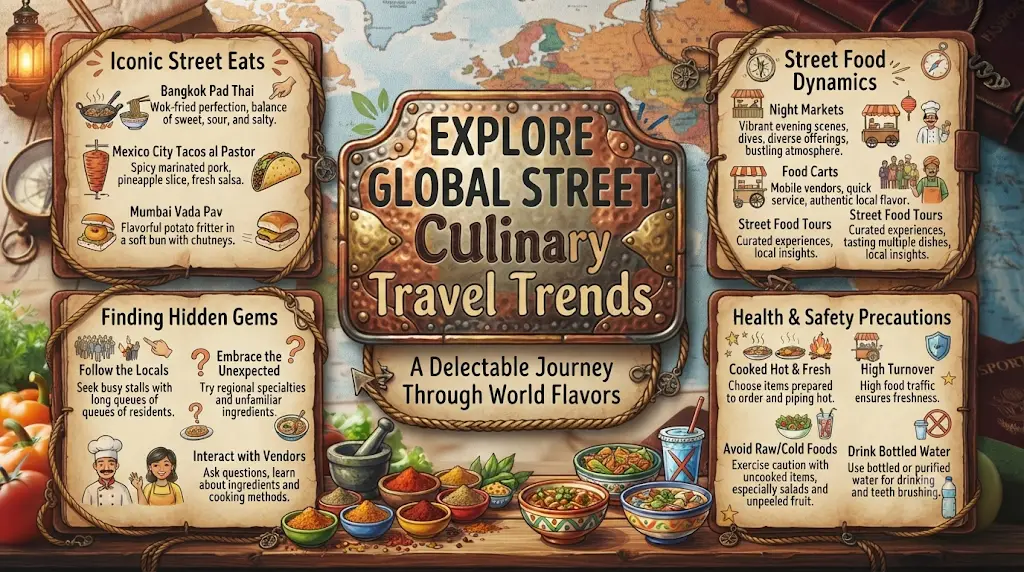
Street Food: The Pulse of Global Culture
When a vendor flicks a metal spatula over a grill, the scent of charred corn, fresh herbs, and spices travels faster than the city’s traffic lights. In Seoul, the sizzle of hotteok mingles with the hum of subway trains; in Lagos, the crackle of suya is a soundtrack to street markets that never sleep. Street food is more than a budget-friendly option; it is a living archive of a nation’s history, geography, and social fabric.
For the modern traveler, the quest is no longer about finding the cheapest bite. It is about decoding a city’s culinary DNA, measuring the authenticity of flavors, and navigating the logistics of a food‑centric itinerary.
This guide dissects the mechanics behind global street food, translates data into actionable itineraries, and equips you with tools, both digital and physical, to experience the world’s street stalls like a seasoned food‑journalist.
Mapping the Street Food Landscape: From Seoul to Lagos
Street food is distributed in three primary clusters: Southeast Asia, Latin America, and Africa. Each cluster presents distinct culinary signatures, regulatory frameworks, and consumer behaviors.
Cluster 1, Southeast Asia
From the night markets of Hanoi to the hawker centers of Singapore, Southeast Asian street stalls thrive on rice, noodles, and fermented sauces. Their economies are highly informal, yet they have adopted stringent hygiene standards in places like Singapore’s hawker centers, which are UNESCO World Heritage Sites.
Cluster 2, Latin America
In Mexico City, the aroma of tamales and churros fills the air, while in Bogotá, empanadas and arepas dominate. Latin American stalls often rely on communal cooking methods, such as open‑fire grills, and are deeply intertwined with local festivals.
Cluster 3, Africa
From the suya of Lagos to the injera of Addis Ababa, African street food is a mosaic of spices and grains. Food safety regulations vary widely, but many vendors have adapted by using portable solar ovens and hand‑washing stations.
Trend Analytics: Data-Driven Insights on Street Food
Recent studies reveal a 15% annual increase in street food tourism revenue worldwide. A 2023 survey by the World Tourism Organization (UNWTO) reported that 72% of travelers consider street food a key factor in choosing a destination.
Global Consumption Trends
Key drivers include:
- Price elasticity: Street food averages 30% cheaper than restaurant dining.
- Health consciousness: 58% of consumers seek low‑calorie, protein‑rich options.
- Authenticity: 64% of millennials cite “authentic local experience” as a top travel motivator.
Health & Sustainability Shift
Consumers now prioritize food safety, traceability, and environmental impact. A 2022 report by the Food and Agriculture Organization (FAO) found that 47% of street vendors who adopted solar power saw a 22% reduction in operating costs.
For a deeper dive, consult the FAO’s Food Safety Data Portal.
Budgeting for a Street Food Passport
Planning a street‑food itinerary is essentially a micro‑budget exercise. Here’s a framework to keep expenses in check.
Cost Breakdown by Region
Average dish price (USD):
| Region | Avg. Price | Calorie (kcal) | Hygiene Score (1‑5) | Pros | Cons |
|---|---|---|---|---|---|
| Southeast Asia | $2.50 | 450 | 4.5 | Wide variety, high freshness | High spice levels may overwhelm |
| Latin America | $3.00 | 500 | 4.0 | Rich cultural context | Limited vegetarian options |
| Africa | $2.80 | 480 | 3.8 | Unique spice blends | Variable hygiene standards |
Smart Packing: Travel Accessories & Kitchen Tools
Every street‑food enthusiast needs a compact set of tools. Consider:
- A reusable water bottle with a built‑in filter, keep hydrated and avoid plastic waste.
- A foldable silicone pot for quick reheating in hostels.
- Portable hand sanitizer that meets WHO hygiene guidelines.
For gear, explore travel accessories on Amazon and kitchen appliances for portable solutions.
Tactical Travel Planning: How to Hit the Best Stalls
Timing, location, and vendor selection are the pillars of a successful street‑food expedition.
Timing & Seasonality
Stall menus shift with the seasons. For example, in Chiang Mai, the winter months bring warm grilled meats, whereas summer sees more chilled salads. Use local festival calendars to align your trip with signature dishes.
Navigating Crowds & Safety
Follow the crowd: a bustling stall usually indicates popularity. However, avoid the most congested areas if you’re new to street food; a quieter corner may offer a cleaner environment. Always observe how vendors handle food: are they wearing gloves? Is the cooking area clean?
Flavor Profiles & Pairing Techniques
Understanding flavor vectors enables you to replicate street‑food experiences at home or identify hidden gems abroad.
Regional Signature Ingredients
- Southeast Asia: lemongrass, galangal, fish sauce.
- Latin America: achiote, cumin, lime.
- Africa: berbere, harissa, yams.
DIY Street Food Kits at Home
Build your own kit with these staples:
- Spice mix: 2 tbsp each of cumin, coriander, and smoked paprika.
- Protein: 1 lb of marinated chicken or tofu.
- Carb: 500 g of pre‑cooked rice or tortillas.
Recreate the aroma by grilling the protein over medium heat, then tossing with the spice mix. Serve with fresh herbs and a squeeze of lime.
For a curated selection of healthy snacks that complement street food, check out healthy food snacks on Amazon.
Safety, Hygiene, and Ethical Consumption
Street food can be a vector for foodborne illnesses if proper precautions are not observed. Ethical consumption also ensures that local vendors receive fair support.
Recognizing Trusted Vendors
Indicators of quality:
- High foot traffic during peak hours.
- Clear, visible food preparation area.
- Vendor wearing a clean apron and gloves.
- Use of fresh, locally sourced ingredients.
Supporting Local Economies Responsibly
When you buy from street vendors, aim to:
- Pay in local currency; avoid using foreign bills.
- Ask for a receipt or a photo of the dish if you want to share online.
- Leave a generous tip if you’re satisfied; most vendors rely on tips for a living wage.
Technology & Street Food: Apps, Data, and AR Guides
Digital tools can transform the way you discover and evaluate street stalls.
- Street Food Finder, Aggregates user reviews, photos, and hygiene ratings.
- Food Map AR, Uses augmented reality to overlay stall locations on real‑world streets.
- Local government health dashboards, Provide up‑to‑date inspection scores.
Integrate these tools into a single workflow: before you travel, download relevant apps; while on the ground, use AR to locate stalls; afterward, share your experiences on social media to help future travelers.
Case Study: Street Food Trail in Southeast Asia
Take the 12‑day “Bangkok‑Chiang Mai” trail as a blueprint. Day 1‑3 focus on Bangkok’s Chinatown, sampling khao lam and moo ping. Days 4‑6 shift to the night markets in Pattaya, where penang laksa and grilled prawns dominate. Days 7‑12 culminate in Chiang Mai’s Sunday Night Market, featuring khao soi and kanom krok.
Key takeaways:
- Allocate 2, 3 hours per day for street food exploration.
- Use a local SIM card to stay connected to real‑time stall updates.
- Carry a lightweight, collapsible bowl for sampling small portions.
Practical Takeaways & Actionable Framework
Below is a step‑by‑step checklist you can deploy before, during, and after your street‑food adventure.
Pre‑Trip
- Research the destination’s top street‑food districts using travel blogs and official tourism sites.
- Set a daily budget based on the regional cost table above.
- Pack essential gear: reusable bottle, hand sanitizer, portable stove, and a small notebook.
- Download at least two street‑food apps and install a local SIM.
On the Ground
- Start early in the morning or late at night to avoid crowds and heat.
- Observe vendor hygiene before ordering.
- Ask locals for recommendations; a simple “What’s the best street food here?” often yields the best hidden gems.
- Document each dish: take a photo, note the vendor name, and jot down the price.
Post‑Trip
- Compile a “Street‑Food Log” with photos, prices, and personal ratings.
- Share your log on a travel forum to help future travelers.
- Recreate your favorite dish at home using the DIY kit guidelines.
- Donate to local food‑security initiatives that support street vendors.
Adopting this framework ensures you capture the essence of street food while staying within budget and supporting local economies.
FAQ
What should I do if I feel ill after eating street food?
Seek immediate medical attention. Carry a copy of your health insurance card and a list of local hospitals. If symptoms are mild, a trip to a nearby pharmacy for antacids or antibiotics (as prescribed) can help.
Can I bring street food back home?
Check your country’s customs regulations. Most countries prohibit fresh meat, dairy, and certain produce. Opt for dehydrated or pre‑cooked items if allowed.
Are street stalls safe for tourists with dietary restrictions?
Most vendors are flexible, but it’s best to communicate clearly: “I’m vegetarian” or “I’m gluten‑free.” Carry a small packet of your own seasoning if you’re sensitive to spices.
How do I avoid tourist traps?
Look for stalls that are busy, have a long line, and offer a simple menu. Avoid stalls with overly elaborate presentations or a high price point for a single item.
What’s the best way to tip street vendors?
A 10, 20% tip is customary. If the vendor is a small family business, a generous tip can mean a significant income boost.
Conclusion
Street food is more than a meal; it is a cultural dialogue, a test of culinary adaptability, and a lens into a city’s soul. By applying data‑driven insights, strategic budgeting, and ethical practices, you can navigate the world’s street stalls with confidence and curiosity. Pack your notebook, download the right apps, and step into the next market with the knowledge that every bite tells a story.

One thought on “Explore Global Street Food: Culinary Travel Trends”
Comments are closed.