
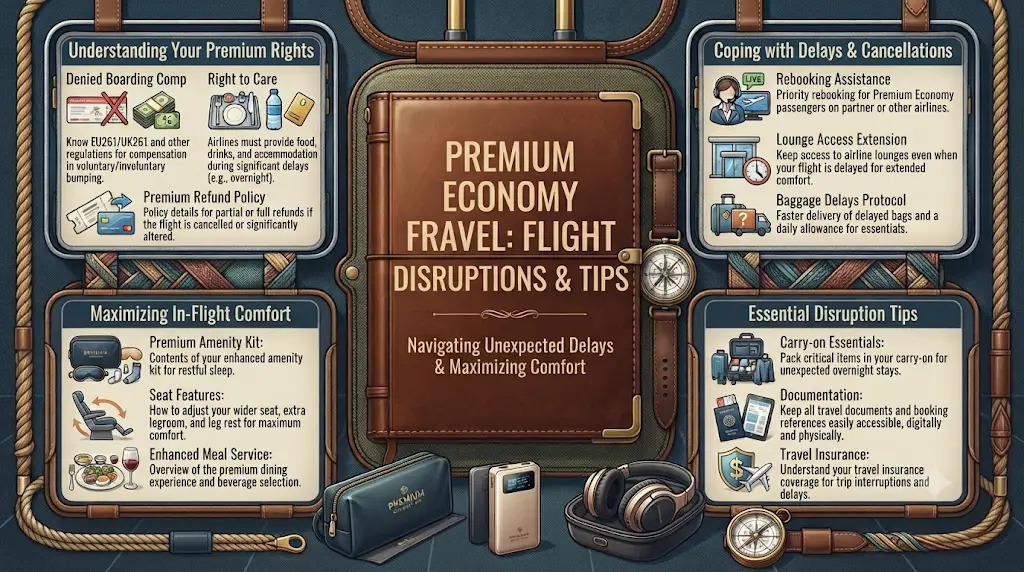
Premium Economy Travel: Flight Disruptions & Tips
When a trans‑Atlantic flight is delayed for two hours, the ripple effects hit the premium‑economy cabin differently than the economy cabin. A business traveler on a 12‑hour flight may lose an entire client meeting; a leisure traveler may miss a scheduled tour. Understanding how disruptions affect you, and learning how to hedge against them, can turn a frustrating experience into a manageable one.
Why Premium Economy Isn’t “Just a Step Up”
Premium‑economy seats are not a mid‑range between economy and business. They are a distinct product category, engineered to deliver:
- Seat pitch up to 38 inches (vs. 31 inches in economy).
- Recline angles up to 25 degrees.
- Dedicated cabin crew with higher service ratios.
- Priority boarding, baggage, and lounge access.
But the price premium, often 1.5‑2× the economy fare, means the airline has fewer seats per flight, so any disruption can have a larger impact on the passenger experience.
Comparing Premium‑Economy Options
| Airline | Seat Pitch (in) | Legroom Bonus | Extra Baggage (kg) | Price Range (USD) | Pros | Cons |
|---|---|---|---|---|---|---|
| Delta Air Lines, Comfort+ | 34 | +2 | 23 (carry‑on) + 10 (checked) | 350, 700 | Priority boarding, lounge, extra legroom | Limited to domestic U.S. routes |
| United Airlines, Premium Plus | 35 | +3 | 23 (carry‑on) + 10 (checked) | 400, 750 | Free seat selection, extra power outlets | Higher fuel surcharges on long‑haul |
| Air Canada, Premium Economy | 36 | +4 | 23 (carry‑on) + 10 (checked) | 300, 650 | Dedicated cabin crew, priority boarding | Seat width slightly narrower |
| British Airways, World Traveller Plus | 37 | +4 | 23 (carry‑on) + 10 (checked) | 500, 900 | Free meal, priority check‑in, lounge access | Limited to trans‑Atlantic routes |
| Singapore Airlines, Premium Economy | 38 | +5 | 23 (carry‑on) + 10 (checked) | 600, 1000 | Premium cabin crew, dedicated seat maps | Higher baggage allowance not always included |
Types of Flight Disruptions That Hit Premium Economy Hard
Disruptions can be categorized into operational, weather‑related, and regulatory. Each has a distinct impact on premium‑economy passengers:
- Operational: Crew shortages, technical glitches, and overbooking.
- Weather‑related: Thunderstorms, high winds, and low visibility.
- Regulatory: Security alerts, airspace closures, and health‑related mandates.
Because premium‑economy cabins are smaller, a single crew member’s absence can delay boarding for the entire cabin. Weather delays often affect long‑haul routes where premium‑economy seats are in high demand. Regulatory shutdowns can cause gate closures that leave premium‑economy passengers stranded without the usual priority support.
Impact on Premium‑Economy Passengers
While the cabin crew may offer extra assistance, the consequences of a delay or cancellation are more pronounced for premium‑economy travelers:
- Higher ticket cost amplifies lost revenue from missed meetings.
- Limited seat availability makes rebooking more difficult.
- Priority services may be suspended during disruptions.
Understanding these nuances allows you to prepare a contingency plan that protects both your time and your wallet.
Strategic Booking Tactics to Mitigate Disruptions
1. Choose Airlines with Strong On‑Time Records
Data from the International Air Transport Association (IATA) shows that airlines with on‑time performance above 80% are more likely to honor compensation policies. Check the IATA website for the latest statistics.
2. Purchase Flexible Fare Options
When booking premium‑economy, opt for fares that allow free date changes or cancellations. The added cost (often 10, 15% of the ticket price) pays for the peace of mind during unpredictable travel seasons.
3. Bundle with Travel Insurance Covering Delays
Standard travel insurance rarely covers delays beyond 24 hours. Look for policies that reimburse missed connections and offer a minimum of $1,000 per passenger for each delayed hour. Use the aviation‑insurance.org portal for industry‑approved carriers.
4. Leverage Frequent‑Flyer Status
Even if you’re not a platinum member, earning status through a credit‑card partnership can grant you upgraded seating and priority handling during disruptions. Check the status benefits on the airline’s loyalty page.
5. Book Early in the Day
Flights that depart early morning are less likely to be affected by late‑night weather or crew fatigue. If your itinerary permits, choose the earliest flight slot to reduce the probability of a delay.
Seat Selection: The First Line of Defense
Premium‑economy offers a selection of seats that vary in location and amenities. Here’s how to pick the best one:
- Window seats: Ideal for sleeping; offer a view and a wall to lean against.
- Aisle seats: Easier access to the lavatory and walkways.
- Front‑row seats: Provide the most legroom and faster boarding.
- Seats near the galley: May experience more noise and foot traffic.
Use the airline’s seat map to identify your preferred category before finalizing the booking. If you’re traveling with a group, coordinate to secure seats together.
Maximizing On‑Board Comfort Amid Disruptions
Even if your flight is delayed, you can still enjoy premium‑economy perks. Follow these steps to stay comfortable:
- Wear layers to adjust to cabin temperature changes.
- Use a travel pillow and blanket, available in premium‑economy, to maintain posture.
- Request a seatbelt extension if you have mobility issues; crew members can provide one.
- Stay hydrated; bring a refillable water bottle and use the onboard water dispenser.
- Download entertainment ahead of time to avoid streaming delays.
Power and Connectivity
Premium‑economy often includes a power outlet and Wi‑Fi. If the flight is delayed, you can use the outlet to charge your devices. For extended delays, use the in‑flight Wi‑Fi (if available) to check email or update clients. If the Wi‑Fi is unreliable, consider a portable hotspot purchased via the airline’s travel partner.
Airport Lounge Access: A Buffer Against Delays
Many premium‑economy cabins grant lounge access. Lounges offer:
- Comfortable seating and showers.
- Complimentary food and beverages.
- High‑speed Wi‑Fi.
- Quiet workspaces.
Use the lounge to recover from a delay, catch up on work, or simply relax. If you’re on a tight schedule, a lounge can be the difference between a productive day and a missed appointment.
Handling Baggage During Disruptions
Premium‑economy passengers typically receive a higher baggage allowance. However, delays can complicate check‑in procedures:
- Check the airline’s baggage policy before boarding.
- Label your luggage with a QR code or a travel tag that includes your contact details.
- Use the airline’s mobile app to track baggage status in real time.
- If your luggage is delayed, file a claim immediately through the airline’s website.
Smart Packing Tips for Premium‑Economy
- Pack a small overnight bag with essentials, change of clothes, toiletries, chargers.
- Use compression bags to maximize space.
- Keep valuables in your carry‑on; avoid checked baggage for high‑value items.
Travel Insurance: The Insurance That Pays Off During Disruptions
Many travelers overlook travel insurance, assuming the airline will cover everything. In reality:
- Airlines rarely reimburse lost time or missed connections.
- Insurance can cover medical emergencies, trip cancellations, and travel delays.
- Look for policies that pay up to $1,000 per passenger for each delayed hour.
When purchasing, compare coverage limits, deductibles, and exclusions. A well‑chosen policy can save you thousands in lost revenue and unexpected expenses.
Technology Tools That Keep You Ahead of Disruptions
- FlightAware: Real‑time flight status and delay alerts.
- Airline Mobile Apps: Push notifications for gate changes, boarding updates.
- TripIt: Consolidates all travel details into one itinerary.
- Google Flights: Price alerts and alternative route suggestions.
Set up notifications before departure. If a delay occurs, these tools often provide alternative flight options and rebooking assistance.
Actionable Framework: The Premium‑Economy Disruption Playbook
- Pre‑Flight Checklist:
- Verify seat selection and cabin services.
- Confirm baggage allowance and insurance coverage.
- Download entertainment and set up devices.
- On Arrival at the Airport:
- Check flight status via the airline app.
- Use the lounge if available.
- Have a backup plan: identify nearby hotels or alternative flights.
- During a Delay:
- Use lounge Wi‑Fi to update clients.
- Request a complimentary meal or beverage.
- If the delay exceeds 3 hours, file a compensation claim.
- Post‑Delay:
- Confirm the new departure time.
- Rebook if the new schedule conflicts with commitments.
- Collect any entitlements (e.g., lounge access, meals).
Follow this playbook every time you travel premium‑economy, and you’ll turn potential chaos into a controlled, predictable experience.
Case Study: A Business Traveler’s 12‑Hour Delay
John, a senior consultant, booked a premium‑economy seat on a 12‑hour flight from New York to London. The flight was delayed 4 hours due to a mechanical issue. John’s strategy:
- He had purchased a flexible fare and had travel insurance covering delays.
- He used the airline’s app to rebook a later flight that matched his conference schedule.
- He accessed the lounge and used the high‑speed Wi‑Fi to finish a presentation.
- He filed a compensation claim, which was processed within 48 hours.
Outcome: No loss of revenue, and he arrived on time for his meeting. This example illustrates how a well‑planned approach can mitigate disruption costs.
FAQ
What is the difference between premium economy and business class?
Premium economy offers more legroom and better service than economy but lacks the lie‑flat seats and dedicated cabin crew of business class. Business class typically includes a private cabin, larger meals, and higher priority for all services.
Can I upgrade from economy to premium economy last minute?
Upgrades are possible at the airport, but availability is limited. It’s safer to book premium‑economy directly if you need the extra comfort.
Do airlines provide compensation for delayed premium‑economy flights?
Compensation varies by airline and jurisdiction. In the EU, Regulation (EC) No 261/2004 mandates compensation for delays over three hours. In the U.S., airlines may offer vouchers or rebooking options.
Is premium‑economy worth the extra cost?
For frequent flyers, the increased comfort, priority services, and lower risk of missed connections often justify the higher fare. For occasional travelers, consider whether the added cost aligns with your travel goals.
How can I ensure my premium‑economy seat is not near the galley during a delay?
When selecting a seat, choose a row away from the galley and lavatory. If you’re traveling with a group, coordinate to sit together in a quieter area.
Conclusion
Premium‑economy travel is not just a luxury; it’s a strategic choice that can protect your time, health, and productivity. By selecting airlines with strong on‑time records, purchasing flexible fares, leveraging travel insurance, and following a structured disruption playbook, you can reduce the impact of flight delays and cancellations. Remember, the extra cost is an investment in resilience, an investment that pays dividends when the skies do not cooperate.
One thought on “Premium Economy Travel: Flight Disruptions & Tips”
Comments are closed.