
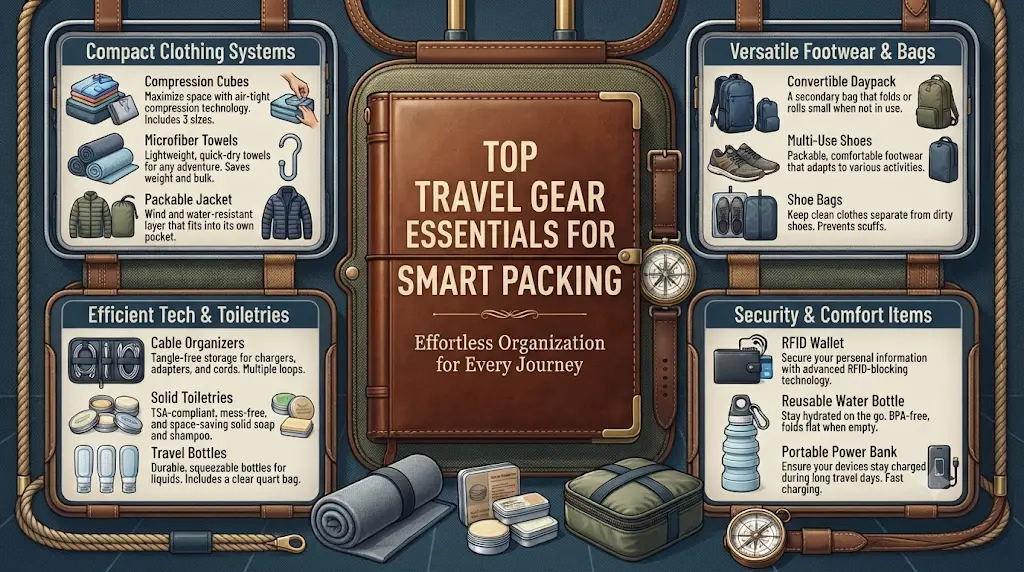
Did you know that the average airline passenger spends $80 per flight on extra baggage fees? That money could instead be invested in gear that saves time, reduces stress, and keeps you comfortable. Smart packing turns a budget‑draining trip into a well‑planned adventure.
The Science of Smart Packing
Every successful traveler treats packing like a mini project. The goal is to minimize weight, maximize utility, and maintain flexibility. Researchers at the University of Arizona found that a well‑organized suitcase can reduce travel time by up to 20 %. The trick? Layering, compression, and a clear hierarchy of items.
When you choose gear, think of it in three layers:
- Core essentials that you need at all times (clothing, toiletries, electronics).
- Optional extras that add comfort or convenience (travel pillow, extra charger).
- Emergency or backup items (first‑aid kit, spare batteries).
Balancing these layers ensures you carry what you need without overloading.
Core Categories of Travel Gear
Carry‑On Essentials
A quality carry‑on is your travel backbone. Look for a bag that meets airline size limits (typically 22 × 14 × 9 inches for most carriers) and offers durable construction. A hard‑shell carry‑on protects fragile electronics, while a soft‑shell offers flexibility for packing irregular shapes.
Checked Bag Must‑Haves
Checked luggage should be lightweight yet sturdy. Polycarbonate shells are a popular choice for their impact resistance. Opt for a bag with a built‑in lock, a removable compression system, and a dedicated shoe compartment to keep odors contained.
Personal Item and Luggage Accessories
These small items have a big impact on organization:
- Travel tags with QR codes for quick identification.
- Compression straps that reduce volume by 20‑30 %.
- Dedicated toiletry pouches that keep liquids sealed.
Packing Cubes & Organization Systems
Packing cubes are the unsung heroes of efficient travel. They segment your suitcase into pre‑defined compartments, allowing you to roll clothing and separate items by type. A typical cube set includes:
- Two large cubes for shirts and pants.
- Two medium cubes for underwear and socks.
- One small cube for electronics or accessories.
When using cubes, follow a simple rule: roll, don’t fold. Rolling reduces creases and maximizes space.
Lightweight and Multi‑Functional Gear
2‑in‑1 Travel Items
Every ounce counts. Consider items that serve multiple purposes:
- Convertible neck pillow that doubles as a travel blanket.
- Water‑proof jacket that can be folded into a small pouch.
- Smart luggage with built‑in GPS and charging ports.
These choices cut down on separate purchases and keep your carry‑on lean.
Security and Safety Gear
Security is often overlooked until it becomes a problem. Equip yourself with:
- Anti‑theft backpacks featuring lockable zippers.
- RFID‑blocking wallets to protect personal data.
- Portable door locks for hotel rooms.
Investing in safety gear reduces the risk of theft and gives you peace of mind.
Tech & Connectivity
Modern travelers rely heavily on electronics. Choose gear that keeps devices charged and protected:
- Power banks with at least 10 000 mAh capacity.
- Universal travel adapters with USB‑C ports.
- Portable SSDs for backing up photos.
Remember to pack cables in a dedicated pouch to avoid tangling.
Comfort & Health Essentials
Long flights and layovers can be brutal. Prepare with:
- Noise‑cancelling headphones for a quiet cabin.
- Compression socks to reduce swelling.
- Travel‑size first‑aid kit with plasters, antiseptic wipes, and pain relievers.
Hydration packs are also handy for maintaining fluid balance during long journeys.
Quick Reference Table
| Item | Price Range (USD) | Pros | Cons | Where to Buy |
|---|---|---|---|---|
| Durable Travel Duffel (Polycarbonate) | 80, 120 | Impact resistant, lockable, 20 kg capacity | Heavier than soft‑shell | Amazon |
| Hard‑Shell Carry‑On (Aluminum Frame) | 150, 250 | Excellent protection, built‑in lock, TSA‑approved | Bulkier, higher cost | Aviasales |
| Compression Packing Cubes (Set of 5) | 20, 40 | Reduces volume, keeps clothes wrinkle‑free | Can be difficult to pack if not used regularly | Amazon |
| Anti‑Theft Backpack (Lockable Zippers) | 70, 130 | RFID blocking, hidden pockets, lockable | Limited internal space for large items | Aviasales |
| Portable Power Bank (10 000 mAh) | 30, 60 | High capacity, multiple output ports | Bulky when fully charged | Amazon |
Practical Takeaways: A Step‑by‑Step Packing Framework
- Plan Your Wardrobe: Choose a color palette and mix‑and‑match pieces. Aim for no more than 7 clothing items per day, and include layers.
- Use the Packing Cube Method: Assign each cube a category (shirts, pants, underwear, accessories). Roll items to maximize space.
- Weight‑Check Your Bag: Weigh the suitcase with a digital scale. If it exceeds airline limits, replace heavy items with lighter alternatives (e.g., switch a heavy sweater for a fleece).
- Secure Electronics: Pack laptops, cameras, and chargers in dedicated pouches. Keep the power bank in a separate compartment to avoid moisture.
- Include Safety Nets: Place a small first‑aid kit in the front pocket of your carry‑on for quick access. Keep a spare key or lock in a separate location.
- Finalize with a Checklist: Use a printable PDF or a note on your phone. Cross off items as you pack to avoid forgetting critical gear.
FAQ
- What are the most common airline baggage fees?
- Airlines typically charge $35, $50 for overweight carry‑ons and $30, $40 for oversized checked bags. Frequent travelers can save by staying under 23 kg for carry‑ons and 32 kg for checked luggage.
- How do I choose between a hard‑shell and soft‑shell carry‑on?
- Hard‑shell bags protect fragile items and deter theft. Soft‑shell bags offer more interior flexibility and tend to be lighter. Evaluate your itinerary: if you’ll be handling rough handling, lean toward hard‑shell.
- Are packing cubes worth the investment?
- Yes. They streamline organization, reduce wrinkles, and can prevent the need to repack in hotel rooms.
- Can I use a regular backpack for checked luggage?
- Backpacks can work for short trips, but they lack the structure and security of dedicated luggage. For long stays, a proper suitcase is recommended.
- What is the best way to keep toiletries organized?
- Use a clear, leak‑proof toiletry bag with separate compartments for liquids, gels, and solids. Pack items in travel‑size containers to stay within liquid limits.
Final Thoughts
Smart packing is not merely about saving space; it’s about creating a travel ecosystem that supports your itinerary, protects your belongings, and reduces friction. By selecting gear that aligns with airline regulations, prioritizing multi‑functionality, and following a structured packing methodology, you transform the act of preparing for a trip into an exercise of efficiency and confidence.
Remember: the right gear is an investment that pays dividends in time saved, money avoided, and peace of mind earned. Equip yourself, pack strategically, and let every journey begin on the right foot.
For deeper dives into airline baggage policies, consult the TSA website or the IATA luggage guidelines. They provide up‑to‑date regulations that can help you avoid costly surprises.

One thought on “Top Travel Gear Essentials for Smart Packing”
Comments are closed.