The Rise of Culinary Tourism: How Immersive Food Experiences Are Shaping the Future of Travel
From pre-dawn fish auctions in Tokyo to wild mushroom foraging in the damp foothills of Piedmont, food has ceased to be an ancillary line item on the traveler’s budget. It has become the itinerary itself.
Beyond the Postcard: The Paradigm Shift in How We Explore
For decades, the mechanics of leisure travel were built upon a predictable visual taxonomy. Travelers crossed oceans to stand before monumental architecture, gaze across alpine horizons, or photograph centuries-old ruins through tour bus windows. Dining, while necessary, was largely structured around convenience, familiar hotel buffets, or restaurants clustered within sight of major landmarks—spaces engineered to soothe tourist anxieties rather than challenge their palates.
That paradigm has collapsed. Today, the world’s most compelling travel narratives are written not in museum guidebooks, but on grease-stained butcher paper in night markets, across flour-dusted marble tables in Bologna, and over smoky open-fire hearths in the Oaxacan highlands. Culinary tourism—historically pigeonholed as the exclusive playground of wealthy oenophiles and Michelin-guide devotees—has transformed into an egalitarian, culturally driven movement that reshapes economies, preserves endangered traditions, and dictates global travel trends.
Modern travelers no longer merely want to look at a destination; they want to ingest it. They recognize that food is the ultimate sensory shortcut to understanding a place’s geography, history, social strata, and political complexities. A bowl of Vietnamese phở eaten on a plastic stool in Hanoi reveals the French colonial legacy through its clarified bone broth technique, while celebrating indigenous botanical mastery through mountains of saw-tooth herb and Thai basil. To eat immersively is to participate in living history.
Deconstructing Culinary Tourism: More Than Just Good Meals
To understand the explosive growth of food-centric travel, we must first define what sets modern culinary tourism apart from ordinary dining while on vacation. Any tourist eats three meals a day; a culinary traveler approaches those meals as fieldwork.
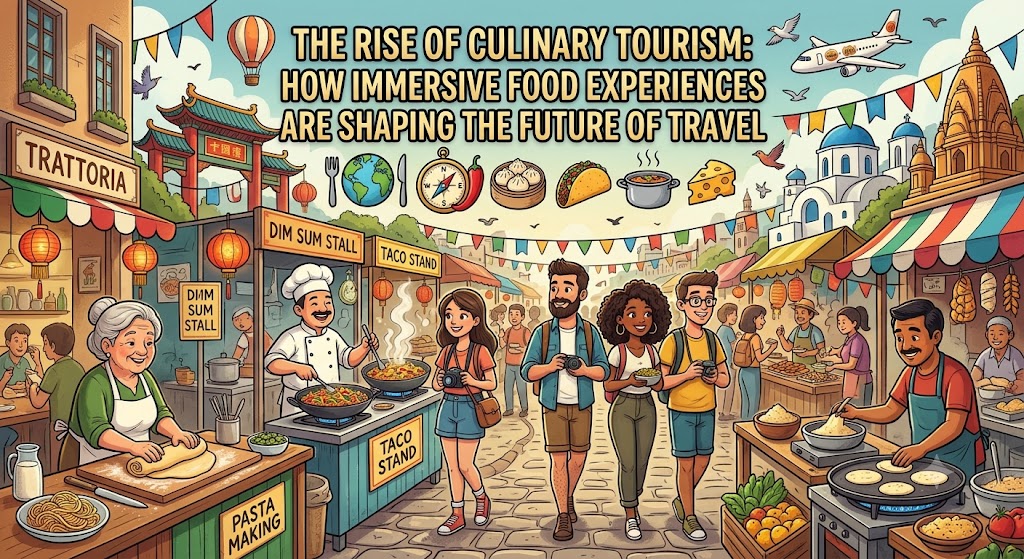
The contemporary culinary traveler operates across a vast and dynamic spectrum. At one end lies hyper-local street gastronomy: navigating the dense, fragrant alleys of Bangkok’s Chinatown or tracking down the premier tacos al pastor trompo in Mexico City based on the color of its searing flame and the rhythm of the taquero’s blade. At the other end lies intellectual gastronomic pursuit: booking twelve months in advance to experience how a chef like Virgilio Martínez maps Peru’s ecological elevations onto tasting plates at Central in Lima.
Crucially, the modern movement rejects the elitism that once dominated food writing. The modern traveler understands that an eighty-year-old grandmother hand-rolling orecchiette on a cobblestone street in Bari possesses a culinary wisdom just as profound as a brigade of fine-dining chefs brandishing tweezers and liquid nitrogen. This democratization of taste has redirected tourism revenues away from multinational hotel chains and into the pockets of street vendors, smallholder farmers, artisanal cheese makers, and community-led cooking cooperatives.
The Socio-Cultural Engine: Why We Crave Immersive Taste
Why has the global appetite for culinary immersion accelerated so aggressively over the past decade? The phenomenon is fueled by three converging shifts in culture, psychology, and technology.
1. The Antidote to Digital Homogenization
In an increasingly digital and globalized world, our daily environments have become eerily uniform. High streets from London to Seoul feature identical fashion boutiques, ubiquitous coffee conglomerates, and algorithmically optimized corporate interiors. You can buy the same mass-produced sweater, stream the same media, and browse the same interfaces anywhere on Earth.
Food remains one of the few cultural artifacts that resists total digital replication. You cannot download the olfactory assault of a wet market in Mumbai, the stinging heat of fresh horseradish shaved over cured trout in Vienna, or the tactile crunch of deep-fried crickets seasoned with kaffir lime in Chiang Mai. Food demands physical presence. It requires the surrender of one’s senses to the immediate physical environment, serving as a powerful antidote to virtual existence.
2. The Search for Intangible Cultural Heritage
Travelers are increasingly aware that historical monuments often showcase the tastes of the powerful, whereas food cultures preserve the everyday resilience and creativity of ordinary people. UNESCO’s recognition of culinary practices—such as the Mediterranean diet, traditional Mexican cuisine, the gastronomic meal of the French, and the art of the Neapolitan pizzaiuolo—has legitimized food as intangible cultural heritage worthy of the highest preservation efforts.
When travelers seek out these UNESCO-recognized traditions, they participate in cultural preservation. In regions vulnerable to rural depopulation, young cooks and food producers are discovering that their ancestral foodways have international value, providing viable economic reasons to remain in their ancestral villages rather than migrating to crowded metropolises.
3. Social Media and the Visual Democratization of Dining
While social media has undeniably created issues with overtourism, it has fundamentally transformed how travelers discover food. A generation ago, international culinary intelligence was filtered through a handful of Western travel publications and guidebook editors. Today, a viral video shot by an independent traveler can illuminate a third-generation noodle master in George Town, Penang, instantly introducing their craft to millions.
Travelers are no longer dependent on standardized concierge recommendations. They arrive in foreign cities armed with hyper-niche knowledge, eager to find the single back-alley stall known for slow-braised pork knuckle or the coastal shack serving uni cracked directly from the sea.
The Anatomy of Immersive Food Experiences
The culinary travel market has evolved far beyond passive dinners and generic cooking classes held in windowless conference rooms. Today’s premier culinary operators design deeply layered, contextual encounters that drop travelers directly into the food production ecosystem.
Agritourism and Regenerative Farming Journeys
Travelers are moving past standard vineyard tastings to get their hands dirty. Modern agritourism invites visitors to live the rhythm of the harvest: staying at working olive mills in the Peloponnese during the November press, milking heritage sheep in the Basque Country to understand the salinity profile of Idiazabal cheese, or working alongside tea pluckers in the misty hills of Darjeeling. These experiences forge a visceral link between soil health, climate, and the final sensory profile on the plate—an education in what the French term terroir.
Wild Gastronomy and Foraging Expeditions
Pioneered by the New Nordic culinary movement, foraging has transitioned from an esoteric survival skill to a sought-after travel experience. In the damp pine forests of Sweden, travelers spend days tracking cloudberries, chanterelles, and wild wood sorrel under the guidance of indigenous Sámi experts. In South Africa’s Western Cape, coastal foraging walks teach visitors to identify edible seaweeds, limpets, and sea succulents along the Benguela Current. These excursions transform the landscape from a passive backdrop into an edible wilderness, permanently altering how travelers observe nature.
Intergenerational Home Cooking Masterclasses
The generic, tourist-oriented cooking school—where twenty travelers cook Pad Thai using pre-portioned ingredients under fluorescent lights—is rapidly being replaced by domestic cooking residencies. Programs like Italy’s Cesarine network connect travelers with local home cooks for meals and lessons inside private residences. In Tokyo, travelers book sessions with retired home cooks to master the intricate geometry of traditional bento or the precise alchemy of a clean dashi broth. The value of these encounters lies as much in the family stories, ancestral cookware, and domestic intimacies shared around the kitchen table as it does in the recipes themselves.
Contextual Street Food Safaris
Street food is inherently intimidating to uninitiated travelers, who are often paralyzed by fears of foodborne illness or linguistic barriers. The rise of hyper-specialized, small-group street food tours led by local culinary journalists, historians, and passionate food writers has opened these subcultures to the world. A properly guided evening through the yokocho (alleys) of Osaka or the chaotic night markets of Taipei does not simply offer samples of octopus balls or stinky tofu; it unpicks the post-WWII economic history that birthed these dining hubs and introduces travelers to the personalities behind the griddles.
Comparative Analysis: The Shift in Culinary Travel Mindsets
The transformation of food travel can be observed through how travelers allocate their time, capital, and attention. The table below illustrates the contrast between traditional tourist dining and modern immersive food travel.
| Dimension | Conventional Tourism Dining | Immersive Culinary Travel |
|---|---|---|
| Primary Driver | Convenience, familiarity, scenic views near major landmarks. | Authenticity, cultural context, technique, and ingredient origin. |
| Itinerary Role | Secondary; meals are fit in around museum and sightseeing schedules. | Primary; daily movements, neighborhoods, and lodging are chosen based on food hubs. |
| Sourcing Transparency | Ignored; dishes are often standardized or catering-focused. | Prioritized; deep interest in farming methods, micro-climates, and regional producers. |
| Economic Beneficiary | Large hotel groups, tourist-trap restaurant conglomerates, international brokers. | Smallholder farmers, street hawkers, generational artisans, and independent guides. |
| Engagement Level | Passive consumption from a menu translated into English. | Active participation: foraging, peeling, rolling, market-haggling, and dialogue. |
The Street Food Renaissance: Democracy on a Skewer
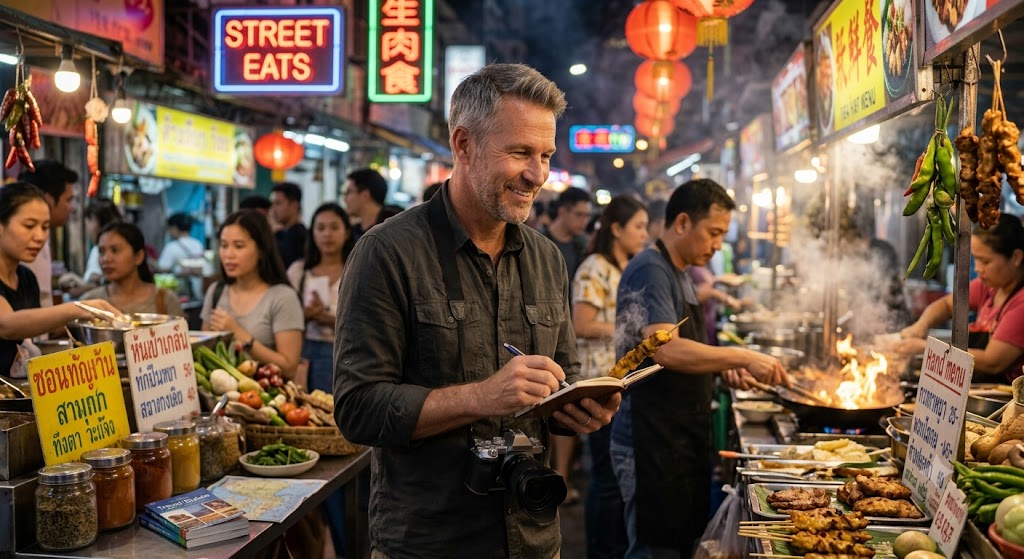
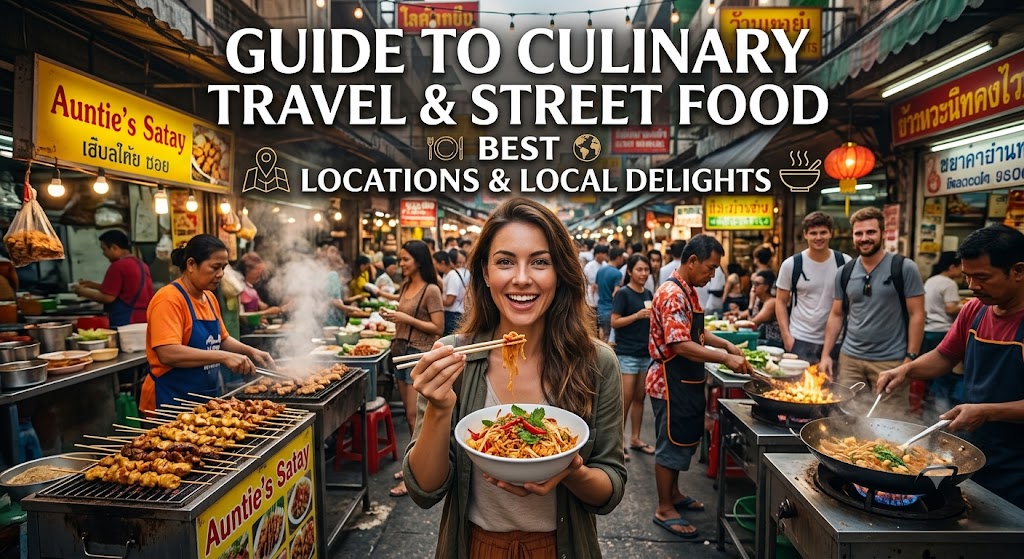
No segment of culinary tourism has experienced a more dramatic re-evaluation than street food. Once viewed by nervous Western travelers as a gastrointestinal hazard to be avoided at all costs, open-air stalls are now celebrated as the truest custodians of regional flavor.
Street food offers an intimacy that brick-and-mortar restaurants rarely match. There are no walls, no maître d’s, and no secrets. The entire production chain—the searing wok, the cleaver striking the cutting board, the hand dunking noodles into boiling water—unfolds inches from where you sit. This radical transparency builds trust. A stall that has spent forty years mastering a single dish, serving hundreds of local patrons daily, operates with a degree of ingredient turnover and specialized muscle memory that elite restaurants struggle to match.
Consider the historic street vendors of Singapore’s hawker centres, which received UNESCO recognition in 2020. Stalls like Tian Tian Hainanese Chicken Rice or Hill Street Tai Hwa Pork Noodle demonstrate that world-class execution does not require white tablecloths or silverware. Travelers queue for hours not out of budget constraints, but because they recognize that these dishes represent the pinnacle of culinary craft.
However, this renaissance comes with real-world tensions. In cities like Bangkok and Ho Chi Minh City, urban modernization initiatives frequently push street vendors off primary thoroughfares into sanitized food halls, severing ties with neighborhood regulars and threatening the informal economy. Conscious culinary travelers must stay informed about these dynamics, choosing to support vendors whose traditions are imperiled by aggressive municipal redevelopment.
Planning an Immersive Culinary Journey: A Practical Guide
Shifting from passive tourist to discerning culinary traveler requires deliberate preparation. To build an itinerary centered around authentic, memorable food encounters, use the following operational framework:
1. Follow the Rhythm of the Harvest
Do not plan a food-centric itinerary solely around pleasant weather; align your travel dates with micro-seasons. If your dream is to experience the culinary soul of truffle country in Istria or Piedmont, visit during the damp chill of autumn when the tubers are uncovered. If you want to taste fresh olive oil in its spicy, vibrant green infancy, head to Tuscany or the Peloponnese during the November crush. Research harvesting calendars, fermentation cycles, and regional food festivals before you book flights.
2. Master the Mechanics of Market Reconnaissance
The central market is the beating heart of any culinary ecosystem, but timing is everything. Arriving at 11:00 AM guarantees you will see other tourists photographing wilted produce. Arrive instead at 5:30 AM or 6:00 AM, alongside local restaurant buyers and home cooks. Watch where the working tradespeople line up for their morning coffee, soup, or pastry. That breakfast stall—serving workers who require hot, nourishing sustenance before dawn—is almost invariably where you will find the most honest food in the district.
3. Vet Guides and Experiences for Community Equity
When booking culinary tours or foraging guides, evaluate where your money lands. Ask key questions: Does the tour operator pay street vendors fairly for samples, or do they negotiate bulk discounts that squeeze micro-businesses? Are the guides local food writers, chefs, or residents of the neighborhood, or are they expatriates running an extractive operation? Prioritize operators that limit group sizes to six or eight guests to avoid overwhelming small family stalls and disrupting normal neighborhood life.
4. Build Palate Resilience and Navigate Safety Intelligently
Enjoying street food around the globe requires pragmatic risk management, not paralyzing fear. Protect your digestive system by taking a broad-spectrum probiotic in the weeks leading up to your trip. When evaluating street vendors, look for three clear indicators: high turnover (dishes cooked fresh before your eyes, not sitting in tepid metal pans), a customer line populated by local families and elderly patrons, and a dedicated person handling cash who does not touch the food.
The Ethical Horizon: Gentrification, Tourism, and Climate
As culinary tourism claims a larger share of the global travel market, it inevitably brings complex environmental and social challenges that the travel community must reckon with.
The Threat of “Culinary Disneyfication”
When an obscure regional dish becomes an international sensation, the sudden surge in tourism can divorce the food from its cultural origins. In some historic districts, generational bakeries and family-run butcher shops have been forced out by skyrocketing rents, replaced by Instagram-tailored snack counters that prioritize spectacle over substance. Travelers must remain self-aware: when we visit purely to capture an aesthetic video for social media, we incentivize businesses to trade cultural depth for visual gimmickry.
Preserving Indigenous Foodways Against Climate Disruption
Culinary traditions are intrinsically bound to stable ecological systems. The rise of culinary tourism coincides with significant climate instability that threatens the very ingredients that define regional cuisines. Shifting rainfall patterns affect coffee yields in Colombia; warming waters alter Mediterranean fish stocks and oyster beds off Brittany; changing winter temperatures disrupt the snowpack essential for traditional sake brewing in Japan.
Responsible culinary travelers must move beyond consumption and become vocal advocates for the ecosystems and agricultural workers sustaining these food traditions. Supporting regeneratively farmed ingredients, indigenous seed-saving initiatives, and small-scale cooperatives ensures that the regional specialties we travel across the world to taste can survive for future generations.
Key Takeaways for the Conscious Culinary Traveler
- Food is the lens, not the backdrop: Treat meals as profound cultural encounters that reveal local history, migration patterns, and socio-economic realities.
- Democratize your spend: Balance high-end reservations with street market stalls, worker-run lunch canteens, and rural farm stays to distribute economic impact equitably.
- Travel in micro-seasons: Match your itinerary with seasonal harvests, fishing migrations, or fermentation cycles rather than generic peak-season vacation windows.
- Prioritize small-group, locally led access: Work with culinary historians and resident guides who demonstrate mutual respect for vendors and maintain small group footprints.
- Protect the living ecosystem: Recognize that authentic food traditions rely on healthy soils, stable climates, and fair compensation for agricultural laborers.
Frequently Asked Questions
What exactly defines culinary tourism?
Culinary tourism (often called food tourism or gastronomy tourism) is travel explicitly motivated by the desire to experience, learn about, and consume the food, beverages, and culinary traditions of a specific region. It encompasses everything from fine-dining pilgrimages and street food explorations to agritourism, cooking classes, winery tours, and wild foraging expeditions.
How can I find authentic local food without speaking the language?
Body language, curiosity, and courtesy transcend linguistic hurdles. Seek out places with handwritten, single-language menus that focus on just a few specialties. Observe where locals gather, particularly multigenerational families and trade workers. Learn a few fundamental phrases in the local language: “What do you recommend?”, “Delicious”, and “Thank you” open doors faster than any translation app.
Is eating street food in developing countries safe?
Yes, provided you apply smart street-sense. Look for stalls with high customer turnover, where ingredients are cooked rapidly over high heat directly in front of you. Choose vendors patronized by local families, parents with young children, and seniors—groups that avoid substandard food. Avoid raw, unpeeled produce, choose drinks without unverified ice if you have a sensitive stomach, and always ensure utensils are completely dry before use.
How does culinary tourism benefit local communities?
Unlike conventional tourism models where significant revenue is absorbed by multinational hotel chains, airlines, and foreign tour operators, culinary tourism directs capital directly into the local informal and agricultural economies. It supports independent farmers, artisanal producers, market stall holders, and neighborhood restaurateurs, providing strong financial incentives to preserve endangered recipes, ancestral farming techniques, and cultural biodiversity.
What is the difference between food tourism and agritourism?
Food tourism focuses broadly on the consumption, preparation, and cultural appreciation of dishes and drinks. Agritourism is a specialized branch of this movement centered on the agricultural origin of food. It involves visiting and staying on working farms, orchards, vineyards, ranches, and dairies to participate directly in agricultural labor, processing, and farm-to-fork dining.