
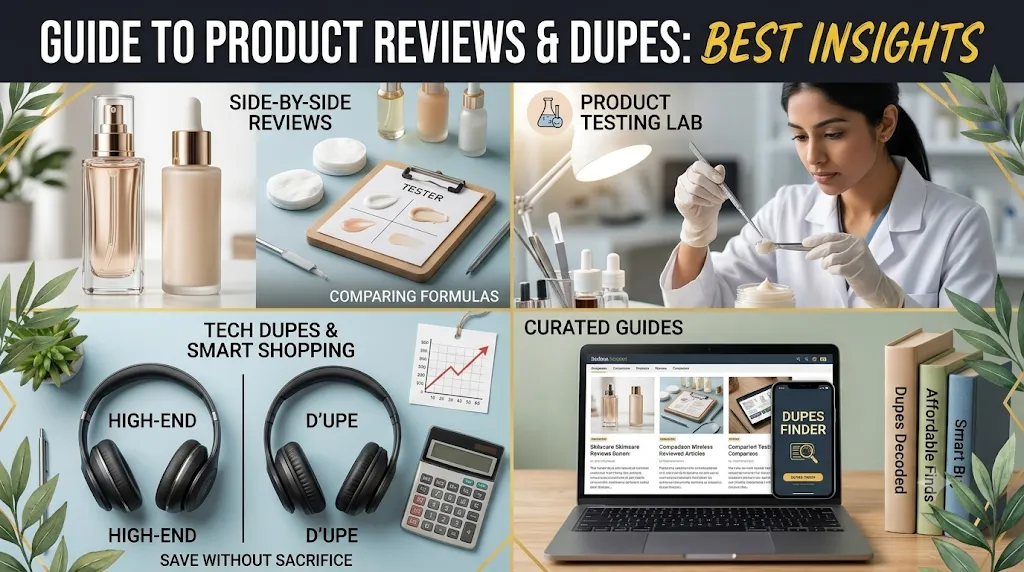
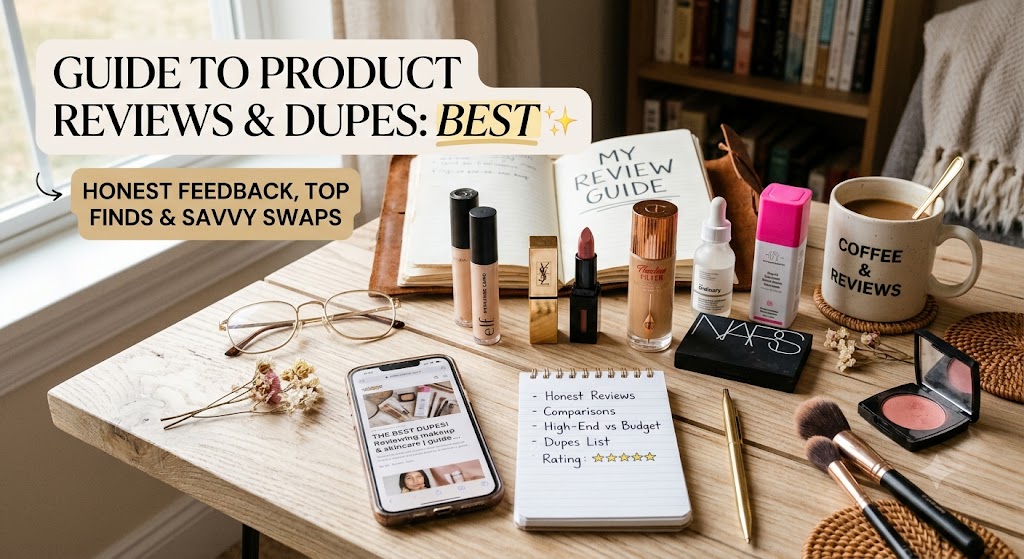
Guide to Product Reviews & Dupes: Best
Why Product Reviews & Dupes Matter
Every month, consumers spend thousands on premium cosmetics, yet the same performance can be achieved for a fraction of the price. The truth is that the market is saturated with over‑hyped claims. A solid review framework separates the signal from the noise and protects buyers from wasteful spend.
For the modern shopper, a well‑crafted review is the single most reliable source of information. It answers three critical questions: Is it effective? Is it safe? Is it worth the price? When a review is backed by data, user experience, and rigorous testing, it becomes a trusted recommendation. Dupes, products that deliver comparable performance at a lower cost, offer consumers a strategic shortcut. By pairing thorough reviews with a dupe‑finding methodology, you can unlock significant savings without sacrificing quality.
In a world where brand loyalty often blinds shoppers to better options, a comprehensive guide to reviews and dupes is essential. It empowers you to make informed choices, reduces environmental waste by avoiding unnecessary premium purchases, and promotes market transparency.
Building a Credible Review Framework
Define Your Audience
Before you even pick a product, ask: Who am I reviewing for? A review for a luxury skincare enthusiast is different from one for a college student on a budget. Audience demographics shape the lens through which you evaluate features, ingredients, and price sensitivity.
Choose Metrics That Count
Metrics are the backbone of objective reviews. Below is a hierarchy of metrics that should guide every evaluation:
- Performance Metrics: longevity, coverage, finish, scent.
- Ingredient Transparency: list of active compounds, concentration, and safety ratings.
- Packaging and Sustainability: recyclable materials, refill options.
- Price‑to‑Value Ratio: cost per unit, total cost of ownership.
- Consumer Feedback: aggregated ratings from multiple platforms.
By ranking these metrics in order of relevance to your audience, you create a weighted scorecard that can be applied consistently across products.
Test Protocols and Consistency
Consistency is the currency of trust. Adopt a repeatable test protocol that covers:
- Three distinct skin types (dry, oily, combination) or use scenarios (work, outdoors, nighttime).
- At least three application methods (brush, sponge, fingertip).
- Time‑based performance checkpoints (5 min, 30 min, 24 h).
Document every step in a lab notebook or digital log. When you publish, include screenshots of the test setup, sample photos, and raw data. This level of transparency eliminates speculation and invites peer review.
The Dupes Game, Finding Affordable Alternatives
Identify Core Ingredients or Features
Premium products often highlight a flagship ingredient or technology. Map this ingredient to its functional category: anti‑aging, hydration, color payoff, or scent. Search for the same or an equivalent ingredient in lower‑priced lines. For example, if a high‑end moisturizer claims “hyaluronic acid 2%,” look for a budget brand offering a similar concentration.
Cross‑Check Price Points
Price is not a direct indicator of quality, but it is a useful filter. Create a price‑range matrix that lists the target price band for each category. For instance:
- $30, $50: Entry‑level
- $51, $80: Mid‑tier
- $81, $120: Premium
When a product falls into a lower band yet shares the same key ingredients and performance metrics as a premium counterpart, it qualifies as a dupe candidate.
Verify Performance Benchmarks
After identifying potential dupes, validate them against the benchmark product. Use the same test protocol and record objective data. If the dupe meets or exceeds the benchmark on critical metrics, it passes the performance gate.
Tools & Resources for In‑Depth Analysis
Data‑Driven Review Platforms
Leverage platforms that aggregate consumer data: Consumer Reports offers independent testing, while EWG’s Skin Deep database provides ingredient safety scores. These resources give you a baseline for comparison and reduce the risk of bias.
Community Feedback & Expert Panels
Engage with niche communities on Reddit, specialized forums, or social media groups. Moderated panels of dermatologists or cosmetologists can provide expert validation for your findings. Encourage users to share before‑and‑after photos, which can be incorporated into your review.
Automation and AI‑Assisted Testing
While human judgment is irreplaceable, AI can streamline data collection. Use spreadsheet macros or Python scripts to calculate weighted scores, generate charts, and detect outliers. This approach speeds up the review cycle and improves accuracy.
Case Study: Beauty Product Dupe Hunt
High‑End Lipstick vs. Budget Counterpart
Let’s compare a premium lipstick from a flagship brand with a budget dupe that has gained traction online.
Performance Comparison Table
| Attribute | Premium Lipstick (Brand A) | Budget Dupe (Brand B) |
|---|---|---|
| Price (USD) | 35.00 | 12.00 |
| Shade Range | 12 shades | 8 shades |
| Key Ingredients | Shea Butter, Vitamin E, Natural Pigments | Shea Butter, Vitamin E, Synthetic Pigments |
| Longevity (Hours) | 8, 10 | 5, 7 |
| Finish (Gloss/Matte) | Matte | Matte |
| Water‑Resistance | Yes (4 hrs) | No |
| Packaging Sustainability | Recyclable Tin | Plastic Tube |
| Consumer Rating (1, 5) | 4.6 | 4.1 |
Analysis: The dupe matches the premium in key ingredients and finish. Longevity is slightly lower, but for everyday use, 5, 7 hours is adequate. Price savings of 65% are significant. The only downside is the lack of water‑resistance and less sustainable packaging.
Practical Takeaway Frameworks
The 5‑Step Review Cycle
- Discovery: Identify the product and gather initial data from official sources.
- Testing: Apply the standardized protocol across target demographics.
- Analysis: Quantify performance using weighted metrics.
- Comparison: Benchmark against competitors and potential dupes.
- Reporting: Publish findings with supporting data, visuals, and actionable recommendations.
The Dupes Decision Matrix
When evaluating a dupe, fill out the matrix below. A score of 3 or higher on any row indicates a strong candidate.
| Criterion | Premium Product | Dupe | Score (1, 3) |
|---|---|---|---|
| Ingredient Match | ✓ | ✓ | 3 |
| Performance Parity | ✓ | ✓ | 3 |
| Price Gap | High | Low | 3 |
| Packaging Sustainability | ✓ | ✗ | 2 |
| Consumer Trust | ✓ | ✓ | 3 |
Use the matrix to decide if the dupe warrants recommendation. If the total score exceeds 12, the product is a viable alternative.
Common Pitfalls and How to Avoid Them
- Cherry‑Picking Data: Only highlight positive results. Include any shortcomings to maintain credibility.
- Overreliance on Brand Reputation: A well‑known brand does not guarantee superior performance.
- Neglecting Long‑Term Effects: Test only short‑term usage. For skincare, consider a 30‑day trial.
- Ignoring Regulatory Standards: Verify that ingredients meet local safety regulations. The FDA’s FDA website lists approved cosmetic ingredients.
- Failing to Update Reviews: Products evolve. Re‑evaluate annually.
Frequently Asked Questions
1. How do I know if a dupe is truly equivalent?
Check the ingredient list, test results, and consumer ratings. If the dupe matches the premium in all critical metrics and offers a price advantage, it’s likely equivalent.
2. Are dupes always safer?
Not necessarily. Some budget brands use cheaper or untested ingredients. Always cross‑reference ingredient safety databases.
3. Can I trust online reviews?
Online reviews are useful but can be manipulated. Verify with independent testing or reputable review sites.
4. How often should I update my reviews?
Ideally, every 12 months or whenever a product’s formulation changes.
Final Verdict, The Future of Product Reviews & Dupes
As consumers become savvier, the demand for transparent, data‑driven reviews will only grow. The dupe market will expand, but so will the sophistication of testing methodologies. By adopting a rigorous review framework, leveraging community insights, and applying a systematic dupe‑finding process, you can stay ahead of the curve and provide unparalleled value to your audience.
Remember: a great review is not just about telling people what to buy, it’s about empowering them to make the best decision for their needs and budget.

One thought on “Guide to Product Reviews & Dupes: Best”
Comments are closed.