Best AI Fitness Trackers in 2025: Apple Intelligence vs. Google Fitbit Tested
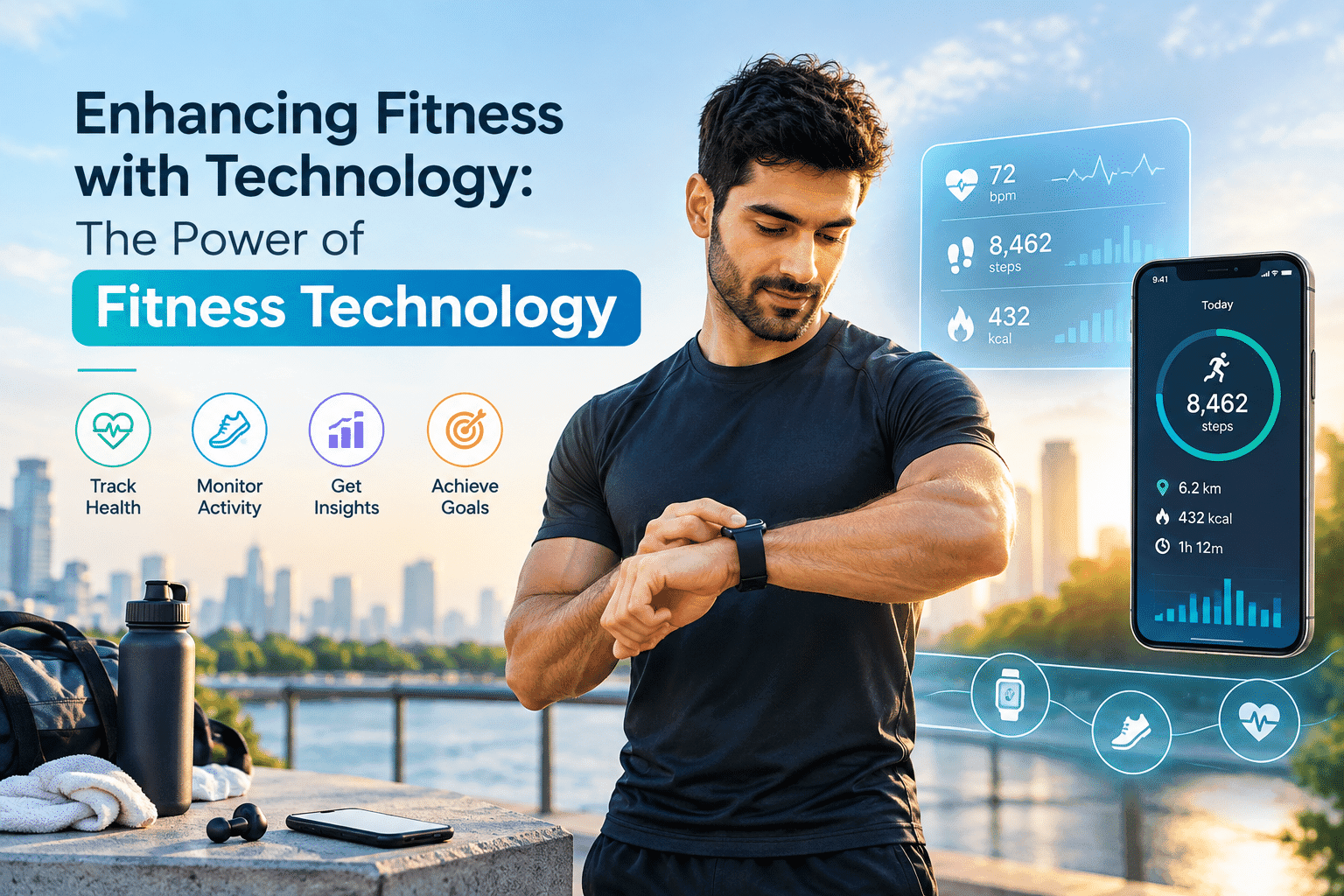
For the first three months of 2025, my daily routine involved a level of wrist-bound redundancy that elicited questioning glances from fellow runners and gym regulars. On my left wrist sat the Apple Watch Series 10 (interchanged on weekend trail runs with the Ultra 2), driven by watchOS 11 and Apple Intelligence. On my right, the Google Pixel Watch 3, channeling Google’s Gemini-infused Fitbit ecosystem.
Until recently, fitness trackers were essentially glorified digital ledgers. They recorded heart rate, counted steps, tracked GPS coordinates, and graphed sleep stages. They handed you raw data—a dizzying array of bar charts and percentages—and left the interpretation to you. If your resting heart rate spiked by seven beats per minute, the device noted it, but rarely could it synthesize that spike against your late-night meal, your afternoon interval workout, and your upcoming marathon training calendar.
In 2025, that passive paradigm is dead. The integration of large language models (LLMs) and advanced neural processing units (NPUs) into wearable ecosystems has transformed trackers into proactive, context-aware physiological agents. We have moved from descriptive biometrics to predictive and prescriptive biometrics.
However, Apple and Google have taken radically divergent philosophical and architectural paths to achieve this. One relies heavily on tight, on-device silicon processing and deterministic algorithmic modeling; the other leverages massive cloud-based generative AI to act as a conversational exercise physiologist. After logging hundreds of miles, dozens of strength sessions, and 90 nights of sleep data, here is the definitive breakdown of how Apple Intelligence and Google Fitbit perform in the real world.
The 2025 AI Wearable Paradigm: How the Technology Changed
Before evaluating the hardware, it is critical to understand what “AI” genuinely means on your wrist in 2025 versus the marketing buzzwords of previous cycles. Historically, wearable companies used basic machine learning (ML)—primarily decision trees and pattern recognition—to classify movements (e.g., distinguishing a breaststroke from a freestyle swim) or to flag irregular heart rhythms.
Today’s AI fitness tracking operates on three distinct layers:
- Multi-Modal Sensor Fusion: High-frequency sampling from photoplethysmography (PPG) sensors, continuous electrodermal activity (cEDA), skin temperature sensors, and accelerometers are ingested simultaneously. Advanced models parse physiological signal from mechanical noise far more accurately than legacy digital filters.
- Contextual Health Synthesizers: Rather than viewing your sleep score in isolation, neural models correlate chronic workload (rolling 28-day strain) with acute autonomic indicators (overnight Heart Rate Variability, or HRV) to predict central nervous system fatigue.
- Natural Language Biometric Query Engines: Instead of digging through five sub-menus to see your VO2 max trend over six months, you can ask your device complex, open-ended questions and receive medically contextualized answers.
Hardware Foundation: Apple S10 vs. Google Tensor & Cortex-M33
Software is only as good as the hardware pipeline feeding it. Garbage data into a generative AI model produces eloquently delivered garbage insights. Both tech giants updated their sensor packages to feed their 2025 AI engines.
Apple Watch Series 10 / Ultra 2
Apple’s hardware dominance centers on the S10 SiP (System in Package), featuring a dedicated 4-core Neural Engine. This dedicated hardware allows Apple to run machine learning models natively on your wrist with minimal thermal penalty and microscopic battery draw. Key sensor assets include:
- Third-generation optical heart sensor coupled with an electrical heart sensor (ECG).
- Dual-frequency GPS (L1 and L5) on the Ultra 2, alongside a revised high-precision single-band system paired with satellite-assisted dead reckoning on the Series 10.
- Wrist temperature sensors reading both skin-interface and ambient environments every five seconds overnight.
- Sleep apnea detection hardware measuring breathing disturbances through a new accelerometer-driven predictive metric.
Google Pixel Watch 3 & Fitbit Architecture
Google employs a hybrid processor architecture: a Qualcomm SW5100 coprocessor paired with an ultra-low-power Cortex-M33 microcontroller. The heavy lifting for baseline tracking happens on the microcontroller, while Gemini-driven tasks are handled via high-speed edge handoffs to the Google Cloud. Sensor fundamentals include:
- Multi-path PPG sensor designed specifically to mitigate signal loss during erratic wrist movements (e.g., kettlebell training or rowing).
- Continuous Electrodermal Activity (cEDA) sensor for tracking sympathetic nervous system arousal through micro-changes in sweat production.
- Skin temperature variation sensors tracking nightly deviations from baseline.
- Groundbreaking “Loss of Pulse” detection algorithms relying on complex spectral analysis of optical signals combined with motion AI.
Apple Intelligence in Practice: The Proactive Context Engine
Apple’s approach to AI in watchOS 11 and iOS 18.x via Apple Intelligence is quiet, conservative, and deeply integrated into the user interface. Apple does not push a chatty conversational bot onto your wrist. Instead, it deploys machine learning models designed to run continuously in the background, surfacing insights only when your biometrics breach established deviations.
Training Load & The Vitals App
The centerpiece of Apple’s athletic AI is its Training Load engine. Historically, Apple was criticized by serious athletes for pushing the “close your rings” dogma regardless of illness or injury. That ended with the introduction of algorithms that calculate the physiological impact of every session.
Apple uses an automated effort-rating model. For cardio workouts (running, cycling, rowing), the S10 chip analyzes a matrix of your heart rate reserve, pace, elevation change, VO2 max estimation, and historical baseline to automatically score your workout’s intensity from 1 to 10. You can manually adjust this rating, but throughout my testing, the model’s algorithmic assessment aligned with my rate of perceived exertion (RPE) approximately 88% of the time.
These individual sessions compile into an Acute-to-Chronic Workload Ratio (ACWR) model, comparing your last 7 days of strain against your rolling 28-day baseline. The system tells you clearly whether your current training path is Well Below, Below, Steady, Above, or Well Above your baseline. It does not speak in arbitrary units; it explicitly warns you when your risk of musculoskeletal injury or overreaching is elevated.
Siri Powered by Apple Intelligence
When you do interact with Apple’s AI directly, the difference from the Siri of past years is stark. By leveraging on-device LLMs that have secure access to your HealthKit database, you can make complex queries without your data leaving the local enclave (or using Private Cloud Compute for larger synthesis):
“Siri, how did my sleep consistency this week compare to my average over the last month, and did it impact my resting heart rate?”
In testing, Siri parses the semantic intent, queries the corresponding HealthKit anchors, and provides a clear, natural summary: “Your bedtime varied by an average of 42 minutes this week compared to your 15-minute average in January. Your resting heart rate rose by 3 beats per minute on mornings following inconsistent sleep.” There is no conversational fluff—just rapid, verifiable statistical correlation.
Google Fitbit Powered by Gemini: The Conversational Exercise Physiologist
If Apple acts as an introverted biostatistician, Google’s Gemini integration within the Fitbit app acts as an enthusiastic, hyper-knowledgeable human coach. Google has leaned heavily into the generative potential of Gemini, embedding it directly into the newly overhauled Fitbit app under the banner of Fitbit Labs.
Fitbit Labs & Dynamic Morning Briefings
Google’s implementation is inherently conversational. You are not simply presented with an ACWR chart; Gemini produces a personalized narrative every morning via your Morning Briefing.
The briefing brings together your Daily Readiness Score, Target Cardio Load, sleep architecture, and even local weather data. For instance, after a night of poor sleep caused by elevated ambient room temperature, the Pixel Watch 3 alerted me:
“Your resting heart rate was elevated by 5 bpm overnight, and your deep sleep dropped by 22% compared to your 30-day baseline. Your skin temperature remained +1.2°F above baseline through 4:00 AM. We’ve dialed your Target Cardio Load down from 42 to 24 for today. Consider an active recovery walk instead of the tempo run you had planned.”
Conversational Health Analysis
Where Google pulls ahead of Apple is in unconstrained data interrogation. The Gemini-powered Fitbit app features an integrated chat interface where you can ask virtually anything about your physiological trends, including uploading images or asking for forward-looking training schedules:
- “Build me a four-week progressive overload plan for a 10K running race, factoring in that I can only train on Tuesdays, Thursdays, and Saturdays, and my current VO2 max is 48.”
- “Why did my heart rate recovery tank during yesterday’s interval workout even though my readiness score was high?”
Gemini processes these requests by pulling real-time biometric tables from your profile and matching them against exercise physiology databases. It explained my poor heart rate recovery by pointing out that my third interval exceeded my lactate threshold heart rate for twice as long as my previous workout, causing significant anaerobic fatigue that simple resting metrics hadn’t yet reflected. It feels like having a physical trainer looking over your shoulder.
Head-to-Head Testing: 30 Days of Physiological Stress
To test these trackers beyond standard gym sessions, I subjected both platforms to controlled stressors: progressive overload weeks, intentional sleep deprivation, alcohol consumption, high-elevation trail running, and deliberate sedentary rest days.
1. Sleep Architecture & Recovery Analysis
Accurate sleep staging is the baseline requirement for recovery metrics. If a device misses your REM or deep sleep, all subsequent AI readiness calculations are fundamentally flawed.
- Apple: Apple’s sleep