
From Celebrity Homelessness to Store Closings
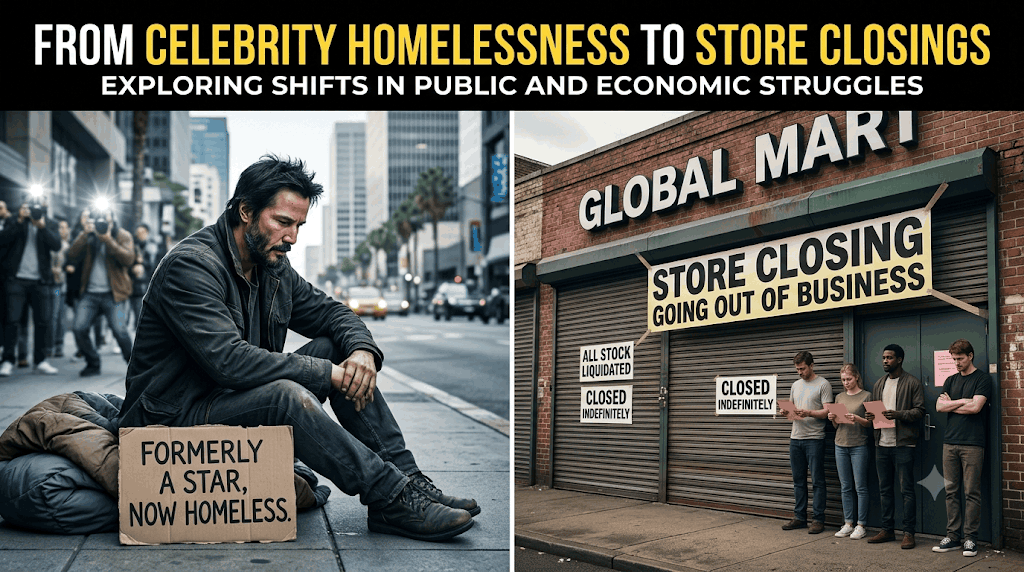
In 2023, 3.5 million Americans were without permanent housing. The headline about a well‑known actor sleeping on a hotel lobby carpet was a symptom, not the cause. When a high‑profile individual’s crisis makes national news, it reveals a deeper, systemic collapse: retail shrinkage, wage stagnation, and a broken housing safety net. The story of celebrity homelessness is, therefore, a mirror for the everyday consumer. The same forces that pushed a famous name onto the streets are closing stores, eroding local economies, and squeezing low‑income households out of the market.
Economic Shockwaves: How Store Closings Amplify Housing Instability
Retail closures are not isolated events. Every shuttered storefront removes a source of jobs, a tax base, and a social hub. In the United States, the National Retail Federation reported that 2023 saw a 12% decline in national retail sales volume, driven largely by the exit of big‑box chains and the disappearance of small neighborhood shops.
When a store closes, its employees lose income. Many of those workers are in the 20‑to‑40‑year age bracket, a demographic that often owns or rents homes. The sudden loss of earnings creates a cascade: delayed mortgage payments, missed rent, and ultimately, eviction. The housing market, already strained by limited affordable units, reacts with higher rents and fewer available properties.
Local governments feel the pressure too. Reduced sales tax revenue forces cuts in public services, including public transportation and housing subsidies. The net effect is a tightening of the housing market that makes it harder for those who are already struggling to find stable, affordable living conditions.
Supply Chain & Retail: The Hidden Link to Homelessness
Global supply chain disruptions, whether from pandemics, geopolitical tensions, or natural disasters, have amplified the fragility of the retail sector. When a manufacturer cannot deliver inventory, retailers must reduce shelf space or close entirely. The cost of shipping a single unit can rise by 15% to 30% during a crisis, squeezing profit margins.
Retailers often respond by cutting costs. This can mean outsourcing labor, reducing staff, or, in the worst case, shutting down an entire location. The workforce that loses jobs is often low‑wage, with little savings or access to benefits. When these workers face sudden unemployment, they have little cushion to absorb the shock.
In many cases, the same supply chain disruptions that push stores toward closure also increase the cost of goods. Higher prices for groceries, clothing, and household essentials strain household budgets, pushing families toward the brink of homelessness. The connection between supply chain volatility and housing instability is a critical, often overlooked, link in the chain.
Consumer Behavior Shifts: The Cost of Convenience
Consumers increasingly favor convenience over cost. The rise of one‑click ordering, same‑day delivery, and subscription services has shifted expectations. A 2024 survey by the Pew Research Center found that 68% of U.S. adults use at least one subscription box for household items.
Convenience comes with a price tag. Subscription services often charge 20% to 30% more than buying in bulk or in physical stores. For households already living paycheck to paycheck, these added costs can be a significant drain. The cumulative effect of higher living expenses, combined with lost retail jobs, creates a perfect storm for housing insecurity.
Moreover, the convenience economy fuels a shift from local, small‑scale retailers to large, centralized distribution centers. When local stores close, communities lose not only jobs but also the social fabric that keeps neighborhoods vibrant and safe. The disappearance of a corner store can mean fewer people walking the streets, which in turn can increase crime rates and further erode property values.
Policy and Corporate Responsibility: What Can Be Done?
Addressing the link between retail closures and homelessness requires a multi‑layered strategy. On the policy side, governments can implement tax incentives for retailers that maintain local storefronts, especially in economically depressed regions. The federal government could also expand the Low‑Income Housing Tax Credit (LIHTC) to cover more units, providing a buffer against rising rents.
Corporations, meanwhile, can adopt responsible supply‑chain practices. By diversifying suppliers, investing in local production, and maintaining transparent sourcing, companies can reduce the risk of sudden inventory shortages. Corporate social responsibility (CSR) initiatives that fund community job training programs can help displaced workers transition into new roles.
Consumers wield power too. Supporting local businesses, even if it means paying a slightly higher price, keeps money circulating in the community. When a neighborhood retains its retailers, it preserves jobs, tax revenue, and a sense of belonging, all factors that help stabilize housing markets.
Practical Guide for Home & Living Consumers: Building Resilience
Below is a step‑by‑step framework that homeowners and renters can adopt to shield themselves from the ripple effects of retail shrinkage and housing instability.
1. Map Your Local Economy
Identify the major employers, retail anchors, and community services in your area. Use resources like the U.S. Census Bureau’s Census website to gather data on employment trends and retail activity.
2. Build an Emergency Fund
Aim for 3‑6 months of living expenses. A simple budgeting tool can help track cash flow. If you need storage solutions, consider home decor essentials that double as organizational aids.
3. Diversify Income Streams
Explore side gigs that align with your skills, freelance writing, tutoring, or online tutoring. Platforms like Upwork or Fiverr can connect you with clients. A secondary income reduces reliance on a single employer.
4. Advocate for Local Policy
Join neighborhood associations or local business groups. Lobby for incentives that keep stores open, such as tax abatements or grants for small retailers.
5. Prioritize Affordable Housing Options
Research programs like the Housing Choice Voucher Program (Section 8) or local housing assistance. If you’re a renter, negotiate a lease that includes rent‑stabilization clauses.
6. Support Community Resilience Initiatives
Volunteer at food banks, community gardens, or local shelters. These networks provide both immediate aid and long‑term stability for residents.
Case Study: A Small Town’s Battle with Retail Exodus
In the mid‑west, the town of Willow Creek had a bustling downtown with a grocery chain, a pharmacy, and a department store. In 2022, the department store announced it would close its 10‑year-old location. The loss of 25 jobs left many families on the brink of eviction. Local officials responded by offering a $10,000 grant to the town council to subsidize a new small‑scale grocery cooperative. Within a year, the cooperative employed 15 people, restored a critical retail anchor, and stabilized the local housing market.
This example shows that targeted, community‑focused interventions can reverse the downward spiral that follows a retail closure.
Tools & Resources: Tracking Store Closings and Housing Trends
Below is a comparison table of popular data sources that help you stay informed about retail activity and housing affordability.
| Source | Coverage | Data Frequency | Cost | Key Metrics |
|---|---|---|---|---|
| National Retail Federation (NRF) | National, sector‑specific | Monthly | Free | Store closures, sales volume, retail employment |
| U.S. Census Bureau, American Community Survey | County & city level | Annually | Free | Housing costs, income levels, employment |
| Housing Finance Agency (HFA) Dashboard | State & local | Quarterly | Free | Affordable housing units, vacancy rates |
| Local Chamber of Commerce | City & town | Monthly | Free | Business openings/closings, economic indicators |
| Real Estate Market Analytics (Zillow, Redfin) | National & local | Daily | Free (basic) | Home prices, rental rates, market trends |
FAQs
Q: How can I protect my household from the impact of a nearby store closing?
A: Diversify your suppliers, keep an emergency fund, and advocate for local economic initiatives. If a major retailer closes, look for alternative local or online options that might offer lower prices.
Q: Is there a direct causal link between store closures and homelessness?
A: While no single factor causes homelessness, retail closures contribute to job loss and reduced local income, which are significant risk factors. The link is stronger in communities where the retail sector is a primary employment source.
Q: What role does supply chain volatility play in this scenario?
A: Supply chain disruptions can force retailers to reduce inventory or close locations. Higher shipping costs increase product prices, which strain household budgets and can indirectly push families toward housing instability.
Q: Can small businesses survive in a retail‑shrinkage environment?
A: Yes, if they adapt. Embracing online sales, local partnerships, and community engagement can sustain revenue streams. Policy incentives and community support also play a critical role.
Q: Where can I find more data on local retail activity?
Check your city’s chamber of commerce website, state economic development portals, and the NRF’s retail data portal. Many provide free, up‑to‑date reports.
Conclusion
The headline about a celebrity’s unexpected homelessness is a stark reminder that economic shocks ripple far beyond the headlines. Store closures, supply chain volatility, and shifting consumer preferences create a perfect storm that erodes job security, inflates housing costs, and ultimately, pushes families onto the streets. By understanding the interconnectedness of these forces, consumers, policymakers, and businesses can take concrete steps, such as building emergency funds, supporting local retailers, and lobbying for housing credits, to mitigate the damage.
In a world where convenience often trumps community, the most resilient households are those that stay informed, diversify income, and actively participate in their local economies. The path to stability is not just about surviving a store’s closure; it’s about building a system that withstands the next one.


One thought on “From Celebrity Homelessness to Store Closings”
Comments are closed.