
Why Budget Flight Hacking Matters
Every traveler knows that airfare can consume a large portion of a trip’s budget. However, the reality is that most people pay more than they need to, simply because they are unaware of the tools and tactics available today. Consequently, mastering budget flight hacking can free up hundreds of dollars for experiences, meals, or souvenirs.
Moreover, with the rise of low-cost carriers and the volatility of fuel prices, airlines frequently adjust fares in ways that are almost impossible for the average consumer to predict. Therefore, adopting systematic approaches to monitoring and booking flights becomes essential for the savvy traveler.
In contrast to last-minute scrambling, a well-planned strategy allows you to lock in the best price before the market shifts. Ultimately, the savings you accumulate over a year can transform the way you travel, turning budget trips into opportunities for exploration.
The AI Revolution in Flight Pricing
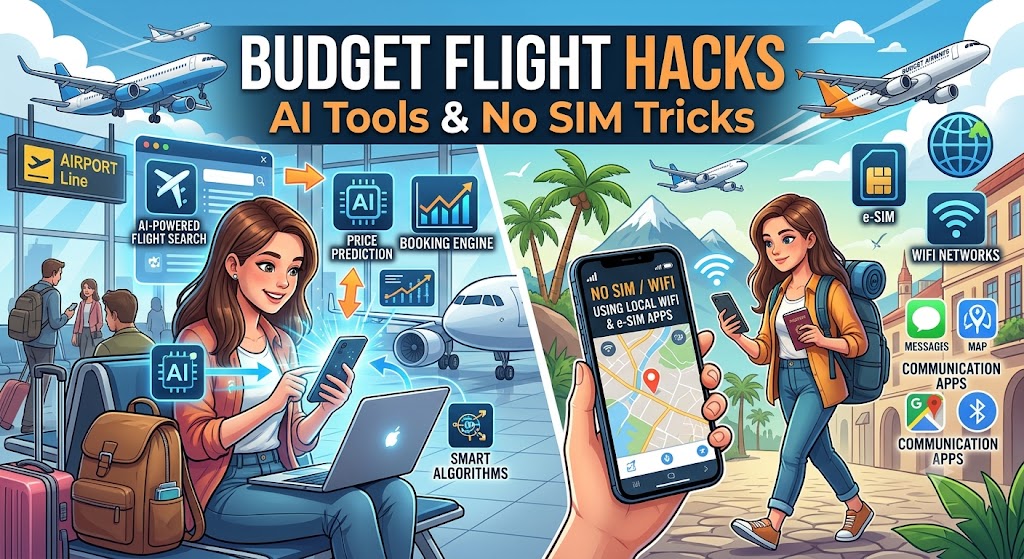
Artificial intelligence has moved beyond the realm of sci-fi into everyday travel planning. Because AI can analyze millions of data points in real time, it offers unprecedented precision in predicting fare fluctuations. Consequently, travelers who leverage AI tools gain a competitive edge that was once the domain of corporate negotiators.
Predictive Pricing Models
AI-powered platforms use historical data, current demand, and even social media sentiment to forecast future prices. Specifically, machine learning algorithms identify patterns such as “mid-week dips” or “post-holiday surges.” Therefore, when you receive a price alert, you can be confident that it reflects a statistically significant trend rather than a random glitch.
For example, a predictive model might tell you that the cheapest time to fly from New York to London is on a Tuesday at 3 a.m., 42 days in advance. By booking at that exact moment, you can save up to 30 % compared to the average fare.
Real-time Fare Alerts
Real-time alerts are the frontline of AI flight hacking. In contrast to static price charts, these alerts adapt instantly to market changes, notifying you when a price drops below a threshold you set. Consequently, you never miss a flash sale, even if you’re traveling on a tight schedule.
Platforms like Hopper, Skyscanner, and Google Flights all offer this functionality. By enabling notifications, you can receive alerts on your phone or email, allowing you to act immediately.
No-SIM Tricks for Seamless Connectivity
When traveling internationally, staying connected without a local SIM can be both expensive and inconvenient. However, there are several no-SIM strategies that keep you online while keeping costs low.
Local SIM Alternatives
One of the most popular alternatives is a portable Wi-Fi hotspot. These devices, often referred to as “MiFi,” can serve multiple devices simultaneously and typically offer unlimited data plans. Because they are plug-and-play, you can activate them at the airport and start using them immediately.
Additionally, many airlines now offer complimentary in-flight Wi-Fi, which can be used for basic browsing and email. However, if you need to stream or video-chat, a hotspot remains the most reliable option.
Offline Navigation & Apps
Another trick is to download offline maps and travel guides before you leave. Google Maps, Maps.me, and Citymapper all allow you to save entire cities for offline use. Consequently, you can navigate without data, saving both time and money.
Furthermore, consider using a travel app that works offline, such as TripIt or Rome2rio. These tools provide flight schedules, public transport routes, and local attractions, all accessible without an active internet connection.
AI-Powered Flight Search Platforms
Choosing the right platform is critical to maximizing AI-driven savings. Below are the top three tools and how to harness them effectively.
Skyscanner, Google Flights, Hopper
Skyscanner offers a “whole month” view, showing you the cheapest day to fly in a given month. Google Flights provides a price graph that highlights trends over time. Hopper, on the other hand, predicts future prices and tells you whether to book now or wait.
Because each platform has its unique strengths, using them in combination often yields the best results. For instance, you can use Skyscanner to identify a cheap window, then Hopper to time your purchase.
How to Set Up Smart Alerts
- Define Your Destination: Enter your origin and destination in the search bar.
- Choose Flexible Dates: Select “flexible dates” to allow the tool to scan a broader range.
- Set Price Thresholds: Enter the maximum price you’re willing to pay.
- Enable Push Notifications: Turn on alerts so you’re notified instantly.
- Review Weekly Summaries: Many platforms send a weekly digest of price changes.
By following these steps, you can ensure that you never miss a price drop that aligns with your budget.
Step-by-Step Framework for Booking Cheap Flights
Below is a comprehensive framework that incorporates AI tools, flexible planning, and strategic timing. By following these steps, you can consistently secure the lowest fares.
Identify Your Travel Window
First, determine the earliest and latest dates you can travel. Because flexibility is a key factor in airfare pricing, the wider your window, the more options you’ll have. For example, if you can travel from the 1st to the 31st of a month, you’ll have a full 30-day range to explore.
Next, use a calendar view to spot obvious low-price days. Typically, mid-week flights are cheaper than weekend ones. Therefore, aim for Tuesday, Wednesday, or Thursday departures whenever possible.
Use AI Tools for Price Forecasting
Once you’ve identified your window, feed the dates into Hopper’s prediction engine. The tool will display a color-coded chart: green indicates a good time to buy, yellow suggests a wait, and red warns of a price spike.
Because Hopper’s data is derived from millions of past bookings, you can trust its recommendations. If the chart shows a green bubble for a particular day, you should aim to book then. Conversely, if the chart is red, consider delaying your purchase.
Book at the Right Moment
When the AI signals a favorable window, act immediately. Many airlines implement dynamic pricing, meaning that once the price drops, it can rise again within minutes. Therefore, having a ready-to-book mindset is essential.
Additionally, consider booking on a weekday, as airlines often release last-minute deals on Monday or Tuesday. Because these deals are time-sensitive, having your payment details ready can save you from missing out.
Ancillary Savings: Baggage, Seat Selection, and More
Airfare is only one component of travel cost. Ancillary fees can quickly erode savings if not managed properly. Below are tactics to keep these hidden expenses under control.
Smart Packing to Avoid Fees
- Stick to Carry-On: Most low-cost carriers allow one free carry-on. By packing only a backpack, you avoid checked-bag fees.
- Use Compression Bags: These reduce the volume of your luggage, allowing you to fit more items into a single bag.
- Plan for Essentials: Keep a small toiletry kit and a change of clothes in your carry-on to avoid purchasing at the airport.
Because the average checked-bag fee ranges from $30 to $70, these small adjustments can add up to significant savings.
Seat Selection Hacks
Many airlines charge for seat selection, especially on international routes. However, you can often secure a better seat for free by booking directly through the airline’s website and opting for a “standard” seat. Additionally, some credit cards offer complimentary seat selection as a perk.
Because airlines sometimes offer discounted seat upgrades during the booking process, it’s worth reviewing the options before finalizing your payment. If you’re willing to pay a modest fee, you can upgrade to a more comfortable seat without breaking the bank.
Travel Accessories That Save You Money
Investing in the right travel gear can reduce costs throughout your trip. Below are multi-purpose items that offer both convenience and savings.
Multi-purpose Gear
- Travel Pillow with USB Port: Keeps you comfortable and charged, eliminating the need for separate devices.
- Portable Power Bank: Allows you to charge multiple devices on the go, saving on expensive airport chargers.
- Collapsible Water Bottle: Refillable and compliant with security regulations, it eliminates the need for bottled water.
Because these items serve several functions, they reduce the overall number of items you need to pack, thus saving on baggage fees.
Link to Amazon Travel Accessories
If you’re looking for high-quality travel gear, consider exploring a curated selection of travel accessories on Amazon India. These products are chosen for their durability, versatility, and value, making them ideal for budget travelers.
Frequently Asked Questions
- What is the best time of year to book flights? Generally, the best time to book international flights is 6-8 weeks in advance, while domestic flights can be booked 3-5 weeks ahead.
- Can I use a VPN to get cheaper fares? Some travelers report lower prices when using a VPN to simulate a different location, but results vary by airline and region.
- How do I avoid hidden fees? Always read the fare rules and consider booking directly with the airline. Additionally, check for baggage and seat fees before finalizing your payment.
- Is it worth buying travel insurance? If you’re traveling on a tight budget, consider a basic plan that covers flight cancellations and lost luggage.
- How can I stay connected without a local SIM? Use a portable Wi-Fi hotspot or download offline maps and guides to reduce data usage.
Conclusion
Budget flight hacking is no longer a niche skill reserved for seasoned travelers. With AI tools, flexible planning, and smart ancillary management, anyone can unlock significant savings. By following the step-by-step framework outlined above, you’ll not only pay less for airfare but also reduce additional costs that often sneak into a trip’s budget.
Moreover, the combination of AI-driven price predictions and no-SIM connectivity tricks ensures that you remain both cost-effective and connected throughout your journey. Therefore, the next time you plan a trip, remember that the tools and strategies discussed here can transform your travel experience, turning a budget trip into an opportunity for adventure.
One thought on “Budget Flight Hacks: AI Tools & No SIM Tricks”
Comments are closed.