
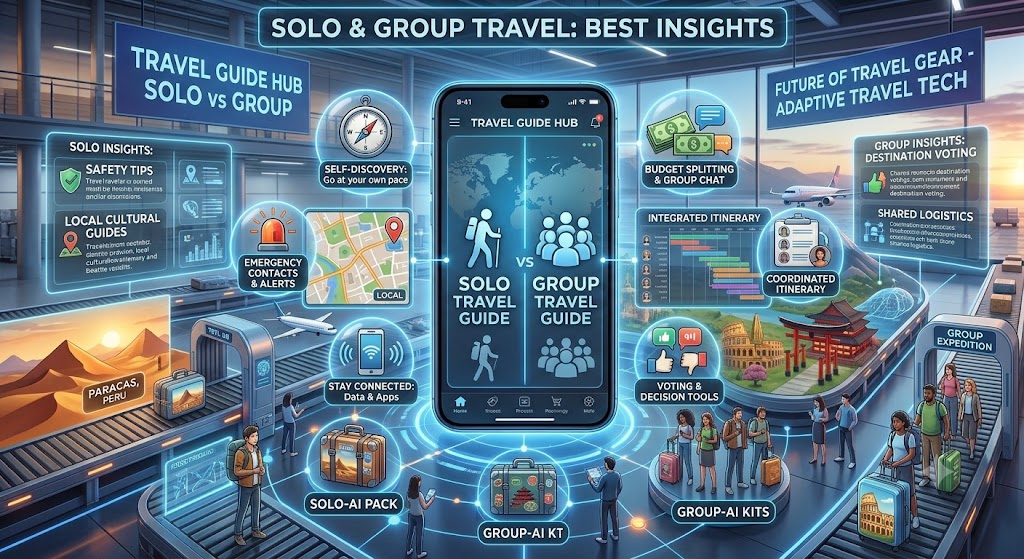
Travel is a universal language that speaks to our desire for adventure, connection, and self-discovery. Whether you’re stepping off a plane alone or navigating a group itinerary, the core principles of planning, safety, and cultural engagement remain the same. However, the nuances differ dramatically, and mastering both solo and group dynamics can transform an ordinary trip into an unforgettable experience. This guide distills the best insights from seasoned travelers and industry experts, offering you step-by-step frameworks, concrete examples, and practical tools-complete with affiliate links to gear, snacks, and flights-to elevate your next journey.
Understanding the Solo vs Group Travel Mindset
First, it’s essential to recognize that solo and group travel are fundamentally distinct mentalities. Solo travelers often pursue freedom, introspection, and spontaneous decision-making. In contrast, group travelers prioritize shared experiences, coordination, and collective enjoyment. Consequently, the preparation process must be tailored to these divergent objectives.
For solo adventurers, the emphasis is on flexibility and personal growth. Because you’re the sole decision-maker, you can pivot on a whim-whether that means detouring to a hidden waterfall or spending an extra night in a city that captured your heart. Meanwhile, group travelers must balance diverse preferences, budgets, and travel styles. Therefore, establishing clear communication channels from the outset is vital to avoid misunderstandings and ensure everyone’s expectations align.
In addition, the psychological dynamics differ. Solo travelers often experience a heightened sense of self-reliance, which can be empowering but also intimidating. Group travelers benefit from social support, but they must also navigate interpersonal friction. Understanding these emotional landscapes helps you prepare mentally for each scenario.
Planning Phase: From Itinerary to Budget
1. Define Your Objectives
Begin by asking yourself what you want to achieve. Are you seeking adventure, relaxation, cultural immersion, or a mix of all? For solo trips, you might prioritize personal milestones-like mastering a new language or hiking a specific trail. Group trips, on the other hand, often revolve around shared milestones, such as attending a festival or completing a multi-day trek together.
Because clarity of purpose guides every subsequent decision, write down your objectives in a travel journal or digital note. This practice also serves as a reference when negotiating group itineraries or negotiating with local operators.
2. Build a Flexible Itinerary
When drafting your schedule, allocate blocks for core activities and leave open windows for spontaneous exploration. For solo travelers, this flexibility allows you to follow serendipitous leads-perhaps a street food vendor recommending a hidden market. Group itineraries should still retain some fluidity; consider setting “free day” blocks where each member can pursue individual interests.
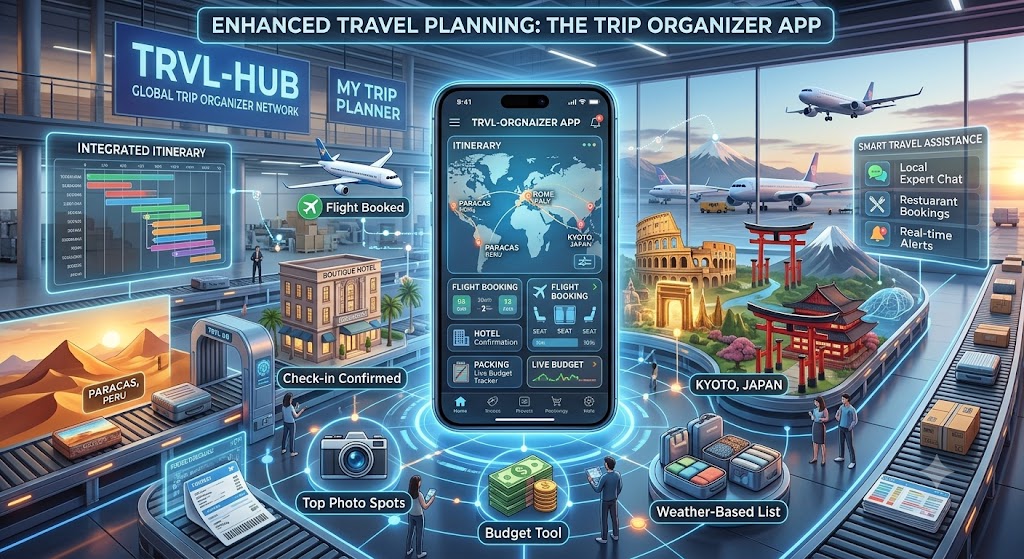
Additionally, use mapping tools like Google My Maps or TripIt to visualize your route. By layering points of interest, transportation hubs, and accommodation, you can spot potential bottlenecks and adjust accordingly. Ultimately, a well-structured yet adaptable itinerary reduces stress and maximizes enjoyment.
3. Budgeting with Precision
Creating a realistic budget is non-negotiable. Start by estimating major expenses: flights, lodging, meals, transportation, activities, and emergency reserves. For solo travelers, the cost of accommodation can be higher per person, so consider hostels, guesthouses, or shared Airbnb spaces. Group travelers can leverage economies of scale-booking a house or villa reduces per-person lodging costs.
Because currency fluctuations can dramatically alter your spending power, use tools like XE or Revolut to lock in favorable rates ahead of time. Moreover, allocate a contingency fund of at least 10% of your total budget for unforeseen circumstances-such as sudden flight cancellations or medical emergencies.
4. Secure Your Flight with Confidence
Finding the best flight deals requires both timing and strategy. Search for flights during off-peak hours, and use price-tracking services like Skyscanner. For solo travelers, consider budget airlines that offer free checked bags for frequent flyers. Group travelers, however, might benefit from booking a single multi-seat ticket or negotiating a group discount with a carrier.
Here’s a quick tip: use this flight search link to compare prices across airlines and secure the most cost-effective option. By booking early, you can lock in lower fares and secure better seat assignments.
Packing Essentials: Gear, Gear, Gear
Effective packing is the backbone of a successful trip. Whether you’re traveling solo or with a group, the right gear can prevent headaches and keep you comfortable throughout your journey.
1. Travel Accessories: The Must-Haves
Every traveler should invest in a reliable travel accessory kit that includes a multi-port charger, a universal adapter, and a compact power bank. For solo travelers, a lightweight duffel or backpack with a lockable zipper ensures security. Group travelers, meanwhile, should consider a shared packing list to avoid duplication of items.
Because the right accessories can save both time and money, choose items that are lightweight, durable, and versatile. For example, a packable rain jacket can serve as both a windbreaker and a day-pack, reducing overall luggage weight.
2. Food & Health: Snacks and Wellness
Maintaining energy levels on the road is crucial. Carry a selection of healthy food snacks like nuts, dried fruit, and protein bars to keep hunger at bay during long flights or train rides. For solo travelers, these snacks also provide a sense of comfort and familiarity.
Group travelers can benefit from a communal snack stash-think a shared cooler filled with fresh fruit, yogurt, and granola. Moreover, ensure everyone has a bottle of water to stay hydrated, especially in hot climates.
3. Personal Care: Sunscreen, Skincare, and Hygiene
Sun protection is non-negotiable. Pack a high-SPF sunscreen and a lightweight, hydrating serum to guard against sunburn and dehydration. For solo travelers, a compact skincare routine can serve as a daily ritual that calms nerves. Group travelers may share a skincare station at the accommodation, simplifying nightly routines.
Additionally, consider a small toiletry bag with travel-size items: toothbrush, toothpaste, deodorant, and a quick-dry towel. Because space is limited, choose items that serve multiple purposes-such as a reusable travel mug that doubles as a water bottle.
4. Tech & Entertainment
In the digital age, staying connected is essential. Pack a lightweight laptop or tablet, a portable Wi-Fi hotspot, and a universal power strip for charging multiple devices. For solo travelers, a digital notebook or journaling app helps capture memories. Group travelers, however, might benefit from a shared digital calendar to coordinate activities.
Moreover, download offline maps and travel guides to ensure you can navigate even without internet access. Because connectivity can be unreliable in remote areas, having offline resources guarantees you’ll never be stranded.
Safety & Health: Staying Secure on the Road
1. Pre-Trip Health Checks
Before you depart, schedule a visit to a travel clinic or your primary healthcare provider. Discuss vaccinations, health risks, and prescription medications. Solo travelers often face greater responsibility for their health, so having a clear medical plan is essential. Group travelers can share a first-aid kit, but each member should also carry personal medications.
Because travel insurance is a safety net, choose a policy that covers medical evacuation, trip cancellation, and lost luggage. In contrast, group travelers should consider a joint insurance plan that offers group discounts.
2. Personal Security Measures
Keep copies of important documents-passport, visas, insurance cards-in separate locations. For solo travelers, use a hidden pouch or a money belt. Group travelers should designate a secure storage area in the accommodation, such as a lockbox or safe.
Additionally, stay vigilant about your surroundings. Use reputable transportation services, avoid traveling alone at night, and always let someone know your itinerary. Because safety is a shared responsibility, encourage group members to check in regularly.
3. Digital Safety
Protect your devices with strong passwords and two-factor authentication. Install VPN software to secure your internet connection, especially when using public Wi-Fi. Solo travelers often rely heavily on digital tools, so safeguarding your data is paramount. Group travelers can share a shared drive for itineraries, maps, and photos, but each member should maintain personal device security.
4. Cultural Etiquette & Local Laws
Research local customs, dress codes, and legal restrictions. For example, in many Middle Eastern countries, modest dress is required in public places. In contrast, some Asian cultures have strict rules about photography in religious sites. By understanding these nuances, you avoid cultural faux pas and potential legal trouble.
Moreover, learn a few key phrases in the local language-such as “Thank you,” “Excuse me,” and “Where is the bathroom?”-to demonstrate respect and foster friendly interactions.
Social Dynamics: Making Friends & Managing Group Dynamics
1. Solo Travelers: Building Connections
Solo travelers often crave authentic human interaction. Join local tours, attend community events, or stay in hostels with common areas to meet fellow travelers. Because people are naturally drawn to those who are open and approachable, smile, ask questions, and share your story.
Additionally, use social apps like Couchsurfing or Meetup to find locals or other travelers with shared interests. For instance, a hiking group in Patagonia can provide both companionship and safety.
2. Group Travelers: Harmonizing Diverse Preferences
Group dynamics can be complex, especially when personalities clash. Establish ground rules early: set a budget ceiling, agree on shared meals, and outline individual free-time expectations. Because clear communication reduces friction, schedule a pre-trip meeting (virtual or in person) to discuss these points.
Moreover, designate rotating leadership roles for different activities-such as a “foodie” for culinary tours or a “culture buff” for museum visits. This division of responsibilities ensures each group member feels valued and engaged.
3. Conflict Resolution Strategies
Disagreements are inevitable, but they can be managed constructively. Adopt a “pause and reflect” approach: when a conflict arises, take a short break, breathe, and revisit the issue calmly. Because emotional escalation often leads to resentment, encourage open dialogue and active listening.
Use the “I” statement technique-e.g., “I feel uncomfortable when…”-to express concerns without blaming. In contrast, avoid accusatory language, which can shut down communication. Ultimately, a respectful, solution-oriented mindset preserves group cohesion.
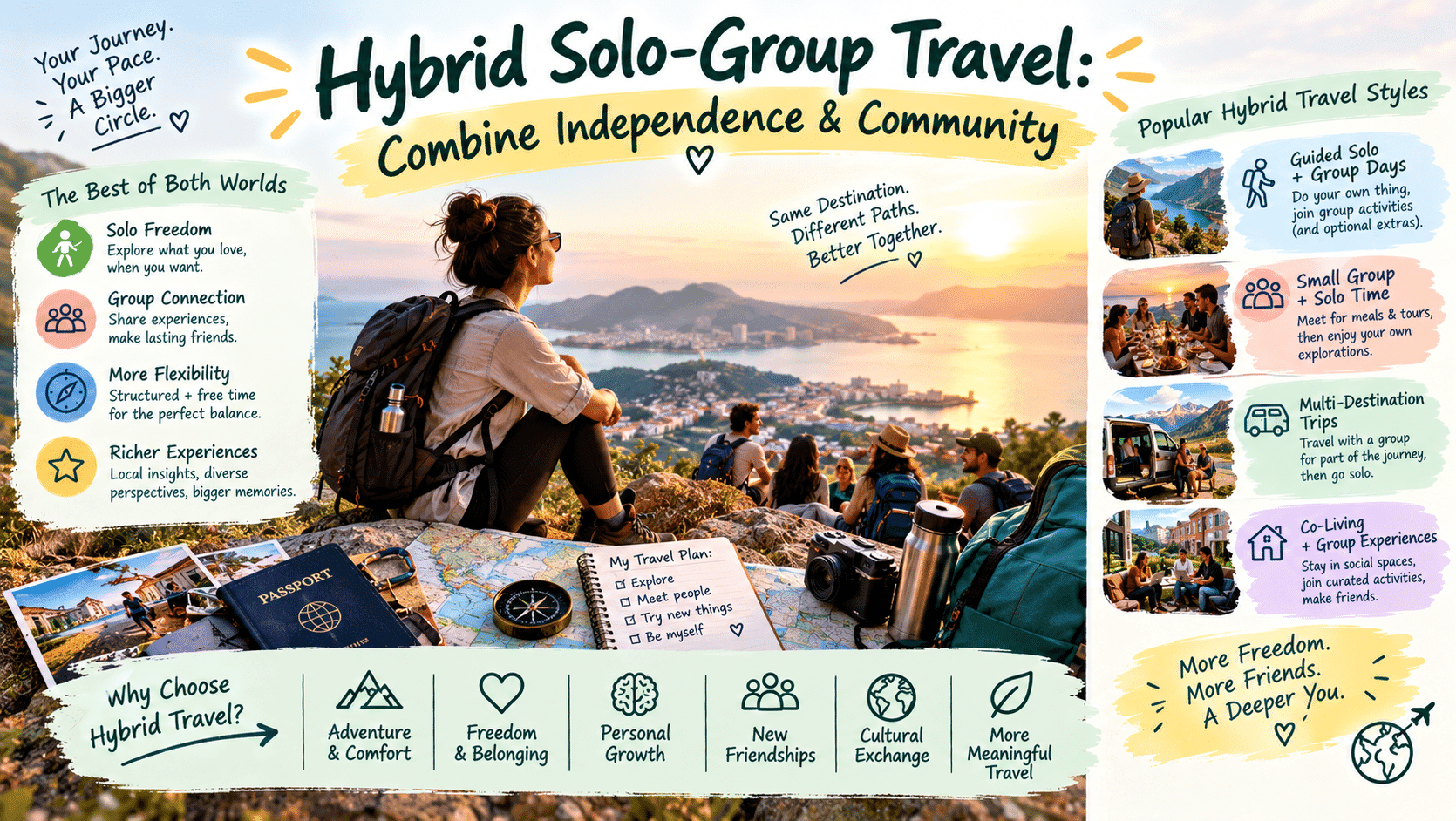
4. Solo & Group Hybrid Strategies
Many travelers find themselves in hybrid situations-traveling solo for part of the trip and joining a group for certain activities. In these scenarios, maintain a flexible mindset. For example, you might join a group cooking class in Thailand but spend evenings exploring temples on your own.
Because blending solo and group experiences can enrich your trip, plan “solo blocks” within a group itinerary. This approach ensures you get both the freedom you crave and the camaraderie you enjoy.
Cultural Immersion: How to Truly Experience a Destination
1. Deep Dive into Local Traditions
Beyond tourist attractions, immerse yourself in the everyday life of the place you’re visiting. For solo travelers, this might mean working a few hours at a local café or volunteering at a community garden. Group travelers can organize a cultural exchange dinner where each member shares a dish from their home country.
Because authenticity stems from genuine interaction, avoid “tourist traps” and seek recommendations from locals or trusted travel communities. For instance, ask a shopkeeper for the best street food stalls rather than following a guidebook.
2. Language Skills as a Bridge
Learning basic phrases in the local language enhances communication and shows respect. Solo travelers can use language apps like Duolingo to practice before departure. Group travelers can schedule collective language lessons-perhaps hiring a local tutor for a day.
Moreover, practice pronunciation by repeating phrases aloud. Because language is a powerful connector, even a simple “How are you?” can open doors to deeper conversations.
3. Responsible Tourism Practices
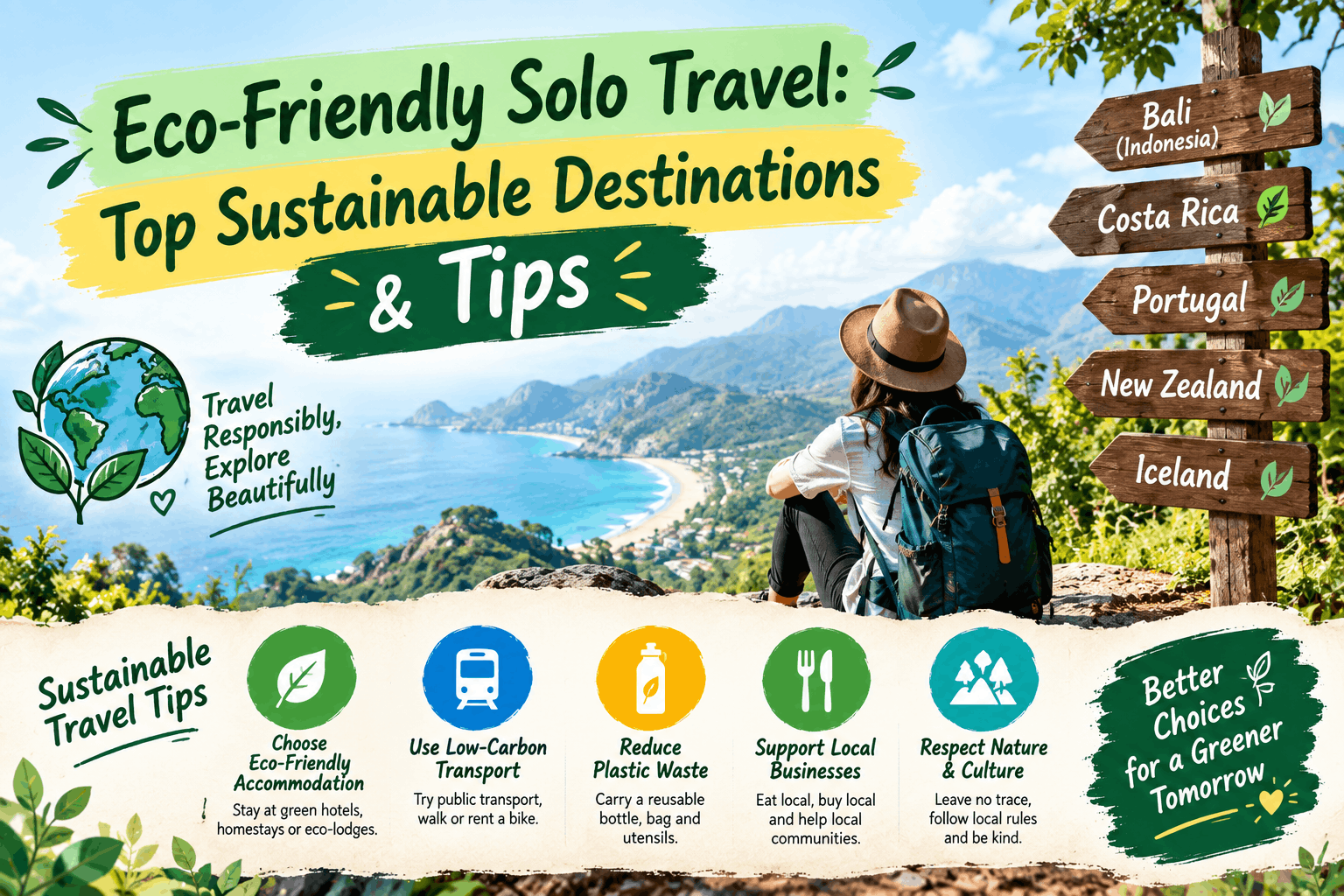
Respect the environment and local communities. Solo travelers should avoid single-use plastics, support eco-friendly accommodations, and purchase souvenirs responsibly. Group travelers can collectively pledge to follow “Leave No Trace” principles and to support local businesses.
Because tourism impacts economies, choose ethical tour operators who pay fair wages and contribute to community projects. This conscious choice not only benefits locals but also enriches your travel experience.
4. Documenting Your Journey
Record your adventures through photos, videos, or a travel journal. Solo travelers often find journaling therapeutic, allowing reflection and memory preservation. Group travelers can create a shared photo album, fostering a sense of collective storytelling.
Use cloud storage services to back up digital content. Because data loss can be heartbreaking, maintain multiple copies-one on a local device and another on an external drive or cloud account.
Post-Trip: Reflection & Planning Next Adventure
After the trip, take time to process your experiences. Solo travelers might write a detailed blog post or update their travel journal, while group travelers could host a virtual debrief session to share insights.
Because reflection solidifies learning, answer questions like: What worked? What didn’t? How did you manage time, budget, and social dynamics? Use these answers to refine your future travel strategies.
Moreover, consider setting a new travel goal-perhaps a destination you’ve always wanted to explore or an activity you’ve been curious about. By continuously challenging yourself, you keep travel fresh and exciting.
Frequently Asked Questions
Q1: How do I choose between solo and group travel?
Solo travel suits those who crave independence and self-discovery. Group travel is ideal for individuals who enjoy shared experiences and mutual support. Ultimately, assess your personality, budget, and travel goals to make an informed decision.
Q2: What are the best travel accessories for a solo trip?
Key items include a lightweight backpack, a universal power adapter, a compact rain jacket, a reusable water bottle, and a travel-size first-aid kit. For more tech-savvy travelers, consider a portable Wi-Fi hotspot and a power bank.
Q3: How can I manage group budgets without conflict?
Use a shared budgeting spreadsheet and set a maximum per-person expense. Agree on cost-splitting methods-such as 50/50 or proportional to income-and communicate openly about spending habits.
Q4: Are there safety concerns unique to solo travelers?
Yes. Solo travelers must be vigilant about personal security, especially in unfamiliar cities. Keep valuables hidden, avoid isolated areas after dark, and stay connected with friends or family back home.
Q5: How can I stay connected with my group while traveling?
Use group messaging apps like WhatsApp or Telegram. Create a shared drive for itineraries, maps, and photos. Schedule regular check-ins, especially during multi-day trips.
Key Takeaways
- Flexibility is your greatest ally. Whether solo or in a group, maintain an adaptable itinerary to seize unexpected opportunities.
- Clear communication prevents friction. Establish expectations early and use technology to keep everyone aligned.
- Invest in quality gear. Proper packing and travel accessories reduce stress and enhance comfort.
- Respect local culture. Learn basic phrases, follow etiquette, and support responsible tourism.
- Reflect to improve. Post-trip analysis sharpens future planning and deepens personal growth.
Armed with these insights, you’re ready to embark on a travel experience that balances freedom with camaraderie, adventure with safety, and personal growth with cultural immersion. Whether you choose the solitary path or the shared journey, remember that every moment on the road is an opportunity to learn, connect, and transform. Bon voyage!
One thought on “Guide to Solo & Group Travel: Best Insights”
Comments are closed.