

Your Skin Type Skincare Routine Guide for All Ages
Skin is the world’s largest organ, and just like any living tissue, it reacts to environment, genetics, and lifestyle. Whether you’re a teenage acne warrior, a 30-year-old navigating first signs of aging, or a seasoned senior looking for gentle hydration, a tailored routine can transform your complexion. In this guide, we’ll walk through the science of skin types, age-related changes, step-by-step routines, ingredient deep dives, and real-world shopping tips-all while keeping readability high and transitions smooth.
Understanding Your Skin Type
Before you can build an effective routine, you must know which skin type you belong to. Knowing this allows you to avoid common pitfalls-over-exfoliating oily skin or clogging dry skin with heavy creams. Let’s break it down.
Normal Skin
Normal skin is balanced-neither too oily nor too dry. It has a smooth texture, minimal pores, and a healthy glow. Because it’s already in equilibrium, your routine can focus on maintenance rather than correction.
Oily Skin
Oily skin produces excess sebum, leading to shine, enlarged pores, and a higher likelihood of breakouts. However, it also resists dryness, so you can use lighter formulas without fear of flaking.
Dry Skin
Dry skin feels tight, especially after cleansing, and may exhibit flakiness or fine lines. It lacks the protective oil layer, making it susceptible to environmental damage. Therefore, hydration and barrier repair are paramount.
Combination Skin
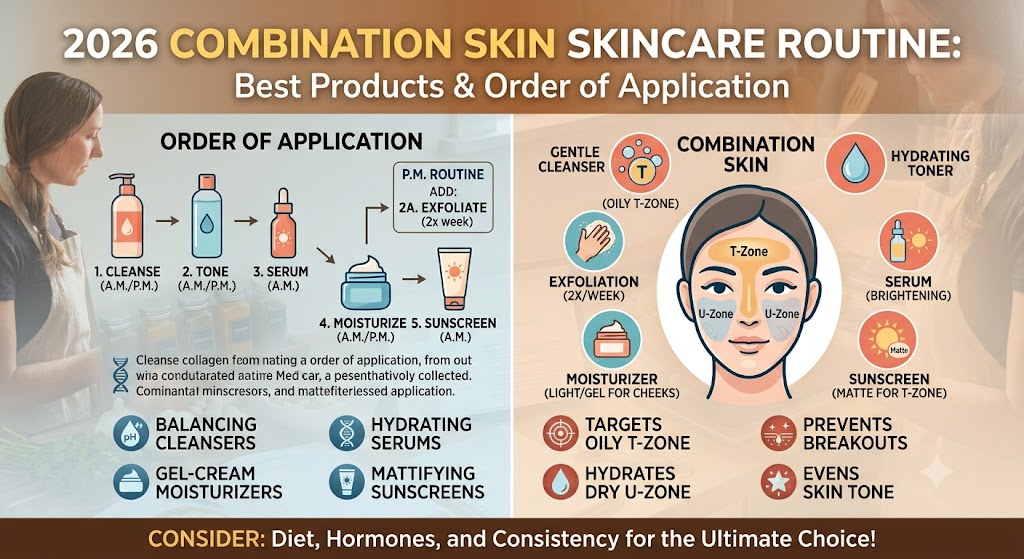
Combination skin is a hybrid-oily T-zone and drier cheeks. The challenge is to treat each area appropriately without over-complicating the routine. A balanced approach works best.
Sensitive Skin
Sensitive skin reacts easily to fragrances, alcohol, or even mild irritants. It may itch, burn, or develop redness. Consequently, fragrance-free, soothing formulas are essential.
Age-Related Skin Changes
As you age, your skin’s biology shifts. Recognizing these changes lets you anticipate needs and adjust products accordingly.
Teens (13-19)
Teenagers experience hormonal surges that spike sebum production. Breakouts are common, and skin is still developing. Therefore, gentle cleansers and spot treatments are key.
20s-30s
During this decade, collagen production is still strong, but early signs of aging-fine lines and uneven tone-begin to appear. Antioxidants and light moisturizers can pre-empt damage.
40s-50s
Collagen loss accelerates, elasticity drops, and pigmentation deepens. Retinoids and hydrating serums become more important to maintain firmness and evenness.
60s+
Older skin loses moisture, becomes thinner, and is highly susceptible to UV damage. Heavy creams, barrier-repair ingredients, and broad-spectrum sunscreen are essential.
Core Skincare Routine Framework
Regardless of age or type, a reliable routine follows the same sequence. Below is a universal framework that you can tweak based on your skin’s needs.
1. Cleanse
Use a gentle cleanser to remove dirt, oil, and makeup. For oily skin, foaming or gel cleansers work; for dry or sensitive skin, cream or balm cleansers are preferable. Cleanse twice daily, morning and night.
2. Tone (Optional)
Toners restore pH balance and prep the skin for serums. Choose alcohol-free formulas with soothing ingredients like rose water or witch hazel for oily skin, and hyaluronic acid for dry skin.
3. Treat
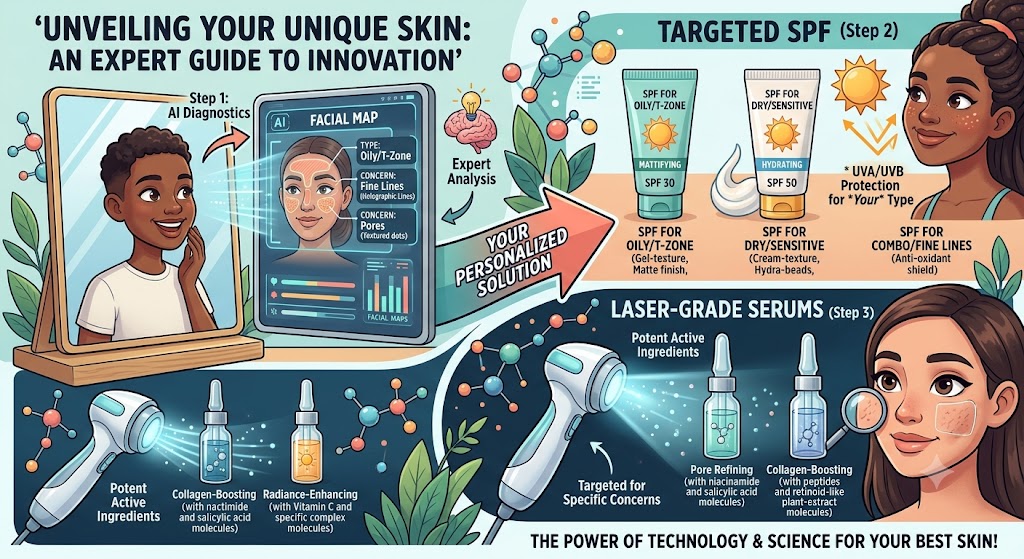
Apply targeted serums or spot treatments. This is where active ingredients-retinoids, vitamin C, niacinamide-enter the equation. Treating early in the routine allows deeper absorption.
4. Moisturize
Hydration locks in the previous layers and strengthens the skin barrier. Light lotions are fine for oily skin; richer creams suit dry or mature skin. Always patch-test new moisturizers.
5. Protect
Never skip sunscreen. Even on cloudy days, UV rays can cause hyperpigmentation and photoaging. A broad-spectrum SPF 30+ should be the final step of the morning routine.
Tailoring the Routine by Skin Type
Below we map the core framework to each skin type, giving you a clear, step-by-step guide.
Normal Skin
- Cleanser: Gentle gel or foam.
- Toner: Hydrating, alcohol-free.
- Treat: Antioxidant serum (vitamin C).
- Moisturizer: Lightweight lotion.
- Sunscreen: SPF 30+ daily.
Oily Skin
- Cleanser: Foaming or gel; avoid heavy surfactants.
- Toner: Witch hazel or tea tree oil-based.
- Treat: Salicylic acid or niacinamide serum.
- Moisturizer: Gel-cream or water-based lotion.
- Sunscreen: Matte finish SPF 30+.
Dry Skin
- Cleanser: Cream or balm; avoid harsh sulfates.
- Toner: Hyaluronic acid or glycerin-rich.
- Treat: Hyaluronic acid serum or ceramide cream.
- Moisturizer: Rich cream or ointment.
- Sunscreen: Hydrating SPF 30+ with hyaluronic acid.
Combination Skin
- Cleanser: Balanced gel or cream.
- Toner: Alcohol-free, dual-action formula.
- Treat: Spot treatment for T-zone; hydrating serum for cheeks.
- Moisturizer: Light lotion on oily areas, cream on dry cheeks.
- Sunscreen: Lightweight SPF 30+ that doesn’t clog pores.
Sensitive Skin
- Cleanser: Fragrance-free, hypoallergenic.
- Toner: Rose water or chamomile-infused.
- Treat: Soothing serum with niacinamide or centella asiatica.
- Moisturizer: Barrier-repair cream with ceramides.
- Sunscreen: Mineral SPF 30+ (zinc oxide or titanium dioxide).
Advanced Treatments & Key Ingredients
Once you’ve mastered the basics, you can introduce more potent actives. Below, we break down the science, benefits, and practical usage of popular ingredients.
Retinoids
Retinoids boost collagen synthesis, speed cell turnover, and clear pores. However, they can be irritating. Therefore, start with a low concentration (0.025%) and apply every other night. Gradually increase as your skin tolerates.
Vitamin C
Vitamin C is a powerful antioxidant that brightens, evens tone, and protects against free radical damage. Use a stable form (ascorbic acid) at 10-15% concentration in the morning. Pair it with a moisturizer to lock in the benefits.
Hyaluronic Acid
Hyaluronic acid holds up to 1,000 times its weight in water, delivering instant hydration. It’s suitable for all skin types, especially dry and mature skin. Apply a serum before moisturizer.
Niacinamide
Niacinamide reduces inflammation, regulates sebum, and improves barrier function. It’s ideal for oily and sensitive skin. Use it after toner and before moisturizer.
Peptides
Peptides signal the skin to produce collagen and elastin, helping to reduce fine lines. They’re gentle and can be used nightly, especially for 40s-50s and older skin.
Lifestyle & Environmental Factors
Even the best routine can be undermined by external factors. Addressing these can amplify results and prevent future issues.
Diet
Foods rich in omega-3 fatty acids, antioxidants, and vitamin E support skin health. For example, salmon, walnuts, blueberries, and spinach provide essential nutrients that translate to smoother skin.
Sleep
During REM sleep, the body repairs skin cells. Aim for 7-9 hours nightly; otherwise, fine lines and dullness can accelerate.
Stress
Stress triggers cortisol release, which can worsen acne and break down collagen. Incorporate mindfulness, yoga, or short walks to keep cortisol levels in check.
Sun Exposure
UV rays cause photoaging, hyperpigmentation, and even skin cancer. Wear hats, sunglasses, and use a high-SPF sunscreen even on overcast days.
Pollution
Airborne pollutants generate free radicals, leading to oxidative stress. Antioxidant serums and barrier-repair creams help neutralize these effects.
Product Recommendations & Where to Buy
Choosing the right products can be overwhelming. Below are curated options for each step of the routine, complete with affiliate links for convenient shopping.
Cleansers
Toners
- Alcohol-Free Toner: Shop now
Serums
Moisturizers
Sunscreens
Travel Skincare Kit
If you’re jet-setting, a compact kit can keep your routine intact. Consider a small cleanser, serum, moisturizer, and SPF. Grab a travel-friendly kit now.
FAQ
1. Can I use the same routine for both day and night?
No, the nighttime routine should focus on repair and renewal (retinoids, richer moisturizers), whereas the daytime routine should emphasize protection (SPF, antioxidants). However, you can keep core steps consistent-cleanse, treat, moisturize-while swapping actives.
2. How often should I exfoliate?
For most skin types, exfoliating 1-2 times per week suffices. Over-exfoliation can compromise the barrier, especially for sensitive skin. Use gentle chemical exfoliants (AHA/BHA) rather than abrasive scrubs.
3. What if my skin changes after a few months?
Skin is dynamic. If you notice increased oiliness, dryness, or sensitivity, reassess your products. A patch test before adding new actives can prevent adverse reactions.
4. Are natural or organic products better?
Not necessarily. Efficacy depends on concentration and formulation, not just “natural” claims. Look for clinically tested ingredients and reputable brands.
5. How long before I see results?
Visible improvements usually appear within 4-6 weeks of consistent use, but deeper changes (e.g., reduced fine lines) may take 3-6 months. Patience and consistency are key.
Conclusion
Crafting a skincare routine that aligns with your skin type and age is both an art and a science. By understanding your skin’s unique needs, applying the core framework, selecting the right actives, and addressing lifestyle factors, you can achieve lasting radiance and resilience. Remember, the most powerful tool isn’t a single product but a disciplined, personalized regimen. Start today, and watch your complexion transform across all ages.
One thought on “Your Skin Type Skincare Routine Guide for All Ages”
Comments are closed.