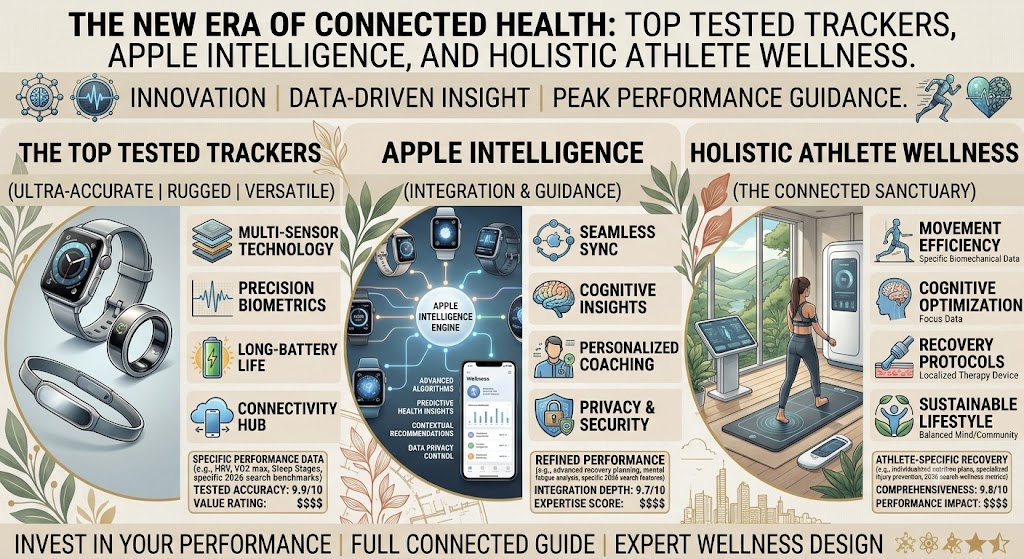
The New Era of Connected Health: Top Tested Trackers, Apple Intelligence, and Holistic Athlete Wellness
For the past decade, the commercial fitness tracking industry operated on an uninspired premise: harvest as many arbitrary data points as possible, bundle them into colorful daily rings or bar graphs, and leave the human user to figure out what any of it actually meant. We counted our ten thousand steps, celebrated arbitrary calorie burns calculated via rudimentary accelerometers, and collected sleep scores that told us we were exhausted—a diagnosis we had already reached without the help of a four-hundred-dollar wrist computer.
That paradigm has finally collapsed. In its place stands an interconnected, highly sophisticated ecosystem where ambient sensing hardware, autonomic nervous system analytics, and localized machine learning converge. Today’s premier wearables are no longer passive counters; they are proactive physiological decoders. Between the emergence of high-speed multi-spectral optical sensors and the integration of on-device neural engines like Apple Intelligence, we have crossed the threshold from generic activity logging into contextual, predictive human performance modeling.
For endurance athletes, strength competitors, and longevity-focused professionals alike, this transformation represents an unprecedented opportunity. However, it also introduces a modern dilemma: how do we separate legitimate physiological insight from high-tech algorithmic noise? This deep-dive evaluation cuts through the marketing hype to review the top-tier hardware tested in the field, unpack the ramifications of artificial intelligence on daily recovery, and establish an actionable blueprint for holistic athletic longevity.
The Sensor Revolution: Precision Biometrics Beyond the Wrist Pulse
To understand why modern wearables have become so impactful, one must first look at the massive leap in biometric sensor fidelity. Early consumer trackers relied almost entirely on single-wavelength green photoplethysmography (PPG) paired with basic three-axis accelerometers. These systems struggled with motion artifacts, poor perfusion in colder environments, and darker skin tones, often delivering heart rate reads that drifted wildly during interval training or dynamic weightlifting.
Contemporary flagships now employ high-density multi-path optical arrays that combine green, red, and infrared light-emitting diodes (LEDs) with multiple photodiodes distributed across the sensor base. This multi-spectral approach allows the device to measure blood volumetric changes at varying tissue depths. The result is real-time monitoring of peripheral capillary oxygen saturation (SpO2), micro-vascular blood volume, and resting baseline fluctuations with a degree of accuracy that closely mirrors clinical benchmarks.
Decoupling Heart Rate Variability: rMSSD vs. SDNN
The crown jewel of modern athletic monitoring is Heart Rate Variability (HRV)—the millisecond-level variation between consecutive heartbeats (the R-R interval). Rather than indicating an erratic pulse, high variability reflects a healthy, dynamic balance between the sympathetic (“fight-or-flight”) and parasympathetic (“rest-and-digest”) branches of the autonomic nervous system.
However, the athletic utility of HRV depends entirely on the mathematical lens applied to that data:
- rMSSD (Root Mean Square of Successive Differences): This metric primarily reflects parasympathetic tone and vagal nerve activity. Wearables like Whoop and Oura focus heavily on rMSSD, sampling repeatedly during deep, slow-wave sleep phases to evaluate systemic physiological recovery without the confounding variables of daytime posture, stress, or caffeine.
- SDNN (Standard Deviation of NN Intervals): This measures overall autonomic balance over extended periods (often calculated over an entire 24-hour cycle). Apple HealthKit defaults to SDNN for broad cardiovascular trend analysis, providing a macro-view of cardiac resilience rather than an acute snapshot of morning athletic readiness.
Continuous Temperature Sensing and Galvanic Stress Response
Beyond optical blood flow, the integration of ambient temperature sensors and electrodermal activity (EDA) sensors has bridged the gap between physical load and environmental stress. High-grade wrist and ring form factors now measure skin temperature deviations down to 0.01 degrees Celsius against your circadian baseline.
This subtle biomarker serves as an early warning system for acute biological disruption: it flags systemic immune responses hours before clinical symptoms of illness manifest, tracks hormonal shifts across the luteal and follicular phases of the menstrual cycle, and highlights incomplete metabolic recovery following late-night nutrient consumption or alcohol intake.
Top Tested Trackers: The Definite Head-to-Head Evaluation
Over months of testing across endurance sessions, heavy compound resistance training, high-altitude trail running, and everyday recovery routines, four distinct platforms emerged as the undisputed leaders in connected health. Each approaches human physiology through a fundamentally different philosophical and mechanical lens.
1. Whoop 4.0: The Pure Recovery and Strain Platform
The Whoop 4.0 remains the preeminent tool for athletes who prioritize autonomic recovery above all else and have zero interest in wrist-based smartwatch notifications. Stripped of screens, buttons, and haptic distractions, Whoop is designed for continuous, unobtrusive wearability.
- The Hardware Advantage: Thanks to its small footprint and modular housing, the sensor can be worn beyond the wrist via specialized bicep bands, compression shorts, or sports bras. For contact athletes and strength competitors who wear wrist wraps or kettlebells against their forearms, bicep placement drastically reduces motion artifacts and eliminates interference.
- Algorithmic Philosophy: Whoop builds its entire ecosystem around two opposing metrics: Strain (calculated from cardiovascular cardiovascular load and muscular strain) and Recovery (calculated via nocturnal HRV, resting heart rate, respiratory rate, and sleep performance). Its algorithm is unapologetically strict; if your parasympathetic tone is suppressed, your Recovery score will reflect it without mercy.
- Drawbacks: The proprietary subscription model requires an ongoing financial commitment. Furthermore, without on-board GPS, it relies on your smartphone for location metrics during open-air running or cycling.
2. Oura Ring Gen 3: Unrivaled Sleep and Circadian Architecture
By transitioning the biometric sensor array from the wrist to the finger, Oura leverages the digital arteries of the hand, where blood vessels sit closer to the surface of the skin than on the dorsal side of the forearm. The result is exceptionally clean nocturnal data capture.
- The Hardware Advantage: Weighing less than six grams, the titanium ring form factor is vastly superior for athletes who find sleeping with a bulky watch uncomfortable. Battery life easily reaches five to seven days on a single charge cycle, promoting true longitudinal compliance.
- Algorithmic Philosophy: Oura is unmatched in its sleep staging and circadian rhythm tracking. By monitoring skin temperature shifts alongside resting pulse and movement, it maps your ideal bedtime window and detects oncoming infections or overtraining fatigue often 24 to 48 hours before subjective symptoms register.
- Drawbacks: It is fundamentally ill-suited for traditional barbell lifting, gymnastics, or rowing; steel knurling will scratch the finish and pinch the finger under load. It remains an elite recovery and lifestyle device rather than an active workout telemetry tool.
3. Garmin Epix Pro & Forerunner 965: The Endurance Titan
For athletes whose training demands precise real-time performance pacing, multi-band satellite navigation, and complex physiological load management, Garmin remains the undisputed industry standard. Both the Epix Pro (with its rugged sapphire/titanium casing and AMOLED display) and the lightweight Forerunner 965 utilize Garmin’s Elevate Gen 5 optical sensor platform.
- The Hardware Advantage: Dual-frequency multi-band GNSS ensures near-flawless tracking under heavy forest canopies or between urban skyscrapers. Battery life is measured in weeks rather than hours, eliminating the anxiety of daily charging routines.
- Algorithmic Philosophy: Garmin’s “Training Readiness” score weaves together sleep history, recovery time, Acute-to-Chronic Workload Ratio (ACWR), HRV Status, and stress metrics. It prevents overtraining by mathematically calculating the exact biological cost of prolonged threshold efforts and high-aerobic sessions.
- Drawbacks: The Garmin ecosystem can be overwhelmingly dense. Its mobile interface (Garmin Connect) prioritizes technical depth over accessibility, presenting a steep learning curve for those who simply want actionable daily instructions.
4. Apple Watch Ultra 2: The Unified Lifestyle and Performance Powerhouse
The Apple Watch Ultra 2 is a hybrid monster: a full-fledged, titanium-encased computer capable of running standalone satellite communications, depth-gauge free-diving operations, and enterprise communication, backed by some of the most clinically verified optical sensors on the commercial market.
- The Hardware Advantage: An astonishing 3,000-nit display ensures crystal clarity under direct desert sun. Its dual-frequency GPS rivalries Garmin’s best platforms, while its ECG app and cardiovascular notifications carry legitimate regulatory clearance.
- Algorithmic Philosophy: Historically, Apple gathered world-class data but provided minimal synthesis. Now, with the introduction of the Vitals app and Training Load calculations in watchOS, Apple evaluates systemic strain against established 28-day baselines, directly challenging traditional sports science trackers.
- Drawbacks: Battery life—while extended to 36 to 72 hours depending on low-power configurations—still requires tactical charging habits that may interrupt continuous multi-day data collection during long-distance expeditions.
Hardware Comparison at a Glance
| Device | Form Factor | Battery Life | Primary Strength | Subscription? | Best For |
|---|---|---|---|---|---|
| Whoop 4.0 | Screenless Wrist/Bicep Strap | 4–5 Days | Cardiovascular & Muscular Strain vs. Recovery | Yes (Monthly/Annual) | Dedicated athletes, functional fitness, combat sports |
| Oura Ring Gen 3 | Titanium Smart Ring | 5–7 Days | Sleep staging, basal temperature, illness warning | Yes (Monthly) | Biohackers, recovery purists, minimalist lifestyle |
| Garmin Epix / 965 | Rugged / Sport Watch | 10–23 Days | Multi-band GPS, ACWR, offline mapping & pacing | No | Ultra-runners, triathletes, outdoor endurance athletes |
| Apple Watch Ultra 2 | Rugged Smartwatch | 2–3 Days | Clinical sensor accuracy, smartwatch utility, computing | No | Hybrid athletes wanting a singular, unified daily wearable |
Apple Intelligence: The AI Transformation in Biometric Contextualization
The greatest weakness of connected health has never been a lack of data; it has been the cognitive burden placed on the user to interpret disparate data points. A high resting heart rate could mean you are overtrained, dehydrated, fighting a viral infection, anxious about a board meeting, or simply digested a sodium-rich meal too close to sleep.
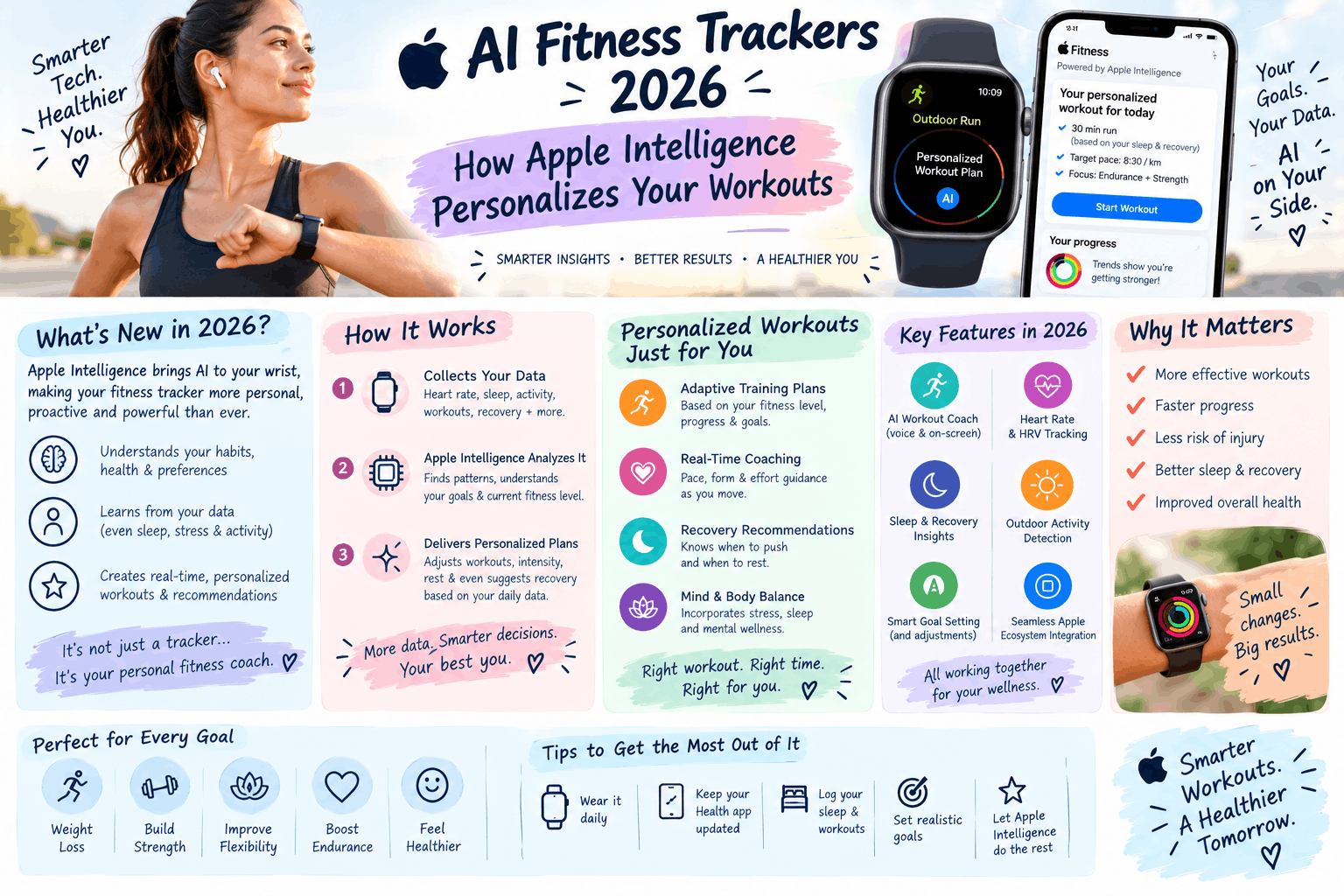
The rollout of Apple Intelligence marks the beginning of an era defined by contextual computational biology. By utilizing private on-device foundation models alongside secure Private Cloud Compute, health tracking is shifting from static, retrospective reporting to predictive, multi-modal synthesis.
Semantic Understanding of the Holistic Self
Traditional algorithms analyze biometric vectors in isolated silos. They look at your sleep duration independently of your calendar, and your active energy expenditure independently of your geographical elevation. Apple Intelligence changes this paradigm by maintaining local semantic awareness of your life’s broader context.
Consider a standard real-world scenario: An athlete wakes up with an HRV reading 25% below baseline, an elevated resting heart rate of seven beats per minute, and poor sleep architecture. A traditional app outputs a generic warning: “Your recovery is low today. Take it easy.”
Apple Intelligence, operating across localized system data, contextualizes the anomaly:
- It notes via your calendar and geolocation that you crossed three time zones yesterday afternoon.
- It correlates your elevated heart rate recovery with ambient temperature sensor shifts inside your living quarters.
- It reviews your previous day’s workout logs showing a 90-minute high-aerobic lactate threshold run.
- It observes that your evening screen time extended deep into your natural melatonin onset window.
Rather than spitting out a fragmented recovery score, the AI contextualizes the narrative: the physiological depression is predominantly driven by acute circadian phase shift (jet lag) and room temperature interference, rather than intrinsic muscular overtraining. The suggested action is not complete sedentary bed rest, but a targeted Zone 2 blood-flow session paired with early sunlight exposure to anchor circadian synchronization.
Natural Language Interrogation of Biomarkers
The ability to query your own physiology through conversational, natural language will permanently alter the dynamic between athletes, coaches, and medical practitioners. Instead of scrolling through six months of Apple HealthKit or Garmin Connect charts to evaluate whether an adjustment to your evening meal timing improved your deep sleep phases, you can ask directly:
“How did shifting my final carbohydrate intake to three hours before bedtime impact my average sleeping heart rate and deep sleep over the past 45 days compared to the prior 45 days?”
The localized model aggregates the records, strips the noise, controls for outliers, and delivers a concise statistical summary. This moves consumer health technology from descriptive tracking into authentic, iterative personal experimentation.
Holistic Athlete Wellness: Connecting Nervous System, Sleep, and Longevity
Hardware and artificial intelligence are only as valuable as the training philosophy that governs their use. When used incorrectly, wearables can induce neurosis—a phenomenon known in clinical literature as orthosomnia, where individuals experience insomnia driven by the psychological anxiety of trying to achieve a perfect sleep tracking score.
To extract maximal performance benefits without losing somatic self-awareness, athletes must view their biometrics through three foundational biological pillars: Autonomic Nervous System Regulation, Sleep Architecture Preservation, and Metabolic Load Balancing.
1. Autonomic Nervous System (ANS) Periodization
Athletic progression does not happen during training; it happens when the body adapts to the stimulus during recovery. High-volume, high-intensity training drives the body into a sympathetic state. Sustainable adaptation requires the athlete to rapidly transition back into a parasympathetic state once the session concludes.
Use your daily HRV trends not as an absolute mandate on whether to train, but as an indicator of systemic capacity:
- Sustained Parasympathetic Suppression: If your 7-day rolling HRV average is significantly suppressed alongside an elevated resting heart rate, your autonomic system is chronically overextended. Shift your programming from central-nervous-system-heavy lifts (e.g., heavy deadlifts, high-volume plyometrics) to local muscular endurance or steady-state aerobic flush work (Zone 2).
- Parasympathetic Saturation: Paradoxically, an unnaturally high HRV accompanied by extreme lethargy and low resting heart rate can indicate late-stage autonomic overreaching—the body’s emergency braking system actively shutting down output to force rest.
2. Engineering Non-Negotiable Sleep Architecture
Sleep cannot be treated as a monolithic block of passive time. It is a finely coordinated neurobiological cycle composed of Light Sleep (NREM Stage 1 and 2), Slow-Wave Sleep (NREM Stage 3, or Deep Sleep), and Rapid Eye Movement (REM) Sleep.
Trackers validate what neurobiology has long proven: these stages serve entirely divergent recovery functions:
- Slow-Wave Sleep (SWS): Occurring predominantly in the first half of the night, SWS is when human growth hormone (HGH) pulses into the bloodstream, cellular repair accelerates, and muscle protein synthesis peaks. If your tracker shows deep sleep consistently dropping below 15-20% of your total sleep time, your musculoskeletal structural integrity will eventually deteriorate.
- REM Sleep: Concentrated heavily in the second half of the night, REM is dedicated to cognitive consolidation, emotional integration, neuroplasticity, and motor learning. Endurance and skill-based athletes who shortchange their final two hours of sleep to make early-morning workouts severely impair their procedural memory and central nervous system coordination.
3. Metabolic Optimization & CGM Integration
A growing frontier in connected health is the pairing of traditional movement wearables with Continuous Glucose Monitors (CGMs), historically reserved for type 1 and type 2 diabetics. When healthy athletes wear biosensors like the Abbott FreeStyle Libre or Dexcom platforms via athletic interfaces like Supersapiens or Levels, they gain unprecedented visibility into energetic efficiency.
By observing continuous interstitial glucose dynamics, athletes can directly identify:
- Reactive hypoglycemia triggered by improper pre-workout carbohydrate timing.
- Nocturnal glycemic crashes that spike cortisol and cause middle-of-the-night sympathetic awakenings.
- The exact fueling thresholds required during ultra-endurance efforts to maintain glycogen replenishment without triggering gastrointestinal distress.
The 4-Pillar Daily Health Routine Driven by Data
To operationalize these technologies into a clear, non-obsessive daily routine, adopt this systemic operational framework:
Pillar 1: The Morning Triad Check (Immediate Awakening)
Check your wearable’s data only after making an internal, subjective somatic assessment. Rate your perceived recovery from 1 to 10 based on joint stiffness, mental clarity, and motivation to train. Then, review your objective triad: Resting Heart Rate, HRV Deviation, and Total Sleep Time. If your subjective feeling and objective data align negatively, scale your planned training session back by 20–30% in intensity or volume.
Pillar 2: Circadian Phase Anchoring (Within 60 Minutes of Waking)
Regardless of what your tracker’s readiness score displays, immediately expose your eyes to unfiltered, natural outdoor sunlight for 10 to 20 minutes. This photons-to-retina contact triggers the suprachiasmatic nucleus in the brain, setting off an internal timer that coordinates cortisol production, optimizes your daytime alertness, and sets your evening melatonin synthesis curve for higher-quality deep sleep sixteen hours later.
Pillar 3: Real-Time Strain Management (During the Training Window)
During active sessions, rely on targeted telemetry rather than perceived effort alone. Use heart rate zone tracking to enforce genuine Zone 2 endurance work (keeping cardiovascular strain below your first ventilatory threshold). Most unmonitored athletes run too fast on their easy days and too slow on their hard days. Real-time wearable metrics enforce discipline on recovery-oriented aerobic sessions.
Pillar 4: Parasympathetic Down-Regulation (Evening Wind-Down)
Two hours before sleep, use your tracker’s skin temperature and resting metrics as a guide to optimize your sleep hygiene. Lower the ambient room temperature to 65–68 degrees Fahrenheit (18–20 degrees Celsius) to facilitate the core body temperature drop required for deep slow-wave sleep. Cease heavy food consumption to prevent the sustained elevated nocturnal heart rates that ruin sleep-based recovery scores.
A Vital Medical and Clinical Reality Check
While the hardware and computational intelligence covered in this guide represent triumphs of biomedical engineering, their role must be strictly defined. Consumer-grade wearables, algorithms, and continuous biometric sensors are non-diagnostic, lifestyle-optimization tools.
They do not replace comprehensive diagnostic testing, clinical-grade 12-lead electrocardiograms, supervised polysomnography (PSG) sleep studies, or direct medical oversight. Biometric trends can illuminate lifestyle correlations and functional recovery adaptations, but they can also yield false positives and false negatives.
If your device flags persistent cardiovascular anomalies—such as recurrent atrial fibrillation alerts, unexplained resting tachycardia, severe nocturnal oxygen desaturations below 90%, or dramatic unprompted drops in baseline HRV—do not attempt to self-diagnose through artificial intelligence models or fitness forums. Bring that raw longitudinal data directly to a licensed cardiologist or medical physician for professional clinical evaluation.
The Final Verdict: Intentional Tracking Over Passive Collection
The new era of connected health is fundamentally an era of empowerment. We possess unprecedented visibility into the mechanics of our own biology. The combination of medical-grade sensors, localized artificial intelligence, and sophisticated recovery analytics allows us to train harder, recover deeper, and identify burnout long before it manifests as physical injury or psychological exhaustion.
Yet, the ultimate metric remains human intuition. Wearables are not intended to replace our connection to our bodies; they are designed to calibrate it. The most successful athletes of the coming decade will not be those who become slaves to their digital dashboards, but those who use this extraordinary intelligence to cultivate a sharper, more resilient, and truly holistic relationship with their physical performance.
Frequently Asked Questions
Which wearable provides the most accurate sleep tracking compared to clinical studies?
In independent polysomnography (PSG) validation studies, the Oura Ring Gen 3 and the Apple Watch consistently rank among the highest consumer devices for sleep-stage identification accuracy (specifically deep and REM detection) and total sleep duration. While no consumer device matches the precision of clinical EEG electrodes, these devices provide reliable longitudinal trend tracking.
Can I wear multiple fitness trackers simultaneously without conflicting data?
Yes. Many elite athletes wear an Oura Ring exclusively at night for sleep and recovery tracking, while utilizing a Garmin watch or Apple Watch Ultra during active daytime running or cycling sessions to leverage superior GPS, real-time telemetry, and physical buttons. Platforms like Apple HealthKit or third-party integrators can bridge these disparate inputs into a single data repository.
Does Apple Intelligence require an active internet connection to process my health data?
No. One of the core architectural pillars of Apple Intelligence is on-device processing. Most personal health data syntheses, semantic context correlations, and pattern recognition tasks take place locally on the device’s Neural Engine. For complex multi-layered queries that require additional computational power, Apple utilizes its Private Cloud Compute architecture, ensuring your health records are never stored, logged, or accessible by third parties.
Why does my HRV drop dramatically after drinking alcohol, even with eight hours of sleep?
Alcohol is a potent central nervous system depressant and cellular toxin. As your liver metabolizes ethanol into acetaldehyde, your sympathetic nervous system is heavily activated to manage the metabolic and vascular stress. This suppresses vagal parasympathetic tone, driving resting heart rates up and crashing HRV (rMSSD) throughout the night, even if you remain completely unconscious for eight hours.
How long does a wearable need to establish an accurate personal baseline?
Most advanced algorithms require a minimum of 14 to 30 continuous days of continuous wear to establish an accurate physiological baseline. During this introductory calibration window, the system establishes your individual circadian patterns, standard deviation ranges for resting heart rate, and natural HRV bandwidth. Avoid making radical changes to your training programming based on wearable metrics until this baseline period is complete.