Luxury train dining represents the absolute pinnacle of slow travel, converting high-speed transit into a multi-sensory gastronomic journey. On the world’s premier private trains, dining is not merely an onboard service—it is the central event. Executive chefs operate in compact, motion-stabilized galley kitchens, executing five-star tasting menus paired with rare vintages while dramatic landscapes sweep past your window. Whether you are craving line-caught Pacific salmon in the Canadian Rockies, saffron-infused royal thalis in Rajasthan, or hand-dived scallops in the Scottish Highlands, fine dining on trains delivers an extraordinary fusion of culinary mastery and historical elegance.
This comprehensive luxury rail dining guide breaks down why gourmet train journeys have captured the hearts of affluent travelers and epicures alike. We will explore the top five luxury train routes with standout dining, analyze what to expect from onboard menus, provide a step-by-step booking strategy, and review essential budget and dietary considerations.
Why Luxury Train Dining Is a Unique Culinary Experience
Modern air travel has systematically stripped the romanticism and culinary art out of transit, reducing meal service to pre-packaged, reheated trays eaten in cramped spaces. In stark contrast, luxury train dining revives the lost art of hospitality, turning time spent traveling into an indulgence. Dining cars on elite lines function as world-class restaurants on wheels, featuring crystal glassware, polished silverware, crisp white linens, and white-glove service standards.
The Historical Allure of Rail Gastronomy
The precedent for high-end onboard dining dates back to the late 19th century, when visionaries like Georges Nagelmackers—founder of the Compagnie Internationale des Wagons-Lits—introduced dedicated dining cars to long-distance European rail lines. For the first time, wealthy passengers could enjoy multi-course French dinners, vintage champagnes, and freshly brewed espresso while traveling across international borders. Today’s premier train operators preserve this heritage, maintaining meticulous art deco or Victorian salon interiors that transport passengers straight into the golden age of rail travel.
Marrying Scenery with Chef-Crafted Menus
Unlike stationary Michelin-starred brick-and-mortar establishments, a gourmet train offers a constantly changing visual canvas. A four-course lunch onboard the Venice Simplon-Orient-Express begins while passing Swiss alpine peaks and concludes alongside the serene shores of Italian lakes. This dynamic environment deepens the sensory impact of the meal: the dish in front of you directly mirrors the regional landscape outside. It is an immersive style of destination dining comparable to curated international trips, such as taking a dedicated Japan culinary tour or visiting historic wine estates in Europe.
The Appeal to Food-Focused Travelers
For culinary enthusiasts, the technical precision required in rail galleys is nothing short of fascinating. Kitchen cars measure a fraction of traditional restaurant kitchens, yet culinary teams execute multi-course, plated banquets without open flame burners on many modern lines due to safety regulations. Chefs rely on convection, induction, precise prep work, and uncompromising technique. Observing high-end service executed at 60 miles per hour adds an element of theatricality that standard restaurants simply cannot replicate.
Top 5 Luxury Train Routes With Standout Dining
While dozens of luxury trains operate worldwide, five specific routes consistently set the benchmark for culinary excellence, offering the best food on luxury trains across distinct geographic regions.
1. Venice Simplon-Orient-Express: Classic French-Italian Opulence
The iconic Venice Simplon-Orient-Express (VSOE) remains the gold standard of European rail luxury. Running classic routes between London, Paris, Venice, and occasionally Istanbul, the train boasts three restored 1920s dining cars: Cote d’Azur (featuring René Lalique glass panels), Etoile du Nord (known for intricate marquetry), and L’Observatoire.
- Culinary Focus: Under the direction of world-renowned chefs, the onboard menu heavily emphasizes seasonal French and Italian haute cuisine.
- Signature Dishes: Brittany lobster, roasted Mont-Saint-Michel lamb, hand-crafted truffle agnolotti, and delicate pastry tarts.
- The Dining Atmosphere: Black-tie dress codes remain strictly enforced for evening meals, creating an atmosphere of unrivaled vintage sophistication.
2. The Maharajas’ Express: Indian Royal Banquet Style
Traversing India’s most iconic golden triangle routes and royal heritage regions, The Maharajas’ Express offers an regal dining experience across two thematic dining cars: Mayur Mahal (Peacock Palace) and Rang Mahal (Palace of Colors). Tables are dressed with fine limoges china and gold-gilded glassware.
- Culinary Focus: Imperial Indian banquets alongside international gourmet staples. Menus rotate based on the specific Indian state the train traverses each day.
- Signature Dishes: Saffron-infused Awadhi biryani, slow-cooked Rajasthani Laal Maas (spiced mutton curry), fragrant cardamom-infused desserts, and delicate street-food-inspired modern amuse-bouches.
- The Dining Atmosphere: Vibrant, opulent, and deeply sensory, accompanied by personalized butler service and curated regional beverage pairings.
3. The Rocky Mountaineer: West Coast Pacific Flavors
Operating through the dramatic wilderness of the Canadian Rockies and the American Southwest, the Rocky Mountaineer’s GoldLeaf Service features a custom-designed double-deck glass-domed carriage. The lower level houses a dedicated, full-service dining room overlooking rushing rivers and mountain canyons.
- Culinary Focus: Pacific Northwest and regional North American cuisine highlighting local producers, fresh seafood, and prime meats.
- Signature Dishes: Wild Pacific salmon baked on cedar planks, Alberta AAA beef tenderloin with red wine jus, and local British Columbia berry tarts.
- The Dining Atmosphere: Relaxed yet refined elegance, emphasizing day-time viewing where meals are synchronised with major scenic landmarks.
4. Belmond Royal Scotsman: Scottish Terroir Tasting Menu
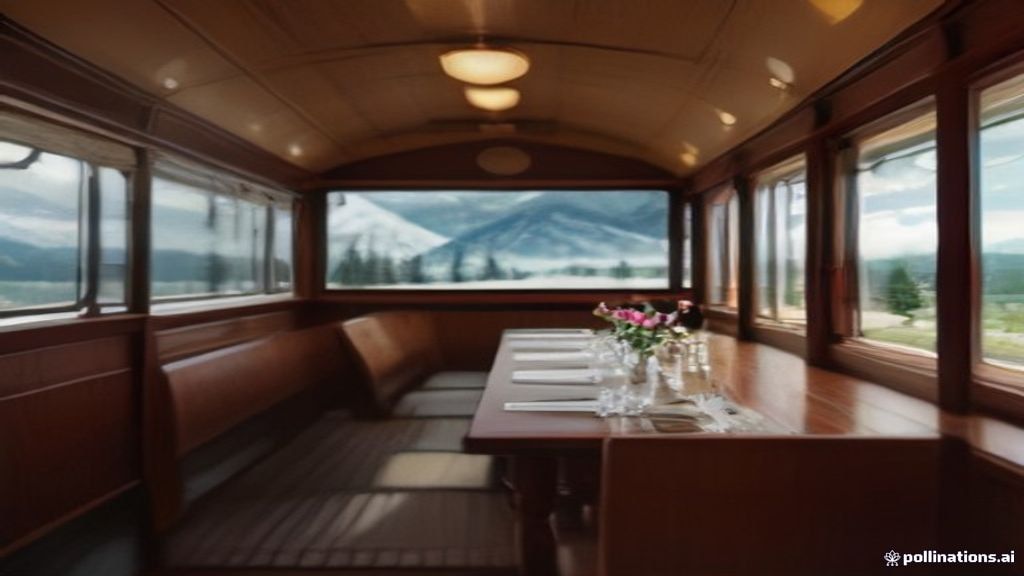
Carrying just 40 guests through the dramatic lochs and glens of Scotland, the Belmond Royal Scotsman offers one of the most intimate luxury train dining environments in the world. Its two dining cars, Raven and Victory, feature rich mahogany paneling and cozy booth seating.
- Culinary Focus: Hyper-local Scottish game, seafood, and artisanal produce sourced fresh at stopping stations along the route.
- Signature Dishes: Seared West Coast scallops, roasted Highland venison, warm haggis croquettes, and artisan Scottish cheeses.
- The Dining Atmosphere: Country-house warmth where dining is paired with extraordinary single-malt Scotch whisky tastings hosted by regional experts.
5. The Ghan: Australian Outback-Inspired Gourmet
Traveling 2,979 kilometers through the heart of the Australian continent from Darwin to Adelaide, The Ghan’s Platinum and Gold Service dining takes place in the elegant Queen Adelaide Restaurant car. The menus reflect the wild, expansive landscapes outside.
- Culinary Focus: Modern Australian cuisine highlighting indigenous herbs, native spices, wild game, and premium South Australian produce.
- Signature Dishes: Grilled saltwater barramundi, pan-roasted kangaroo tenderloin with native plum glaze, and Spencer Gulf king prawns paired with Clare Valley Riesling.
- The Dining Atmosphere: Contemporary Australian luxury—informal, welcoming, yet technically flawless in presentation and service.
What to Expect From Onboard Menus
Understanding the structure of onboard food and beverage programs helps travelers appreciate why gourmet train journeys demand such premium pricing. Rail culinary operations differ significantly from traditional cruise ships or luxury resorts.
Seasonal, Locally-Sourced Ingredients
Because space onboard is limited, train chefs do not store massive amounts of frozen stock. Instead, they rely on a network of high-end station-side providors. Fresh ingredients are delivered directly to the platform at key stops along the journey. A train traveling through France might receive fresh oysters in Brittany, farm-raised cheeses in Burgundy, and fresh pastries at Paris Gare de l’Est. This guarantees that onboard menus reflect true seasonal locality.
Chef Collaborations and Guest Chefs
Top rail operators routinely partner with Michelin-starred culinary icons to design seasonal menus or run special guest-chef journeys. These collaborations bring cutting-edge gastronomy to the rails, combining precision culinary engineering with regional tradition. These special departures often sell out years in advance due to high demand among international food enthusiasts using specialized luxury rail booking platforms.
Wine Pairings and Sommelier Services
Wine programs on luxury trains are exceptionally sophisticated. Dedicated sommeliers curate cellars designed to complement specific regional routes. On European journeys, menus feature grand crus from Bordeaux, Burgundy, and Piedmont; North American lines highlight boutique Napa and Okanagan Valley vintages; while Australian journeys showcase aged Penfolds and iconic Barossa Shiraz. Sommeliers must also account for motion and atmospheric pressure changes, selecting wines with robust aroma profiles that open up beautifully onboard.
Multi-Course Tasting Formats and Private Salons
Dinner on a luxury train is rarely a quick affair. Evening meals typically range from four to seven courses, structured slowly to allow guests to relax and savor every pairing. For travelers celebrating milestones or seeking complete privacy, many lines offer private dining salons or allow guests in top-tier suites (such as the Grand Suites on the VSOE) to have multi-course tasting menus served course-by-course directly in their private cabins by a dedicated steward.
Step-By-Step Booking Guide
Securing a seat on a gourmet rail journey requires careful planning, as inventory on the world’s best luxury trains is extremely limited—often capped at 30 to 100 passengers per departure.
Step 1: Choose the Right Itinerary for Your Culinary Goals
Determine whether your primary focus is classical European haute cuisine, wild game and local produce, or exotic regional spicing. If you want black-tie multi-course formality, book the Venice Simplon-Orient-Express. If you prefer daytime wildlife viewing alongside pristine regional seafood, choose the Rocky Mountaineer’s GoldLeaf service.
Step 2: Time Your Booking Window (12 to 18 Months Ahead)
Due to high demand and small capacity, prime dining and suite combinations sell out far in advance. Book 12 to 18 months prior to departure, particularly if you want high-demand shoulder seasons (autumn truffle seasons in Europe or fall foliage in North America).
Step 3: Book Through Official Platforms or Specialized Agents
Reserve directly through official operators (such as Belmond, Journey Beyond, or Great Train Journeys) or through certified luxury travel advisors. Specialized agents frequently hold priority access to top suite categories and exclusive onboard dining packages that are not listed on standard consumer sites.
Step 4: Upgrade to Culinary Packages and Chef’s Table Access
When booking, inquire about optional culinary upgrades. Certain itineraries offer private wine-tasting masterclasses, market tours with the executive chef during extended station stops, or behind-the-scenes galley tours where you can see the culinary team in action. Similar to booking a hands-on Oaxaca culinary workshop, securing these experiential add-ons in advance ensures you get direct access to regional culinary masters.
Step 5: Review Payment Policies and Secure Travel Insurance
Luxury rail bookings require substantial upfront deposits (typically 20% to 25%), with final balance payment due 90 to 120 days before departure. Cancellation penalties can be strict. Always secure comprehensive travel insurance through a specialized luxury travel insurance provider that covers trip interruption, medical emergencies, and high-value ticket reimbursement.
Budgeting & Value Considerations
Gourmet rail travel is an investment. Evaluating the true cost requires understanding what is included in the base fare versus what incurs extra charges.
Typical Price Brackets
Prices vary dramatically based on carriage class, itinerary length, and private cabin size:
- Entry-Level Luxury (e.g., Rocky Mountaineer GoldLeaf, 2-Day Journey): $1,800 – $3,200 per passenger. Includes all gourmet meals, snacks, and premium beverages during day travel.
- High-End Luxury (e.g., The Ghan Platinum Service, 3-Night Journey): $4,000 – $7,500 per passenger. Fully inclusive of private cabin, all multi-course meals, high-end spirits, wines, and off-train dining excursions.
- Ultra-Luxury / Historic Icons (e.g., VSOE Grand Suite, 1-Night Classic Journey): $8,000 – $15,000+ per passenger. Includes private suite, 24-hour butler service, free-flowing champagne, and customized multi-course private dining menus.
All-Inclusive Dining vs. A La Carte Charges
Most top-tier lines operate on an all-inclusive model where three-course lunches, multi-course dinners, afternoon teas, premium wines, and spirits are included in the ticket cost. However, travelers should check if ultra-rare reserve wines, vintage champagnes, or private room-service surcharges carry extra fees. On lower tier packages, alcoholic beverages may be billed à la carte.
Assessing Value: Food Quality vs. Overall Experience
When assessing value, break down the component costs: you are paying for luxury accommodations, seamless transportation through remote scenery, off-train excursions, and standard-setting fine dining that rivals top urban establishments. For culinary travelers, the convenience of having world-class dining delivered effortlessly twice a day makes luxury train travel an outstanding overall value compared to coordinating separate hotels, transfers, and high-end restaurant reservations independently.
Dietary Restrictions & Special Requests
A common concern among travelers considering a gourmet rail trip is whether compact train galleys can safely handle complex dietary needs. The answer is yes—provided proper communication channels are followed.
Galley Constraints and Advance Notice Protocols
Train kitchens operate in narrow corridors with restricted storage. Unlike hotel kitchens, they cannot simply run to a walk-in freezer to grab alternative ingredients mid-journey. Therefore, luxury train operators enforce a strict advance notice requirement. Dietary restrictions, life-threatening allergies, vegan, kosher, or halal requests must be submitted at least 30 to 60 days before departure.
Custom Accommodations on Major Rail Lines
When notified in advance, train chefs craft customized multi-course tasting menus that match the exact culinary sophistication of the standard menu:
- Vegetarian & Vegan: Executive chefs craft plant-based dishes using heirloom vegetables, truffle infusions, wild mushrooms, and nut-based cream reductions.
- Gluten-Free & Celiac: Dedicated prep protocols prevent cross-contamination, offering gluten-free breads, pastries, and thickened sauces prepared fresh onboard.
- Kosher & Halal: Because certified kosher preparation requires specialized kitchen setups, most lines arrange pre-packaged meals prepared off-site under strict religious supervision by certified caterers, which are then finished and presented elegantly onboard.
Frequently Asked Questions
Do I need a separate reservation for the dining car?
On most luxury trains, your dining times are pre-allocated or coordinated upon embarkation with your cabin steward or restaurant manager. On smaller trains like the Belmond Royal Scotsman, all guests dine together in a single sitting. On larger trains with multiple dining cars, guests select early or late seatings upon booking or during day-one check-in.
Can I bring my own wine on a luxury train?
Most luxury lines permit guests to bring personal bottles aboard for consumption in their private cabins. If you wish to bring a rare vintage bottle to the formal dining car, corkage fees typically range from $30 to $75 per bottle. However, given the exceptional quality of included onboard cellars, bringing outside wine is rarely necessary.
Are there onboard cooking demonstrations or chef masterclasses?
Select luxury rail itineraries offer interactive cooking demonstrations, pastry-making sessions, or cocktail masterclasses in the lounge car during leisurely afternoon stretches. Check your specific itinerary details or consult with your travel agent prior to departure to see if culinary workshops are scheduled.
What happens if a featured menu item is unavailable?
Rail chefs rely on fresh regional sourcing. If a specific ingredient becomes unavailable due to seasonal weather or local market conditions, the executive chef substitutes an ingredient of equal or superior quality from a local supplier at the next station stop. Menus are printed daily onboard to reflect these hyper-fresh adjustments.
Conclusion & Next Steps
Luxury train dining transforms transit into an unforgettable sensory event. By fusing classical culinary techniques, hyper-local ingredients, and sophisticated wine programs with some of the world’s most impressive landscapes, gourmet train journeys offer an unequaled experience for food-focused travelers. Whether you choose the historical glamour of the Venice Simplon-Orient-Express or the rugged, native flavors of The Ghan, dining on the rails is an investment in rich culinary culture and timeless luxury.
Ready to plan your next culinary escape? Start by choosing your preferred route, checking availability 12 to 18 months ahead, and contacting an official rail specialist to lock in your cabin and dining preferences today.