
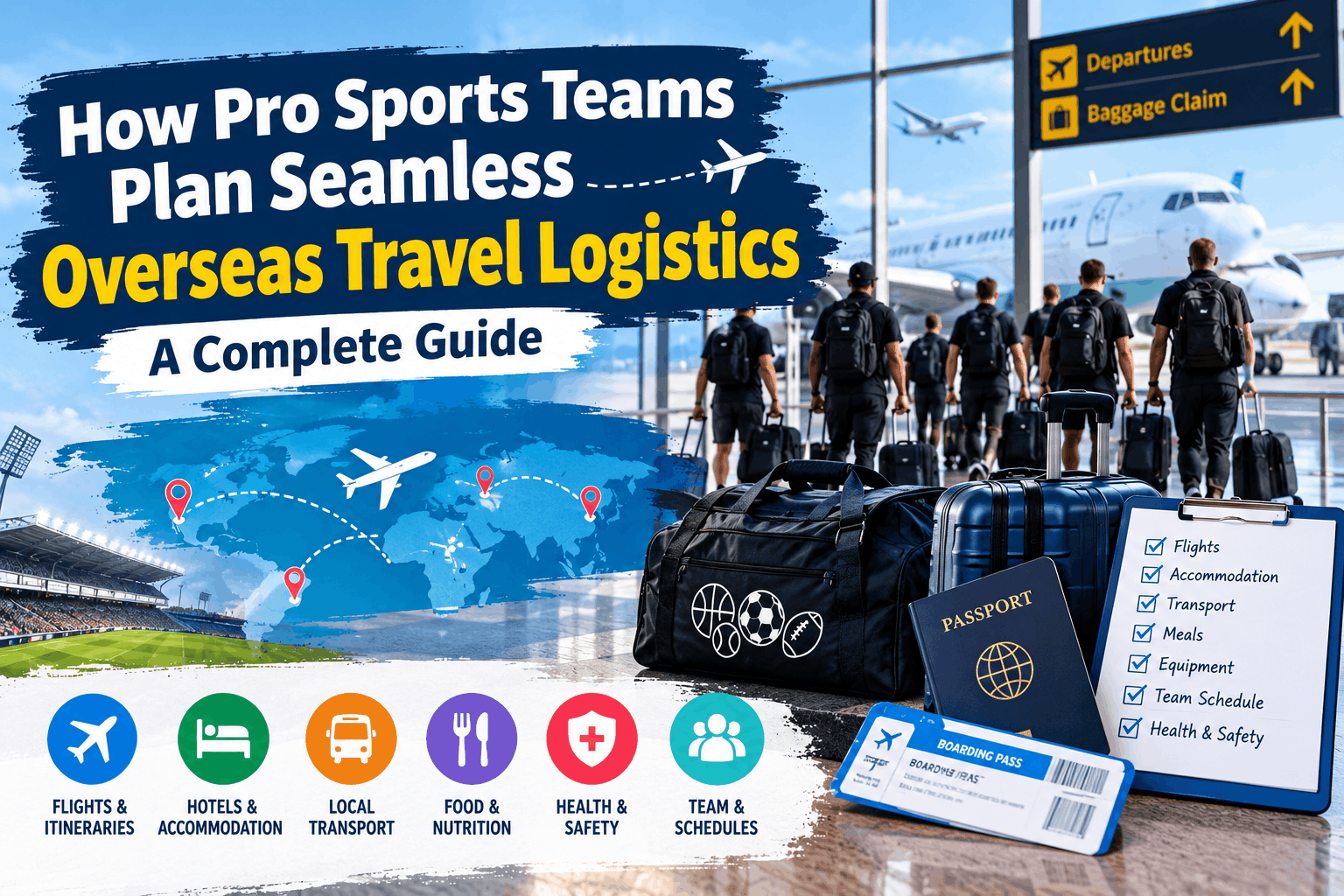
When a professional sports franchise embarks on an overseas tour, the logistics puzzle is far more intricate than a typical corporate trip. From massive gear shipments to tight competition schedules, every detail can influence athlete performance and the bottom line. This guide walks logistics managers through a step‑by‑step process that turns a chaotic itinerary into a seamless operation.
Why Overseas Travel Is a Unique Challenge for Pro Sports Teams
Unlike standard business travel, a sports team moves dozens of athletes, coaches, support staff and a full inventory of equipment that can weigh several tons. The schedule is often compressed: teams may have back‑to‑back games across different cities, leaving little margin for delays. Performance is directly tied to travel quality—poor sleep, missed meals or damaged gear can cost points on the field.
Corporate travelers usually deal with personal luggage and a few laptops. A pro team, however, must coordinate:
- Large cases of helmets, pads, uniforms and medical supplies.
- Specialized technology such as video analysis rigs, wearable sensors and broadcast equipment.
- Strict nutrition and recovery protocols that require temperature‑controlled storage.
These variables create a logistics environment where a single missed customs clearance can cascade into missed practice, reduced recovery time, and ultimately a competitive disadvantage.
Pre‑Trip Planning Checklist
Define Objectives and Timeline
Start by mapping the tour calendar, including game dates, practice sessions, media events and mandatory rest days. From this master schedule, extract critical logistics milestones: equipment drop‑off dates, customs pre‑clearance windows, and crew travel windows.
Create an Inventory of Gear and Apparel
Use a spreadsheet or dedicated asset‑management software to list every item, its weight, dimensions, and any special handling requirements. Tag high‑value or fragile assets (e.g., helmets, video rigs) with unique identifiers that will later match GPS trackers.
Establish Budget and Stakeholder Approvals
Break the budget into categories: freight charges, customs duties, insurance, accommodation, meals and contingency reserves. Secure sign‑off from the athletic director, finance department and, if applicable, the league’s travel compliance office.
Choosing the Right Logistics Partner
The right partner can mean the difference between a smooth tour and a logistical nightmare. Key criteria include proven experience with sports gear, deep customs expertise in target countries, and a technology platform that offers real‑time visibility.
- Experience with Sports Gear: Look for case studies involving helmets, padding, and temperature‑sensitive medical kits.
- Customs Expertise: Partners should have in‑country customs brokers who understand temporary import rules for athletic equipment.
- Real‑Time Tracking: GPS and IoT sensors that feed into a dashboard accessible by the team’s travel coordinator.
Top providers that regularly serve professional teams include LuggageToShip, ShipStation and DHL Global Forwarding. When evaluating contracts, scrutinize Service Level Agreements (SLAs) for on‑time delivery guarantees, liability coverage and escalation procedures.
For teams that want a single‑pane‑of‑glass solution, the recommended tool integrates shipment booking, customs documentation and live tracking into one interface.
Equipment Shipping & Customs Clearance
Packaging Standards for Helmets, Pads, and Tech
Invest in hard‑sided cases with foam inserts that meet International Air Transport Association (IATA) standards. Label each case with a QR code that links to the inventory spreadsheet. For delicate electronics, include silica gel packs and shock‑absorbing layers.
Customs Documentation: HS Codes, ATA Carnets, Temporary Import Bonds
Accurate Harmonized System (HS) codes reduce clearance time. Most sports equipment falls under Chapter 95 (sports goods) but double‑check each item. An ATA Carnet is often the fastest route for temporary imports; it acts as a passport for goods and eliminates the need for a bond in many countries.
Avoiding Delays with Pre‑Clearance Programs
Many airports now offer pre‑clearance kiosks where you can submit documentation 48 hours before arrival. Enroll your logistics partner in programs such as the U.S. Customs and Border Protection’s Automated Commercial Environment (ACE) for faster processing.
For a deeper dive into shipping strategies used by NFL franchises, see our Pro‑Level NFL Travel Logistics: Ship Your Gear Like a Team in 7 Simple Steps guide.
Travel Itinerary & Athlete Accommodation Optimization
Coordinating Flights, Charter Buses, and Ground Transport
Book block seats on commercial flights for staff and use chartered aircraft for athletes when schedules are tight. Align arrival times with ground transport windows to avoid overnight layovers that disrupt sleep cycles.
Selecting Hotels with Recovery Amenities and Proximity to Venues
Prioritize hotels that offer hydro‑therapy pools, sleep‑enhancing lighting and on‑site nutritionists. Use a mapping tool to calculate the walking distance from the hotel to the competition venue; a 10‑minute walk reduces transit fatigue.
Meal Planning and Nutrition Logistics
Work with a sports nutritionist to pre‑order meals that meet macro‑nutrient targets. Where possible, arrange for refrigerated storage of supplements and perishable snacks. In countries with strict food import rules, partner with local caterers who hold the necessary certifications.
In‑Transit Management and Real‑Time Visibility
Modern IoT sensors can transmit temperature, humidity and shock data every few minutes. Integrate these feeds into a centralized dashboard that alerts the logistics manager via SMS if thresholds are breached.
- GPS Trackers: Attach to each equipment case; set geofences around airports and hotels.
- Communication Protocols: Establish a 24/7 hotline with the logistics partner and a Slack channel for the internal team.
- Contingency Plans: Pre‑position backup gear in the destination city and identify local vendors who can supply emergency replacements.
Post‑Trip Debrief and Data Analysis
Collecting KPI Data
After the tour, compile metrics such as on‑time delivery percentage, cost variance versus budget, number of customs holds, and athlete satisfaction scores. Use a simple scorecard to visualize trends.
Lessons Learned and Process Improvements
Host a debrief meeting with travel coordinators, coaches and the logistics partner. Document what worked (e.g., pre‑cleared ATA Carnets) and what didn’t (e.g., last‑minute equipment swaps). Update the pre‑trip checklist accordingly for the next overseas assignment.
Case Study: The 49ers’ Seamless Travel to Australia
The San Francisco 49ers’ 2023 preseason tour to Australia was highlighted in an ABC7 report that praised the team’s “zero‑delay” equipment arrival and “optimal athlete recovery” strategy. Key tactics included:
- Partnering with DHL Global Forwarding for a dedicated customs broker in Sydney.
- Using temperature‑controlled containers for medical kits and nutrition packs.
- Implementing a real‑time tracking dashboard that fed alerts to the head of logistics the moment a container deviated from its route.
Other sports can replicate this model by securing a single logistics partner with local expertise, investing in IoT tracking, and embedding nutrition planning into the travel itinerary.
FAQ
What is the difference between an ATA Carnet and a temporary import bond?
An ATA Carnet acts like a passport for goods, allowing temporary import without paying duties, provided the items are re‑exported within the allowed period. A temporary import bond is a financial guarantee posted with customs; if the goods are not re‑exported, the bond may be forfeited.
How many days in advance should customs documentation be submitted?
Most airlines and freight forwarders recommend submitting paperwork at least 48 hours before departure. For high‑risk items, a 72‑hour window gives customs brokers enough time to resolve classification questions.
Can I use the same logistics partner for both equipment shipping and athlete travel?
Yes, many global forwarders now offer an end‑to‑end service that includes passenger travel, cargo, and on‑ground logistics. Ensure the contract clearly separates liability for people versus property.
Conclusion
Planning overseas logistics for a professional sports team demands a blend of meticulous inventory control, expert customs navigation, and real‑time visibility. By following the checklist, selecting a partner with proven sports‑gear experience, and leveraging technology such as GPS trackers and IoT sensors, logistics managers can turn a complex tour into a competitive advantage. The 49ers example proves that when every detail is accounted for, athletes arrive ready to perform and teams stay within budget—an outcome every sports organization strives for.


One thought on “How Pro Sports Teams Plan Seamless Overseas Travel Logistics – A Complete Guide”
Comments are closed.