
Introduction – Why Collagen Matters Today
Collagen is the most abundant protein in the human body, forming the structural scaffold of skin, hair, nails, bones, and joints. As we age, natural collagen production drops by up to 1% per year, leading to fine lines, loss of elasticity, and joint discomfort. This decline has sparked a consumer surge in collagen supplements, with the global market projected to exceed $7 billion by 2028. Understanding the nuances between marine and bovine sources helps you choose a product that aligns with your skin‑care and joint‑support goals.
Collagen Basics – Types, Structure, and Sources
Three collagen types dominate human tissue:
- Type I – found in skin, tendons, and bone; provides tensile strength.
- Type II – the main component of cartilage; crucial for joint cushioning.
- Type III – works alongside Type I in skin and blood vessels.
Supplement manufacturers hydrolyze whole‑protein collagen into collagen peptides (also called hydrolysates). Hydrolysis breaks the triple‑helix into short chains of 2–20 amino acids, making them water‑soluble and easier for the digestive system to absorb.
Common animal sources are:
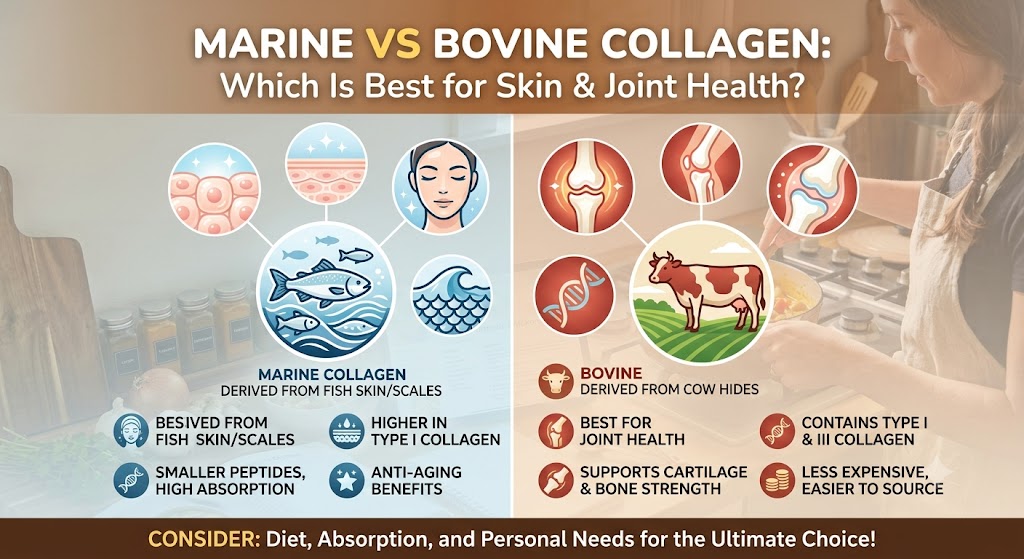
- Marine fish skin and scales – rich in Type I.
- Bovine hide and cartilage – a blend of Type I (skin) and Type II (joint).
Marine Collagen – Benefits and Science
Marine collagen is extracted from the skin and scales of wild‑caught fish such as cod, haddock, or pollock. Sustainable fisheries that follow MSC guidelines ensure minimal impact on ocean ecosystems. Because fish skin contains a high concentration of Type I collagen, marine hydrolysates are especially prized for skin health.
Skin‑Focused Benefits
Clinical trials have shown that daily intake of marine collagen peptides (2.5–5 g) can improve skin elasticity by 5–15% after eight weeks and boost hydration levels. The smaller peptide size (average 2–5 kDa) facilitates rapid absorption, delivering glycine, proline, and hydroxyproline directly to dermal fibroblasts.
Allergen Considerations
People with fish allergies should avoid marine collagen. Most reputable brands label potential allergens clearly and may offer hypoallergenic, peptide‑filtered versions.
Bovine Collagen – Benefits and Science
Bovine collagen is sourced from grass‑fed cattle hides and cartilage. The hide provides Type I, while cartilage contributes Type II, offering a broader spectrum for both skin and joint support.
Joint‑Focused Benefits
Studies on undenatured Type II bovine collagen (UC‑II) demonstrate reduced joint pain and improved mobility in adults with osteoarthritis after 12 weeks of 40 mg daily dosing. The mechanism involves oral tolerance, where specific peptides modulate the immune response to protect cartilage.
Ethical and Dietary Factors
For consumers who require halal or kosher certification, bovine collagen from certified sources meets those standards. Grass‑fed, hormone‑free cattle are also a selling point for clean‑label shoppers.
Bioavailability & Digestion – How Your Body Absorbs Peptides
Bioavailability hinges on peptide size, amino‑acid composition, and the presence of cofactors such as vitamin C. Marine peptides are typically smaller (2–5 kDa) than bovine peptides (5–10 kDa), which can translate to faster uptake in the small intestine.
Factors that boost absorption include:
- Taking collagen on an empty stomach or with a small amount of fruit juice (vitamin C enhances proline hydroxylation).
- Avoiding high‑protein meals that compete for transporters.
Both sources ultimately raise circulating collagen‑derived peptides, but the timing and dosage can affect the magnitude of the response.
Efficacy for Skin – Which Wins?
When comparing head‑to‑head trials, marine collagen often edges out bovine in skin‑specific outcomes because of its higher Type I purity and smaller peptide profile. One double‑blind study reported a 12% increase in skin firmness with marine collagen versus 7% with bovine after 12 weeks.
Real‑world users echo these findings: many report smoother texture within four weeks of marine supplementation, while bovine users notice gradual improvements over eight weeks. For those primarily after radiant skin, marine collagen is the more targeted choice.
Efficacy for Joints – Which Wins?
Joint health benefits lean toward bovine collagen, especially formulations that retain undenatured Type II. Clinical evidence shows UC‑II can reduce pain scores by up to 30% in active adults, whereas marine collagen’s impact on joints is modest but still positive, supporting connective‑tissue repair through its amino‑acid supply.
If joint comfort is the primary goal, a bovine‑rich product (or a blend that includes UC‑II) is likely the better option.
Sustainability, Ethics, and Allergenicity
Marine sourcing can be environmentally friendly when fisheries adhere to Marine Stewardship Council (MSC) standards, turning what would be waste (fish skins) into a valuable supplement. However, over‑fishing concerns persist, so look for certifications and transparent supply chains.
Bovine farming carries a larger carbon footprint, but grass‑fed, regenerative‑agriculture operations are reducing emissions and improving soil health. Choose brands that disclose herd management practices.
Allergy risk is opposite: fish‑allergic individuals must avoid marine collagen, while beef‑allergic consumers should stick with marine sources.
Key certifications to watch for include MSC, USDA Organic, Non‑GMO, and third‑party testing logos.
How to Choose a High‑Quality Collagen Supplement
When evaluating products, apply the following checklist:
- Sourcing Transparency: Brands should list the exact species (e.g., wild‑caught cod) and farming practices.
- Third‑Party Testing: Look for a Certificate of Analysis (CoA) confirming peptide size, purity, and absence of heavy metals.
- Peptide Size: Smaller peptides (2–5 kDa) generally indicate higher bioavailability.
- Flavor & Additives: Unflavored, low‑sweetener formulas reduce unwanted calories and allergens.
- Price per Gram: Compare cost against peptide concentration; a good benchmark is $0.03–$0.06 per gram of hydrolyzed collagen.
For a curated list of vetted options, see our recommended collagen supplement guide.
Dosage, Timing, and Stackable Ingredients
Typical daily dosages:
- Skin support: 10 g of marine or bovine hydrolyzed collagen.
- Joint support: 5 g of bovine hydrolyzed collagen plus 40 mg of undenatured Type II (UC‑II) if available.
Best times to take:
- Morning on an empty stomach for rapid absorption.
- Evening with a source of vitamin C (e.g., orange juice) to aid peptide synthesis.
Stackable nutrients that synergize with collagen include:
- Vitamin C – essential for hydroxylation of proline and lysine.
- Hyaluronic acid – hydrates skin and lubricates joints.
- Zinc – supports collagen cross‑linking.
Combining these can amplify results without increasing collagen dosage.
Frequently Asked Questions
Can I combine marine and bovine collagen?
Yes. A blended approach lets you harness marine’s skin‑focused Type I and bovine’s joint‑supporting Type II. Many users split doses—morning marine for skin, evening bovine for joints.
Is collagen safe during pregnancy?
Collagen is a food‑grade protein and generally recognized as safe (GRAS). However, pregnant individuals should consult their healthcare provider, especially if they have specific dietary restrictions.
How long to see results?
Skin improvements typically appear after 4–8 weeks of consistent use, while joint comfort may require 8–12 weeks, depending on the baseline condition and dosage.
Conclusion – Making the Right Choice for Your Goals
In summary, marine collagen excels for skin elasticity, hydration, and rapid absorption due to its high Type I content and smaller peptides. Bovine collagen, particularly when it includes undenatured Type II, offers superior joint support and a broader amino‑acid profile.
Use the decision flowchart below to guide your purchase:
- If skin health is your primary focus → choose marine collagen (wild‑caught, MSC‑certified).
- If joint comfort is paramount → opt for bovine collagen with UC‑II or a blend that emphasizes Type II.
- If you need both → consider a split‑dose regimen or a hybrid product that lists both marine and bovine sources.
By evaluating sourcing ethics, peptide size, and third‑party testing, you can select a supplement that aligns with both your health objectives and sustainability values.
For deeper dives into related ingredients, explore our omega-3 skin benefits article and the role of koji ingredient in modern formulations.



One thought on “Marine vs Bovine Collagen: Which Is Best for Skin & Joint Health?”
Comments are closed.