
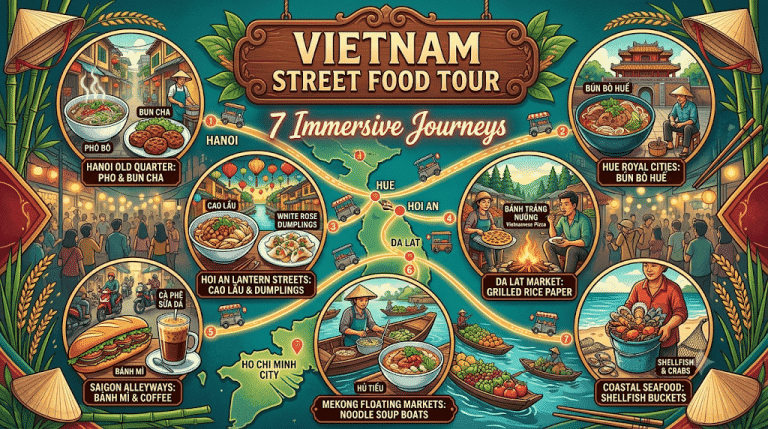
Steam rises from a steaming bowl of pho, the aroma of lemongrass and star anise curling into the humid air of Hanoi’s Old Quarter. The vendor, eyes bright, slides the bowl toward you with a practiced nod. You take your first spoonful, silky rice noodles, tender slices of pork, a squeeze of lime, a handful of fresh basil, and the world narrows to a single, unforgettable flavor. That moment is the gateway to a city where street food is not just sustenance; it’s a living, breathing narrative that you can taste, feel, and share.
Why Vietnam’s Streets Are a Culinary Canvas
Vietnam’s culinary landscape is a patchwork of regional specialties, each rooted in centuries of history, geography, and the ingenuity of its people. From the bustling night markets of Ho Chi Minh City to the quiet river stalls of Hue, the country offers an endless array of textures and tastes. The street food scene is a microcosm of the nation’s diversity, where a single alley can host everything from savory grilled seafood to sweet coconut desserts.
Beyond the palate, the street food experience is an immersion into everyday Vietnamese life. You’ll hear vendors call out, “Cà phê sữa đá, please!” while the scent of freshly ground coffee mingles with the sharp tang of pickled vegetables. It’s a sensory overload that invites you to step outside your comfort zone, engage with locals, and discover the stories that shape each dish.
The 7 Immersive Journeys
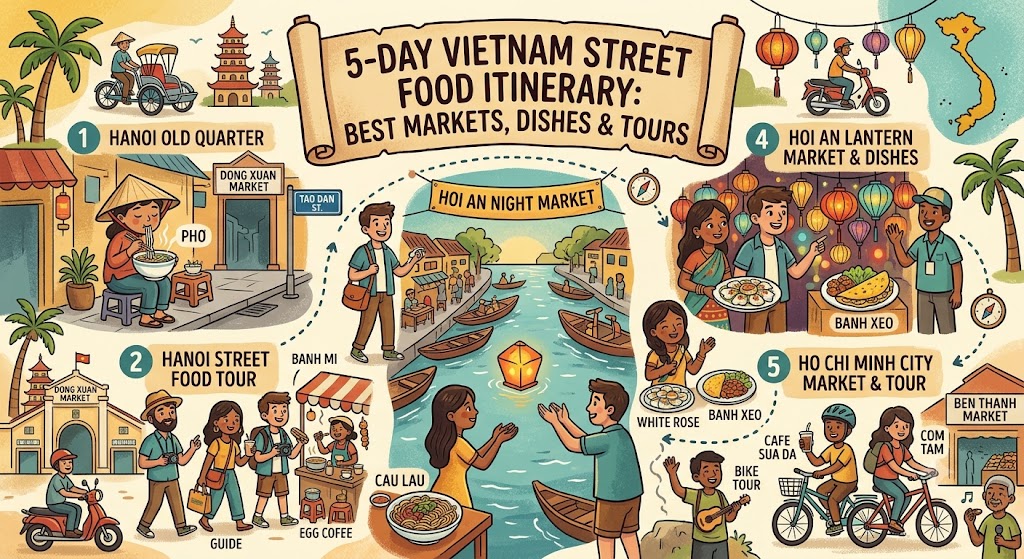
1. Hanoi’s Old Quarter: Pho, Bánh Mì, and the Midnight Market
The Old Quarter’s maze of streets is a labyrinth of culinary adventures. Start at dawn with a bowl of pho from a stall that has been family-run for three generations. The broth is simmered for hours, a slow, patient process that rewards the patient. By midday, the aroma of grilled pork sandwiches, bánh mì, fills the air. Look for the stall with the wooden sign, “Bánh Mì Bà Mười,” where the baguette is light, the pork is marinated in a blend of soy and fish sauce, and the pickled carrots add a satisfying crunch.
As the sun dips, the night market comes alive. Street vendors sell everything from fresh fruit skewers to steaming hot rice cakes (bánh xèo). A local guide will point you toward the stall that offers the best bánh xèo, where the batter is thin, the filling is a mix of shrimp and pork, and the finish is a drizzle of lime and a scattering of fresh herbs. The night market is not just about food; it’s about the rhythm of the city, the chatter of locals, and the thrill of discovering something new with each step.
2. Ho Chi Minh City: Bánh Xèo and Fresh Seafood by the Saigon River
In the bustling district of District 1, the Saigon River offers a different flavor of street food. The riverside stalls are a mosaic of fresh seafood, shrimp, mussels, and fish, grilled to perfection and served with a side of rice paper rolls. The key to a great roll is the balance: the rice paper should be soft, the filling flavorful, and the dipping sauce, a mix of fish sauce, lime, and chili, just right.
After sampling the seafood, wander to the nearby Bánh Xèo stalls. These crispy pancakes, filled with pork, shrimp, and bean sprouts, are a staple in Ho Chi Minh City. The secret lies in the batter, which is made from rice flour, turmeric, and coconut milk. A local chef will demonstrate the technique of spreading the batter thinly and letting it sizzle, creating a delicate, flaky texture. Pair the bánh xèo with a glass of sweet, chilled iced coffee, cà phê sữa đá, for the ultimate street food experience.
3. Da Nang: Seafood & The Famous Hoi An Lanterns
Da Nang’s coastline offers a fresh take on Vietnamese seafood. The fish market is a sensory feast: the scent of brine, the sight of glistening fish, and the sound of vendors shouting their prices. Sample the grilled fish at a stall that uses a secret blend of herbs and spices. The fish is cooked over charcoal, giving it a smoky flavor that is both aromatic and satisfying.
From Da Nang, a short drive takes you to the ancient town of Hoi An, where lanterns light up the streets each evening. The lanterns are not just a visual delight; they set the mood for a culinary journey. The local street stalls in Hoi An serve a variety of dishes, but the must-try is Cao Lau. This noodle dish is made from a unique blend of local water and herbs, giving it a distinctive texture. The noodles are thick, the pork slices tender, and the fresh greens add a crispness that completes the dish.
4. Hue: The Royal Court’s Secret Recipes
Hue, the former imperial capital, is steeped in history, and its street food reflects that legacy. The city’s most famous dish is Bún bò Huế, a spicy beef noodle soup that carries the flavors of the royal court. The broth is made from beef bones, lemongrass, and a generous dose of chili, creating a fiery yet savory base. A local vendor will teach you how to balance the heat with a splash of fish sauce and a squeeze of lime.
Beyond the soup, Hue offers a variety of grilled meats. The local specialty, Bánh khoái, is a flatbread filled with pork and shrimp, wrapped in a thin sheet of rice paper and fried until golden. The combination of textures, crispy, chewy, and tender, makes it a delightful snack. Don’t miss the street stalls that serve fresh, chilled fruit, mango, rambutan, and pineapple, perfect for a sweet finish after a spicy meal.
5. Phu Quoc: Tropical Fruits and Fresh Fish
Phu Quoc, a volcanic island in the Gulf of Thailand, is a paradise for seafood lovers. The island’s fishermen bring in fresh catches daily, and the stalls at the local market showcase the day’s bounty. Sample grilled barracuda or tuna, seasoned with a mix of lime, garlic, and chili. The fish is cooked to preserve its natural sweetness, and the accompaniment of fresh herbs and a squeeze of lime completes the flavor profile.
Phu Quoc is also renowned for its tropical fruits. Mangoes, lychees, and dragonfruit are abundant, and the island’s fruit stalls offer them in creative ways, fruit skewers, smoothies, and even fruit-infused cocktails. The vibrant colors and sweet, juicy flavors make for a refreshing break from the island’s warm climate.
6. Nha Trang: Fresh Seafood, Coffee, and Night Markets
Nha Trang’s beaches are lined with stalls that offer a variety of fresh seafood, from octopus to shrimp. The key to a great seafood meal in Nha Trang is the freshness of the ingredients and the simplicity of the preparation. Grilled or steamed, the fish is seasoned with just a few herbs and a splash of fish sauce, letting the natural flavors shine through.
The city’s night markets are a haven for food lovers. Look for the stalls that serve bánh cuốn, steamed rice rolls filled with pork and mushroom. The rolls are delicate, with a slightly sweet filling that balances the savory broth. Pair the dish with a cup of Vietnamese iced coffee, brewed with a drip filter for a smooth, rich taste.
7. Hanoi’s Hanoi: Egg Coffee and the Tranquil Streets of Hoàn Kiếm
Back in Hanoi, a visit to the iconic Hoàn Kiếm Lake is a must. The tranquil surroundings contrast sharply with the bustling streets. After a leisurely stroll, stop by a local café to try the legendary egg coffee. This unique drink, created in the 1940s by a French colonial-era café owner, combines espresso, condensed milk, and a fluffy egg yolk foam. The result is a sweet, creamy, and surprisingly complex beverage.
From the café, head to a nearby stall that serves chả giò, Vietnamese spring rolls. The rolls are filled with a mixture of pork, shrimp, and vermicelli, wrapped in a thin rice paper and fried to a golden crisp. The accompanying dipping sauce, a blend of fish sauce, lime, and chili, adds a tangy kick that perfectly complements the savory filling. The combination of egg coffee and chả giò offers a balanced taste of Hanoi’s street food culture.
Planning Your Street Food Tour
Timing is everything when it comes to street food. Early mornings and late evenings are the best times to catch the freshest stalls and avoid crowds. If you’re traveling during the rainy season (May to October), pack a waterproof jacket and an umbrella. A small, reusable water bottle is essential, staying hydrated is key in the humid climate.
Safety & Hygiene Tips
Vietnam’s street food is renowned for its freshness, but it’s wise to stay vigilant. Look for vendors that cook food right in front of you; the smoke and steam are signs of a clean, high-temperature cooking process. Choose stalls that have a high turnover, if the food is moving fast, it’s likely fresh. Avoid food that has been sitting out for a long time.
Gear & Packing
When heading out for a day of street food adventures, bring a lightweight, foldable backpack. Pack a small first aid kit, a bottle of hand sanitizer, and a reusable plastic bag for any leftover snacks. If you’re traveling with a camera, a compact tripod will help you capture the vibrant colors and bustling scenes of the markets.
Consider investing in travel accessories that can make your journey smoother. A versatile travel wallet will keep your documents organized, while a compact travel umbrella can be a lifesaver during sudden downpours. For those who love to cook, a portable kitchen appliance can be handy for preparing simple meals when you’re on the go.
Getting Around
Vietnam’s cities are best explored by walking, motorbike, or the local “xe ôm” (motorbike taxis). A motorbike rental is an affordable way to cover larger distances, but be sure to wear a helmet and follow local traffic rules. For a more relaxed experience, a bicycle tour can offer a unique perspective of the city’s streets and neighborhoods.
Travel Tips for the Foodie
- Learn a few basic Vietnamese phrases: “Cảm ơn” (thank you), “Xin vui lòng” (please), and “Bao nhiêu?” (how much?).
- Bring cash in small denominations; many stalls do not accept cards.
- Always carry a small bag of snacks, fruit, nuts, or dried seaweed, to keep you energized between meals.
- Respect local customs: avoid pointing with your fingers; instead, use your hand to indicate directions.
- Keep an eye on your belongings, especially in crowded markets.
FAQs
What is the best time of year to explore Vietnam’s street food?
Spring (February to April) and autumn (September to November) offer mild temperatures and lower humidity, making it comfortable to walk around the markets. Avoid the peak of the rainy season, as heavy showers can make the streets slippery.
Is Vietnamese street food safe for travelers with dietary restrictions?
Most street stalls use fresh ingredients and cook food quickly, reducing the risk of contamination. However, if you have specific dietary needs, look for vendors that can accommodate them or consider eating at a reputable restaurant.
How can I avoid getting food poisoning?
Choose stalls that cook food in front of you, have high turnover, and maintain a clean cooking area. Avoid raw or undercooked seafood, especially if you’re unsure about its freshness.
Do I need to tip street food vendors?
Tipping is not mandatory, but a small tip is appreciated if the service is good or if you receive a special recommendation.
Can I bring my own food to the markets?
Yes, but it’s best to bring something light and portable, such as nuts or dried fruit. Most vendors prefer fresh, local ingredients.
What are the must-try drinks in Vietnam’s street markets?
Egg coffee, iced coffee (cà phê sữa đá), and fresh coconut water are popular choices. For a refreshing twist, try a local fruit smoothie made from mango or pineapple.
Is it safe to eat street food in tourist areas?
Yes, tourist areas typically have vendors that cater to visitors, but it’s still wise to check for cleanliness and freshness. Look for busy stalls with high turnover.
Vietnam’s streets are a living museum of flavors, a place where every bite tells a story. Whether you’re a seasoned foodie or a curious traveler, the country’s street food scene invites you to step into the everyday rhythm of Vietnamese life. Pack your curiosity, your appetite, and your sense of adventure, and let each of these seven journeys become a chapter in your culinary memoir.
One thought on “Vietnam Street Food Tour: 7 Immersive Journeys”
Comments are closed.