
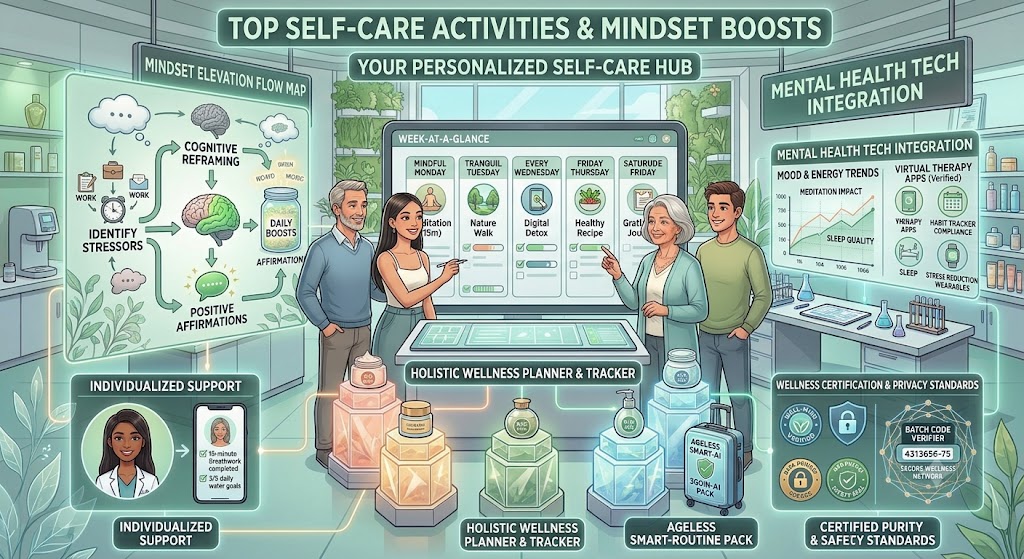
Top Self-Care Activities & Mindset Boosts
In a world that never stops, our own well-being often takes a back seat. Consequently, the most powerful antidote is a deliberate, consistent practice of self-care and mindset work. Therefore, this guide will walk you through the most effective activities and mental shifts that can transform your daily life.
1. Mindful Morning Rituals
Starting your day with intention sets the tone for everything that follows. For example, a simple breathing exercise can calm the nervous system before the first email arrives. Additionally, integrating gratitude journaling helps you recognize abundance rather than scarcity.
Begin with three deep breaths: inhale for four counts, hold for four, exhale for four. This rhythmic pattern lowers cortisol, the stress hormone, and enhances focus. Moreover, it primes your brain for clarity throughout the day.
Next, write down three things you’re grateful for. This practice rewires the brain to notice positivity, thereby increasing resilience. In contrast, a mind that dwells on “what’s missing” tends to spiral into anxiety.
Finally, add a short stretch or yoga flow. Even five minutes of gentle movement boosts circulation and releases endorphins. Consequently, you’ll feel more energized for the tasks ahead.
Key Takeaway: A 10-minute morning routine-breathing, gratitude, and movement-creates a foundation of calm, clarity, and gratitude that carries you through the day.
2. Digital Detox & Screen Management
Modern life is saturated with screens, and the constant influx of information can overwhelm the mind. Therefore, carving out intentional tech-free periods is essential for mental restoration.
Start by setting a “no-phone” rule during meals. This encourages mindful eating and improves digestion. Additionally, allocate a 30-minute window each evening where you turn off notifications.
During this window, replace scrolling with a calming activity such as reading a paperback or listening to a podcast that uplifts you. As a result, you’ll reduce the “digital fatigue” that often leads to headaches and sleep disturbances.
Use apps that track screen time and set daily limits. For example, the built-in “Screen Time” feature on iOS or “Digital Wellbeing” on Android can provide real-time feedback. Consequently, you’ll become more aware of your usage patterns and make informed adjustments.
Key Takeaway: By instituting tech-free windows and mindful consumption, you reclaim focus, improve sleep, and nurture deeper interpersonal connections.
3. Physical Self-Care: Exercise & Nutrition
Physical health and mental well-being are inextricably linked. Therefore, a balanced routine that includes movement and mindful eating can elevate mood, energy, and clarity.
Home workouts require minimal equipment. For instance, a set of resistance bands, a sturdy chair, and a yoga mat can support a full-body routine. In addition, you can find wellness and fitness gear that fits your budget and space constraints.
Incorporate cardio, strength, and flexibility. For example, a 20-minute HIIT session followed by a 10-minute stretch improves cardiovascular health and releases endorphins. Meanwhile, strength training builds muscle and boosts metabolism.
Nutrition also plays a pivotal role. Choose whole foods-fruits, vegetables, lean proteins, and healthy fats. Because processed foods can spike blood sugar and induce mood swings, they should be limited.
When craving a snack, opt for healthy food snacks like nuts, seeds, or dried fruit. These options provide sustained energy and satisfy sweet cravings without the crash.
Key Takeaway: A balanced mix of movement and whole-food nutrition fuels both body and mind, enhancing mood, focus, and overall vitality.
4. Creative Expression & Hobbies
Engaging in creative pursuits stimulates neuroplasticity and reduces stress. Therefore, carving out time for a hobby can be as restorative as a meditation session.
Choose an activity that excites you-painting, writing, gardening, or playing an instrument. For example, sketching for ten minutes each day can sharpen observational skills and foster a sense of accomplishment.
Alternatively, if you enjoy cooking, experiment with new recipes. This not only satisfies your palate but also encourages mindful eating. In contrast, routine meals can become monotonous and less nourishing.
Additionally, consider starting a “creative journal” where you jot down ideas, doodles, or reflections. This practice serves as both a creative outlet and a self-reflection tool, allowing you to track progress and insights over time.
Key Takeaway: Regular creative engagement nurtures mental flexibility, reduces anxiety, and provides a satisfying counterbalance to daily responsibilities.
5. Sleep Hygiene & Relaxation
Sleep is the cornerstone of recovery, memory consolidation, and emotional regulation. Therefore, establishing a consistent bedtime routine is paramount.
Begin by setting a fixed sleep schedule-aim to go to bed and wake up at the same time every day. This consistency trains your circadian rhythm and improves sleep quality.
Before bed, dim the lights and switch to warm, amber lighting. This reduces melatonin suppression caused by blue light from screens. Furthermore, you can use a skincare routine that includes soothing serums to signal your body that it’s time to wind down.
Incorporate a short relaxation technique such as progressive muscle relaxation or a guided meditation. For instance, tense each muscle group for five seconds, then release. This practice lowers heart rate and promotes deep sleep.
Key Takeaway: A structured bedtime routine-lighting, skincare, and relaxation-ensures restorative sleep, which is essential for daytime performance and mood regulation.
6. Social Connection & Boundaries
Human beings thrive on connection, yet excessive or toxic interactions can erode well-being. Therefore, cultivating healthy relationships and setting clear boundaries is essential.
Schedule regular check-ins with supportive friends or family. A quick phone call or coffee meetup can reinforce emotional bonds and reduce loneliness. Additionally, join a community or club that shares your interests to expand your social network.
Meanwhile, practice saying “no” when commitments feel overwhelming. By protecting your time, you preserve energy for self-care activities. Consequently, you avoid burnout and maintain a healthier work-life balance.
Use the “I” language when communicating boundaries. For example, say, “I need some quiet time after work” rather than “You’re too demanding.” This reduces defensiveness and promotes mutual respect.
Key Takeaway: Balanced social interactions and clear boundaries nurture emotional health, reduce stress, and create space for personal growth.
7. Mindset Boosts: Positive Habits & Growth Mindset
A resilient mindset is built on daily habits that reinforce self-belief and curiosity. Therefore, intentional practices can shift you from a fixed to a growth orientation.
Start with a “growth affirmation” each morning. For example, “I learn from challenges and grow stronger.” This primes the brain to view setbacks as learning opportunities.
Track progress in a habit journal. Use a simple chart to mark each day you complete a self-care activity. The visual representation of consistency reinforces motivation and self-efficacy.
When faced with failure, pause to reframe the narrative. Instead of thinking, “I failed,” consider, “I discovered what doesn’t work, and I’ll adjust.” This subtle shift reduces self-criticism and fuels perseverance.
Key Takeaway: By embedding growth affirmations, habit tracking, and reframing failures, you cultivate a mindset that embraces learning, resilience, and continuous improvement.
FAQ
- Q: How long should a self-care routine last? A: Even 10-15 minutes per day can produce significant benefits. Consistency outweighs duration.
- Q: Can I combine multiple self-care activities in one session? A: Yes, but ensure each component is purposeful. For instance, a 30-minute workout followed by 10 minutes of journaling can be highly effective.
- Q: What if I don’t have time for exercise? A: Integrate movement into daily tasks-take the stairs, stretch during TV breaks, or walk while on calls.
- Q: How do I stay motivated? A: Set specific, measurable goals; celebrate small wins; and share progress with a supportive community.
- Q: Are there affordable ways to practice self-care? A: Absolutely. Use household items, free apps, or community resources. For example, a simple towel can become a yoga mat.
One thought on “Top Self-Care Activities & Mindset Boosts”
Comments are closed.