Mastering Extreme Travel Logistics: Gear and Packing Frameworks from Pro Sports to Family Travel
At 3:00 AM on a tarmac in Zurich, an equipment manager for an NHL team during an overseas exhibition series watches fifty-four customized duffels slide out of the belly of a charter aircraft. Six hours later, in the arrivals hall of Tokyo’s Haneda Airport, a mother of three under age seven stares at a conveyor belt waiting for two car seats, an all-terrain double stroller, a travel crib, and four rolling suitcases. At first glance, these scenarios seem worlds apart. One operates on a multi-million-dollar payroll; the other runs on caffeine, adrenaline, and wet wipes.
Yet, at their core, both scenarios are governed by the exact same discipline: high-consequence travel logistics. When your movement profile involves high volumes of specialized gear, tight transit windows, variable environmental conditions, and zero tolerance for failure, casual packing methods collapse. Rolling your clothes or buying a generic packing cube set will not save you when baggage handlers crush an unreinforced zipper, customs impounds critical gear, or an ear infection strikes at 35,000 feet over the Atlantic.
To move through the world smoothly when stakes, headcounts, or cargo volumes are high, you must stop thinking like a tourist and start operating like a logistics director. By borrowing hard-won protocols from professional athletic franchises, tactical operators, and expedition teams, we can build unified packing frameworks that eliminate friction whether you are orchestrating an overseas tournament or navigating an international family vacation.
The Anatomy of Logistical Failure
Most travel disasters do not stem from bad luck; they stem from systemic vulnerabilities designed into your loadout before leaving the front door. In logistics analysis, points of failure fall into three distinct categories:
- Mechanical Failures: Broken zippers, sheared caster wheels, torn webbing, or split shells caused by poor textile density, substandard hardware, or overpacking.
- Access Failures: Packing an essential item (a passport, an EpiPen, an infant change of clothes, or a critical charging cable) into the bottom of an inaccessible cargo bay or checked luggage compartment.
- Cognitive Overload Failures: Carrying too many loose items without clear sub-containment, forcing the traveler to open, search, and repack bags under stressful transit conditions, drastically increasing the likelihood of leaving items behind.
Professional kit managers survive by eliminating single points of failure (SPOFs) and building automated packing architectures. Below are the operational methodologies that transform chaotic hauls into predictable, frictionless transit.
Framework 1: The Master Manifest and Visual Indexing
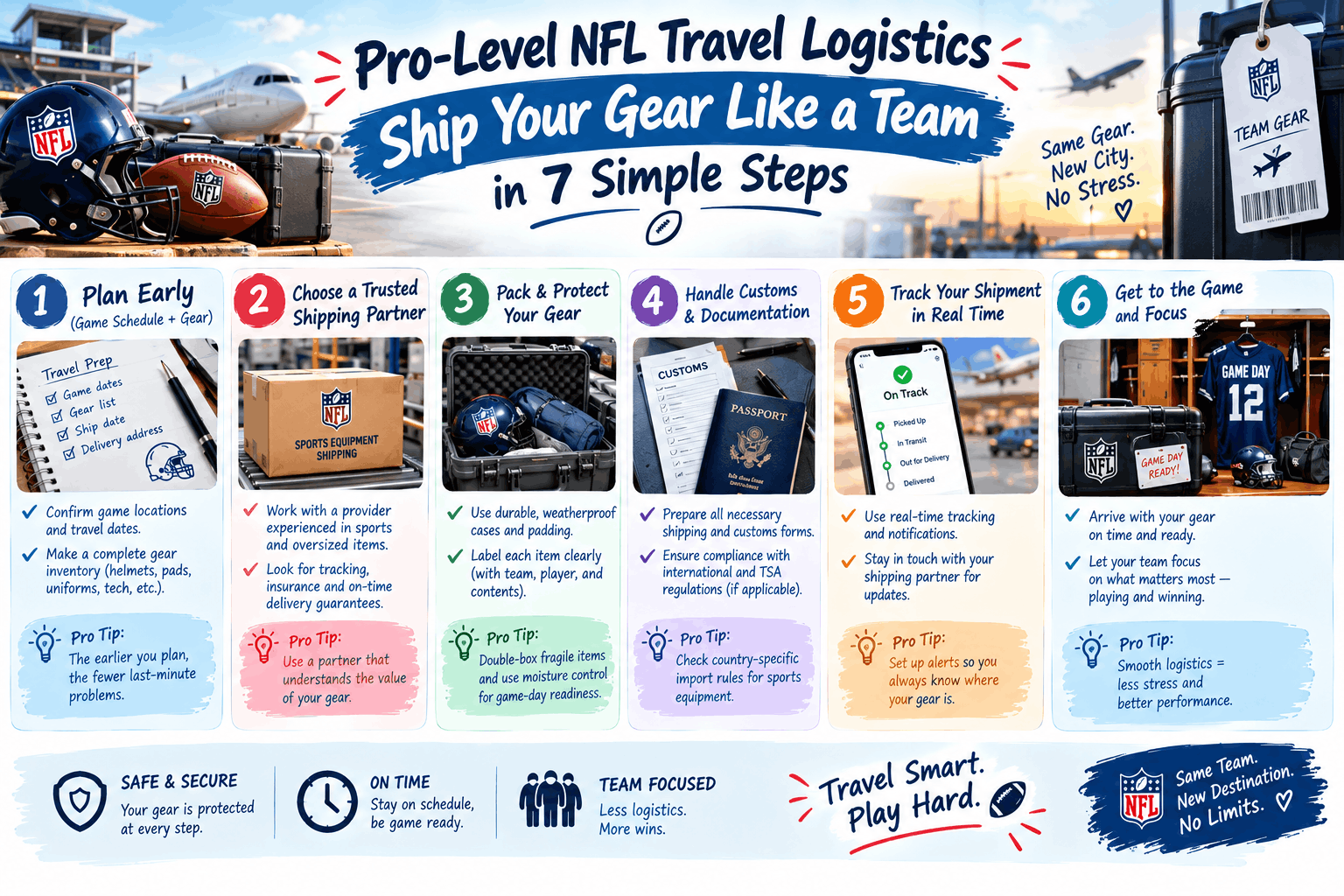
A professional athletic franchise moves between 1,500 and 4,000 pounds of equipment across twenty to forty cities in a single season. If a skate sharpener, game jersey, or medical diagnostic kit goes missing, the team faces regulatory fines or athletic impairment. Their baseline solution is not memory; it is the Master Cargo Manifest paired with Visual Indexing.
Deploying the Digital Manifest
Every piece of hardware must be cataloged in a shared digital ledger (such as Notion, Airtable, or a simple cloud-synced spreadsheet) broken into two layers:
- Macro-Manifest: The outer container registry (e.g., Bag 1: Primary Electronics & Drone; Bag 2: Cold Weather Base Layers; Bag 3: Toddler Nutrition & Consumables).
- Micro-Manifest: The internal contents of each container, logged by compartment or internal pouch.
For family travel, this removes the cognitive burden of asking, “Which bag has the backup thermometer?” For field crews and athletes, it provides immediate proof of contents for insurance and customs declarations (such as ATA Carnets).
Visual Indexing: Color-Coding and Contrast
Never pack into an abyss. Black packing cubes dropped into a black-lined duffel bag under low transit lighting create immediate friction. Elite teams and search-and-rescue units utilize high-visibility (Hi-Vis) contrast lining—blaze orange, neon yellow, or electric blue—inside their luggage so silhouettes stand out instantly.
Translate this across your system using deliberate color-coding:
- Red: Immediate Medical, Triage, and Health intervention.
- Yellow/Orange: High-priority transit electronics, cables, power banks, and adapters.
- Blue: Base layers, thermal regulation, and extra outerwear.
- Green/Clear: Consumables, hydration, and nutritional stores.
Clear PVC or transparent mesh panels are essential. If you cannot identify the contents of a pouch within three seconds without unzipping it, the packaging system has failed.
Framework 2: The Three-Tier Transit Deployment System
One of the most catastrophic mistakes in travel is packing by category (all clothes in one bag, all electronics in another) rather than by operational tempo and access requirements. If an airline misplaces one category-packed bag, you lose 100% of your capability in that domain.
Professional logistical frameworks instead employ a Three-Tier Architecture based on proximity and necessity:
Tier 1: On-Body / Under-Seat (The Survival & Friction Kit)
This kit never leaves your physical control. It stays under the seat in front of you on a plane, between your feet on a train, or on the passenger seat of an overland vehicle. Its contents are strictly calibrated to solve immediate transit friction over a rolling 12-hour window:
- Critical documents (passports, visas, physical paper copies of confirmations).
- Primary prescription medications, inhalers, and pediatric triage basics.
- Single-device charging capability (10,000mAh PD power bank, universal multi-cable).
- Complete change of base clothing for the most vulnerable party members (infants, key presenters, or athletes).
- High-calorie, non-perishable metabolic fuel and hydration electrolytes.
Tier 2: Overhead / Gate-Side (The 48-Hour Contingency Kit)
This is your carry-on luggage (typically 35L to 45L). If every piece of checked cargo disappears into the logistical ether, Tier 2 allows you to execute operations for 48 hours without purchasing an item. It contains complete secondary changes of clothing, essential electronics, primary toiletries, and mission-critical specialized gear (e.g., camera bodies, competition footwear, or proprietary documentation).
Tier 3: Base Cargo / Hull Transit (The Operational Bulk)
This is checked baggage: high-volume duffels, hard-sided composite cases, ski bags, and utility haulers. This gear is built for base operations at your destination. It can be delayed by 24 to 36 hours without crippling the journey. To defend against catastrophic loss, Tier 3 bags should be packed cross-sectionally: if traveling with multiple team members or children, distribute outfits evenly across all checked bags rather than assigning one suitcase per person. If Suitcase B vanishes, Person B still has 50% of their wardrobe in Suitcase A.
Hardware Engineering: Luggage, Textiles, and Fasteners
When selecting gear for extreme transit profiles, marketing terms like “smart luggage” or “luxury polycarbonate” mean very little. Equipment fails at its weakest mechanical links: zippers, stitching points, chassis plates, and wheel bearings. Understanding textile engineering and hardware mechanics is necessary to protect your investments.
Shell Materials: Ballistic Nylon vs. Cordura vs. Hard Shells
For heavy transit, high-denier woven synthetics almost always outperform rigid plastic shells. Here is why: a hard-sided suitcase absorbs impact by flexing, but under extreme cold or dynamic airline baggage system crushing, thin plastics shatter. High-tenacity woven fabrics deform, absorb kinetic energy, and bounce back.
- Ballistic Nylon (840D to 1680D): Originally developed for military flak jackets, this filament-yarn nylon features an exceptional strength-to-weight ratio and supreme tear resistance. Its smooth weave prevents snagging on conveyor belts.
- Cordura (500D to 1000D): Built from textured nylon fibers, Cordura offers peerless abrasion resistance. It handles sliding across gravel, tarmac, and rough surfaces better than standard nylon, though it collects dirt slightly faster due to its textured surface.
- Curv / Polypropylene Woven Composites: If a hard shell is mandatory (e.g., carrying precision sensors, lighting equipment, or delicate instruments), look for self-reinforced polypropylene composites over standard ABS or polycarbonate. Woven composite sheets resist catastrophic cracking even at sub-zero temperatures.
- Roto-Molded Polyethylene: The standard for unconditional transit protection (e.g., Pelican, SKB, Nanuk). They are heavy, often imposing a significant weight penalty on your baggage allowance, but provide impervious environmental sealing and impact absorption.
Zippers: The True Point of Failure
Over 80% of soft-luggage catastrophic failures occur at the zipper tracks. Ensure your gear uses heavy-duty, self-repairing nylon coil zippers rather than stamped plastic teeth. Look specifically for YKK #10 Coil Zippers on main compartments and nothing smaller than #8 on external access panels. Reverse-coil zippers provide decent dust and water resistance, but standard coil configurations typically endure heavier lateral tension when a bag is packed to its volumetric limits.
Comparison of Transit Luggage Form Factors
| Form Factor | Best Use Case | Tare Weight | Durability Profile | Handling Modality |
|---|---|---|---|---|
| Heavy-Duty Rolling Duffel (e.g., 90L-120L Ballistic Nylon) | Team gear, mixed family loads, sports equipment, expeditions | Low to Medium (8–11 lbs) | Exceptional puncture and impact resistance; flexible packing geometry | Two heavy-duty oversized wheels; best for mixed surfaces, gravel, curbs |
| Roto-Molded Hard Case (e.g., Pelican Air series) | Optics, broadcast gear, firearms, high-value sensitive electronics | High (14–22 lbs) | Total impact, dust, and water immersion immunity; rigid structural walls | Inline skate wheels; rigid tow handle; awkward in compact rental vehicles |
| Technical Travel Pack (40L-45L Carry-On) | Tier 2 operations, solo rapid transit, non-traditional urban environments | Minimal (3–5 lbs) | High abrasion resistance; internal load transfer frames reduce body fatigue | Ergonomic harness/hip-belt system; hands-free mobility across mass transit |
| Structured Spinner Suitcase (Polycarbonate) | Smooth terminal transfers, corporate/business travel, flat-surface transit | Medium (9–13 lbs) | Vulnerable to high-impact drops; wheels can snap if loaded beyond capacity | Four 360-degree casters; excellent on linoleum/carpet, terrible on cobbles |
The Cross-Application: Translating Pro Logistics to Family Travel
Traveling across oceans with young children is not a simple vacation; it is an expedition involving high biological variance and dynamic human needs. Toddlers and young children have volatile core body temperatures, rapid metabolic shifts, unstable circadian rhythms, and zero tolerance for delayed gratification. When you treat family travel as a sports logistics problem, you swap chaotic stress for disciplined system design.
Burn-Rate Planning: The Consumable Formula
In athletics, trainers plan nutrition, electrolyte packs, and tape based on an hourly burn rate. In high-stakes family travel, you must run the identical math for diapers, formula, snacks, and sanitization gear. Never rely on the assumption that “we can buy it when we land.” A flight diversion to an unexpected regional hub or a four-hour customs delay will break that strategy.
The Transit Burn-Rate Formula:
Total Required Units = (Expected Transit Hours + 8 Buffer Hours) × Average Consumption Rate Per Hour
If an infant consumes one bottle every three hours, and total door-to-door transit is estimated at 15 hours: (15 + 8) ÷ 3 = 7.6 bottles of pre-measured formula or shelf-stable milk. You do not pack six; you pack eight complete feeding setups in your Tier 1 and Tier 2 luggage.
Sub-Kitting: The “Blowout & Fever” Grab Bag
Never dig through a 40-liter duffel to locate an infant outfit or a syringe of ibuprofen in an aircraft lavatory or cramped transit bus. Build sealed, self-contained sub-kits inside puncture-resistant zip-pouches:
- The Lavatory Rapid-Swap Kit: One disposable diaper, three sanitizing wipes in a sealed sachet, one single-use changing pad, and one complete outfit (onesie, socks) packed inside a quart-sized vacuum-seal bag. When an incident occurs, you bring only this 4-ounce packet into the lavatory. The soiled clothes go back inside the vacuum bag, sealing away moisture and odor entirely.
- The Pediatric Triage Pod: A clear, padded organizer containing weight-indexed pain and fever reducers (acetaminophen/ibuprofen), calibrated dosing syringes, oral rehydration salt packets, a fast-read rectal/ear thermometer, hydrocortisone, chewable antihistamines, and cohesive self-adhering bandage tape. Disclaimer: Always consult your pediatrician for dosages calibrated to your child’s current weight, rather than relying on age-bracket estimates printed on packaging.
Handling Hardware: Tactical Strollers vs. Ergonomic Babywearing
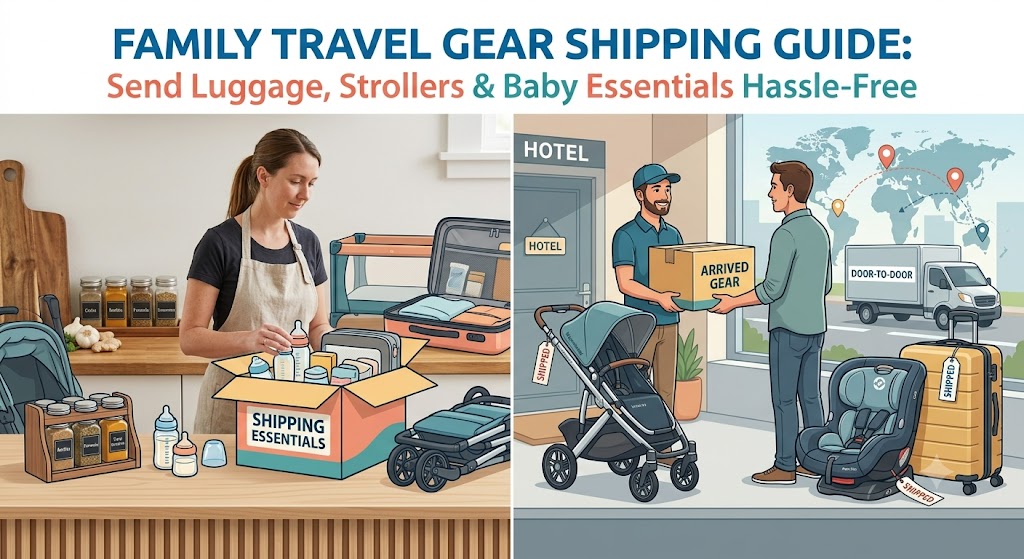
Gate-checking a massive, full-size modular stroller is a massive tactical liability. They frequently return broken from the cargo hold, get delivered late to the jet bridge, or cannot fit down standard European or Asian public transit stairwells. The professional logistics approach focuses on compact folding footprints and hands-free modularity.
Invest in an ultra-compact travel stroller that collapses within IATA carry-on dimensions (such as the Babyzen YOYO, Joolz Aer, or Bugaboo Butterfly). It rolls directly down the airplane aisle and slides into the overhead bin alongside your Tier 2 gear. For secondary mobility, use a structured, high-support ergonomic baby carrier. Wearing your child leaves your hands free to manage Tier 3 luggage through terminals, train stations, and uneven streets without breaking stride.
The Load-In / Load-Out Architecture (LIFO)
In warehouse management and freight logistics, the rule of LIFO (Last In, First Out) governs cargo sequencing. You pack items in the precise reverse order of their planned operational extraction. When loading an overland vehicle, trunk, or train compartment, novice travelers shove whatever is heaviest into the bottom, regardless of when it is needed.
Apply the disciplined LIFO hierarchy to your physical cargo:
- First In (Deepest layer / furthest back): Destination-only gear (sleeping systems, formal event wear, technical athletic gear, backup footwear).
- Middle Layer: Hygiene setups, secondary layers, spare cables, and intermediate consumables.
- Last In (Direct access / nearest to hatch or opening): Wet-weather outerwear, medical kits, dynamic nutritional pods, and child-containment equipment (stroller, sling).
By enforcing this rule, you never have to unpack an entire vehicle or tear open an expansive duffel bag on a rainy roadside or crowded airport curb just to extract a single rain jacket or change of clothes.
The Chaos Protocol: Designing for Friction and Failure
No matter how refined your logistics, systems can degrade. Aircraft divert, baggage handlers drop items onto wet tarmacs, and customs officials question odd electronic arrays. The elite traveler builds a Chaos Protocol to absorb these disruptions without losing operational momentum.
Hardware-Level Redundancy
Always carry a secondary interface to access mission-critical data and funds. Never store your physical backup payment cards, international passport photocopies, and primary credentials in the same pocket or bag as your active wallet. Maintain an encrypted digital vault of all documents (cloud-hosted and cached locally on your device for offline access).
The Power Grid Architecture
Relying on public USB charging ports in airports and transit hubs is slow, mechanically unreliable, and presents mild cybersecurity risks (“juice jacking”). Instead, travel with your own closed-loop charging ecosystem:
- One 65W to 100W GaN (Gallium Nitride) wall charger equipped with interchangeable international plug adapters. GaN technology delivers higher wattage in a chassis half the size of traditional silicon blocks.
- One high-density power bank (20,000mAh to 26,800mAh, keeping it strictly under the FAA/TSA 100Wh legal threshold for carry-on luggage without prior airline approval).
- Reinforced high-wattage silicone or braided USB-C cables rated for 100W Power Delivery (PD). A single high-spec cable can charge your laptop, camera battery, mobile phone, and tablet sequentially.
Customs and Border Control Streamlining
If you travel with high-value pro sports gear, media hardware, or large quantities of packaged goods, prepare your physical bags for inspection. Pack clear dry-bags or zippered mesh cubes so border agents can inspect equipment visually without tearing apart your carefully balanced organization. Keep a printout of your Master Manifest directly under the top zipper of every Tier 3 checked case, detailing the make, model, serial number, and declared value of all items inside.
Actionable Packing Checklists by Operational Phase
Phase 1: The Pre-Deployment Audit (72 Hours Out)
- [ ] Review electronic manifest against all itinerary milestones.
- [ ] Deploy battery recharge cycle: Bring all primary power banks, cameras, and critical transceivers to 100% capacity.
- [ ] Inspect physical luggage hardware: Check wheel bearings for play, verify YKK zipper tracks run cleanly without catching, and inspect structural handle rivets.
- [ ] Check for liquid integrity: Place all gels, lotions, and liquid consumables into triple-sealed, clear TPU or silicone leakproof bottles. Factor in high-altitude cabin depressurization by leaving 15% air headroom inside squeeze bottles to absorb expansion without seal rupture.
Phase 2: Terminal Navigation & Transit
- [ ] Lock all Tier 3 bags with high-grade TSA-compliant steel-cable combination locks or numbered tamper-evident pull-seals. Cable locks handle rough transit without catching on handling belts better than rigid brass shackles.
- [ ] Slip internal hardware trackers (Apple AirTags, Tile, or Samsung SmartTags) into concealed, structural parts of every bag—not in external pockets where baggage handlers or opportunistic thieves can easily toss them. Ensure they sit clear of metallic barriers that degrade Bluetooth signals.
- [ ] Keep Tier 1 packs directly attached to your person or docked securely over the tow handle of your Tier 2 bag using a pass-through luggage strap.
Phase 3: Base Camp Arrival & Field Check
- [ ] Audit checked bags immediately upon retrieval: Check physical seams and zipper tracks for transit compression damage. Report compromised luggage to the airline baggage counter before leaving the arrivals terminal.
- [ ] Execute the “Re-Arming Cycle”: Immediately replenish Tier 1 consumable supplies (wet wipes, snacks, water stores) from Tier 3 bulk stock so you are prepared for unexpected excursions the following day.
- [ ] Inspect all delicate equipment, sensors, or pediatric health tools to verify calibration and structural integrity before field use.
Frequently Asked Questions
How do I handle liquid limits for pediatric medication on international flights?
Under international aviation safety rules (including TSA and EASA frameworks), medically necessary liquids, formulas, breast milk, and liquid medications are exempt from standard 3.4-ounce (100ml) container volume limits. You are not required to jam these into a quart-sized zip-top bag. However, you must declare them to screening officers before screening starts. Keep all medications in their original prescription bottles with matching patient names, accompanied by an official letter from your physician outlining necessity. Pack these items together inside a dedicated, clear, insulated pouch in your Tier 1 carry-on.
Are compression packing cubes actually worth the weight penalty?
Yes, but only if they utilize a dual-zipper compression perimeter system built with high-tenacity ripstop nylon. Cheap compression cubes use low-grade plastic zippers that fail under lateral pressure, adding unnecessary tare weight without real space savings. High-performance compression cubes reduce soft-goods volume by up to 35%, preventing internal loads from shifting inside your luggage during rough transit. However, remember that compression saves volume, not weight. Monitor your total cargo weight closely to avoid airline overweight baggage penalties.
What is the most common mechanical failure on checked luggage, and how do I prevent it?
The single most common failure point is the wheel assembly—specifically, external 360-degree “spinner” caster wheels that project outward from the suitcase chassis. These are easily snapped off by automated baggage sorting conveyors or heavy impacts against cargo holds. For extreme or heavy logistics, opt for luggage with recessed, oversized inline-skate wheels featuring sealed ball bearings. Because they are integrated into the bag’s structural frame, they absorb direct impacts without shearing off.
How can I track high-value gear or bulk baggage across multi-leg international flights?
Deploy Bluetooth trackers (such as Apple AirTags or SmartTags) into every piece of cargo, but pair them with physical barcode discipline. Photograph your luggage tags showing the 10-digit airline bag-tag barcode on your phone immediately after drop-off. If your baggage is misrouted, providing the airline’s ground handlers with the exact bag tag number alongside your tracker’s live coordinates will resolve claims much faster than standard lost baggage tickets.
How do professional teams manage laundry cycles across extended travel schedules?
Professional teams utilize antimicrobial textile science and modular wash protocols. Pack technical base layers made of ultrafine Merino wool (150–200 gsm) or advanced synthetic fibers treated with silver-ion or polygiene finishes, which naturally resist odor-causing bacteria for multiple wears. For field-washing, carry a compact, dry-bag style wash pouch alongside concentrated, biodegradable detergent sheets. This eliminates heavy liquid laundry detergents and allows you to wash and air-dry Tier 1 base layers within an 8-hour overnight window.