Why Solo Cooking Needs Its Own Toolset
Cooking for one isn’t just a scaled‑down version of feeding a family; it’s a distinct lifestyle that demands a different set of tools. When you’re the only eater, you quickly learn that oversized pots sit half‑full, giant ladles become unwieldy, and cleaning a mountain of dishes after a single serving feels wasteful. A focused kit eliminates those pain points.
Cost‑benefit of a streamlined kit vs. full‑size sets – Buying a full 10‑piece cookware set can cost $200‑$300, yet you’ll only use a fraction of it daily. By selecting a handful of versatile pieces, you can stay under $100 while still covering every cooking technique you need.
Impact on space, cleanup, and waste – Small apartments or studio‑style lofts often have limited counter and cabinet room. Compact tools free up space for groceries, and fewer items mean less to scrub after each meal.
Core Cookware Essentials for One
1‑Quart Saucepan
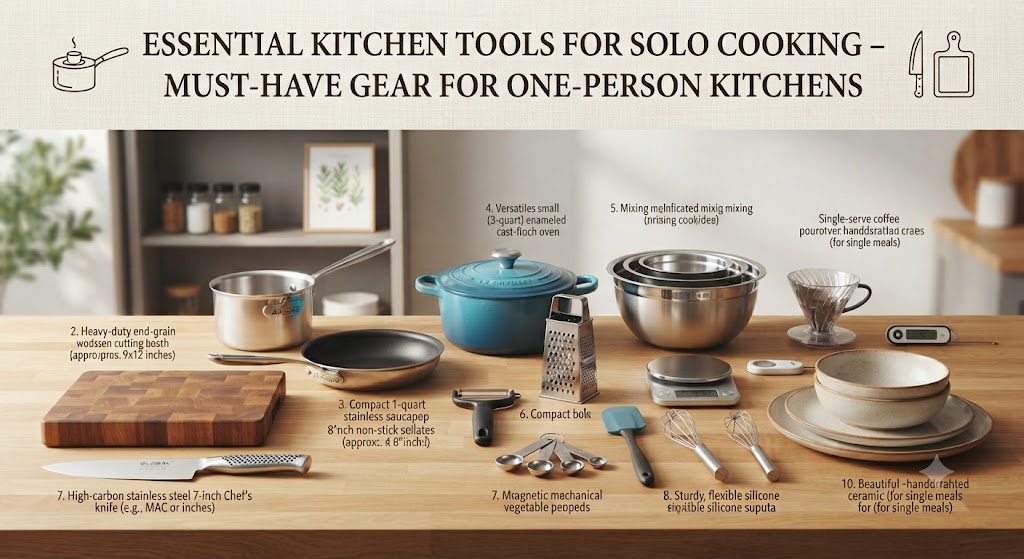
A 1‑quart (≈1 liter) saucepan is the workhorse for sauces, grains, and reheating leftovers. Its shallow depth speeds up boiling, and the modest size means you never waste heat on empty space. Look for a heavy‑bottomed version with a stay‑cool handle for safety.
8‑Inch Skillet
Whether you’re flipping an egg, stir‑frying vegetables, or searing a single chicken breast, an 8‑inch skillet provides the perfect surface area. Cast iron offers unbeatable heat retention, but a non‑stick aluminum model can be easier to clean for busy professionals.
Multi‑Purpose Dutch Oven or Casserole
For the occasional batch – think a pot‑luck contribution or a weekend stew – a compact Dutch oven (2‑qt) fits neatly in a small oven and doubles as a serving dish. Its tight‑fitting lid locks in moisture, making it ideal for one‑pot meals without extra cookware.
Multi‑Function Utensils & Gadgets
All‑in‑One Spatula‑Tongs Combo
Instead of a separate spatula, slotted spoon, and tongs, a hybrid tool saves drawer space and reduces the number of items you need to wash. Look for silicone heads that can handle both high‑heat sautéing and delicate fish flipping.
Adjustable Measuring Cup Set
Traditional measuring cups take up a whole rack. An adjustable cup that expands from ¼ cup to 2 cups collapses flat when not in use, keeping your countertop clear while still delivering precise measurements.
Collapsible Colander
Made from silicone, a collapsible colander folds down to the size of a small plate. It’s perfect for rinsing quinoa, draining pasta, or washing berries without occupying permanent storage space.
Compact Appliances That Pay Off
Mini Blender or Personal Smoothie Maker
A 300‑ml personal blender fits under most cabinets and can pulverize fruit, nuts, and even small frozen chunks for a quick breakfast or post‑workout shake. Many models feature a detachable cup that doubles as a travel bottle.
Counter‑Top Air Fryer (2‑qt)
Air fryers have become the go‑to for fast, low‑oil meals. A 2‑quart unit cooks a single serving of fries, chicken tenders, or roasted veggies in under 15 minutes, and its compact footprint leaves room for a coffee maker.
Single‑Serve Immersion Circulator for Sous‑Vide
If you crave restaurant‑level precision, a compact immersion circulator lets you cook a steak, salmon, or egg‑white omelet to exact temperature without a massive water bath. Most units clip onto a small pot you already own.
Smart Storage & Organization
Stackable Meal‑Prep Containers with Silicone Lids
These containers nest inside each other, reducing cabinet clutter. The silicone seals keep food fresh for days, and the clear walls let you spot leftovers at a glance.
Magnetic Knife Strip
Free up drawer space by mounting a magnetic strip on the wall. It keeps knives within easy reach, reduces the risk of accidental cuts, and adds a sleek, modern look to a tiny kitchen.
Wall‑Mounted Utensil Rack
Hooks or a small rail installed above the stove holds spatulas, ladles, and your all‑in‑one tongs combo. This keeps essential tools at arm’s length and prevents them from cluttering the countertop.
Budget Picks & Where to Find Deals
Finding quality tools without breaking the bank is easier than you think. Here are three proven sources:
- CNET‑tested budget-friendly skillet under $30 – A 8‑inch non‑stick aluminum skillet that scores high on heat distribution and durability. Ideal for students and first‑time renters.
- Serious Eats’ under‑$50 gadget roundup – Includes a collapsible colander, adjustable measuring cup, and a mini blender that all received 4‑star ratings for performance and value.
- Prime Day and seasonal sales tips – Set price alerts on Prime Day kitchen deals 2026 and watch for flash sales on space‑saving kitchen tools. Bundles often include a skillet, colander, and a set of silicone lids for a fraction of the retail price.
Maintenance Tips to Extend Longevity
Seasoning Cast Iron for Solo Use
Even a small 8‑inch cast‑iron skillet benefits from a light seasoning coat. After each wash, dry it thoroughly, then rub a thin layer of vegetable oil and heat on the stovetop for five minutes. This prevents rust and builds a natural non‑stick surface.
Cleaning Compact Appliances Efficiently
Rinse a mini blender immediately after use to avoid fruit pulp buildup. Most jars are dishwasher‑safe; for the motor base, wipe with a damp cloth and avoid submerging. Air fryers accumulate crumbs – a quick brush‑out after each session keeps the fan from clogging.
Storing Rarely Used Tools to Avoid Clutter
If you only use a Dutch oven a few times a month, consider storing it in a high cabinet or a breathable fabric bag. This frees up lower cabinets for daily items and protects the enamel from accidental knocks.
Buying Guide Checklist
- Assess kitchen space and cooking style – Do you need a stovetop‑only setup or occasional oven use?
- Prioritize multi‑use over single‑purpose items – A skillet that can also function as a grill pan saves a whole extra piece.
- Set a budget and compare reviews – Look for products with at least 4‑star ratings on major retail sites and check independent test labs like CNET or Consumer Reports.
Conclusion: Build a Lean, Effective Solo Kitchen
By focusing on versatile, space‑saving pieces, you can assemble a kitchen that feels purposeful rather than crowded. Start with the 1‑quart saucepan, 8‑inch skillet, and a compact air fryer; then layer in smart storage solutions and a few multi‑function gadgets. Over time, upgrade one item at a time – perhaps swapping the non‑stick skillet for a seasoned cast‑iron version or adding an immersion circulator for sous‑vide experiments.
Ready to share your own solo‑cooking setup? Drop a comment below or tag us on social media with #SoloKitchenTFS. Your tip could help another young professional turn a cramped countertop into a culinary playground.