Why Oaxaca Is Mexico’s Gastronomic Capital
Oaxaca’s cuisine earned UNESCO’s Intangible Cultural Heritage status in 2010, cementing its reputation as Mexico’s ultimate culinary heartland. The region’s centuries-old gastronomic traditions seamlessly blend indigenous Zapotec and Mixtec ingredients—such as heirloom corn, native chiles, and complex mole formulations—with Spanish colonial influences, creating a tapestry of flavors that is simultaneously deep, complex, and deeply comforting. Iconic elements like chapulines (crispy toasted grasshoppers), small-batch artisanal mezcal, fresh quesillo (string cheese), and the legendary seven mole sauces set Oaxaca light-years apart from other Mexican culinary destinations.
Recent travel trends indicate a 35% surge in culinary-focused journeys to southern Mexico over the past three years. This growth is largely driven by discerning travelers, passionate home cooks, and professional chefs seeking high-touch, hands-on cultural immersion. Oaxaca’s bustling open-air markets, historic family-run kitchens (cocinas de humo), and community-driven culinary projects make it an unmatched ecosystem for anyone wanting to learn authentic Mexican cooking techniques from native tradition-keepers.
Understanding Oaxacan Culinary Pillars
Before selecting a workshop, it helps to understand the foundational elements that define traditional Oaxacan cooking. A high-quality culinary workshop will not just teach you how to follow a recipe; it will train your senses to understand the raw materials, tools, and ancient processes that give Oaxacan food its distinct profile.
1. The Seven Moles of Oaxaca
Mole is not merely a sauce; it is a labor-intensive ceremonial dish that balances dozens of dry and fresh ingredients. In an immersive workshop, you will explore the distinct profiles of all seven classic styles:
- Mole Negro: Rich, dark, and complex, featuring charred chilhuacle chiles, Mexican chocolate, raisins, and aromatic spices.
- Mole Amarillo: A vibrant, herbaceous mole thickened with masa and spiced with fresh yellow chiles and hoja santa.
- Mole Coloradito: Warm, brick-red, and sweet-savory, relying heavily on dried guajillo chiles, plantains, and sesame seeds.
- Mole Verde: Fresh and bright, unrefined by heavy roasting, made with pumpkin seeds, green tomatoes, epazote, and parsley.
- Mole Manchamanteles: Literally translating to “tablecloth stainer,” this fruity mole features pineapple, sweet apple, and chorizo notes.
- Mole Chichilo: An intense, savory mole driven by burnt tortillas, allspice, and toasted pasilla oaxaqueño chiles.
- Mole Rojo (Poblano Style Oaxaqueño): Deep red, nutty, and mildly spicy, studded with pumpkin seeds, almonds, and dried red chiles.
2. Ancestral Equipment and Techniques
Authentic Oaxacan cooking relies heavily on pre-Hispanic kitchen technology. The best workshops provide direct practice with these traditional tools:
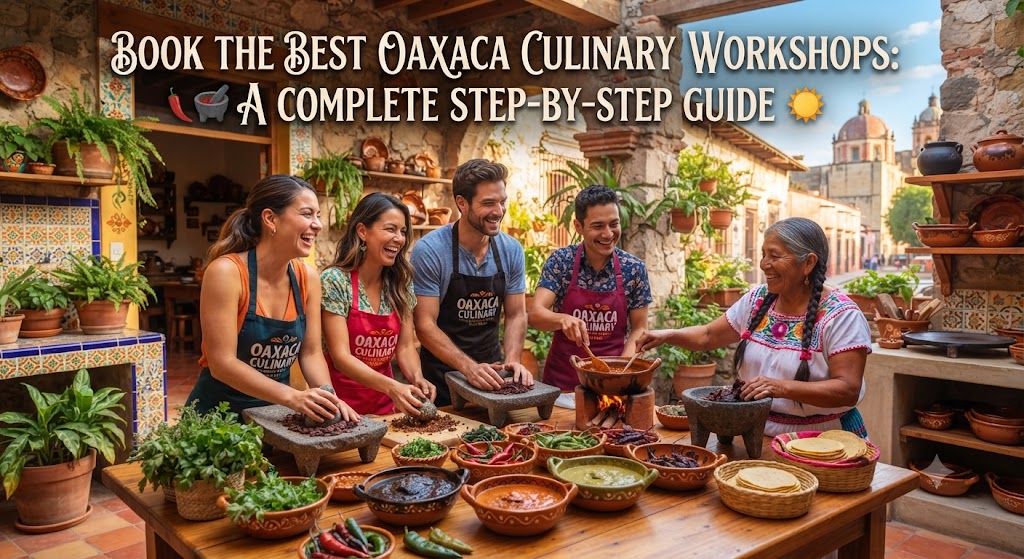
- Metate y Mano: A volcanic stone grinding slab used to mill nixtamalized corn into smooth masa or grind toasted chiles and cacao into paste.
- Molcajete: A mortar and pestle carved from basalt stone, essential for crushing garlic, roasted tomatoes, and fresh herbs into textured salsas.
- Comal de Barro: An unglazed clay griddle suspended over wood embers, used to dry-toast chiles, roast tomatoes (*tatemado*), and cook thin tortillas without oil.
- Cocina de Humo: Traditional “smoke kitchens” built around open woodfires that impart a distinct wood-smoke aroma into stews and braises.
Choosing the Right Culinary Workshop Format
Not all culinary experiences cater to the same preferences. Understanding the format, instruction style, group dynamics, and geographical setting will ensure you pick a program that matches your goals.
Workshop Formats Explained
- Full-Day Market-to-Table Class: The gold standard for travelers. You begin at 8:00 AM navigating local markets alongside the chef, sourcing native produce, chiles, and meats, before returning to the kitchen to cook a four-course feast.
- Intensive Specialty Masterclasses: Multi-hour deep dives into specific crafts—such as making mole from scratch, traditional nixtamalization, artisanal bread baking (pan de yema), or butchery and cecina curing.
- Home Kitchens vs. Culinary Institutes: Home kitchen workshops (often run by native cocineras tradicionales) offer intimate cultural context and home-style secrets. Professional culinary studios deliver structured, polished instruction with professional-grade workstations.
- Rural Farm-to-Table Excursions: Located in outlying villages like Teotitlán del Valle, Etla, or San Antonio de la Cal, these day-long workshops connect cooking directly with organic farming, wild forage, and traditional hearths.
Evaluating Skill Level Requirements
Beginners should seek out structured classes with small student-to-instructor ratios where foundational tasks—like handling chiles safely and pressing tortillas—are broken down clearly. Intermediate and professional cooks will gain the most from advanced mole labs or private masterclasses that focus on balancing complex flavor compounds and refining texture emulsion.
Group Size, Privacy, and Pricing Dynamics
Private classes (2–4 participants) offer maximum flexibility, enabling tailored menus for specific dietary needs or deep instruction on technical skills. Shared public classes (6–12 participants) offer lower per-person fees, a lively social environment, and high-energy group dynamics.
| Workshop Type | Average Duration | Price Range (USD) | Key Features Included |
|---|---|---|---|
| Market & Cook (Shared) | 4 to 5 Hours | $80 – $110 | Market walk, 3-course meal, drinks, recipe book |
| Private Home Kitchen | 5 to 6 Hours | $130 – $190 | Custom menu, private transport, personalized training |
| Rural Ancestral Experience | 6 to 8 Hours | $150 – $220 | Village tour, farm harvesting, hearth cooking, mezcal pairing |
| Specialty Mole Masterclass | 4 to 5 Hours | $95 – $140 | Deep dive into 2–3 moles, chile roasting, spice grinding |
Top Rated Oaxaca Culinary Workshops
- Traditional Mole Masterclass in Centro Histórico
Duration: 5 hours. Learn the exact ratios and roasting mechanics required to construct two signature Oaxacan moles. Under expert guidance, you will toast spices, char chiles over a woodcomal, and grind paste using volcanic stone tools. Cost: US$110 per person. Book this workshop.
- Ancestral Cooking & Farm Experience in Teotitlán del Valle
Duration: 7 hours. Travel out of the urban center to an indigenous Zapotec village. Harvest organic herbs directly from a family garden, make nixtamal masa, and cook ancestral soups and tamales over an open wood-burning cocina de humo. Cost: US$165 per person. Reserve your spot.
- Market-to-Comal Tlayuda & Street Food Workshop
Duration: 4 hours. Walk through the sprawling Mercado de Abastos to select fresh ingredients, then head into a garden kitchen to prepare giant crispy tlayudas, fresh quesillo, roasted asiento, and hand-pounded molcajete salsas. Ends with a guided local beer and mezcal pairing. Cost: US$85 per person. View platform listings.
- Mezcal Distillation & Culinary Food Pairing Lab
Duration: 6 hours. Visit a small-batch palenque (distillery) in Matatlán. Study wild agave species, witness pit-roasting and tahona stone crushing, and finish with a multi-course tasting menu paired thoughtfully with ancestral mezcals. Cost: US$145 per person. Check availability.
Step-by-Step Guide to Booking Your Workshop
Step 1: Determine Travel Timing and Book Early
Oaxaca experiences extreme tourist surges during specific festive periods. If you travel during Día de los Muertos (late October to early November), Guelaguetza (July), or the Christmas/New Year holidays, culinary classes fill up 3 to 6 months in advance. For low-season travel (May or September), booking 2 to 3 weeks prior is usually sufficient.
Step 2: Compare Third-Party Platforms vs. Direct Chef Bookings
Booking through established aggregators like Viator or Airbnb Experiences provides secure digital payments, standardized cancellation windows, and verified user reviews. Booking directly with independent chefs via their websites or social media channels can occasionally yield lower rates or direct customization, though cancellation policies may be stricter.
Step 3: Communicate Dietary Restrictions in Advance
Traditional Oaxacan cuisine makes extensive use of unrefined pork lard (asiento or manteca), chicken stock base in moles, and toasted insects. If you are vegetarian, vegan, celiac, or have severe nut or shellfish allergies, explicitly verify that your chosen kitchen can provide suitable substitutions (e.g., using plant oils, vegetable broths, or separate preparation areas).
Step 4: Verify Language, Transport, and Inclusions
Always verify whether the class is conducted in English, Spanish, or a bilingual format. Confirm if round-trip transportation from Oaxaca’s town center (Centro Histórico) is provided, especially for rural workshops located in the Central Valleys.
Essential Oaxacan Markets to Explore
Market excursions form the backbone of any true Oaxacan cooking class. Knowing what each market specializes in helps you select the right market-to-table workshop route:
- Mercado Benito Juárez: Located right in Centro, this covered market is ideal for purchasing packaged moles, dried pasilla oaxaqueño chiles, fresh quesillo, artisanal chocolate discs, and colorful local pottery.
- Mercado 20 de Noviembre: World-famous for its smoked meats hallway (Pasillo de los Tasajos). Here, smoke fills the air as street vendors grill thin cuts of beef (tasajo), marinated pork (cecina), and spicy pork sausage (chorizo) over live coals.
- Mercado de Abastos: A sprawling, non-touristy wholesale market on the edge of town. It is vast, energetic, and best visited alongside a local chef guide who can safely navigate the dense aisles of heirloom produce and wild herbs.
- Tlacolula Sunday Market: One of the oldest continuously operating indigenous markets in Mesoamerica. If your workshop coincides with a Sunday, choose an itinerary that incorporates a trip to Tlacolula for an unforgettable sensory experience.
Mastering Key Techniques: What You Will Learn
Attending a premier Oaxaca cooking class provides actionable skills you can recreate at home. Key culinary techniques taught across top workshops include:
1. Nixtamalization and Masa Preparation
You will learn how field corn is simmered with mineral lime (calcium hydroxide) to soften the outer hull and release bioavailable niacin. After resting, the corn is washed and ground into pliable masa dough, forming the foundation for tortillas, tlayudas, tetelas, and memelas.
2. Balanced Chile Toasting (El Tatemado)
Drying and charring chiles requires precise heat control. You will practice blistering chiles on a dry comal just long enough to release aromatic oils and sugars without scorching them—a mistake that renders mole unpleasantly bitter.
3. Emulsification without Dairy or Flour
Oaxacan moles achieve their velvety, glossy viscosity without heavy cream, butter, or cornstarch roux. Instead, you will learn how roasted seeds, charred bread, plantains, nuts, and ground tortilla ash serve as natural thickening agents.
Budgeting Your Oaxaca Culinary Trip
Planning a seamless gastronomic vacation requires accurate budgeting. Beyond the workshop fee itself, plan for market snacks, artisanal mezcal purchases, local transit, and tips for kitchen staff.
| Expense Category | Budget Level | Mid-Range Level | Luxury Level |
|---|---|---|---|
| Workshop / Cooking Class | $70 – $90 / class | $100 – $150 / class | $180 – $300 / class |
| Market Snacks & Street Food | $10 – $15 / day | $20 – $35 / day | $40 – $70 / day |
| Full Service Dining (Dinner) | $15 – $25 / person | $35 – $65 / person | $80 – $150 / person |
| Mezcal Tastings | $10 – $20 / flight | $25 – $45 / flight | $60 – $120 / tasting |
| Local Transport (Taxis/Buses) | $3 – $8 / day | $12 – $25 / day | $50 – $100 / private driver |
To maximize your budget, consider pairing expensive full-day masterclasses with self-guided street food walks or visiting local fondas (market food stalls) for affordable, authentic lunches.
Practical Tips for Workshop Preparation
- Attire and Footwear: Wear flat, closed-toe non-slip shoes. Kitchen floors can get wet, and market streets are notoriously uneven. Choose breathable cotton clothing, as open woodfires and clay comals create high ambient heat.
- Kitchen Hygiene and Water Safety: High-end culinary schools use purified water for all produce washing, cooking, and ice-making. If attending informal home-kitchen classes, confirm that filtered or bottled water is used for salad washing and salsa prep.
- Take Notes and Document Steps: Complex mole recipes contain over 20 step-dependent ingredients. Bring a small notebook or use your smartphone to film delicate steps like chile roasting and stone grinding.
- Tipping Etiquette: While service charges are rarely forced onto class bills, leaving a 10% to 15% cash tip for the head chef, assistants, and market guides is standard practice for exceptional service.
Frequently Asked Questions (FAQ)
- Can vegetarians and vegans enjoy Oaxacan cooking classes?
Yes! While traditional Oaxacan food uses pork lard and meat broths, many modern workshops cater specifically to plant-based diets by using vegetable oils, local wild mushrooms (like huitlacoche and chanterelles), beans, and rich vegetable stocks.
- Are classes suitable for children and families?
Many hosts welcome children, especially in private classes. Hands-on tasks like shaping masa, pressing tortillas, and harvesting ingredients from gardens are engaging for young travelers.
- Is English widely spoken in these workshops?
Most cooking classes geared toward international travelers are conducted in English or by bilingual native chefs. Always review the class listing details before confirming your reservation.
- Can I bring artisanal ingredients back home through airport customs?
Commercially sealed dried chiles, vacuum-packed chocolate paste, ground coffee, and sealed bottles of mezcal can generally be brought through international customs in checked luggage. Fresh produce, meats, unsealed seeds, and live plants are strictly prohibited by international agricultural border controls.
- What is the standard cancellation policy for cooking classes?
Most platforms offer full refunds if canceled at least 24 to 48 hours before the scheduled start time. Private custom bookings or multi-day culinary retreats may require a non-refundable deposit.
- How long before my trip should I book my class?
It is best to reserve your class 3 to 4 weeks in advance for standard travel times, and 2 to 4 months ahead if traveling during peak holiday weeks like Día de los Muertos.
Final Recommendations
Booking a hands-on Oaxaca culinary workshop elevates a standard vacation into a transformative cultural journey. By choosing a workshop format tailored to your skill level, mastering traditional techniques over clay comals, and exploring vibrant local markets, you will leave Oaxaca with unforgettable memories and authentic cooking skills to share with friends and family for years to come.
Ready to plan your trip? Explore our detailed culinary travel guides and discover more immersive food itineraries across Mexico.