Every parent wants a healthy, energetic child, yet modern life makes it easy to slip into endless screen time, fragmented sleep, and missed opportunities for movement. The 24‑hour movement guidelines for kids provide a science‑backed framework that balances physical activity, sedentary behavior, and sleep—all within a single day. This guide translates those recommendations into realistic daily routines, fun games, and low‑pressure tracking methods so you can empower your 5‑12‑year‑old to thrive in 2024.
Understanding the 24‑Hour Movement Guidelines
The guidelines were jointly released by the World Health Organization (WHO) and the U.S. Centers for Disease Control and Prevention (CDC) to give families a clear, evidence‑based roadmap for daily health. Rather than treating exercise, screen time, and sleep as separate silos, the model views them as interlocking pillars that together shape a child’s overall well‑being.
- Physical activity: Any bodily movement that raises heart rate and uses muscles, from structured sports to spontaneous play.
- Sedentary behavior: Activities that involve sitting or lying down with low energy expenditure, most notably screen time.
- Sleep: Restful, uninterrupted sleep that supports growth, cognition, and emotional regulation.
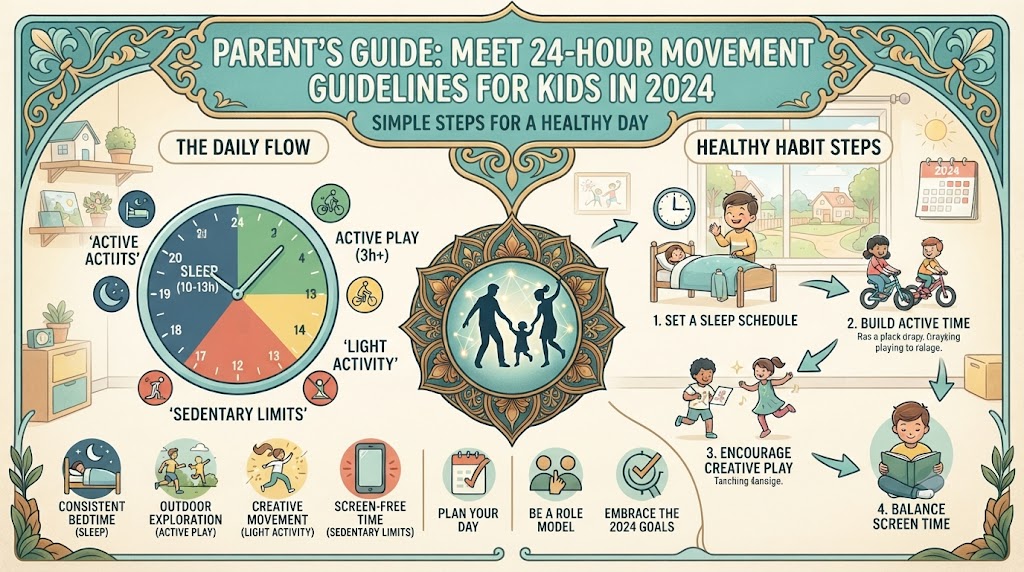
For children ages 5‑12, the age‑specific recommendations are:
- At least 60 minutes of moderate‑to‑vigorous physical activity daily, with most of it aerobic.
- Limit recreational screen time to no more than 60 minutes per day, and break up long periods of sitting with active breaks every 30 minutes.
- Ensure 9‑12 hours of quality sleep each night, depending on age.
These targets are not arbitrary; they reflect large‑scale epidemiological studies linking each pillar to reduced chronic disease risk and better mental health.
Why the Guidelines Matter for Your Child’s Health
Research published in Nature shows that children who consistently meet the movement guidelines have a 30% lower risk of developing obesity by age 13. The protective effect stems from three synergistic mechanisms:
- Energy balance: Regular activity burns calories while adequate sleep regulates appetite hormones such as leptin and ghrelin.
- Cognitive boost: Aerobic movement improves blood flow to the prefrontal cortex, enhancing attention, memory, and problem‑solving skills.
- Emotional resilience: Physical play releases endorphins and reduces cortisol, helping kids manage stress and anxiety.
Beyond the numbers, establishing these habits early creates a lifelong pattern of health‑positive choices, making the transition to teenage independence smoother.
Creating a Daily Routine That Meets All Three Pillars
Structure is the secret weapon for busy families. Below is a sample schedule that satisfies the 24‑hour movement targets while leaving room for school, homework, and family time.
06:30 – Wake, stretch, and drink water
07:00 – Breakfast (no screens)
07:30 – Walk or bike to school (active commute)
08:00‑12:00 – School (recess + 5‑minute active breaks every 30 min)
12:30 – Lunch + 15‑minute playground sprint
13:30‑15:30 – Classroom work (stand‑up desk option)
16:00 – After‑school sport or quick 10‑minute activity burst
17:00 – Homework (screen‑free zone)
18:00 – Family dinner (conversation, no devices)
19:00 – Play‑based activity: dance party, backyard obstacle course, or recommended tool
20:00 – Wind‑down routine: reading, dim lights, no screens
20:45 – Bedtime (9‑12 hrs total sleep)
Key takeaways:
- Moderate‑to‑vigorous activity: Incorporate games that raise heart rate—tag, soccer drills, or a family bike ride.
- Screen‑time strategies: Use a timer, create screen‑free zones, and replace idle scrolling with “active breaks” that involve jumping jacks or stretching.
- Sleep hygiene: Keep a consistent bedtime, limit caffeine, and establish a calming pre‑sleep ritual.
Practical Activities and Games for Every Setting
Home‑Based Movement Ideas
When the weather keeps you indoors, creativity can turn any room into a mini‑gym:
- Dance parties: Put on a favorite playlist and let kids freestyle for 10 minutes.
- Obstacle courses: Use cushions, chairs, and tape to design a crawl‑under‑and‑over challenge.
- Yoga for kids: Simple poses like “tree” and “downward dog” improve balance and mindfulness.
School‑Friendly Options
Collaborate with teachers to enrich recess:
- Introduce “movement stations” (jump rope, hula‑hoop, short sprint lanes).
- Organize quick “brain‑body” games—e.g., “Simon Says” with fitness moves.
- Encourage teachers to lead 2‑minute stretch breaks between lessons.
Outdoor Family Activities
Weekend adventures are perfect for ticking off the activity quota while bonding:
- Bike rides on a local trail (aim for 30 minutes of steady pedaling).
- Nature scavenger hunts that require walking, climbing, and crawling.
- Family sports day: mini‑soccer, frisbee, or kickball at the park.
Tracking Progress Without Over‑Monitoring
Kids thrive on positive feedback, not constant surveillance. Choose tools that are simple, visual, and fun.
- Kid‑friendly activity trackers: Devices like the Garmin vívofit jr turn steps into quests and reward badges.
- Free apps and printable charts: Apps such as “My Activity Diary” let parents log daily movement, while printable “Movement Tracker” sheets let children place stickers for each active minute.
- Positive reinforcement: Celebrate milestones with non‑food rewards—extra bedtime story, a trip to the ice‑cream shop, or a new sticker set.
For tech‑savvy families, an AI fitness tracker can personalize activity goals based on the child’s baseline, but keep the focus on fun rather than numbers.
Overcoming Common Challenges
Dealing with Picky‑Move Kids
Not every child loves traditional sports. Offer a menu of options and let them vote each week. Sometimes a simple game of “freeze dance” feels less intimidating than structured drills.
Balancing Academic Workload and Activity
Homework doesn’t have to be sedentary. Try “standing study” with a high‑table, or incorporate “movement math” where kids jump a number of times equal to the answer.
Managing Screen‑Time Resistance
Instead of an all‑or‑nothing ban, negotiate a “screen contract”: for every 30 minutes of recreational screen time, the child must complete a 10‑minute active break. Visual timers help make the exchange transparent.
Frequently Asked Questions
Can my child meet guidelines on weekends only?
While a weekend marathon can boost weekly totals, daily consistency is more effective for sleep regulation and habit formation. Aim for at least 30 minutes of activity on weekdays and build up to the full hour on weekends.
How to adjust for children with medical conditions?
Consult your pediatrician to tailor intensity and duration. Even low‑impact activities—water play, gentle yoga, or short walks—contribute to the overall goal.
What to do if sleep is consistently short?
Identify barriers: late‑night screen use, caffeine, or an irregular bedtime. Implement a wind‑down routine 30 minutes before lights out, and keep the bedroom cool and dark.
Resources and Next Steps
Ready to dive in? Start with these trusted references:
- CDC – Children’s Physical Activity Guidelines
- American Academy of Pediatrics – Healthy Active Living
- How Vaping Hurts Your Fitness & What to Do to Recover Faster (for broader health context)
Suggested reads: “The Playful Parent’s Handbook” and “Active Kids, Healthy Futures”. Local community centers often host free movement classes—check your city’s recreation department.
Call to Action: Try the 7‑day trial schedule above. Track your child’s activity with a simple chart, adjust as needed, and celebrate the first week of success. Consistency beats perfection—every active minute counts toward a healthier future.