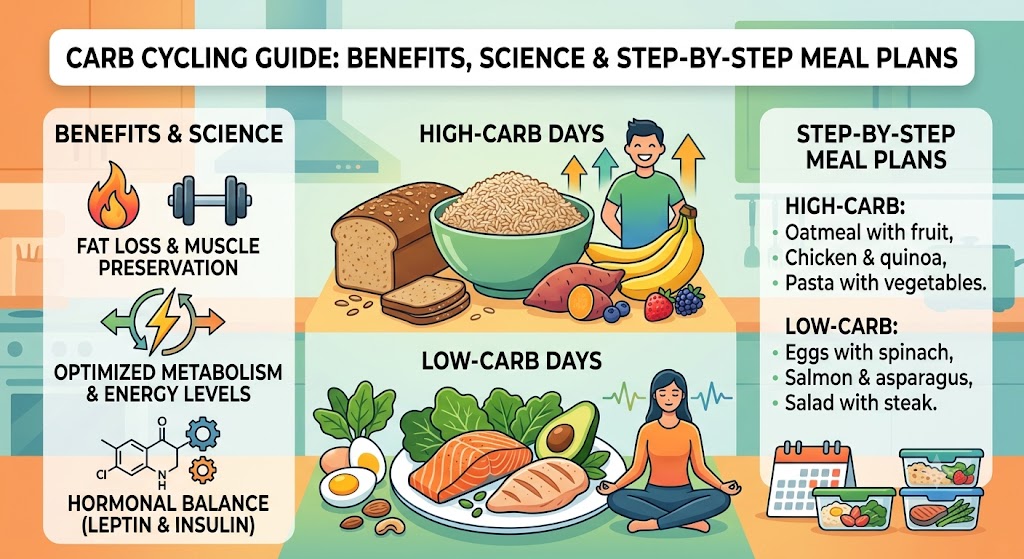
Carb cycling is a flexible nutrition strategy that alternates high‑carb and low‑carb days to match training demands, preserve muscle, and promote fat loss. This guide explains the science, outlines who benefits most, and provides ready‑to‑use meal plans so you can start tomorrow.
What Is Carb Cycling?
At its core, carb cycling means varying carbohydrate intake across the week rather than eating a constant amount every day. On high‑carb days you consume enough carbs to fully replenish muscle glycogen, support intense workouts, and boost hormones like leptin. On low‑carb days you dial back carbs, encouraging the body to tap stored fat for fuel while still providing protein to protect muscle.
Typical reasons people adopt carb cycling include:
- Improving body composition without the strictness of a continuous low‑carb diet.
- Aligning fuel availability with training intensity.
- Enhancing metabolic flexibility – the ability to switch between carbs and fat efficiently.
The Science Behind Carb Cycling
Carbohydrates are the body’s preferred source of quick energy because they are stored as glycogen in muscle and liver. When you schedule high‑carb days around heavy lifting or interval sessions, you ensure glycogen stores are topped up, which translates to better power output and faster recovery.
Low‑carb days create a mild insulin dip, which can improve insulin sensitivity. Over time, this makes the cells more responsive to insulin, a factor linked to better weight management and reduced risk of metabolic disease. Research from Harvard Health notes that periodic carbohydrate re‑feeds can prevent the metabolic slowdown often seen with prolonged calorie restriction.
Peer‑reviewed studies in the Journal of Sports Sciences and Nutrition & Metabolism have shown that athletes who cycle carbs maintain lean mass better than those on a constant low‑carb regimen, while still achieving comparable fat loss.
Who Can Benefit From Carb Cycling?
Athletes and strength‑trainers – Powerlifters, sprinters, and bodybuilders frequently need high glycogen for maximal effort lifts. Carb cycling lets them load carbs on training days and cut them on rest days.
People aiming for fat loss while preserving muscle – By providing ample carbs when muscles need them, the body is less likely to break down protein for energy.
Individuals with fluctuating energy needs – Shift workers, frequent travelers, or anyone whose daily activity level varies dramatically can match carb intake to the day’s demands.
How to Structure Your Carb Cycling Plan
1. Determine cycle length – Common patterns are a 5‑day cycle (3 low, 2 high) or a 7‑day cycle (5 low, 2 high). Choose based on how many intense sessions you have per week.
2. Set macro targets – On high‑carb days aim for 2.0–2.5 g of carbs per pound of body weight, moderate protein (0.8–1.0 g/lb), and low fat (0.3–0.4 g/lb). On low‑carb days drop carbs to 0.5–0.8 g/lb, keep protein constant, and increase healthy fats to compensate for calories.
3. Align with training – Schedule high‑carb days on the same days you perform heavy lifts, high‑intensity interval training (HIIT), or long cardio sessions. Low‑carb days work best on rest days or light‑skill workouts.
Example weekly schedule:
- Monday – Heavy leg day (high‑carb)
- Tuesday – Upper‑body hypertrophy (low‑carb)
- Wednesday – Rest or mobility (low‑carb)
- Thursday – HIIT sprint session (high‑carb)
- Friday – Full‑body circuit (low‑carb)
- Saturday – Light cardio or active recovery (low‑carb)
- Sunday – Rest (low‑carb)
Step‑by‑Step Sample Meal Plans
High‑Carb Day Breakfast
• 1 cup cooked oatmeal topped with sliced banana, a drizzle of honey, and 1 tbsp almond butter.
• 3 egg whites + 1 whole egg scrambled with spinach.
• 250 ml orange juice.
Low‑Carb Day Lunch
• Grilled chicken breast (150 g) over mixed greens, cherry tomatoes, cucumber, and 1 avocado.
• Dressing: 1 tbsp olive oil + lemon juice.
• Side: ½ cup roasted Brussels sprouts.
Low‑Carb Day Dinner
• Baked salmon (180 g) with a herb‑yogurt sauce.
• Cauliflower rice sautéed with garlic and a handful of kale.
• 1 oz walnuts for extra omega‑3s.
Snack Ideas & Portion Guidelines
- High‑carb day: Greek yogurt with berries and a sprinkle of granola (≈30 g carbs).
- Low‑carb day: Celery sticks with 2 tbsp peanut butter (≈6 g carbs).
- Both days: A protein shake mixed with water or unsweetened almond milk – use a recommended macro tracker to keep portions accurate.
Carb Cycling vs. Other Diets
Compared with keto, carb cycling allows periodic carb re‑feeds, which can be easier on thyroid function and social eating. Unlike intermittent fasting, carb cycling does not restrict eating windows, focusing instead on nutrient timing. Traditional calorie‑restriction diets often lead to a steady drop in metabolic rate; carb cycling’s high‑carb days help maintain leptin levels and prevent that slowdown.
Pros:
- Flexibility – you can still enjoy pasta or rice on training days.
- Preserves muscle – protein stays high, carbs support performance.
- Improves metabolic flexibility – the body learns to switch fuels efficiently.
Cons:
- Requires planning – you must track macros and align meals with workouts.
- Potential for over‑eating on high‑carb days if portions aren’t measured.
Common Mistakes & FAQs
Over‑restricting carbs on low days
Dropping carbs below 0.3 g/lb can cause energy crashes, especially for those who train daily. Aim for the lower bound of the recommended range and monitor how you feel.
Neglecting micronutrients
Because low‑carb meals often emphasize protein and fat, it’s easy to miss vitamins and minerals. Include plenty of leafy greens, colorful vegetables, and occasional fruit on high‑carb days. For more on nutrient timing, see our article on foods for better sleep.
FAQ
- Can beginners try carb cycling? Yes, but start with a simple 5‑day cycle and use a tracking app to stay accountable.
- Do I need to count calories? Not always. If your macro ratios stay within the recommended ranges, calories tend to align naturally.
- Will carb cycling affect my hormones? Properly timed carbs can support thyroid and sex hormones by preventing chronic low‑insulin states.
Tracking Progress and Adjusting Your Plan
Key metrics include body weight, body‑fat percentage, training performance (e.g., squat volume), and subjective energy levels. Blood‑glucose monitoring can be useful for those with insulin sensitivity concerns.
Adjustments:
- If strength stalls, add an extra high‑carb day or increase carbs by 10 % on existing high‑carb days.
- If fat loss plateaus, consider reducing carbs on low days by 5 % or extending the low‑carb phase.
- Always keep protein steady – a drop can lead to muscle loss.
Conclusion & Next Steps
Carb cycling blends the performance benefits of strategic carbohydrate timing with the body‑composition advantages of periodic low‑carb phases. When executed with clear macro targets, aligned training, and mindful micronutrient intake, it can be a powerful tool for fitness‑oriented adults.
Actionable checklist:
- Identify your high‑intensity training days.
- Choose a 5‑ or 7‑day cycle that matches your schedule.
- Calculate macro targets (high‑carb vs low‑carb) using a reliable calculator.
- Plan meals ahead – use the sample menus as a template.
- Track weight, performance, and energy for at least 4 weeks.
- Adjust carbs or cycle length based on the data.
Ready to give it a try? Grab a recommended macro tracker, set up your first week, and watch how your body responds.