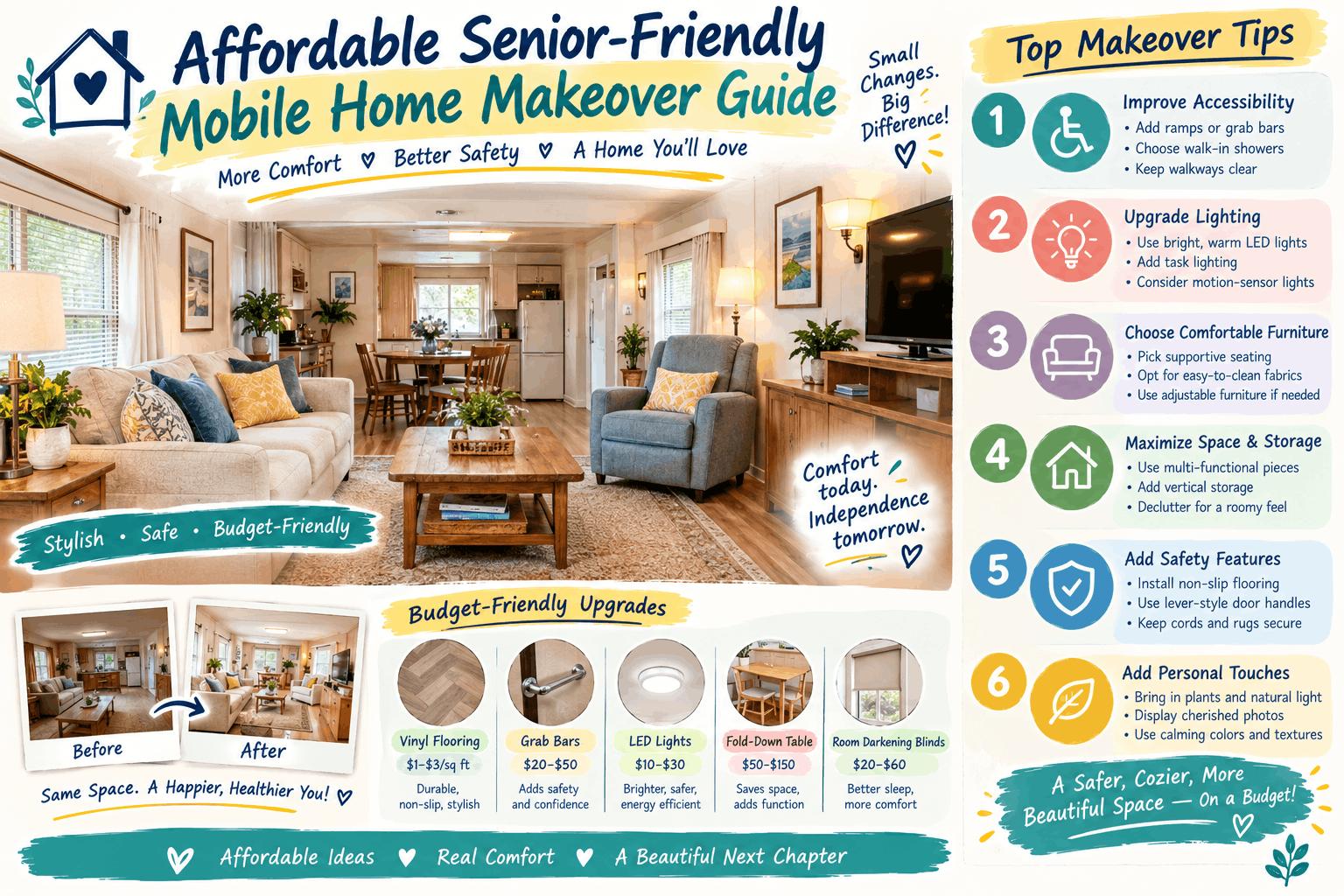
Redesigning a mobile home doesn’t have to drain the savings of seniors or their families. With a clear plan, smart budgeting, and a focus on safety, you can transform a modest space into a comfortable, stylish retreat that supports aging in place. This guide walks you through every step—from assessing the current layout to selecting low‑cost finishes—so you can achieve a budget mobile home interior design that feels both modern and senior‑friendly.
Assessing Your Mobile Home’s Current Layout and Needs
Before you buy paint or furniture, take a systematic inventory of what you have. Measuring square footage accurately helps you avoid buying oversized items that block pathways.
Measure square footage and note structural constraints
- Use a tape measure or laser measurer to record the length and width of each room.
- Sketch a simple floor plan on graph paper; mark doorways, windows, and any built‑in fixtures.
- Note low ceilings, sloping walls, or load‑bearing walls that cannot be altered.
Identify safety hazards for seniors (stairs, narrow passages)
- Check stair risers for uniform height; uneven steps increase fall risk.
- Measure hallway widths—ideally 36 inches or more for easy wheelchair navigation.
- Look for loose rugs, exposed cords, or sharp edges that need immediate attention.
Set clear goals: comfort, safety, aesthetics, budget
Write down three primary objectives (e.g., “add grab bars,” “improve lighting,” “refresh color palette”) and rank them by importance. This hierarchy will guide later budgeting decisions.
Creating a Realistic Budget and Prioritizing Projects
A well‑structured budget prevents surprise expenses and keeps the project on track.
Break down costs: paint, flooring, furniture, lighting, energy upgrades
- Paint: $25‑$35 per gallon for low‑VOC options.
- Flooring: $1.50‑$3 per square foot for vinyl plank.
- Furniture: $150‑$400 for multi‑functional pieces.
- Lighting: $10‑$30 per LED fixture.
- Energy upgrades: $20‑$50 for weather‑stripping kits.
Allocate funds to high‑impact, safety‑first items
Prioritize grab bars, non‑slip flooring, and adequate lighting before aesthetic upgrades. A safe environment adds value and peace of mind.
Use a simple spreadsheet or budgeting app
Track each line item, mark completed purchases, and adjust as you go. For families who prefer an online tool, recommended tool offers a free template that syncs across devices.
Safety‑First Design Choices for Seniors
Safety features should blend seamlessly with style, so they never feel like an afterthought.
Install grab bars and non‑slip flooring
- Place grab bars beside the toilet, in the shower, and at the end of each stair.
- Choose vinyl plank with a textured surface; it provides traction without the cold feel of tile.
Choose ergonomic, easy‑to‑move furniture
Look for chairs with armrests at a comfortable height (7‑9 inches) and lightweight frames that can be repositioned for cleaning or re‑arranging.
Incorporate ADA‑compliant fixtures and clear pathways
- Switch to lever‑handle faucets that require less grip strength.
- Keep at least 36 inches of clear space in front of appliances and closets.
Color, Paint, and Wall Treatments on a Shoestring
Color influences mood and visibility, especially for seniors with declining eyesight.
Select light, high‑contrast colors to improve visibility
Soft whites, pale blues, and warm greys reflect light, while contrasting trim (e.g., dark navy baseboards) helps define edges.
Use low‑VOC, budget‑friendly paint brands
Brands like Behr Premium Plus and Valspar offer low‑VOC formulas at $25‑$30 per gallon, reducing fumes and long‑term health concerns.
Add removable wall decals for personality without damage
Vinyl decals can be swapped seasonally and leave no residue, perfect for renters or those who want to keep walls pristine.
Flooring Solutions That Blend Cost, Comfort, and Safety
Flooring is a major visual element and a safety factor.
Vinyl plank flooring: affordable, water‑resistant, slip‑resistant
Click‑lock vinyl planks install over existing subfloor, saving labor costs. Look for a 0.5‑inch wear layer for durability.
Interlocking foam tiles for low‑traffic areas
These tiles are ideal for a reading nook or under a home office desk, providing cushion and easy replacement if damaged.
DIY floor underlay for added insulation
Lay a thin roll of recycled felt under the vinyl to improve thermal comfort without raising the floor height.
Space‑Saving Furniture and Smart Storage
Maximizing limited square footage is essential in a mobile home.
Multi‑functional pieces: sofa beds, lift‑top coffee tables
A sofa bed offers a guest space without a dedicated bedroom, while a lift‑top coffee table hides magazines, remote controls, or a laptop.
Wall‑mounted shelves and floating cabinets
Floating units free floor space and can be placed at a reachable height for seniors, reducing bending.
Utilize the space under beds and closets
Roll‑out bins with handles keep linens, seasonal clothing, or medical supplies organized and accessible.
Lighting Strategies for Visibility and Mood
Good lighting reduces falls and creates a welcoming atmosphere.
LED strip lighting under cabinets for task light
These strips illuminate countertops for cooking or reading without harsh glare.
Motion‑sensor nightlights for safety
Place them in hallways, bathrooms, and the bedroom to guide nighttime trips without turning on bright overhead lights.
Layered lighting: ambient, task, accent
- Ambient: ceiling‑mounted LED fixtures with dimmers.
- Task: table lamps on reading chairs or workstations.
- Accent: small wall sconces that highlight artwork or photographs.
Energy‑Efficiency Upgrades That Pay Off
Lower utility bills free up money for future upgrades.
Weather‑stripping doors and windows
Foam tape kits cost $5‑$10 per door and seal drafts that raise heating costs.
Portable solar chargers for small electronics
A 10‑watt foldable panel can keep phones, tablets, and a bedside lamp powered during outages.
Programmable thermostat or smart plug kits
Setting the thermostat 2 °F lower in winter saves up to 5 % on heating; smart plugs turn off idle devices automatically.
DIY Decor Ideas That Add Personality Without Breaking the Bank
Personal touches make a house feel like home.
Upcycled furniture with chalk paint
Give an old dresser a fresh look with matte chalk paint; it adheres to wood, metal, and laminate.
Hand‑stitched cushion covers using affordable fabrics
Choose cotton or linen from discount stores, add a simple seam, and swap colors seasonally.
Seasonal décor using natural elements
Collect pine cones, dried lavender, or river stones for tabletop arrangements that bring texture and scent.
Final Checklist and Maintenance Tips
After the makeover, a quick audit ensures everything stays safe and functional.
- Walk‑through safety audit: test grab bars, check floor traction, verify clear pathways.
- Monthly budget review for ongoing upgrades: note any unexpected repairs and adjust the spreadsheet.
- Resources for senior‑friendly home services: local Area Agency on Aging, community volunteer groups, and reputable contractors specializing in accessible remodels.
Frequently Asked Questions
How much should I expect to spend on a full mobile‑home redesign?
Costs vary widely, but a modest upgrade focusing on safety (grab bars, lighting, flooring) can be completed for $1,500‑$3,000. Adding aesthetic upgrades (paint, décor) may raise the total to $5,000‑$7,000.
Can I install grab bars myself?
Yes, if you use a stud‑finder and follow the manufacturer’s instructions. For extra security, especially near showers, consider hiring a handyman to ensure proper anchoring.
What flooring is best for a senior with limited mobility?
Vinyl plank with a textured, slip‑resistant finish offers the best balance of comfort, durability, and low cost. Avoid high‑gloss tiles that become slippery when wet.
Conclusion
Redesigning a mobile home for seniors on a budget is entirely achievable when you prioritize safety, plan finances meticulously, and choose versatile, affordable materials. By following the steps outlined above, you’ll create a space that feels secure, functional, and uniquely yours—without compromising on style. For more inspiration on cohesive layouts, explore our article on open‑plan kitchen and living room design, and discover how memory‑boosting home design can complement senior‑friendly upgrades. Happy remodeling!