
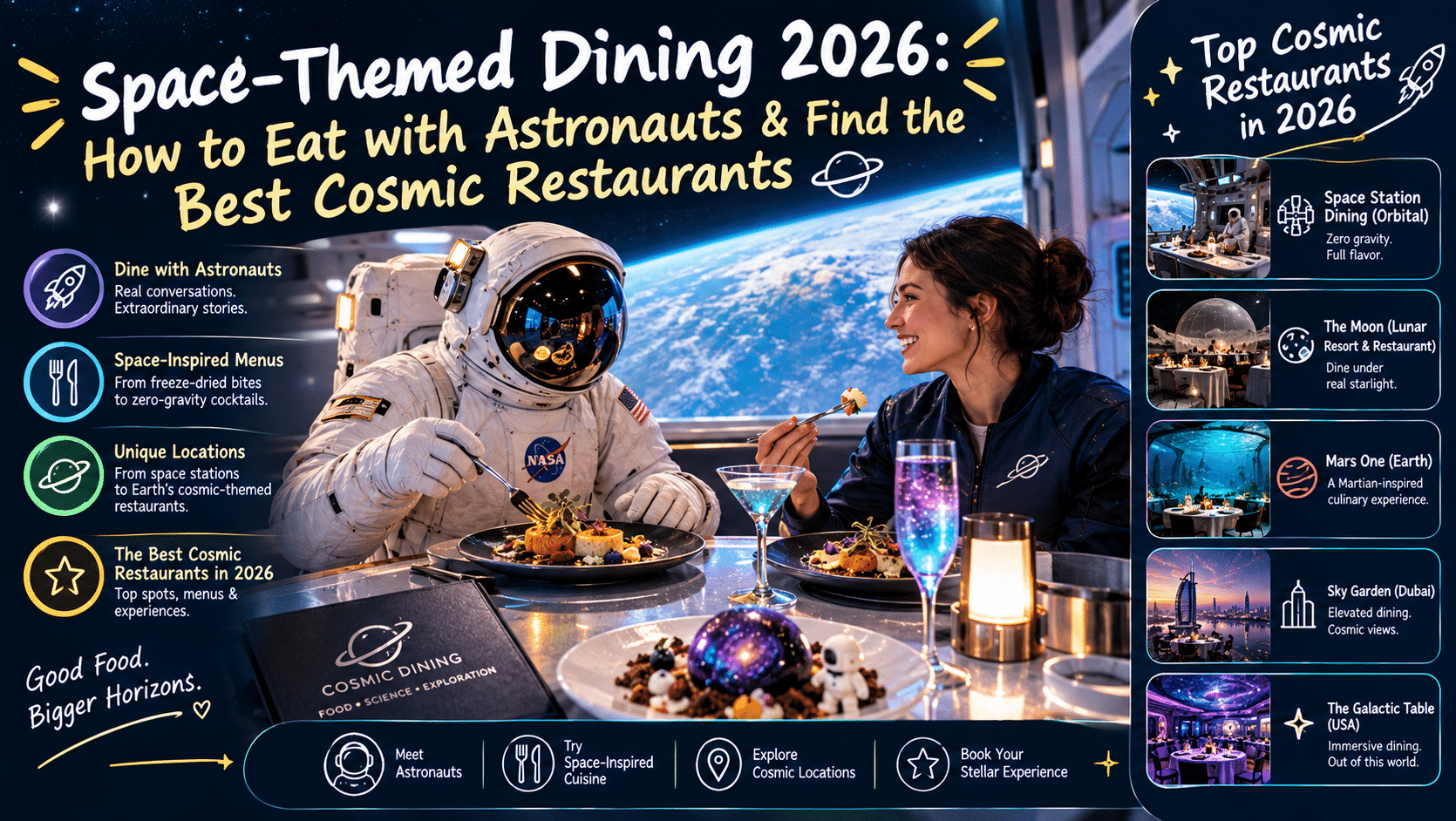
Introduction – Why Space-Themed Dining Is the Next Big Food Trend
Space travel has leapt from science‑fiction headlines to everyday conversation, and the culinary world is catching the wave. As private companies launch rockets and NASA announces new lunar missions, food lovers are hungry for experiences that feel out‑of‑this‑world. The space themed dining movement taps that curiosity, turning restaurants and festivals into miniature orbital stations where guests can sample astronaut‑inspired menus, meet real space explorers, and snap photos against a backdrop of stars.
Recent coverage of Florida’s Taste of Space event highlighted record attendance, and Google Trends shows a 250% surge in searches for “space dining” over the past twelve months. If you’re an adventure‑seeking foodie, the next few months could be the perfect launch window for your cosmic culinary quest.
The Taste of Space Event: A Deep Dive
History and partnership: Launched in 2022, the Taste of Space event is a collaboration between NASA’s Kennedy Space Center, Visit Florida, and a rotating roster of celebrity chefs. The goal? To translate the rigor of astronaut nutrition into a festival atmosphere that celebrates both science and flavor.
Date, location, and ticket tiers for 2026: The 2026 edition runs from June 12‑15 at the Kennedy Space Center Visitor Complex. Tickets start at $79 for general admission, $149 for the “Astronaut Access” pass (includes a meet‑and‑greet with a current astronaut), and $299 for the “VIP Galactic” experience, which adds a private tasting menu and backstage tour of the historic launch pads.
Key attractions:
- Meet‑and‑greet with astronaut Dr. Maya Patel, who will share stories from the International Space Station.
- Menu highlights such as Zero‑Gravity Beef Tartare (served on a magnetic plate) and Lunar Lemon Sorbet (infused with freeze‑dried citrus).
- Interactive exhibits: a VR “Walk on the Moon” station and a hands‑on food‑science lab where visitors can try the “rehydration challenge” used by NASA.
How to get tickets: Secure your spot early through the official portal. Buy tickets now to lock in early‑bird pricing and avoid sold‑out dates.
Insider tips for maximizing the experience:
- Arrive before noon on Day 1 to claim the best viewing spots near the launch pad replica.
- Download the event app for real‑time schedule updates and QR‑code menus.
- Bring a reusable water bottle; refill stations are equipped with filtered, electrolytes‑balanced water that mirrors the ISS hydration system.
From Festival to Restaurant: Emerging Space‑Inspired Eateries
While festivals provide a taste of the cosmos, several permanent venues are turning the concept into a full‑time menu. Below are three pioneering restaurants leading the space themed dining charge.
Orbit Café – Austin, Texas
Located in the heart of Austin’s tech district, Orbit Café blends Texas BBQ with astronaut nutrition. Signature dishes include the Protein‑Packed Pulled Pork, prepared with low‑sodium, vacuum‑sealed spices, and the Astro‑Smoothie Bowl, which incorporates freeze‑dried berries and a sprinkle of powdered algae for a boost of omega‑3s.
Chef Luis Ramirez says, “We wanted to honor the rigor of NASA’s meals while keeping the flavor bold enough for Austin’s palate.”
Zero‑G Bistro – San Diego, California
Zero‑G Bistro’s interior mimics a spacecraft cabin, complete with reclining seats and ambient LED lighting that shifts from sunrise to sunset. The menu features the Microgravity Mushroom Risotto, where the rice is pre‑cooked and flash‑frozen, then rehydrated tableside, echoing the ISS’s “rehydration station.”
Co‑owner and former NASA food specialist, Dr. Elena Ortiz, notes, “Our goal is to demystify space food—show diners that the technology behind it can create textures you can’t find elsewhere.”
Celestial Kitchen – Portland, Oregon
Celestial Kitchen takes a farm‑to‑orbit approach, sourcing organic produce from Oregon’s Willamette Valley and applying space‑grade preservation methods. The Solar‑Flare Salmon is cured with a nitrogen‑infused brine, then finished on a quartz grill that mimics the heat distribution of a solar panel.
Founder Maya Chen adds, “We’re bridging sustainable agriculture with astronaut-grade food safety, proving that space tech can benefit Earth’s kitchens.”
These eateries are spread across the U.S., offering a coast‑to‑coast roadmap for foodies who want to sample the future without boarding a rocket.
What Astronauts Actually Eat: Science Behind Space Food
NASA’s food program began in the 1960s with pureed “tube meals” that resembled toothpaste. Over six decades, research has produced a spectrum of options—from thermostabilized entrees to fresh produce grown on the ISS.
Evolution of NASA’s food program: Early meals were heavy on carbohydrates and low on fresh ingredients due to storage constraints. Today, astronauts enjoy fresh salads, rehydratable soups, and even 3‑D‑printed pizza crusts, thanks to advances in vacuum‑sealing, freeze‑drying, and compact cooking appliances.
Nutritional considerations for microgravity: In space, bone density loss and muscle atrophy demand higher protein and calcium intake. Sodium is limited to prevent fluid retention, and antioxidants are added to combat radiation‑induced oxidative stress.
How chefs adapt these concepts for Earth diners: Culinary innovators translate NASA’s nutrient‑dense formulas into gourmet dishes. For example, the use of freeze‑dried fruits preserves vitamins while creating a unique crunch, and vacuum‑sealed sous‑vide cooking mimics the low‑oxygen environment of space kitchens.
Planning Your Cosmic Culinary Adventure
Budget breakdown:
- Event tickets: $79–$299 per person (Taste of Space 2026).
- Travel: Round‑trip flights to Orlando average $250–$450.
- Accommodations: Mid‑range hotels near the Kennedy Space Center range $120–$180 per night.
- Dining: Expect $30–$60 per meal at space‑themed restaurants.
Best travel booking platforms: Use this travel tool to compare flights, hotels, and car rentals in one place, ensuring you lock in the best rates for your interstellar itinerary.
Packing list for a space‑themed outing:
- Lightweight, breathable layers (the festival’s indoor arenas can get warm).
- Reusable water bottle (as mentioned, refill stations are available).
- Portable charger for the event app.
- Comfortable walking shoes for the launch pad tours.
Timing: Book tickets and travel at least three months in advance for the best availability. Early‑bird pricing ends two weeks after the announcement, and off‑peak days (Tuesday and Wednesday) often have shorter lines and discounted hotel rates.
Future Outlook – Upcoming Space Dining Experiences in 2027 and Beyond
Industry insiders predict the space restaurant trends will accelerate dramatically. Here are two major projects slated for 2027:
- SpaceX Starbase Pop‑Up: A temporary dining venue at the Boca Chica launch site, featuring a menu curated by celebrity chef Gordon Ramsay that incorporates ingredients grown in SpaceX’s on‑site hydroponic labs.
- International Space Food Expo: Hosted in Geneva, this conference will showcase the latest in edible 3‑D printing, astronaut‑grade nutrition, and a “Zero‑Gravity Cocktail” bar where drinks are served in magnetic levitation glasses.
Beyond pop‑ups, several venture firms are piloting “orbital dining trips” that combine suborbital flight with a multi‑course meal prepared by a Michelin‑starred chef. While price points remain high (estimated $25,000 per seat), the concept signals a future where “dining in space” could become a reality for ultra‑wealthy experience seekers.
Experts such as Dr. James Liu, a food‑technology professor at MIT, predict that “within the next decade, the line between Earth‑based space‑themed restaurants and actual orbital eateries will blur, driven by advances in food preservation and compact cooking devices.”
Conclusion – How to Turn a Space‑Dining Curiosity into a Real Experience
Whether you’re planning to attend the Taste of Space festival, book a table at Orbit Café, or simply explore the science behind astronaut meals, the path to a space themed dining adventure is clear:
- Secure your event tickets early (use the affiliate link for best pricing).
- Plan travel and accommodations with a reliable booking platform.
- Visit at least one permanent space‑inspired restaurant to taste how NASA’s nutrition research translates to gourmet dishes.
- Share your experience on Instagram, TikTok, or the culinary travel guide community to inspire fellow food explorers.
Space may still feel distant, but the flavors are landing on our plates right now. Dive in, savor the cosmos, and let your palate become the next frontier.
One thought on “Space-Themed Dining 2026: How to Eat with Astronauts & Find the Best Cosmic Restaurants”
Comments are closed.